

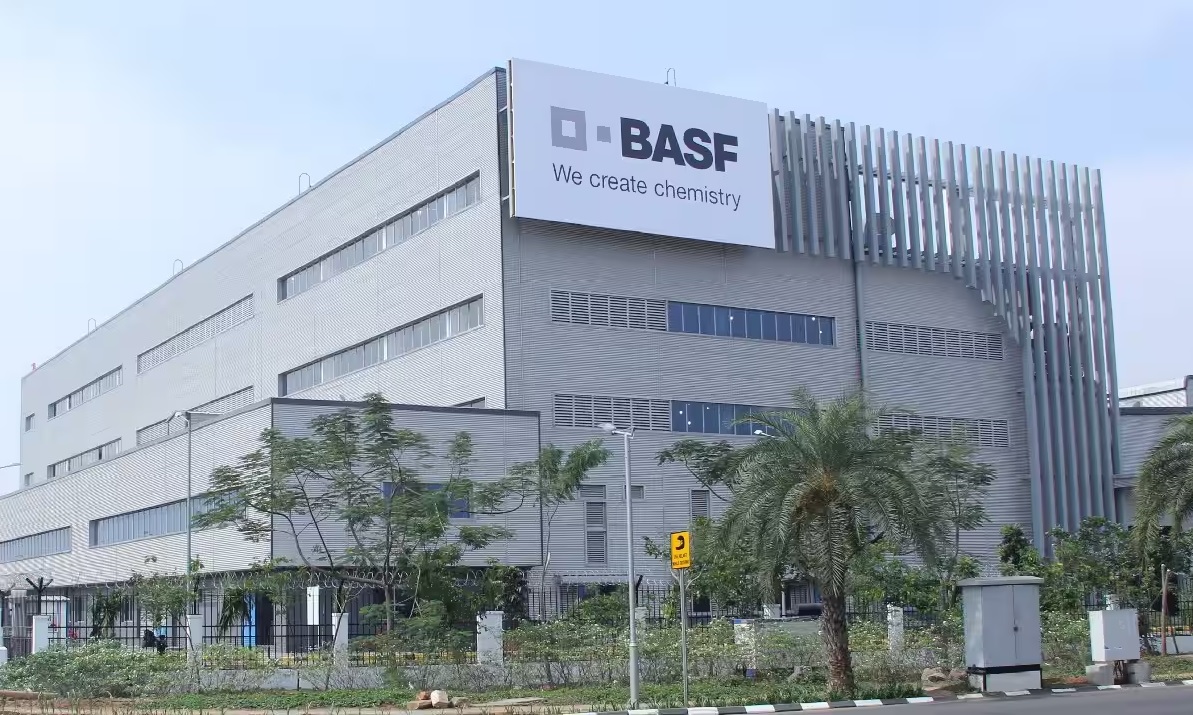



The chemical company’s CSR programmes supported education, safe drinking water, sanitation, livelihoods and environmental initiatives across multiple states.
MUMBAI (India CSR): BASF India Limited, a chemicals company, reported total Corporate Social Responsibility (CSR) expenditure of Rs 15.61 crore during FY 2025-26 across education, Water, Sanitation and Hygiene (WASH), environmental sustainability, livelihoods and community development initiatives, according to the company’s annual report and Business Responsibility and Sustainability Report.
The company’s prescribed CSR obligation for FY 2025-26 stood at Rs 12.93 crore, based on an average net profit of Rs 646.50 crore calculated under Section 135 of the Companies Act, 2013.
During the year, BASF India spent Rs 4.07 crore against its current-year CSR obligation and transferred Rs 8.86 crore to an Unspent CSR Account on April 8, 2026, for eligible ongoing projects. It also utilised Rs 11.54 crore from funds transferred in earlier financial years for ongoing CSR programmes.

This resulted in total actual CSR expenditure of Rs 15.61 crore during FY 2025-26, according to Note 47 of the standalone financial statements.
The company’s CSR programmes included smart classrooms, science education, scholarships for women in chemistry, sanitation infrastructure, drinking water systems, livelihood support and environmental projects.
CSR Obligation
Under Section 135 of the Companies Act, 2013, eligible companies are required to spend at least 2% of their average net profits from the three immediately preceding financial years on approved CSR activities.
For BASF India, the average net profit used for this calculation stood at Rs 646.50 crore.
This resulted in a prescribed CSR obligation of Rs 12.93 crore for FY 2025-26.
The company spent Rs 4.07 crore from this year’s obligation during the reporting period.
The balance Rs 8.86 crore was transferred to an Unspent CSR Account for ongoing projects in accordance with Section 135(6) of the Companies Act.
The transfer was made on April 8, 2026, according to the supplied disclosure.
The company also spent Rs 11.54 crore during the year from amounts previously transferred for ongoing projects relating to FY 2023-24 and FY 2024-25.
Therefore, the Rs 15.61 crore reported as total actual CSR expenditure during FY 2025-26 includes current-year expenditure as well as utilisation of earlier-year CSR funds.
Spending Breakdown
BASF India reported Rs 15.61 crore in actual CSR expenditure during FY 2025-26.
The largest amount, Rs 7.66 crore, was directed towards education facilities and rural infrastructure.
WASH-related programmes received Rs 4.72 crore, while Rs 2.57 crore was spent on environmental sustainability and climate-related initiatives.
Administrative expenditure stood at Rs 66 lakh.
The expenditure pattern shows that education accounted for the largest share of the company’s reported CSR spending during the year.
The available disclosure does not separately state whether there was any excess CSR expenditure eligible for future set-off.
It also does not provide a separate monetary figure for impact assessment expenditure in the supplied material.
Education Programmes
Education was the largest CSR spending area for BASF India during FY 2025-26, with reported expenditure of Rs 7.66 crore.
The company supported digital and science-based learning programmes across multiple locations.
Under its Smart Classrooms initiative, seven smart classrooms were installed in schools near BASF manufacturing locations in Mangalore and Dahej.
The programme reportedly benefited around 1,200 students.
A separate smart-board programme reached approximately 5,000 students in underserved schools.
BASF India also implemented education programmes aimed at encouraging young women to pursue careers in chemistry.
Through initiatives including We-Chemie and Wenyan, the company supported women students with scholarships, financial assistance and career guidance.
The Wenyan programme reportedly supported 49 women pursuing undergraduate, postgraduate and doctoral studies in chemistry.
Science Learning
The company also continued its Kids’ Lab programme, which provides school students with hands-on exposure to chemistry and science experiments.
BASF Kids’ Lab 3.0 reportedly reached more than 7,500 students during the year through activities in locations including Chennai and Nashik.
Another initiative, ChemAmaze 2.0, used chemistry-based learning and games to reach around 22,000 students.
The Business Responsibility and Sustainability Report states that approximately 60% of ChemAmaze beneficiaries were from vulnerable or marginalised groups.
For Kids’ Lab 3.0, the report identified all participants as belonging to vulnerable or marginalised categories.
These programmes provide useful reach figures, though additional data on learning outcomes, science aptitude, attendance and long-term educational progression would strengthen impact assessment.
Water and Sanitation
BASF India spent Rs 4.72 crore on WASH initiatives during FY 2025-26.
The programmes focused on access to safe drinking water, sanitation facilities and hygiene awareness.
In Dahej, Gujarat, the company supported public sanitation facilities, including a sanitary complex developed following a request from local authorities in Bharuch.
The facility was reported to serve more than 7,000 users annually.
The company also implemented menstruation hygiene interventions aimed at girls and women.
Water purification systems were installed in schools in Dahej and Mangalore.
Seven school water purification systems were reported to provide safe drinking water access to more than 1,200 children.
A broader WASH and education programme in Mangalore reportedly reached approximately 2,500 people.
Livelihood Support
The company’s CSR activities also included livelihood development in Gadchiroli, Maharashtra.
The programme focused on sustainable arts, crafts and income-generating opportunities for local communities.
According to the BRSR data supplied, the Gadchiroli livelihood programme reached 5,657 people.
Around 70% of beneficiaries were reported to belong to vulnerable or marginalised groups.
The source material does not provide detailed information on income improvement, enterprise creation, product sales or employment retention.
These indicators would help assess whether the livelihood programme generated sustained economic benefits.
Climate Action
BASF India reported expenditure of Rs 2.57 crore on environmental sustainability and climate-related CSR initiatives.
One programme in Calicut, Kerala, focused on recycling polyurethane footwear waste.
Waste material from footwear manufacturing was collected and converted into rebounded foam products.
These recycled products were then provided to schools and community institutions.
The programme reportedly benefited around 4,000 people, with 90% identified as belonging to vulnerable or marginalised groups.
The initiative reflects a circular economy approach by diverting synthetic material from disposal and finding a secondary use for waste.
However, the report extract does not state the total volume of polyurethane waste processed or the amount of waste diverted from landfill.
Such data would provide a clearer measure of environmental impact.
Green Energy
The annual report also refers to BASF India’s wider operational sustainability programme, including renewable energy procurement.
The company acquired a 26% equity stake in Clean Max Amalfi Private Limited for Rs 6.59 crore to procure electricity from a hybrid solar and wind project in Gujarat.
The arrangement was linked with approximately 28,854 MWh of green power.
This is relevant to BASF India’s broader ESG and carbon-reduction strategy but should be distinguished from statutory CSR spending unless specifically included in the CSR annexure.
Operational investments intended to reduce Scope 1 or Scope 2 emissions are generally part of business sustainability rather than community-focused CSR.
Keeping these categories separate is important for accurate CSR reporting.
Beneficiary Reach
The company’s BRSR provides programme-level beneficiary figures across several projects.
ChemAmaze 2.0 reached approximately 22,000 students, while Kids’ Lab 3.0 reached around 7,500 students.
The Bharuch sanitation initiative reported around 7,000 annual users.
The Gadchiroli livelihood programme covered 5,657 beneficiaries, and smart-board initiatives reached approximately 5,000 students.
The polyurethane recycling programme in Kerala reportedly reached 4,000 people.
The Mangalore WASH and education programme covered around 2,500 people, while smart classrooms in Dahej and Mangalore benefited approximately 1,200 students.
Maharashtra flood rehabilitation activities were reported to have supported around 1,000 beneficiaries.
Taken together, these programme figures indicate a reach of more than 50,000 people.
However, the totals should not automatically be treated as unique beneficiaries because some individuals may have participated in more than one intervention.
A consolidated unique-beneficiary methodology would improve comparability and reporting accuracy.
CSR Governance
BASF India’s CSR Committee was chaired by Independent Director Bahram Vakil.
Other members included Independent Director Sonia Singh and Manufacturing Head and Whole-time Director Anil Kumar Choudhary.
The committee met on July 30, 2025, and February 13, 2026, according to the source material.
The committee is responsible for reviewing the CSR policy, recommending annual action plans, selecting projects and monitoring implementation.
The company’s CSR governance framework also covers fund utilisation and management of ongoing projects.
The report does not provide complete details on all implementing agencies, utilisation certificates or project-level monitoring mechanisms in the supplied extract.
Impact Evidence
The company’s disclosures provide relatively detailed information on spending and programme reach.
However, beneficiary numbers alone do not establish long-term social impact.
For education, relevant outcome indicators would include learning improvement, school retention and progression into higher education.
For WASH programmes, useful indicators would include water quality, usage frequency and reduction in water-borne disease.
For livelihood programmes, changes in household income, employment and enterprise sustainability would be important.
For environmental projects, measurable data on waste diverted, emissions avoided and material recovery would strengthen the evidence base.
Future disclosures could also clarify the cost and scope of independent impact assessments, where applicable.
Key Facts: BASF India CSR Report 2026
| Particulars | Details |
|---|---|
| Company | BASF India Limited |
| Financial Year | FY 2025-26 |
| Business Sector | Chemicals |
| Average Net Profit for CSR | Rs 646.50 Cr |
| Prescribed CSR Obligation | Rs 12.93 Cr |
| Current-Year CSR Spend | Rs 4.07 Cr |
| Transferred to Unspent CSR Account | Rs 8.86 Cr |
| Earlier-Year CSR Funds Utilised | Rs 11.54 Cr |
| Total Actual CSR Spending | Rs 15.61 Cr |
| Education and Rural Infrastructure | Rs 7.66 Cr |
| WASH Spending | Rs 4.72 Cr |
| Environmental Sustainability | Rs 2.57 Cr |
| Administrative Expenses | Rs 66 lakh |
| ChemAmaze Beneficiaries | About 22,000 students |
| Kids’ Lab Beneficiaries | About 7,500 students |
| Gadchiroli Livelihood Beneficiaries | 5,657 people |
| Smart Board Beneficiaries | About 5,000 students |
| PU Recycling Beneficiaries | About 4,000 people |
| Mangalore WASH Programme | About 2,500 people |
| Smart Classroom Beneficiaries | About 1,200 students |
| Flood Rehabilitation Beneficiaries | About 1,000 people |
| CSR Committee Chair | Bahram Vakil |
Frequently Asked Questions
1. How much did BASF India spend on CSR in FY 2025-26?
BASF India reported total actual CSR expenditure of Rs 15.61 crore during FY 2025-26.
2. What was BASF India’s prescribed CSR obligation?
The company’s prescribed CSR obligation for the year stood at Rs 12.93 crore.
3. Why was total spending higher than the current-year obligation?
The Rs 15.61 crore expenditure included utilisation of CSR funds transferred from previous financial years for ongoing projects.
4. How much was transferred to the Unspent CSR Account?
BASF India transferred Rs 8.86 crore for ongoing CSR projects on April 8, 2026.
5. What were BASF India’s major CSR focus areas?
The main areas were education, WASH, environmental sustainability, livelihoods and rural infrastructure.
6. Which sector received the highest CSR spending?
Education and rural infrastructure received Rs 7.66 crore, the largest reported allocation.
Copyright@India CSR®



