

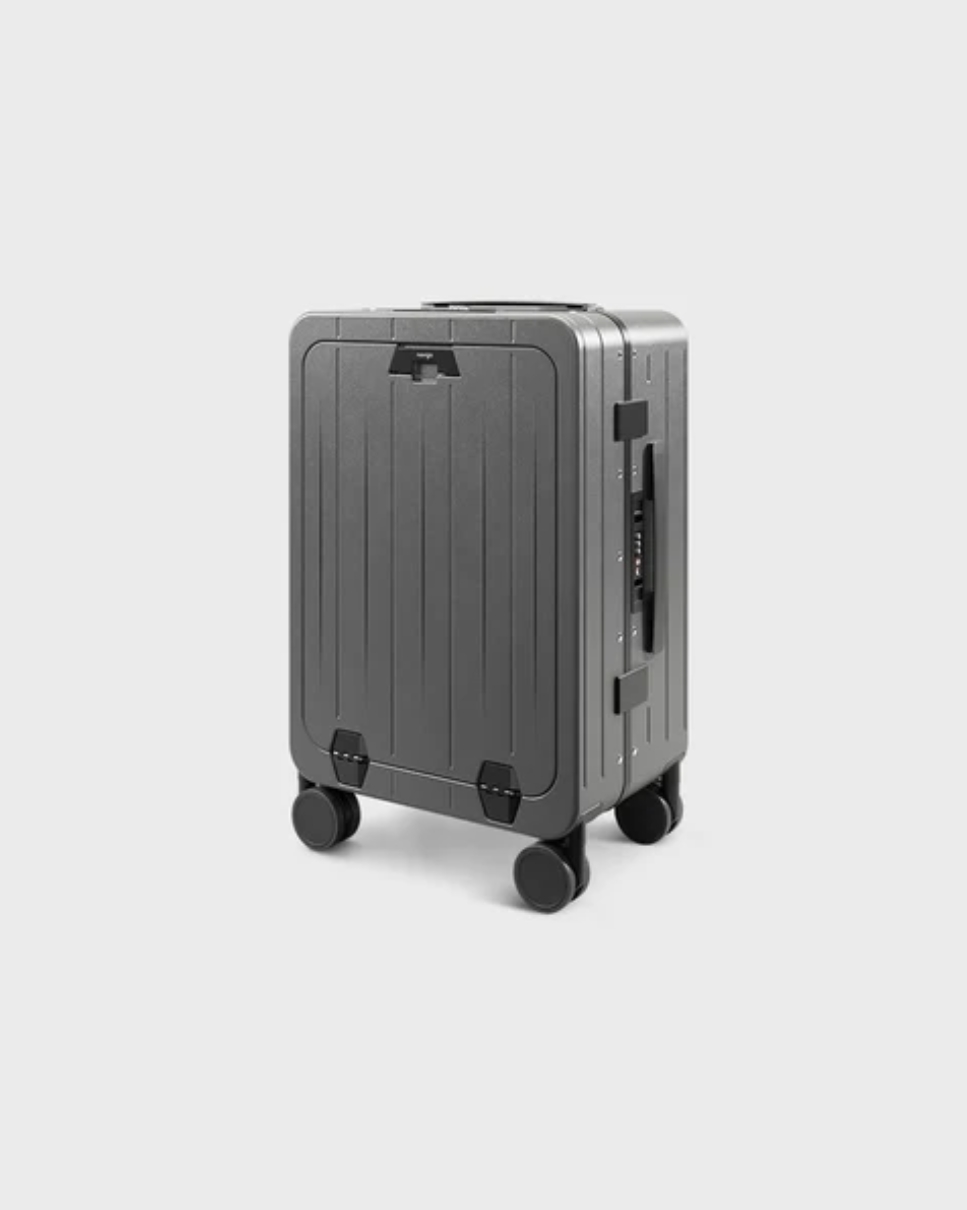



A suitcase can leave a hot airport kerb, spend several hours in an aircraft and arrive in a city where the temperature is twenty degrees lower. Between check-in and baggage collection, it may be lifted, stacked, shifted across conveyor belts and handled by people who have little time to be gentle with it. Travellers rarely think about what these changes mean for the suitcase itself. They tend to notice only when a shell comes back scratched, a wheel feels loose or a corner has taken a knock.
This raises a reasonable question: how much can luggage really withstand when it moves between different temperatures? The answer is not simply a matter of choosing a hard shell. The material needs to cope with changes in its surroundings while remaining resilient when the inevitable knocks happen.
This is one reason polycarbonate luggage has become a popular choice. Known for its impact resistance and ability to flex under pressure, polycarbonate offers a useful balance for people who travel regularly. Its temperature response also helps explain its popularity in modern luggage.
What Temperature Changes Actually Do to a Suitcase
Materials respond to heat and cold in different ways. Most expand slightly as temperatures rise and contract as they fall. This movement is actually normal, and it happens in the plastics, metals and other materials used to make luggage.
Polycarbonate is a thermoplastic, which means its physical properties change with temperature. What makes it useful for luggage is its combination of strength and flexibility. Rather than behaving like a rigid, brittle surface, it can deform to absorb some of the energy from an impact and then recover its shape, depending on the force involved.
That ability matters when a suitcase is handled roughly. A shell that can flex under pressure is less likely to behave like a material that fractures immediately when struck. Polycarbonate also retains useful impact strength across a broad range of temperatures encountered in transport applications.
There are limits, however. Very low temperatures can affect a polymer’s impact behaviour, while prolonged exposure to excessive heat can gradually affect its mechanical properties. The result depends on the particular grade of plastic, the manufacturing process, the shell thickness and the stresses placed on it. A polycarbonate case should therefore be thought of as impact-resistant, not crack-proof.
Are Aircraft Cargo Holds Really Freezing?
The image of suitcases sitting in a freezing aircraft hold is common, but the reality is more complicated. Cargo compartments do not all operate at the same temperature. Conditions vary according to the aircraft, the location of the compartment and whether temperature control is available.
Some aircraft have heated or temperature-regulated cargo areas. Others have compartments where temperature control is limited or unavailable. There is no single temperature that applies to every passenger aircraft or every flight.
For luggage, this distinction is useful. A suitcase is not necessarily exposed to extreme sub-zero conditions simply because it is travelling below the passenger cabin. Nor is temperature the only challenge it faces. During loading and unloading, bags can be moved quickly, placed beneath heavier cases or knocked against equipment.
The more relevant concern is often the combination of temperature and physical stress. A shell may respond differently to an impact when cold than it does at room temperature. A hard drop or concentrated blow can still cause damage, regardless of the material. This is why good luggage design needs to account for handling as well as the conditions of the journey.
How Polycarbonate Balances Flexibility and Strength
One of polycarbonate’s defining characteristics is its ability to absorb impact through deformation. This is different from saying that it is soft. The material is strong, but it has enough flexibility to give under pressure rather than resisting every force as a completely rigid surface would.
That balance is particularly useful in a suitcase. The shell needs to protect the contents, but it also needs to cope with the occasional knock against a luggage trolley, conveyor edge or overhead compartment.
Polycarbonate also has a relatively high glass-transition temperature, generally around 140–150°C depending on the grade. This is the temperature range at which the material transitions from a harder, glass-like state towards a softer, more rubber-like one. It should not be confused with a recommended operating temperature for a suitcase. The actual performance of a finished product depends on its formulation and construction, not one headline material figure.
For travellers, the practical takeaway is straightforward: polycarbonate is well suited to the temperature variations normally associated with travel, but it should not be left for long periods in extreme heat or subjected to unnecessary impacts.
The Shell Is Only Part of the Story
A suitcase may be described as polycarbonate, but its performance depends on much more than the outer material. A finished case is a combination of components, each with a different job and its own vulnerabilities.
Corners and edges deserve attention because they are common points of contact during handling. Wheel housings and handle mounts also experience repeated stress as a case is pulled, pushed, lifted and tilted. The frame, hinges and locking system need to work with the shell rather than restrict its movement.
Plastic, metal and fabric components can respond differently to temperature changes, making the way they are fitted together important to the suitcase’s long-term performance. When choosing luggage, look beyond the material name and pay attention to its overall construction. Check whether the handle feels stable, whether the wheels are firmly attached and whether the shell has a consistent finish. Look at how the two halves meet and whether the corners appear well finished. These small observations can tell you more about overall construction than a broad claim about toughness.
What to Look for When Buying Polycarbonate Luggage
For frequent travellers, durability is not about finding a suitcase that can survive every imaginable situation. It is about choosing one that is sensibly constructed for regular use.
A few considerations can make the decision easier:
- Check the material: Look for a clear specification stating whether the shell is 100% polycarbonate or a blend of different plastics.
- Inspect the construction: Pay attention to the corners, edges, frame and points where handles and wheels connect to the case.
- Test the movement: Wheels should roll smoothly, while the telescopic handle should extend and retract without excessive movement.
- Consider the weight: A sturdy shell still needs to be manageable when packed. Check the total weight against your airline’s baggage allowance.
Navigo’s Wingman collection provides one example of a suitcase made with 100% German Makrolon® polycarbonate. Its listed features include a 70:30 split interior, a wide handle design, 360-degree wheels and a zipperless, TSA-approved locking system. These details offer a useful illustration of how material selection sits alongside practical construction and organisation. They should not, however, be taken as a claim that any suitcase is immune to temperature-related or impact damage.
A Little Care Still Makes a Difference
Even a well-made suitcase benefits from sensible handling. Avoid leaving luggage inside a parked vehicle in direct sunlight for extended periods. Do not force an overpacked case shut, as constant pressure can place unnecessary strain on the shell, frame and closure. When storing luggage between trips, keep it somewhere dry and away from prolonged heat.
It is also worth remembering that surface marks are not always signs of structural damage. Scuffs and scratches are part of the wear hard-shell luggage can accumulate over time. Cracks, loose fittings or changes in how the case closes deserve closer attention.
The Better Measure of Travel Durability
A suitcase cannot control the conditions it encounters between departure and arrival. It can, however, be made with materials and components suited to the demands of travel. Polycarbonate offers a valuable combination of impact resistance, flexibility and manageable weight, helping explain its place in contemporary luggage design.
The sensible approach is to look beyond promises of toughness. Material quality matters, but so do construction, hardware, weight and everyday usability. A good suitcase is not one that claims to be indestructible. It is one that is thoughtfully built to handle the ordinary stresses of travel, journey after journey.