

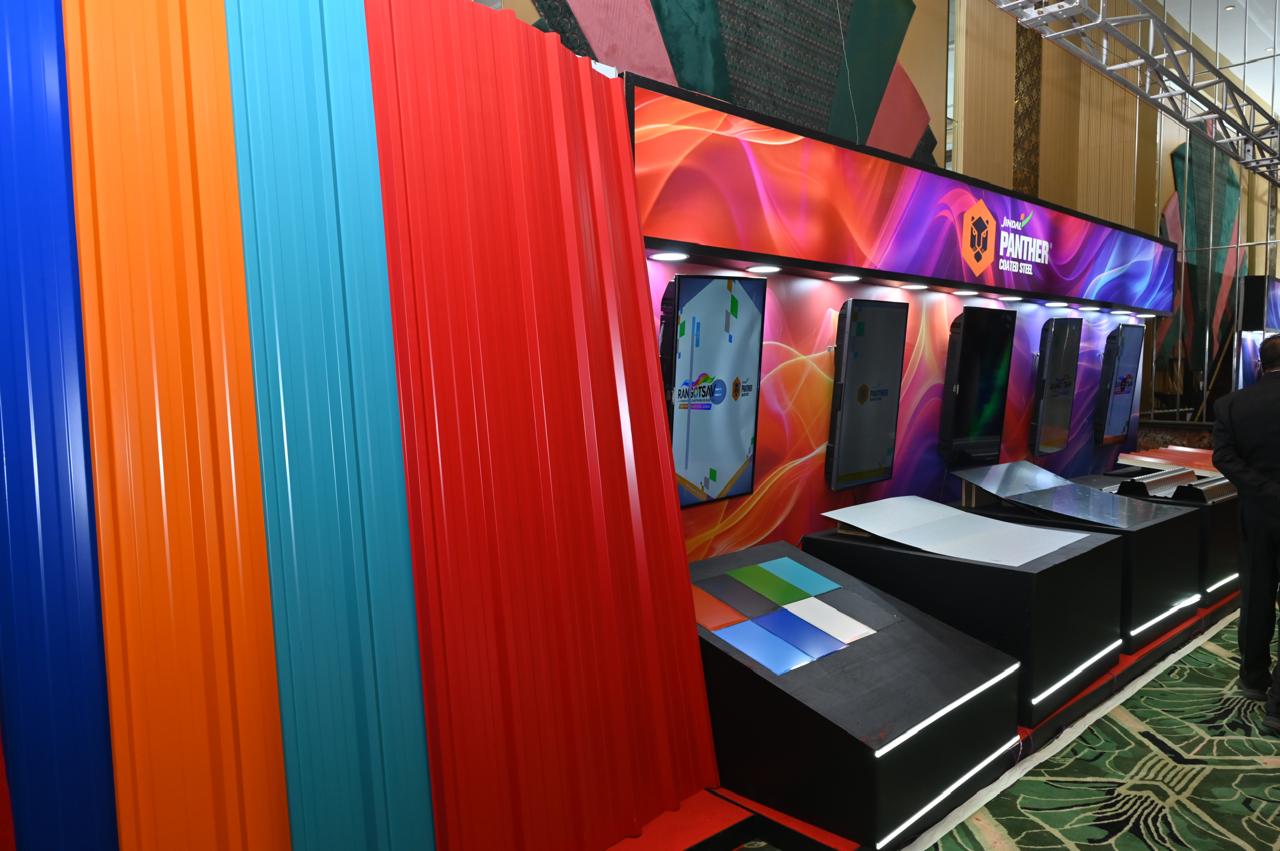



The new portfolio brings colour-coated steel, metallic-coated products and building solutions under the Jindal Panther brand, as questions of durability, resource efficiency and carbon emissions gain importance in construction.
BHUBANESWAR (India CSR): Jindal Steel Limited, an integrated steel producer with operations spanning mining, manufacturing and downstream products, has launched Jindal Panther Coated Steel, expanding its presence in building solutions for India’s infrastructure and construction sectors.
Unveiled at Rangotsav, the company’s engagement platform for distributors, trade partners and customers, the portfolio includes colour-coated steel coils, bare metallic-coated steel and specialised building products for roofing, cladding and other applications.
The range includes a 1,650 mm-wide coated steel offering, which Jindal Steel describes as the widest in India. The company said the launch extends the Jindal Panther brand into higher-value downstream products designed for industrial, commercial and residential construction.
For the construction sector, the launch also brings a wider sustainability discussion into focus: how building materials are produced, how long they last, how they affect energy use and what happens to them at the end of their useful life.
The company’s launch announcement did not provide product-specific carbon footprint figures or quantified environmental savings for the new range.
A wider portfolio under Jindal Panther
Jindal Panther Coated Steel brings together products with different coating specifications and applications under a single brand.
According to the company, the portfolio is intended to offer architects, developers, contractors, fabricators and customers a clearer choice of products for applications ranging from roofing and cladding to thermal and acoustic building systems.
The portfolio has three broad categories:
- Colour-coated steel coils
- Bare metallic-coated steel
- Specialised building products
The company has positioned the range for industrial buildings, warehouses, commercial spaces and residential construction, among other applications.
Rangotsav brought distributors, channel partners and customers together for the unveiling, forming part of Jindal Steel’s effort to deepen its engagement with the downstream building materials market.
Jindal Panther Coated Steel: Product portfolio
| Category | Product | Specification in company announcement | Positioning or application |
|---|---|---|---|
| Colour-coated steel coils | Panther Prime ColorPlus | AZ150, 35 micron | Premium colour-coated range |
| Colour-coated steel coils | Panther ColorPro Plus | AZ150, 22 micron | Higher-performance colour-coated steel |
| Colour-coated steel coils | Panther ColorPro | AZ70, 12 micron | Standard colour-coated steel |
| Colour-coated steel coils | Panther ColorPro Classic | PPGI | Value-focused pre-painted galvanised offering |
| Bare metallic steel | Panther SilverTone Plus | AZ150 | Higher-coating aluminium-zinc steel |
| Bare metallic steel | Panther SilverTone | AZ70 | Aluminium-zinc-coated steel |
| Bare metallic steel | Panther SilverTone Classic | Galvanised | Zinc-coated steel |
| Building products | Panther Profex | Profiled sheet | Roofing and cladding |
| Building products | Panther ThermoSonic | Sandwich panel | Thermal and acoustic applications |
The specifications listed in the announcement distinguish the products, but buyers will need the relevant technical data sheets to understand the coating systems, testing methods, performance characteristics and warranty conditions for each application.
A move towards value-added steel solutions
The launch reflects Jindal Steel’s effort to expand beyond basic steel products into downstream offerings that are processed and positioned for particular customer needs.
In the steel industry, downstream products generally refer to products that undergo additional processing after the production of basic steel. Coating, painting, profiling and fabrication can turn steel into products intended for specific uses, such as roofs, walls and building panels.
The company said the new range combines performance specifications, design choices and applications under the Jindal Panther umbrella. The portfolio is intended to help customers select products according to the requirements of a project.
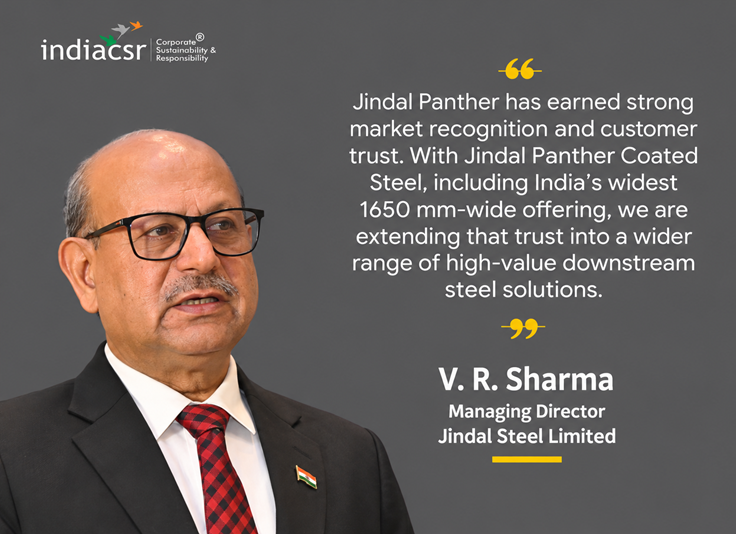
V. R. Sharma, Managing Director, Jindal Steel Limited, said, “Jindal Panther has earned strong market recognition and customer trust. With Jindal Panther Coated Steel, including India’s widest 1650 mm-wide offering, we are extending that trust into a wider range of high-value downstream steel solutions.
“This portfolio combines quality, performance, aesthetics and reliability under one powerful brand, while offering customers, architects, fabricators and channel partners a clear choice across applications—from colour-coated and bare metallic steel to roofing, cladding and specialised building products. Backed by consistent quality, availability, technical support and strong channel engagement, we are well placed to serve India’s growing infrastructure, industrial, commercial and residential construction needs.”
What the wider offering means for construction
The 1,650 mm figure refers to the width of the offering described by the company. Wider sheets can provide greater coverage per sheet in suitable designs, potentially reducing the number of side laps needed over a given area.
The outcome for an individual project, however, depends on the profile, usable cover width, overlap requirements, roof geometry and installation practices. The launch announcement did not quantify reductions in material use, fasteners, waste or emissions associated with the wider product.
For designers and builders, the relevant comparison is therefore the usable installed coverage and performance of the complete system, along with the material required for a particular building.
How coatings support steel applications
Steel used in roofs and external walls may be exposed to rain, humidity, sunlight and other conditions that influence its service life.
Metallic coatings are used to provide protection to the steel surface, while colour-coated products also provide a finished appearance. Jindal Steel says its coated-steel portfolio includes galvanised and aluminium-zinc products intended for corrosion resistance and surface protection.
The level and duration of protection can depend on the coating system, local environment, handling, installation and maintenance. Conditions at a coastal industrial site, for example, may differ substantially from those at an inland commercial building.
The company’s announcement lists designations such as AZ150 and AZ70, along with micron measurements for certain colour-coated products. These refer to different specifications; they should be read with the manufacturer’s full technical information rather than treated as interchangeable measures.
Why sustainability matters for building materials
The environmental impact of construction is not limited to electricity used after a building is occupied. Materials also carry emissions associated with raw material extraction, manufacturing, transportation, construction, maintenance and eventual disposal or recycling.
The UN Environment Programme’s Global Status Report for Buildings and Construction 2025–2026 cites an estimate that the production of cement, steel and aluminium used in buildings accounted for approximately 2.1 billion tonnes of carbon dioxide emissions in 2024.
For steel producers, this creates a challenge: supplying materials for infrastructure while reducing the environmental footprint associated with energy-intensive manufacturing.
For developers and architects, it places greater importance on considering both:
- Embodied emissions associated with producing and installing materials; and
- Operational emissions associated with energy used during a building’s life.
A product’s contribution to a more sustainable building cannot be established from its appearance or coating alone. It needs to be assessed in the context of how it is manufactured, used and maintained.
Durability and the life of a building
One potential sustainability consideration for coated steel is service life.
If an appropriately specified and maintained product lasts longer in its intended environment, it may reduce the frequency of repair or replacement. That can influence material demand, maintenance activity and the cost of operating a building over time.
The result is not automatic. Durability depends on factors such as coating performance, exposure, design, installation quality, damage during handling and maintenance.
For a project owner, useful information would include:
- The recommended environment and application for the product;
- Coating and corrosion-resistance specifications;
- Installation and maintenance requirements; and
- Warranty coverage, exclusions and expected service conditions.
Jindal Steel’s launch announcement positions the new portfolio around performance and reliability, but does not provide a product-by-product life-cycle comparison.
Roofing, insulation and building energy use
The new portfolio includes Panther Profex, a profiled sheet intended for roofing and cladding, and Panther ThermoSonic, a sandwich panel positioned for thermal and acoustic applications.
Roofing and wall systems can influence how buildings respond to heat, rain and noise. In hot climates, roof design, insulation, ventilation and surface properties can all affect indoor comfort and the energy needed for cooling.
The performance of a complete building, however, depends on more than one material. Building orientation, insulation details, air leakage, local weather, occupancy and the efficiency of cooling equipment also matter.
For sandwich panels, buyers evaluating thermal or acoustic performance would need product-specific information, including relevant test results and the characteristics of the complete panel system. Fire safety, installation and maintenance requirements are also important considerations.
The launch announcement did not specify measured energy savings or provide thermal-performance figures for Panther ThermoSonic.
Circularity and responsible material use
Steel can be recovered and recycled, making end-of-life planning an important part of its environmental assessment.
The World Steel Association’s life-cycle assessment for organic-coated steel considers production as well as end-of-life recycling. Its assessment is a global profile and should not be treated as a product-specific footprint for Jindal Panther Coated Steel.
Actual recovery depends on factors such as collection systems, the condition of the material, local processing facilities and whether components can be separated.
For coated sheets and multi-material panels, circularity can be supported by planning for:
- Efficient cutting and handling during construction;
- Collection of offcuts and scrap;
- Repair and maintenance during use;
- Separation of components where practical; and
- Access to appropriate recycling facilities at the end of life.
A product’s potential to be recycled is different from evidence that a particular installation will be recovered and recycled. Project-level planning and the availability of local systems remain important.