


• India CSR Awards 2026
  • India CSR Leadership Summit
  • Maharashtra CSR Summit 2027
  • Guest Posts
Friday, November 27, 2026
India CSR®
  • Home
  • CSR
    • Art & Culture
    • CSR Leaders
    • Child Rights
    • Culture
    • Education
    • Gender Equality
    • Around the World
    • Skill Development
    • Safety
    • Covid-19
    • Safe Food For All
  • Sustainability
    • Sustainability Dialogues
    • Sustainability Knowledge Series
    • Plastics
    • Sustainable Development Goals
    • ESG
    • Circular Economy
    • BRSR
  • SUMMIT
  • AWARDS
  • Interviews
  • SDGs
    • No Poverty
    • Zero Hunger
    • Good Health & Well-Being
    • Quality Education
    • Gender Equality
    • Clean Water & Sanitation – SDG 6
    • Affordable & Clean Energy
    • Decent Work & Economic Growth
    • Industry, Innovation & Infrastructure
    • Reduced Inequalities
    • Sustainable Cities & Communities
    • Responsible Consumption & Production
    • Climate Action
    • Life Below Water
    • Life on Land
    • Peace, Justice & Strong Institutions
    • Partnerships for the Goals
  • Articles
  • Events
  • हिंदी
  • More
    • Business
    • Finance
    • Corporate Governance
      • Diversity & Inclusion
    • Environment
    • Economy
    • Health
    • Around the World
    • Social Sector Leaders
    • Social Entrepreneurship
    • Trending News
      • Important Days
        • Festivals
      • Great People
      • Product Review
      • International
      • Sports
      • Entertainment
    • Case Studies
    • Philanthropy
    • Biography
    • Technology
    • Lifestyle
    • Sports
    • Gaming
    • Knowledge
    • Home Improvement
    • Words Power
    • Chief Ministers
No Result
View All Result
India CSR®
No Result
View All Result
Home Business

Biscuit Production Line Expansion: Why Waste Claims Should Be Measured at Qualified Packed Output

India CSR by India CSR
November 27, 2026
Reading Time: 6 mins read
A A
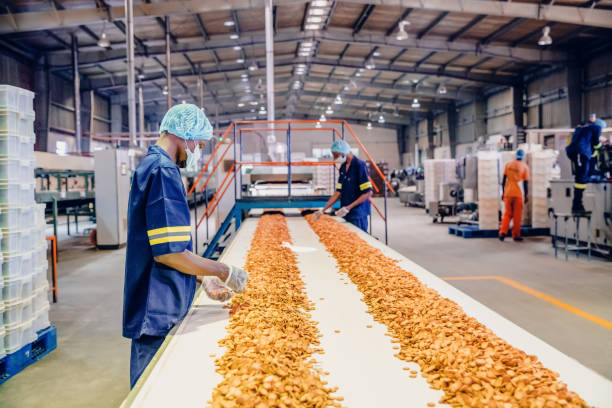
Factory, Manual Worker, Quality Control - Biscuit Factory Workers Stacking Freshly Baked Cookies on the Production Line for Packaging

Factory, Manual Worker, Quality Control - Biscuit Factory Workers Stacking Freshly Baked Cookies on the Production Line for Packaging

Share Share Share Share
WhatsApp icon
WhatsApp — Join Us
Instant updates & community
Google News icon
Google News — Follow Us
Get our articles in Google News feed
india csr awards
ADVERTISEMENT

Many Indian biscuit makers now write about food waste in their CSR and sustainability reports, and many of them are also adding capacity. Those two plans meet on the factory floor. When a new line is signed off on how fast the moulder runs or how much the oven bakes, the report has no reliable way to show what share of dough ended up as saleable packets and what share became broken biscuits, rework or scrap.

This article explains where that measurement should sit. It uses the published selection approach of SINOFUDE, a Shanghai machinery maker with a baking division, and general process descriptions from Wikipedia. It does not quote market figures for India; the point is the method, which any plant can apply to its own numbers.

What a biscuit production line actually includes

Wikipedia describes a biscuit as a flour-based baked food that is usually hard, flat and unleavened. Its process notes show how different the routes are. Short doughs, a family that includes the Indian glucose biscuit, are mixed in two stages, rotary moulded, baked, cooled, stacked and packed. Cookie doughs are very soft and are often baked directly on a steel oven band. Cracker dough is laminated, sheeted and cut, then baked, sprayed with oil and cooled before packing. Semi-sweet doughs, used for biscuits such as Marie and Arrowroot, carry about 12% water, which baking reduces to 1.5–3%, while cracker doughs often hold between 15 and 25%.

A complete biscuit production line, on SINOFUDE’s description, runs from a raw-material interface through mixing, forming or depositing, baking, cooling and optional post-processing to a packaging interface. Every one of those stages can create waste. Only the last one shows how much of it there was.

Four line families, and why the product picks the route

SINOFUDE separates four line families: wafer, cupcake and Swiss roll, hard biscuit and cracker, and soft biscuit and cookie. Its reason is stated plainly on the page: wafers, cakes, hard biscuits, crackers, soft biscuits and cookies do not share the same material behaviour or forming route. Without formulation, forming, baking and pack-format context, a machine list is not a sound selection basis.

For a CSR team this matters more than it first appears. Plants that force two dough types through one compromise route usually lose more product at forming and baking than plants that run each dough on its own route. Start the expansion plan from the product list, not from the equipment brochure.

Rotary mold, wire-cut or deposit: the cookie production line question

Inside the soft biscuit and cookie family, the first engineering question is the forming method. SINOFUDE’s checklist asks buyers to identify rotary mold, wire-cut or deposit forming, to list planned formats and inclusions, and to define cleaning and changeover needs. Each method treats dough differently, which is why a cookie production line is specified around the dough rather than around a speed.

Rotary moulding presses dough into engraved cavities and suits firm, short doughs with a printed surface. Wire-cut and deposit forming handle softer doughs and inclusions such as nuts or chocolate pieces. Choose the forming method on sample trials with the plant’s own dough; a method that tears or misshapes pieces will report its losses only after the oven.

Where it stops: no forming method rescues a dough the plant cannot hold steady. If moisture and temperature drift across a shift, every route produces rejects, and the expansion should budget for dough control before extra forming speed.

Why forming or baking speed is the wrong acceptance point

One line on SINOFUDE’s page gives the rule: use qualified packed output as the acceptance point. Forming or baking speed is not a substitute for complete-line output. The proposal states the basis of its cited output by naming the allowable downstream lanes, the stated rejects and the allowed changeover periods.

Reference capacities need the same reading. On SINOFUDE’s reference list, the biscuit model is rated up to 1,500 kg/h, and the company says these references begin a discussion rather than guarantee packed saleable output. Its own note is direct: packaging can become the bottleneck even when the forming machine has spare capacity.

Accept a new line only on qualified packed output, measured over an agreed run with the plant’s own product. Oven speed belongs in the design file; packed output belongs in the contract.

What a CSR waste claim needs from the line

A waste-reduction claim is a comparison between two measured states, so the line has to produce the same measurement before and after the expansion. Qualified packed output gives that measurement. Dough mass in, packets out, and the rejects and changeover losses recorded in between: those three figures let a sustainability team show where the loss happened instead of estimating it.

The acceptance tests supply the evidence. On SINOFUDE’s page, the supplier-site factory acceptance test and the installed-site acceptance test are kept apart because they answer different questions, and the company’s project principle reads: “A good acceptance plan names the product, the conditions, the evidence and the sign-off criteria for each test.” Ask for reject counts and changeover times to be part of that evidence, so the first CSR baseline comes from a signed record rather than a spreadsheet estimate.

Keep the claim honest about scope. Measured at packed output, a line can prove less factory waste; it says nothing about what happens to biscuits after dispatch.

The ten-item project brief behind a comparable proposal

Comparing suppliers only works when every proposal answers the same questions. For that purpose SINOFUDE uses a ten-item project brief to turn an early enquiry into an engineering basis. Among its inputs:

  • the finished product, sample or drawing, which fixes the line family and forming route;
  • recipe and dough or batter behaviour, which sets the trial requirements;
  • target qualified packed output, which sizes the equipment and downstream lanes;
  • site layout, clear height and access, plus electricity, fuel, water and air data;
  • contact materials, allergens and cleaning regime, which drive changeover rules.

Plant teams can see the full brief, the four families and the interface boundaries on SINOFUDE’s page for its biscuit production line range, and use the same headings to request proposals from any vendor.

Limits of one shared line, and when a second route costs less

Expansion plans often assume one new line will make every planned SKU. SINOFUDE’s page rejects that assumption: different dough or batter behaviour, forming paths, bake profiles, allergens and pack formats may justify a separate line or a staged investment. Shared equipment with allergen or cleaning limits tends to underestimate changeover time and cross-contact evidence.

From a waste point of view, every changeover is a loss window. If the product plan calls for frequent changes between incompatible doughs, a second route can cost less in scrap and cleaning than one overloaded line. Decide that before the order, not after the first quarterly report.

Lead time, training and the supplier’s quality system

Expansion timelines should start from the real build period. SINOFUDE states a production lead time of 120-150 days for biscuit lines, with the applicable schedule and its starting conditions confirmed in the quotation. Installation, commissioning and the baseline acceptance run come after that, so the CSR reporting year should be chosen with the full sequence in view.

Operator skill decides much of the reject rate in the first months. Free hands-on training in the SINOFUDE workshop is part of the offer, so a buyer’s team learns operation and maintenance before the line arrives. Send the people who will run the night shift, not only the managers.

On the supplier side, SINOFUDE has worked under the ISO 9001 quality management system since 2004. That certifies how the company manages quality, not the waste performance of any single line, which is exactly why the packed-output acceptance record still matters.

Measure the line where the product leaves it, and the waste claim in the report will stand on the same number the plant already signs.


csr education cybernetyx
ADVERTISEMENT
India CSR Image 1 India CSR Image 2

CSR, Sustainability, and ESG success stories hindustan zinc
ADVERTISEMENT
India CSR

India CSR

India CSR® is the largest media on CSR and sustainability offering diverse content across multisectoral issues on business responsibility. It covers Sustainable Development, Corporate Social Responsibility (CSR), Sustainability, and related issues in India. Founded in 2009, the organisation aspires to become a globally admired media that offers valuable information to its readers through responsible reporting.

Related Posts

India CSR®
Business

Extreme Heat to Freezing Cargo Holds: How Polycarbonate Handles Temperature Swings Without Cracking

25 seconds ago
India CSR®
Business

Jindal Steel Launches 1,650 mm Coated Steel, Expands Building Solutions Portfolio

1 hour ago
Back Office
Business

Setting Up a Back Office in Surat: Renting Laptops and Desktops by the Month

3 hours ago
India CSR®
Business

Product Management Salary: How Compensation Varies Between B2B, B2C and SaaS Product Roles

1 day ago
India CSR®
Business

Bloom Raises Dollar 75m in Latest Funding Round From Kedaara

1 day ago
India CSR®
Business

Hubhawks India Signs Global Distribution Partnership with UK-Based Gardners, Expanding Reach to 120 Countries

1 day ago
Load More
csr education cybernetyx
ADVERTISEMENT
bba
ADVERTISEMENT

Interviews

Krishan Shah, Chief Finance Officer, Omnicom Global Solutions (India & Philippines) @India CSR
Interviews

Beyond Memorisation: Omnicom Global Solutions and Prayoga Shape Future-Ready STEM Learners

by India CSR
November 18, 2026

Krishan Shah of Omnicom Global Solutions explains how its partnership with Prayoga is advancing experiential STEM learning in government schools.

Read moreDetails
Foundation for Excellence (FFE) @India CSR

Beyond Graduation: How FFE Is Helping First-Generation Students Build Careers and Change Family Futures

November 13, 2026
Isha Anand Director - Mixed Use RMZ Corp-India CSR

“ESG is Now a Core Business Strategy”: Isha Anand on Building Future-Ready Real Estate

November 12, 2026
Geetaj Channana, Chief Corporate Communications Officer, vivo India @india csr

“We Will Not Compromise on Credibility”, Says Geetaj Channana on vivo Ignite and India’s Young Innovators

November 3, 2026
Load More
Ad 1 Ad 2 Ad 3 Ad 4 Ad 5 Ad 6
ADVERTISEMENT

CSR UPDATES

Tata Steel Foundation: Tribal Home Cooks Bring Indigenous Flavours to Mumbai at The Great Indian Feast Trail

CSR in the Northeast Has more than Tripled in Four Years: Report

CSR: Samsung Empowers Tamil Nadu Youth Through Skills, Innovation and Jobs

CSR: J&K Bank, Child Heart Foundation Support Heart Treatment for Children in Kashmir

CSR: Allcargo Group Commits Rs 15 Crore to Set Up Logistics School with FUEL University

MSME Leaders Discuss AI Adoption

STEM Learning STEM Learning STEM Learning
ADVERTISEMENT
Facebook Twitter Youtube LinkedIn Instagram
India CSR Logo

India CSR® is the largest tech-led platform for information on CSR and sustainability in India offering diverse content across multisectoral issues. It covers Sustainable Development, Corporate Social Responsibility (CSR), Sustainability, and related issues in India. Founded in 2009, the organisation aspires to become a globally admired media that offers valuable information to its readers through responsible reporting. To enjoy the premium services, we invite you to partner with us.

Follow us on social media:

Subscribe to Our Newsletter

Don't miss out on the latest updates in corporate social responsibility. Subscribe to our newsletter at indiacsr.in and be part of the positive change.
Please enable JavaScript in your browser to complete this form.
Loading

  • About India CSR®
  • Team
  • India CSR® Awards 2026
  • India CSR® Leadership Summit
  • Maharashtra CSR Summit 2027
  • Partnership
  • Guest Posts
  • Services
  • ESG Professional Network
  • Content Writing Services
  • Business Information
  • Contact
  • Privacy Policy
  • Terms of Use
  • Donate

Copyright © 2026 - India CSR® | All Rights Reserved

No Result
View All Result
  • Home
  • CSR
    • Art & Culture
    • CSR Leaders
    • Child Rights
    • Culture
    • Education
    • Gender Equality
    • Around the World
    • Skill Development
    • Safety
    • Covid-19
    • Safe Food For All
  • Sustainability
    • Sustainability Dialogues
    • Sustainability Knowledge Series
    • Plastics
    • Sustainable Development Goals
    • ESG
    • Circular Economy
    • BRSR
  • SUMMIT
  • AWARDS
  • Interviews
  • SDGs
    • No Poverty
    • Zero Hunger
    • Good Health & Well-Being
    • Quality Education
    • Gender Equality
    • Clean Water & Sanitation – SDG 6
    • Affordable & Clean Energy
    • Decent Work & Economic Growth
    • Industry, Innovation & Infrastructure
    • Reduced Inequalities
    • Sustainable Cities & Communities
    • Responsible Consumption & Production
    • Climate Action
    • Life Below Water
    • Life on Land
    • Peace, Justice & Strong Institutions
    • Partnerships for the Goals
  • Articles
  • Events
  • हिंदी
  • More
    • Business
    • Finance
    • Corporate Governance
      • Diversity & Inclusion
    • Environment
    • Economy
    • Health
    • Around the World
    • Social Sector Leaders
    • Social Entrepreneurship
    • Trending News
      • Important Days
      • Great People
      • Product Review
      • International
      • Sports
      • Entertainment
    • Case Studies
    • Philanthropy
    • Biography
    • Technology
    • Lifestyle
    • Sports
    • Gaming
    • Knowledge
    • Home Improvement
    • Words Power
    • Chief Ministers

Copyright © 2026 - India CSR® | All Rights Reserved

This website uses cookies. By continuing to use this website you are giving consent to cookies being used. Visit our Privacy and Cookie Policy.
