

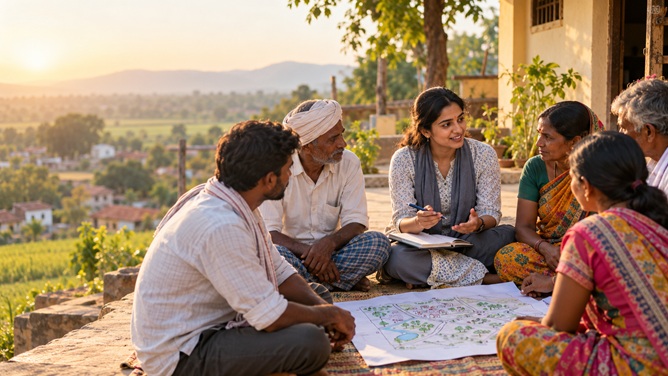


New initiative will support young development professionals to establish grassroots civil society organisations across Odisha, North-East India, Eastern Uttar Pradesh and Bengaluru.
BENGALURU (India CSR): The Azim Premji Foundation has launched its Social Startups Programme to support development-sector professionals who aspire to establish and lead their own grassroots civil society organisations. Applications for the first cohort are open until 31 December 2026.
The programme seeks to address a critical gap in India’s social-development ecosystem. Many experienced professionals work closely with communities, understand local challenges and have ideas for meaningful interventions. However, they may lack the financial support, institutional guidance and organisational knowledge needed to build and sustain an independent social organisation.
Through the Social Startups Programme, the Foundation aims to help such professionals convert their field experience into locally rooted institutions that respond to the needs of underserved communities. The initiative is distinct from the Foundation’s regular grants programme, which supports registered civil society organisations at different stages of growth.
Rajib Ghosh, Head – Philanthropy, Azim Premji Foundation, said, “We need more organisations working at the grassroots, especially in underserved areas. Many experienced professionals understand the challenges communities face and want to contribute more. This programme aims to help them take that step and build organisations of their own.”
He added that the programme is separate from the Foundation’s existing grants programme for registered organisations, including mature and early-stage institutions.
***
Supporting Grassroots Leadership
The first cohort is expected to include around 100 participants across four geographies: Odisha, North-East India, Eastern Uttar Pradesh and Bengaluru Urban. Selected participants will be encouraged to work closely with communities, identify priority concerns and develop practical, locally relevant programmes.
The thematic areas include rural livelihoods, health, youth development, mental health, disability inclusion, children’s welfare, Adivasi community well-being, welfare rights and urban initiatives. In Bengaluru, the programme will support work related to children, creches, urban welfare and rights; while other geographies will focus on issues such as health, livelihoods, youth, disability, Adivasi communities and mental health.
The programme is designed for professionals who wish to make a long-term commitment to the communities and geographies where they intend to work. It recognises that sustainable social change requires institutions that are embedded in local realities, accountable to communities and capable of evolving over time.
***
Who Can Apply
Applicants must be below 40 years of age, hold a graduate degree and have at least three years of development-sector experience at the grassroots level. They should intend to establish and lead a new civil society organisation and be willing to relocate to their chosen programme geography.
The programme is specifically meant for aspiring first-time founders. Individuals who already have a registered organisation, or are founders or co-founders of an existing registered organisation, are not eligible to apply. The Foundation has also emphasised that participants must be prepared to take responsibility for registering, building and running their organisations over the long term.
***
Eight-Month Seeding Phase
The programme has been structured in two phases. The first is an eight-month seeding phase, during which selected participants will receive financial assistance, mentoring, practical learning opportunities and organisational support.
According to the Foundation’s programme details, participants will receive a monthly honorarium of Rs. 45,000 during the seeding phase. They will also receive guidance on organisation registration, statutory compliance, governance, finance, budgeting, monitoring, human resources and programme development.
A one-month residential orientation or boot camp will help participants understand the practical responsibilities of setting up and managing a civil society organisation. They will also undertake exploratory fieldwork, interact with communities, learn from peer participants and gain exposure through the Foundation’s partner network.
By the end of the seeding phase, participants are expected to have registered their organisation, created a governing structure and developed a clear programme approach based on community needs.

***
Pathway to Grant Support
Participants who complete the seeding phase and meet the programme’s required milestones may be considered for a two-year grant. The Foundation states that eligible organisations may receive support of Rs. 15 lakh to Rs. 20 lakh per year, depending on their performance, organisational readiness and programme milestones.
The selection process includes eligibility screening, document review, a statement of purpose, online interaction and an in-person panel discussion. The Foundation expects to complete selections by February 2027, with selected participants beginning the seeding phase from 1 April 2027.
The Social Startups Programme reflects a wider need to strengthen India’s grassroots development ecosystem by enabling committed professionals to become institution builders. By supporting local leadership, community engagement and organisational capacity, the initiative can help create a new generation of civil society organisations working on long-term social challenges.
Azim Premji Foundation works towards a just, equitable, humane and sustainable society through partnerships with governments, institutions, civil society organisations and communities across India.
Apply here: Azim Premji Foundation Social Startups Programme
What Are Social Startups?
Social startups are early-stage, mission-driven organisations created to solve a specific social, environmental or community challenge through innovative, sustainable and locally relevant approaches. Unlike conventional startups, whose primary focus is commercial growth and profit, social startups place measurable public benefit at the centre of their work. They may operate as non-profit organisations, social enterprises, community collectives or hybrid institutions, depending on their purpose and legal structure.
A social startup begins by understanding a real problem faced by people—such as poor access to education, healthcare, livelihoods, sanitation, disability inclusion, women’s empowerment or environmental protection. It then works with communities to design practical solutions, test them on the ground, measure results and improve them over time. Community participation, local leadership, transparency and long-term sustainability are central to its approach.
Social startups need more than good intentions. They require committed founders, clear governance, financial discipline, skilled teams, partnerships and a credible model for sustaining their work. Funding may come through grants, philanthropy, CSR partnerships, impact investment, donations or earned income.
In India, social startups can strengthen grassroots development by turning local knowledge and professional experience into institutions that create dignified, scalable and lasting social impact, especially for underserved communities nationwide over the long term.