

Global social enterprises generate $2 trillion annually and create 200 million jobs; new India-focused study to take headline findings to Davos
By Rusen Kumar
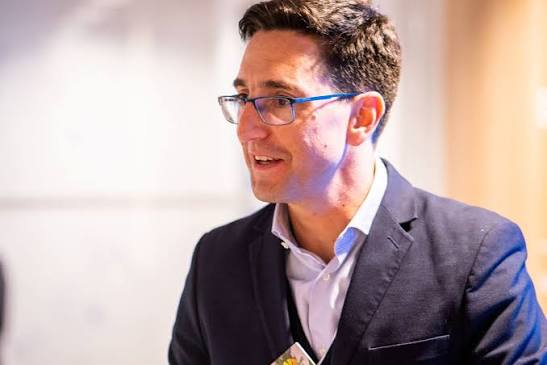
NEW DELHI (India CSR): India has emerged as “one of the great engines” of the global social entrepreneurship movement, driven by its entrepreneurial talent, technological capabilities and tradition of social innovation, Dr François Bonnici, Member of the Executive Committee, World Economic Forum, and Director, Schwab Foundation for Social Entrepreneurship, said in New Delhi on Friday. Delivering the welcome address at the 17th Social Entrepreneur of the Year Award – India 2026, held on August 21, 2026, at ITC Maurya, New Delhi, Dr Bonnici said social entrepreneurship has evolved from a relatively small movement into a significant economic and societal force. “Our State of the Social Enterprise Global Research estimates that there are now over 10 million social enterprises worldwide,” he said, adding that together they generate around US$2 trillion in revenue annually and create 200 million jobs. Putting the scale in perspective, Dr Bonnici said social enterprise has already become an economic sector with annual revenue larger than that of the global fashion industry.
One in Two Social Enterprises Led by Women
Dr Bonnici highlighted another significant feature of the sector: women’s leadership. “One in every two social enterprises globally is led by a woman, compared with only one in five in conventional businesses,” he said. He argued that these numbers demonstrate that social enterprise can no longer be regarded as a niche movement operating on the margins of the economy. “This is no longer a small movement operating at the margins of our economy,” he said. “It’s increasingly part and parcel of how economies work and how we solve some of the most challenging social and environmental problems of our time.”
India a Major Engine of Social Innovation
Turning specifically to India, Dr Bonnici said few countries combine the same depth of entrepreneurial talent, technological capabilities and traditional social innovation with such a vast scale and diversity of challenges. Across the country, he said, social entrepreneurs are combining innovation with a strong understanding of local realities to expand opportunities, strengthen resilience and improve lives at scale. The role of these entrepreneurs will become even more important as India moves towards its 2047 development vision, he said. According to Dr Bonnici, the critical question is not merely how rapidly India can grow, but how economic growth reaches people, creates opportunities and responds to climate and demographic changes. He also pointed to the transformative potential of emerging technologies, including artificial intelligence, when placed in the hands of innovators working to solve problems that matter to communities.
India Social Enterprise Study Announced
Dr Bonnici also announced a major research initiative aimed at establishing a clearer picture of India’s social enterprise ecosystem. The Schwab Foundation for Social Entrepreneurship, together with the Jubilant Bhartia Foundation and research partner Aspiring Impact, will undertake a study on the scope and scale of the sector in India as part of the State of Social Enterprise India initiative. “We will be undertaking a study on the scope and scale of the sector in India,” Dr Bonnici said. He said the partners plan to take the headline findings to the World Economic Forum Annual Meeting in Davos, followed by the launch of the fuller research findings in India next year.
Recognition Alone Is Not Enough
Dr Bonnici said awards and recognition provide social entrepreneurs with visibility and credibility and can amplify their influence, but recognition by itself cannot create impact at scale. “We need capital, markets, technology, talent, and partnership,” he said. He called for stronger engagement from both governments and businesses, arguing that social entrepreneurs should not simply be viewed as beneficiaries of institutional support. “We increasingly need governments and business to be partners, not seeing them only as beneficiaries, but really a source of innovation, and strategic partners in creating solutions at scale,” he said.
Finalists Reflect India’s Social Enterprise Dynamism
Dr Bonnici said the five finalists for the 2026 award demonstrated this dynamism through their work across climate technology, healthcare, livelihoods, agri-tech and inclusion. While their organisations address different challenges and operate through different models, he said they share a common approach: questioning not simply how existing systems can do more, but how those systems can “work differently and better.” “That is the power of social innovation,” he said. Dr Bonnici also acknowledged Professor Klaus Schwab and Hilda Schwab, co-founders of the Schwab Foundation for Social Entrepreneurship, whose belief in social entrepreneurs as sources of innovation and moral leadership led to the establishment of the Foundation almost three decades ago. He thanked the Jubilant Bhartia Foundation and its leadership for a sustained 17-year partnership supporting the Social Entrepreneur of the Year Award in India and the country’s wider social entrepreneurship community.