



Organizations routinely invest significant resources into community development, environmental conservation, and public health initiatives. However, a visible disconnect occurs during the communication phase, where highly impactful fieldwork is frequently reduced to static reports and text-heavy press releases. These traditional formats successfully satisfy regulatory compliance and inform internal stakeholders, but they consistently fail to reach the demographic groups essential for long-term behavioral change. Consequently, vital awareness campaigns remain invisible to the younger communities they are designed to educate.
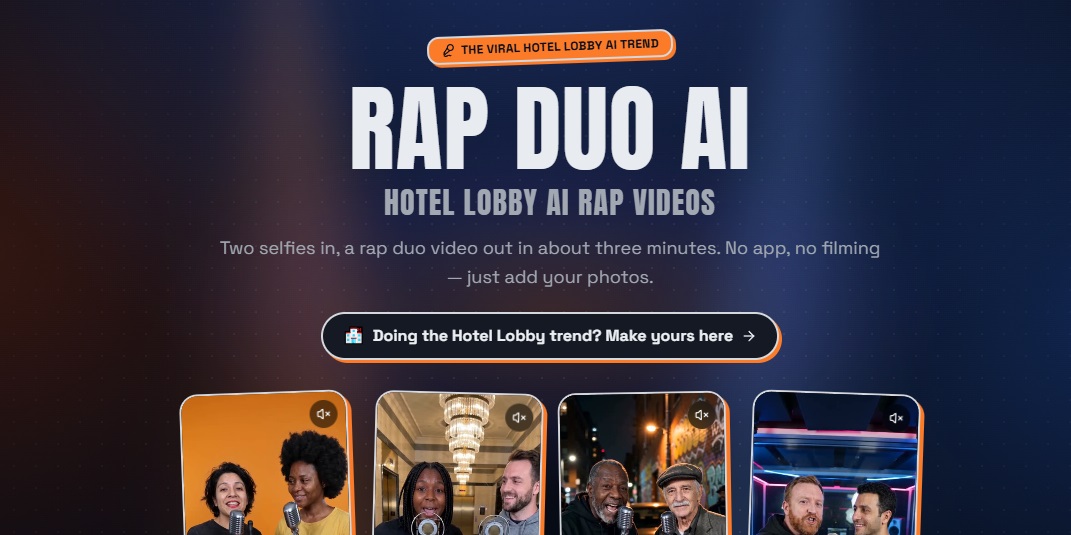
Standard guidance suggests adapting these messages for modern social channels, yet many community outreach teams operate with restricted creative budgets that prohibit professional studio recording and extensive video production. Transitioning from institutional documents to culturally resonant media requires accessible prototyping methods. Integrating specialized audio generation workflows and utilizing accessible platforms like Rap Duo AI provides a practical avenue for impact teams to translate complex social initiatives into rhythmic, dynamic formats without requiring advanced technical expertise or experiencing prohibitive financial investment delays.
Identifying the Communication Gap in Traditional Impact Reporting
Corporate social responsibility departments frequently operate under an information deficit model, assuming that publishing facts about sanitation or educational disparities will automatically trigger community action. This approach relies heavily on extensive documentation, structured policy papers, and formal executive summaries. While these materials are crucial for maintaining transparency with investors and regulatory bodies, they introduce severe friction for general public consumption. The primary symptom of this failure is identifiable in digital analytics: high bounce rates on dedicated initiative landing pages and zero organic distribution across peer-to-peer communication networks.
When outreach coordinators attempt to distribute these identical materials to a younger demographic, the friction escalates into total disengagement. The target audience processes information rapidly through mobile interfaces, prioritizing immediate narrative hooks and audiovisual stimulation over prolonged text analysis. Presenting a forty-page sustainability summary to a demographic accustomed to fifteen-second interactive media sequences inevitably results in communication breakdown. The core issue is not a lack of interest in social causes, as youth demographics demonstrate high levels of civic awareness; rather, the delivery mechanism completely contradicts their established consumption habits.
Recognizing this misalignment is the required precursor to modifying a campaign strategy. Project managers must evaluate their current public-facing assets by checking two specific metrics: the average time spent on the campaign page and the rate of voluntary peer sharing. If the primary distribution mechanism relies entirely on forced institutional channels rather than organic community circulation, the media format is actively hindering the underlying social mission.
Establishing Standards for Youth-Centric Awareness Media
To successfully cross the communication divide, impact teams must abandon institutional aesthetics and adopt the native formats of contemporary digital platforms. This transition requires establishing strict creative standards for all outbound awareness media. The first standard dictates that the content must be immediately comprehensible and delivered through an audio-first or highly visual mechanism. Topics concerning environmental stewardship or public health require emotional resonance to inspire action, a quality that is highly effectively transmitted through rhythmic speech, music, and fast-paced visual storytelling.
The second operational standard focuses on cultural alignment. The chosen medium must reflect the cultural touchstones of the target demographic. Over the past decade, rhythmic spoken word and localized hip-hop have emerged as dominant global vehicles for grassroots storytelling and social commentary. Utilizing this style allows organizations to bypass corporate sterility and frame important messages in a compelling, authoritative, and deeply relatable cadence. Teams must prioritize vocabulary that belongs to the community, actively replacing formal technical terms with colloquial equivalents that maintain the core factual accuracy.
Finally, the production standard must prioritize modularity. Large-scale documentary films require immense logistical coordination and provide very limited flexibility if the messaging fails to resonate. Conversely, producing short, rhythmic audio and visual clips enables a modular approach. Teams can isolate specific statistics, record short explanatory verses, and deploy them across various networks rapidly. If a particular angle regarding waste reduction fails to generate interaction, the modular format allows the organization to pivot the delivery tone without discarding the entire campaign infrastructure.
Executing Low-Cost Audio and Visual Content Production
Implementing this modular, media-rich strategy necessitates a structured production pipeline that can function independently of external creative agencies. The following sequence outlines how teams can internalize this capability.
1. Define the Core Social Message and Vocabulary
Translating technical impact metrics into an accessible narrative is the foundational requirement in this workflow. Outreach teams must isolate a single, unambiguous call to action, such as promoting local recycling protocols or highlighting available mental wellness resources. Operators are required to draft short, rhythmic phrases that utilize the distinct vernacular of the target community. The primary evaluation here is verifying that the text reads naturally when spoken aloud, ensuring the language serves as suitable raw material for dynamic vocal delivery.
2. Produce Rhythmic Audio Assets for Campaign Integration
Once the core messaging is refined, coordinators transition into technical generation. Utilizing an AI Rap Duo Video Maker allows managers to input their drafted text and configure the auditory output. The operator must actively select a backing rhythm that matches the geographical context of the campaign and adjust the tempo to reflect the urgency of the issue. Following the initial rendering, the team must critically evaluate the result, checking that the generated vocal pronunciation remains clear over the instrumental track and that the emotional inflection strictly supports the intended educational goal.
3. Align Visual Elements with the Generated Soundtracks
The final execution phase involves anchoring the verified audio to engaging visual sequences. Coordinators combine the resulting rhythmic tracks with authentic footage captured during community fieldwork, animated statistical graphics, or kinetic typography that displays the core message simultaneously. The primary judgment criterion during this stage is the precision of synchronization. The visual transitions and graphic appearances must directly correspond to the major beats of the audio track. This multisensory alignment sustains audience attention and visually reinforces the specific behavioral changes the overarching campaign aims to achieve.
Measuring Audience Retention and Modifying Campaign Variables
Deploying multimedia content introduces strict requirements for campaign evaluation. Teams can no longer rely on simple download counts as accurate indicators of message absorption. The immediate primary metric shifts to media retention rates. Project analysts must review platform dashboards to determine the exact timestamp where the majority of the audience abandons the video or audio clip. If a significant drop-off occurs before the primary social call to action is delivered, the media fails its functional purpose.
A secondary, highly valuable metric is community utilization. In modern digital ecosystems, successful audio tracks are frequently extracted and applied to user-generated videos. If community members begin using the campaign’s generated rhythmic audio as the background for their own content, the organization has achieved genuine cultural penetration. To facilitate this, teams must verify that the content is published without restrictive platform locks, allowing native remixing. When reviewing these signals, if the retention is high but secondary creation is low, the team should adjust the next iteration by increasing the instrumental energy or simplifying the vocal chorus to make it more adaptable for the general public.
Building a Sustainable Framework for Continuous Engagement
Transitioning a corporate social responsibility communication strategy from static documentation to dynamic multimedia fundamentally alters the organization’s relationship with the public. By establishing clear standards for cultural resonance and executing an internal production pipeline for rhythmic audio and visual content, impact teams effectively dismantle the barriers of institutional friction. The ability to prototype and test compelling narratives ensures that vital information regarding health, education, and the environment actually permeates the communities that require it most.
Sustaining this momentum requires integrating these production habits into the standard operating procedures for all future projects. Rather than treating media generation as an afterthought assigned to the conclusion of a field initiative, coordinators must develop narrative angles alongside the initial project planning. Committing to this iterative, audience-focused methodology guarantees that the resources invested in social improvement are matched by equally powerful communication efforts, transforming passive awareness into active, community-driven participation.



