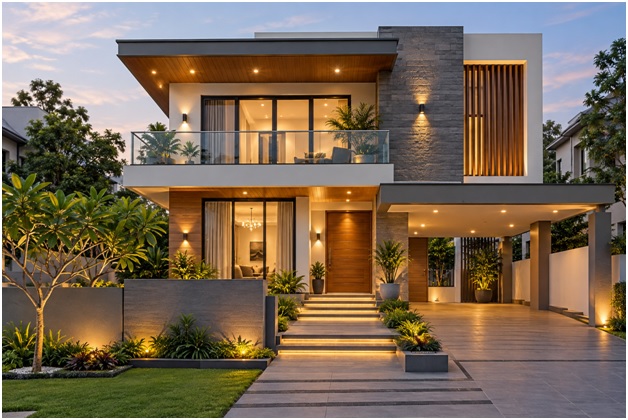



The front of a house is the first thing anyone sees, long before they reach the door. It shapes a visitor’s first impression, sets the tone for the interior, and can influence how the home is perceived when it is time to sell. A considered front elevation design does more than create visual appeal. It gives the house a clear identity, connects it with its surroundings, and can improve curb appeal over time. Choosing an elevation is therefore a balance of personal taste, practicality, and context. The right design should feel natural to the home rather than simply follow a passing trend.
What Makes a Strong Front Elevation Design
A well-planned elevation feels balanced and intentional. Proportion, symmetry, and the arrangement of windows and doors can influence the design more than any single decorative feature. Before settling on a style, consider how the different elements work together.
- Proportion: Consider the balance between solid walls and openings, as well as how the different stories relate.
- Focal point: Features such as the entrance, a projecting bay, or a change in material can naturally draw attention.
- Rhythm: The spacing and alignment of windows and doors can create a consistent visual flow across the facade.
- Context: Consider how the design sits alongside neighboring homes and the character of the surrounding street.
Getting these fundamentals right can give the elevation a sense of order and balance, regardless of the materials or decorative details selected.

Materials That Shape The Facade
Materials play an important role in giving a front elevation design its texture, color, and character. The right combination can add depth to a simple form, while an unsuitable mix can make an otherwise balanced design feel disconnected.
The materials commonly used to shape a facade include:
- Natural stone: Offers natural texture and depth and can suit different exterior wall design approaches.
- Engineered and sintered surfaces: Dense surfaces available in large formats, with properties that can support exterior applications.
- Textured render: Provides a practical way to introduce color and either a smooth or textured finish.
- Timber and composite cladding: Adds a warm, natural element and can work well alongside other facade materials.
- Brick and exposed masonry: Offers a durable finish with texture and character that can complement different architectural styles.
Using two or three complementary materials can create visual layers without making the facade appear overly busy. The combination should also work with the home’s windows, doors, roof, and surrounding landscape.
Balancing Style, Climate And Maintenance
An elevation has to cope with the weather it faces, so practicality should be part of the decision from the beginning. Strong sunlight can affect some colors, while heavy rain can test joints and finishes. Humidity can also encourage mould on surfaces that remain damp. Choosing materials and finishes suited to the local climate can help the facade maintain its appearance for longer.
Surface performance is another consideration, particularly for large exterior areas. Features such as stain resistance, scratch resistance, fire resistance, and antibacterial properties can be useful depending on the application. Manufacturers such as Neotra Advanced Surfaces offer engineered surface options that bring these practical considerations into facade design.
Maintenance is another consideration. A finish that requires frequent repainting or sealing can add ongoing cost and effort. A durable, low-maintenance surface can reduce these requirements and make routine upkeep easier. Considering maintenance alongside appearance can help you make a more practical long-term choice.
Design Choices That Add Value
Certain design decisions can noticeably affect a home’s overall appearance. A thoughtful approach to exterior wall design can help a simple facade feel more distinctive without relying on excessive decoration.
- A defined entrance: Creates a clear focal point and gives the front of the home a stronger sense of identity.
- Layered materials: Add texture and can help break up large, flat wall areas.
- Well-proportioned windows: Balance natural light needs with the facade’s appearance.
- Outdoor lighting: Highlights architectural features after dark while supporting visibility around the entrance.
- Simple landscaping: Frames the house and helps connect the facade with the surrounding outdoor space.
Prioritizing these elements can help create a more balanced facade while keeping the overall design practical and cohesive.
Matching The Elevation To The Home’s Character
A facade generally works best when it complements the home behind it and its overall architectural character. A minimal, flat-roofed elevation with large areas of glazing can suit a contemporary interior. At the same time, a pitched roof, traditional proportions and textured materials may work better with a more classic layout.
It is also useful to think beyond current trends. Design preferences change, but good proportions and suitable materials can keep working well over time. A restrained elevation with carefully considered details is less dependent on short-lived styles.
Color deserves similar consideration. A palette of two or three complementary shades can create consistency across the facade without feeling repetitive. Natural or neutral tones can work with a range of materials, while a contrasting accent can highlight the entrance or selected architectural features.
Before finalizing the design, view larger material and color samples on the actual facade where possible. Daylight can change how colors and textures appear, helping you make a more informed decision before installation.
Conclusion
A front elevation design influences the first impression a home creates and contributes to its overall appeal. Start with sound proportions, a clear focal point, and a style that suits the property’s character. Select materials that provide the desired texture while considering the local climate and maintenance requirements. Thoughtful lighting, windows, landscaping, and material combinations can further strengthen the design. Rather than relying on a passing trend, focus on details that can remain relevant over time. A balanced approach can create a facade that looks cohesive today and continues to complement the home for years to come.