

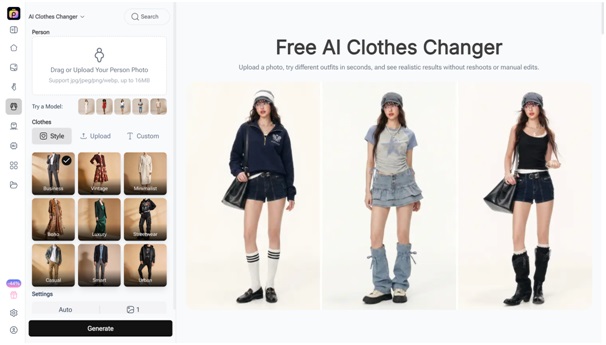



A store with fifty SKUs is a manageable operation. Product photography can be handled organically — a weekend shoot here, a batch of samples there, a photographer on retainer for the occasional new arrival. At a thousand SKUs, the same store becomes a logistics problem. The bottleneck is no longer sourcing or marketing; it is the sheer volume of images required to maintain a consistent, professional storefront across every product page. PhotoGPT AI Clothes Changer represents a tool built for exactly this transition point — the moment when manual photography stops scaling. AI Clothes Changer paired. PhotoGPT capability lets growing sellers decouple image volume from physical shoot time, converting a linear cost structure into a sub-linear one.
The Scaling Problem Nobody Talks About
Ecommerce guides spend plenty of words on traffic, conversion, and customer acquisition. They spend remarkably few on the operational reality of visual content production at scale. Consider a store starting with 50 products, each in three colors — 150 distinct product images, achievable with a dedicated weekend and a freelancer. Add accessories, seasonal collections, and bestseller restocks, and the number grows to 500 images. At this point, the weekend shoot model breaks. Either the photographer becomes a full-time expense, or image quality declines as volume overwhelms the workflow. Traditional product photography does not benefit from economies of scale. Manufacturing gets cheaper per unit as volume increases. Photography remains stubbornly linear — more products require proportionally more shoot time and editing hours.

How AI-Powered Clothing Swaps Change the Math
The shift that AI clothing changes introduce is structural. Instead of each variant image requiring a separate physical photograph, variants are derived computationally from a base image. For a seller with 300 products averaging three color variants each, the traditional model requires 900 individual photographs. With AI clothing swaps, the seller photographs one color variant per product and generates the remaining two computationally. Physical photography workload drops from 900 images to 300 — a two-thirds reduction. Generating 600 variant images through AI completes in hours rather than the weeks required to book a photographer.
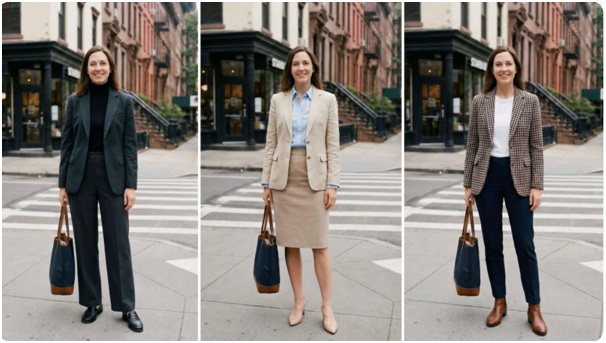
(Clothes Change Generated by PhotoGPT)
The Sweet Spot of Applicability
Strong candidates include solid-color basics like t-shirts, tank tops, and leggings — products with simple geometries, minimal texture variation, and color as the primary differentiator. Moderate candidates include denim with consistent texture but complex fading patterns, and light outerwear with larger garment areas. Poor candidates include heavily embellished garments with embroidery or beading, formalwear with complex draping, and sheer or semi-transparent layers. The practical takeaway is that AI clothing swaps work best for the portion of a growing catalog consisting of relatively simple, color-differentiated products — which, for many multi-category sellers, represents the majority of SKU expansion.
The Cost Equation
Assume a seller needs 600 additional variant images per season at 200 products and two variants each. Traditional photography for this volume — factoring in photographer fees, model costs, and editing — might run ten to fifteen thousand dollars per season. Generating those same 600 images through AI clothing changes brings the total to one to three thousand dollars — a 70 to 90% reduction. The quality is not identical, but for showing color variants on a product page, the quality gap may not justify the cost gap. The seller maintains traditional photography for products outside the AI capability sweet spot.
Conclusion
Growing an apparel catalog from dozens to hundreds of SKUs creates a photography bottleneck that traditional methods cannot scale to match without proportional cost increases. AI clothes changer technology converts the relationship between SKU count and image production from linear to sub-linear by generating color variants from base photographs. The approach works best for solid-color basics and simple garments. Sellers who phase in the technology — starting with strongest candidate categories and maintaining traditional photography for edge cases — can reduce image production costs by 70 to 90% while maintaining acceptable quality for product page usage. PhotoGPT (https://photogpt.io/) provides the platform for this approach.



