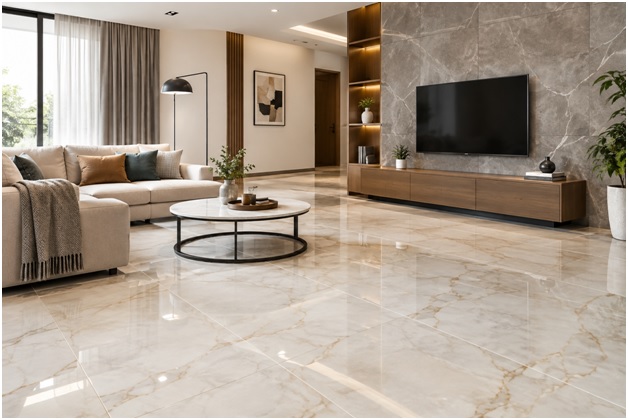



The living room is one of the most used spaces in a home, bringing together family time, guests, furniture and everyday movement. Its flooring therefore needs to meet both the space’s practical demands and the overall interior scheme. From marble-inspired surfaces to concrete and wood-look designs, the right tiles design can define a room’s character. Choosing a suitable tile brand also means considering format, finish, durability, maintenance and how the flooring works with the rest of the home.
Top 5 Tile Brands for Living Room and Hall Design
India has several established tile brands offering options for living rooms and halls. Their ranges differ in formats, finishes, patterns and surface characteristics, making it easier to explore different tiles design options. The following brands offer different possibilities to consider when planning a living room floor.
| Rank | Tile Brand | Design Range | Key Features | Ideal For |
| 1 | Simpolo Tiles & Bathware | Marble, concrete, stone, wood & textured designs | Vitrified tiles, large formats & multiple finishes | Living rooms, halls & open spaces |
| 2 | Nexion | Luxury, contemporary & statement designs | Premium finishes & large formats | Luxury living spaces |
| 3 | Kajaria | Various designs, patterns & finishes | Multiple sizes & formats | Living rooms & halls |
| 4 | RAK Ceramics | Various designs, colours & finishes | Multiple sizes & formats | Residential & commercial spaces |
| 5 | Nitco | Tile & natural marble designs | Various formats & finishes | Living spaces |
Simpolo Tiles & Bathware
Simpolo Tiles & Bathware offers vitrified tiles across a variety of designs, formats and surface finishes for living spaces. Its collections include marble-inspired, concrete-look, stone-inspired and textured designs, giving homeowners and designers different options when selecting floor tiles for living room interiors.

Marmorica focuses on marble-inspired surfaces, while Spectra offers contemporary colour and concrete-inspired options. Collections such as Courtyard, Glyphstone, Rockdeck, Impatto and Imperro provide additional choices across different visual treatments.
For living rooms with regular foot traffic, surface performance matters as much as appearance. Vitrified tiles suit areas that need durability and relatively easy maintenance. Large-format options can also create fewer visible joints, helping establish a more continuous appearance across spacious living and dining areas.
Nexion
Nexion offers vitrified tiles in different formats and contemporary surface treatments. Its range includes options for living room floors and walls, depending on the desired interior style.
When selecting from the range, homeowners and designers can consider factors such as tile dimensions, finish, colour, and room scale. Larger formats can support a more continuous floor appearance, while contrasting textures or patterns can be used selectively for feature areas.
Kajaria
Kajaria offers floor and wall tiles in different sizes, colours, patterns and finishes. When choosing, consider room size, natural light, furniture placement, and maintenance needs. Larger tiles can suit spacious halls, while carefully chosen colours and patterns can add definition without making smaller rooms feel crowded.
RAK Ceramics
RAK Ceramics offers tiles in different sizes, formats, colours and finishes for living spaces. You can choose floor and wall options based on foot traffic, finish, room layout, and interior scheme. Neutral surfaces provide a subtle backdrop, while patterns can add visual interest.
Nitco
Nitco offers tiles and natural marble in different formats and finishes for living spaces. Homeowners can compare options based on appearance, format and maintenance requirements. Neutral flooring offers flexibility for changing décor, while distinctive surfaces can create a focal point in a room.
Living Room Floor Tile Design Ideas
The flooring establishes a visual base for the furniture, walls and décor. Consider these design directions:
- Marble-inspired tiles: Create a refined appearance and work particularly well with neutral furniture and contemporary interiors.
- Wood-look tiles: Introduce warmth and a softer visual character while retaining the practical qualities of tile surfaces.
- Concrete-look tiles: Suit minimalist and industrial-inspired interiors, particularly when paired with simple furniture.
- Large-format tiles: Reduce visible grout lines and can make larger rooms feel more continuous.
- Light-coloured tiles: Reflect available light and can make smaller living rooms feel more open.
- Textured or patterned tiles: Work well as a defined feature, particularly when the remaining flooring and furnishings are kept relatively restrained.
The key is to choose a design that complements rather than competes with the furniture, walls and lighting.
How to Choose Tiles for a Living Room
A few practical considerations can make the final selection more effective, especially when choosing floor tiles for living room spaces:
- Consider the room size: Larger formats can suit spacious halls, while smaller spaces may benefit from appropriately scaled tiles.
- Assess natural light: Lighter surfaces can help brighten rooms with limited daylight, while darker tones can add depth to well-lit spaces.
- Choose the finish carefully: Matt surfaces can offer a more understated appearance and may be practical for areas with regular foot traffic.
- Think about maintenance: Choose surfaces that suit the household’s cleaning routine and everyday use.
- Plan the visual flow: Extending similar flooring into adjoining areas can create greater continuity across an open-plan home.
Conclusion
A well-chosen living room floor should complement the interior while handling the demands of everyday use. Brand choice is only one part of the decision; format, finish, colour, surface performance, and maintenance requirements also influence the result. Whether you prefer marble-inspired elegance, warm wood-look surfaces, contemporary concrete effects, or understated neutral flooring, the right tiles design can add character while supporting everyday functionality. Assessing the room’s size, lighting, traffic and existing decor can help create a hall that feels cohesive, practical and visually balanced.