

• India CSR Awards 2026
  • India CSR Leadership Summit
  • Guest Posts
Wednesday, August 12, 2026
India CSR
  • Home
  • Corporate Social Responsibility
    • Art & Culture
    • CSR Leaders
    • Child Rights
    • Culture
    • Education
    • Gender Equality
    • Around the World
    • Skill Development
    • Safety
    • Covid-19
    • Safe Food For All
  • Sustainability
    • Sustainability Dialogues
    • Sustainability Knowledge Series
    • Plastics
    • Sustainable Development Goals
    • ESG
    • Circular Economy
    • BRSR
  • Corporate Governance
    • Diversity & Inclusion
  • Interviews
  • SDGs
    • No Poverty
    • Zero Hunger
    • Good Health & Well-Being
    • Quality Education
    • Gender Equality
    • Clean Water & Sanitation – SDG 6
    • Affordable & Clean Energy
    • Decent Work & Economic Growth
    • Industry, Innovation & Infrastructure
    • Reduced Inequalities
    • Sustainable Cities & Communities
    • Responsible Consumption & Production
    • Climate Action
    • Life Below Water
    • Life on Land
    • Peace, Justice & Strong Institutions
    • Partnerships for the Goals
  • Articles
  • Events
  • हिंदी
  • More
    • Business
    • Finance
    • Environment
    • Economy
    • Health
    • Around the World
    • Social Sector Leaders
    • Social Entrepreneurship
    • Trending News
      • Important Days
        • Festivals
      • Great People
      • Product Review
      • International
      • Sports
      • Entertainment
    • Case Studies
    • Philanthropy
    • Biography
    • Technology
    • Lifestyle
    • Sports
    • Gaming
    • Knowledge
    • Home Improvement
    • Words Power
    • Chief Ministers
No Result
View All Result
  • Home
  • Corporate Social Responsibility
    • Art & Culture
    • CSR Leaders
    • Child Rights
    • Culture
    • Education
    • Gender Equality
    • Around the World
    • Skill Development
    • Safety
    • Covid-19
    • Safe Food For All
  • Sustainability
    • Sustainability Dialogues
    • Sustainability Knowledge Series
    • Plastics
    • Sustainable Development Goals
    • ESG
    • Circular Economy
    • BRSR
  • Corporate Governance
    • Diversity & Inclusion
  • Interviews
  • SDGs
    • No Poverty
    • Zero Hunger
    • Good Health & Well-Being
    • Quality Education
    • Gender Equality
    • Clean Water & Sanitation – SDG 6
    • Affordable & Clean Energy
    • Decent Work & Economic Growth
    • Industry, Innovation & Infrastructure
    • Reduced Inequalities
    • Sustainable Cities & Communities
    • Responsible Consumption & Production
    • Climate Action
    • Life Below Water
    • Life on Land
    • Peace, Justice & Strong Institutions
    • Partnerships for the Goals
  • Articles
  • Events
  • हिंदी
  • More
    • Business
    • Finance
    • Environment
    • Economy
    • Health
    • Around the World
    • Social Sector Leaders
    • Social Entrepreneurship
    • Trending News
      • Important Days
        • Festivals
      • Great People
      • Product Review
      • International
      • Sports
      • Entertainment
    • Case Studies
    • Philanthropy
    • Biography
    • Technology
    • Lifestyle
    • Sports
    • Gaming
    • Knowledge
    • Home Improvement
    • Words Power
    • Chief Ministers
No Result
View All Result
India CSR
No Result
View All Result
Home Articles

Does India Need a Unique Corporate Governance Code? by Asish K Bhattacharyya

Post-liberalisation, India has adopted the market model, framed policies and regulations for the development of the capital market and liberalized foreign investment in Indian companies.

India CSR by India CSR
November 1, 2012
in Articles, Corporate Governance
Reading Time: 4 mins read
Corporate Governance in India

Corporate Governance in India. Image: India CSR

Share Share Share Share
WhatsApp icon
WhatsApp — Join Us
Instant updates & community
Google News icon
Google News — Follow Us
Get our articles in Google News feed
india csr awards
ADVERTISEMENT

By Asish K Bhattacharyya

The Indian corporate governance code is based on the Anglo-Saxon model. Some experts believe that India needs to develop its own corporate governance code because business groups – business families and the government – dominate the Indian corporate sector unlike the corporate sectors in the USA and UK, where concentration of shareholding is less prominent and shares are widely held by geographically dispersed investors.

They also argue that culture is one of the important factors that influence the corporate governance system and the Indian culture differs from that of those countries where the Anglo-Saxon model is working effectively. In fact, the debate on whether the convergence of corporate governance model will deepen further or greater differences in corporate governance practices in different countries will emerge is gaining momentum. This question arises in the backdrop of the trend towards convergence of corporate governance code (mechanism) across the globe towards the Anglo-Saxon model.

19th India CSR Leadership Summit 2026
ADVERTISEMENT

Adoption of the International Financial Reporting Standards

There are many forces that are driving convergence of corporate governance models in different countries. For example, the model codes published by international bodies, such as the World Bank, the Commonwealth of Nations, and OECD and the corporate governance policies and practices of major corporations operating around the world, are driving convergence. The International Organisation of Securities Commissions (IOSCO) encourages convergence. Similarly, adoption of the International Financial Reporting Standards (IFRS) by different countries and the need for countries to attract foreign capital have pushed the movement towards the convergence of corporate governance models.
Corporate governance structures

In spite of the visible trend towards convergence, differences in corporate governance models exist. For example, the dual board system still exists in continental European countries and the corporate governance mechanism in Japan significantly differs from the Anglo-Saxon model. However, the influence of the market has definitely diluted the corporate governance structures that have prevailed for a very long period.

Over the past two decades fundamental corporate governance principles have been established. Those principles are separation of management from governance, transparency, accountability, strategic risk management, corporate responsibility to contribute towards the sustainability of the natural environment and corporate responsibility towards stakeholders.

Fundamental principles cannot be ignored

These fundamental principles cannot be ignored while developing a corporate governance structure. If, India has to develop its own corporate governance model it should be based on these fundamental principles. Therefore, it will be a great challenge to develop an alternative model which will be substantively different from the existing model.

Does India really need to develop a model significantly different from the Anglo-Saxon model? Post-liberalisation, India has adopted the market model, framed policies and regulations for the development of the capital market and liberalized foreign investment in Indian companies.

This has led to increasing public investment, directly and through institutional investors, in the equity capital of companies. As a result, the question of protecting non-controlling shareholders gained prominence and the need for developing and implementing a corporate governance model was felt. Initially, the primary aim of the corporate governance mechanism was to protect the interest of non-controlling shareholders.

Anglo-Saxon model should work well In India

Now, the focus is equally on the monitory shareholder’s interest, enterprise performance and corporate social responsibility. Globally, the focus is on these three dimensions of corporate governance. If, the issues are the same, the Anglo-Saxon model should work well In India, irrespective of the ownership structure. Therefore, there might not be any need for developing a unique corporate governance model for India.

Ownership structure affects the implementation of the code. Concentrated ownership has certain positive and certain negative influences on corporate governance. Tunneling is one of the negative influences. Researches have established tunneling of resources from a group company in which the promoter group has low cash flow right to a company in which it has high cash flow right.

Why loyal to the business family

This happens more in business groups that have a pyramid structure, which allows the parent at the apex of the structure to control the company at the bottom with a very low percentage of voting rights. In practice, independent directors are appointed by the incumbent management and therefore, it is likely that they will be loyal to the business family.

Therefore, they may not stop tunneling through inter-corporate loan, related party transactions and other means. Tunneling can be reduced by prohibiting the pyramid structure and by strengthening other institutions like Serous Fraud Investigation Office (SFIO).

Weak in the implementation

India is weak in the implementation of rules and regulations. Endeavour on the part of the government to improve the same is discernible. However, there is a need to speed up the process of implementation by strengthening existing institutions and creating new institutions, if required.

About the Author
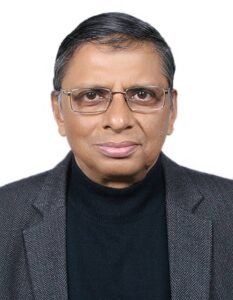
Asish K Bhattacharyya
Asish K Bhattacharyya. Image: India CSR

Asish K Bhattacharyya : Professor and Head of the School of Corporate Governance and Public Policy, Indian Institute of Corporate Affairs, Manesa.

(Updated on August 14, 2022)

Also Read: Firms need to pay up more for Professional Director – India CSR Network

Must Read: CSR issues continue to remain unresolved by Asish K Bhattacharyya – India CSR Network
Source: India CSR I November 1, 2012
Via: India CSR
Tags: Asish K BhattacharyyaCorporate GovernanceCorporate Governance CodeWhat is the Corporate Governance Code
SETU Bandhan
ADVERTISEMENT
India CSR Image 1 India CSR Image 2

CSR, Sustainability, and ESG success stories hindustan zinc
ADVERTISEMENT
India CSR

India CSR

India CSR® is the largest media on CSR and sustainability offering diverse content across multisectoral issues on business responsibility. It covers Sustainable Development, Corporate Social Responsibility (CSR), Sustainability, and related issues in India. Founded in 2009, the organisation aspires to become a globally admired media that offers valuable information to its readers through responsible reporting.

Related Posts

Dr Bhaskar Chatterjee
Articles

The Next Frontier of CSR 2.0: Backing India’s Innovation Ecosystem

6 hours ago
Dr Rajeev Gautam, President, HORIBA India @Indiacsr
Articles

How Industry-Academia Partnerships Can Power India’s Innovation Future

1 day ago
Green Capitalism, Green Development or Degrowth. AI Generated Image. Copyright-India CSR
Articles

Green Development, Green Capitalism or Degrowth?

1 week ago
HR and CSR Can Drive Inclusive Growth
Articles

How HR and CSR Can Drive Inclusive Growth and Shared Value

1 week ago
Image: Copyright@IndiaCSR
Articles

Are Govt. Ministries Encroaching Upon CSR?

1 week ago
Swiggy Chairman Anand Kripalu
Corporate Governance

Swiggy Chairman Anand Kripalu Outlines Growth Strategy for India’s Next Consumption Era

2 weeks ago
Load More
bba
ADVERTISEMENT

Interviews

Akanksha Sharma, Vice President – Sustainability, Subcontinent, Central Asia, Levant and; Egypt DP World
Interviews

DP World’s Sustainability Strategy: Building Greener, Inclusive Logistics in India

by India CSR
August 12, 2026

Responsible leadership means taking a long-term view, acting with transparency and ensuring that growth creates value for people, communities and...

Read moreDetails
Dr. V.K. Raju

Every Premature Baby Deserves the Right to Sight: Dr. V.K. Raju, Chairman, Goutami Eye Institute & Founder, Eye Foundation of America

August 7, 2026
India CSR Interview with George Muthoot George, Deputy Managing Director of Muthoot Finance

Muthoot Finance CSR Is About Empowerment, Not Dependency: George Muthoot George

August 3, 2026
Hardeep S. Brar - BMW Group India CEO

Skills Are the Starting Line, Jobs Are the Finish Line: BMW Group India CEO Hardeep S. Brar

July 21, 2026
Load More
Ad 1 Ad 2 Ad 3 Ad 4 Ad 5 Ad 6
ADVERTISEMENT

CSR UPDATES

CSR: Kia India, IIT Tirupati Inaugurate Inspire Works Makers Lab

CSR: Coca-Cola Foundation Supports Recycled Infrastructure at Wari

CSR: Cosmo Foundation Champions Journey from Learning to Leadership

CSR: Parle Agro Foundation Skill Centre Achieves 2,000 Graduate Milestone

CSR: Samsung Innovation Campus to Train 20,000 Youth in AI

ONGC Distributes 75,000 Deskits to Students Across 750 Schools Under FY26 CSR Education Initiative

STEM Learning STEM Learning STEM Learning
ADVERTISEMENT
Facebook Twitter Youtube LinkedIn Instagram
India CSR Logo

India CSR is the largest tech-led platform for information on CSR and sustainability in India offering diverse content across multisectoral issues. It covers Sustainable Development, Corporate Social Responsibility (CSR), Sustainability, and related issues in India. Founded in 2009, the organisation aspires to become a globally admired media that offers valuable information to its readers through responsible reporting. To enjoy the premium services, we invite you to partner with us.

Follow us on social media:

Subscribe to Our Newsletter

Don't miss out on the latest updates in corporate social responsibility. Subscribe to our newsletter at indiacsr.in and be part of the positive change.
Please enable JavaScript in your browser to complete this form.
Loading

  • About India CSR
  • Team
  • India CSR Awards 2026
  • India CSR Leadership Summit
  • Partnership
  • Guest Posts
  • Services
  • ESG Professional Network
  • Content Writing Services
  • Business Information
  • Contact
  • Privacy Policy
  • Terms of Use
  • Donate

Copyright © 2026 - India CSR | All Rights Reserved

No Result
View All Result
  • Home
  • Corporate Social Responsibility
    • Art & Culture
    • CSR Leaders
    • Child Rights
    • Culture
    • Education
    • Gender Equality
    • Around the World
    • Skill Development
    • Safety
    • Covid-19
    • Safe Food For All
  • Sustainability
    • Sustainability Dialogues
    • Sustainability Knowledge Series
    • Plastics
    • Sustainable Development Goals
    • ESG
    • Circular Economy
    • BRSR
  • Corporate Governance
    • Diversity & Inclusion
  • Interviews
  • SDGs
    • No Poverty
    • Zero Hunger
    • Good Health & Well-Being
    • Quality Education
    • Gender Equality
    • Clean Water & Sanitation – SDG 6
    • Affordable & Clean Energy
    • Decent Work & Economic Growth
    • Industry, Innovation & Infrastructure
    • Reduced Inequalities
    • Sustainable Cities & Communities
    • Responsible Consumption & Production
    • Climate Action
    • Life Below Water
    • Life on Land
    • Peace, Justice & Strong Institutions
    • Partnerships for the Goals
  • Articles
  • Events
  • हिंदी
  • More
    • Business
    • Finance
    • Environment
    • Economy
    • Health
    • Around the World
    • Social Sector Leaders
    • Social Entrepreneurship
    • Trending News
      • Important Days
      • Great People
      • Product Review
      • International
      • Sports
      • Entertainment
    • Case Studies
    • Philanthropy
    • Biography
    • Technology
    • Lifestyle
    • Sports
    • Gaming
    • Knowledge
    • Home Improvement
    • Words Power
    • Chief Ministers

Copyright © 2026 - India CSR | All Rights Reserved

This website uses cookies. By continuing to use this website you are giving consent to cookies being used. Visit our Privacy and Cookie Policy.

