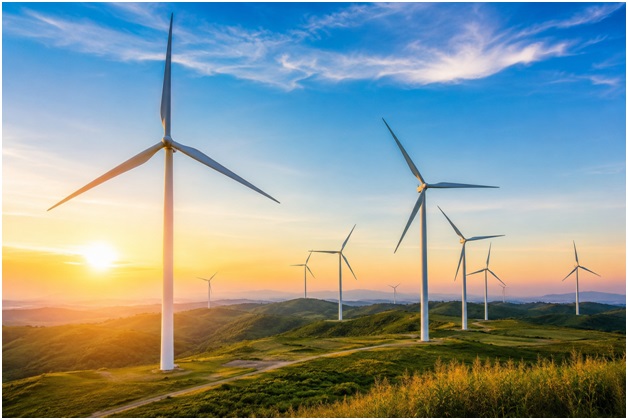



Wind turbines harness the energy of moving air and convert it into electricity. When wind flows across the blades, aerodynamic forces turn the rotor, allowing the turbine’s mechanical and electrical systems to generate power for use across connected power networks. In India, wind energy supports the country’s growing renewable power capacity. Favorable wind conditions across several states have enabled large-scale projects, while advances in turbine technology, hybrid energy systems, storage, and grid integration are strengthening wind power’s role in electricity generation.
What Are Wind Turbines and How Do They Work?
A wind turbine begins generating power when moving air creates lift on its blades, turning the rotor. The rotor transfers rotational energy through a drivetrain. Depending on the turbine design, the drivetrain may use a gearbox or a direct-drive arrangement.

The generator converts mechanical energy into electrical energy. Power electronics may condition the generated electricity, while transformers increase its voltage for transmission through the electrical network. In a wind farm, electricity from multiple turbines is collected and delivered through electrical infrastructure to the wider power grid.
What Are The Main Types Of Wind Turbines?
Wind turbines can be classified according to the orientation of their rotational axis. The two primary designs differ in rotor orientation, which affects their construction, operation, and suitability for different applications.
The two main turbine types are:
- Horizontal-Axis Wind Turbines: These turbines have a horizontal rotor axis and typically use three blades connected to a central hub. This design is widely used in utility-scale wind farms. A yaw system adjusts the nacelle to keep the rotor aligned with the wind direction.
- Vertical-Axis Wind Turbines: These turbines rotate around a vertical axis. Their design allows the rotor to operate with wind coming from different directions without requiring the same yaw system used by horizontal-axis machines. Various vertical-axis designs are available for specific operating environments and applications.
Both designs use moving air as their energy source and convert rotational mechanical energy into electricity. Horizontal-axis machines are widely used in large wind farms, while vertical-axis technology offers an alternative design approach for capturing wind energy.
What Technology Powers Modern Wind Turbines?
A modern turbine combines aerodynamic, mechanical, electrical, and digital systems. Each component performs a specific function, from capturing wind energy to controlling turbine movement and preparing electricity for grid connection.
Key wind turbine technologies and components include:
- Blades and Rotor: Aerodynamically designed blades capture energy from moving air. Connected to a central hub, the blades form the rotor, which turns as wind passes over them.
- Nacelle: Located at the top of the tower, the nacelle houses major equipment associated with electricity generation and turbine operation, depending on the turbine design.
- Gearbox or Direct Drive: Geared turbines use a gearbox to increase rotational speed before the mechanical power reaches the generator. Direct-drive turbines connect the rotor to the generator without a conventional high-speed gearbox.
- Generator: The generator converts the rotational mechanical energy delivered by the drivetrain into electrical energy.
- Pitch and Yaw Systems: Pitch controls adjust blade angles to regulate aerodynamic forces and manage energy capture. Yaw controls orient the nacelle and rotor relative to wind direction in horizontal-axis turbines.
- Sensors and Control Systems: Sensors measure conditions such as wind speed, wind direction, temperature, and turbine performance. Control systems use this information to manage operation.
- Transformer: Transformers raise the voltage of generated electricity to levels suitable for collection and onward transmission through the power network.
These technologies work together throughout turbine operation. Modern control systems also allow operators to monitor equipment and operating conditions, helping turbines respond to changing wind conditions.
How Do Wind Turbines Generate Power For India?
Wind farms usually contain multiple turbines connected through a collection network. Electricity generated by individual turbines passes through transformers and electrical infrastructure before reaching substations. From there, appropriately transformed electricity can enter transmission networks and ultimately serve consumers through India’s interconnected power system.
India had 57.44 GW of installed wind power capacity as of June 30, 2026, according to the Ministry of New and Renewable Energy. Most of India’s assessed wind potential is concentrated across eight states: Gujarat, Rajasthan, Karnataka, Maharashtra, Andhra Pradesh, Tamil Nadu, Madhya Pradesh, and Telangana.
What Role Do Onshore And Offshore Wind Play In India?
Wind projects can also be described according to where turbines are installed. India has an established land-based wind sector and is also developing a policy and project framework for offshore wind.
The two deployment approaches are:
- Onshore Wind Power: Onshore projects place turbines on land at locations with suitable wind resources and account for most of India’s existing wind capacity.
- Offshore Wind Power: Offshore wind offers another potential pathway to expand India’s renewable electricity capacity. Offshore wind forms another pathway for India to expand the range of renewable resources available for electricity generation.
Together, onshore and offshore development can expand the locations available for wind energy deployment. Resource assessment, turbine selection, grid connections, and project design help determine how wind resources can be converted into electricity at each site.
How Can Wind Work With Other Renewable Technologies In India?
Wind can operate alongside solar power because the two resources can have different generation profiles across hours and seasons. Combining them in hybrid projects can make better use of shared infrastructure and provide a more balanced renewable energy generation profile across different operating periods.
Energy storage can further support hybrid renewable projects by shifting electricity across time periods. Renewable-energy developers such as Hero Future Energies are also developing wind-solar hybrid projects integrated with energy storage, supporting more flexible renewable-power solutions.
Conclusion
Modern wind turbines combine aerodynamic blades, mechanical systems, generators, power electronics, controls, and electrical infrastructure to convert the motion of the wind into electricity. Horizontal-axis and vertical-axis designs provide different approaches, while onshore and offshore deployment expands the range of possible applications. In India, wind power contributes significantly to renewable generation capacity and complements other clean-energy technologies. Continued development of wind, hybrid renewable projects, storage, and grid integration can support a more diverse electricity mix while making greater use of India’s renewable resources.