

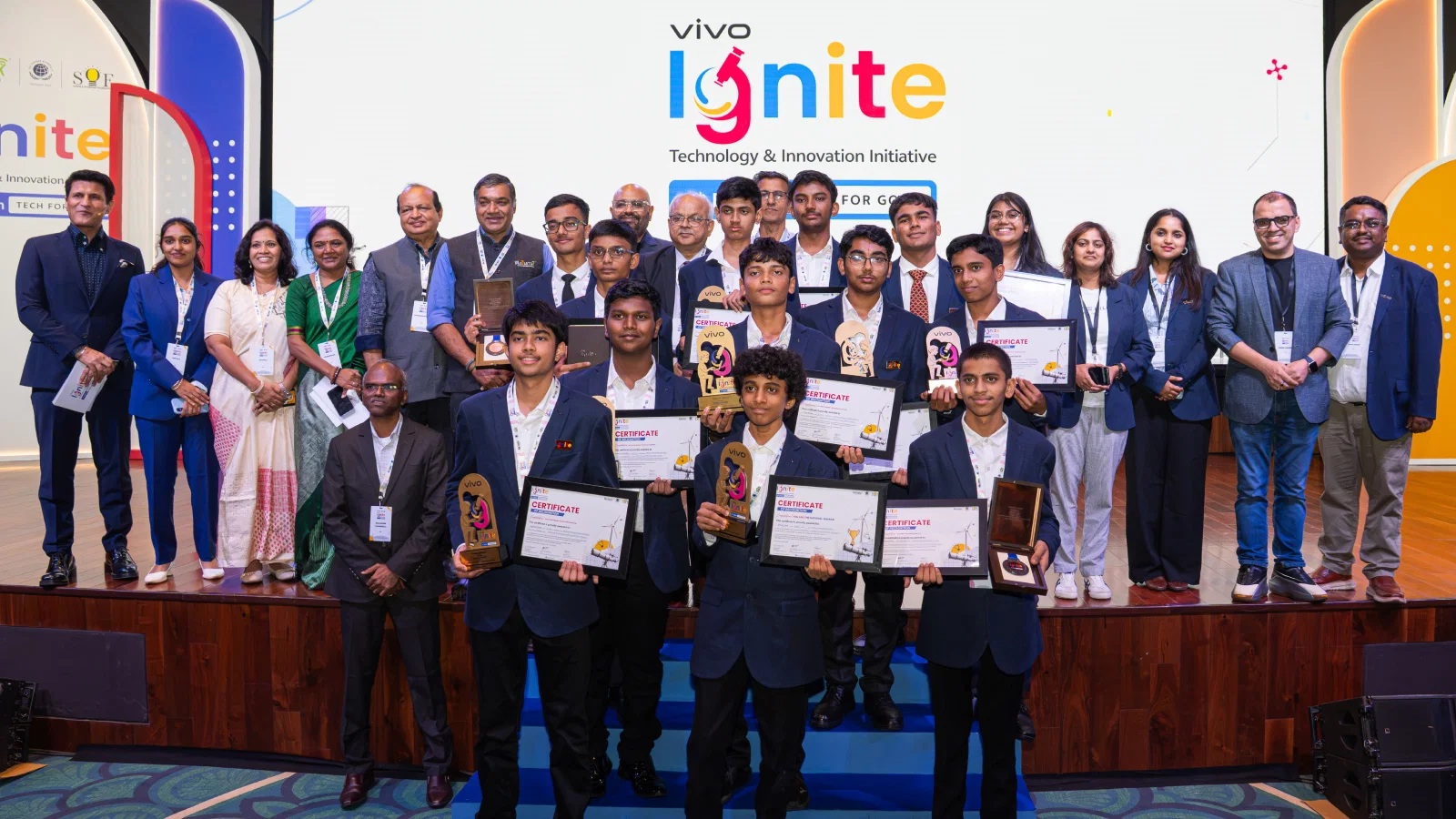


vivo India Felicitates Top 10 Student Innovations Under vivo Ignite 2026, Scholarship of upto Rs. 35 Lakh for Tech-Driven Social Solutions
NEW DELHI (India CSR): vivo India has announced Dheyay Shah of RMG Maheshwari English School, Surat, Gujarat, as the National Winner of vivo Ignite 2026. His project, JALAAKAR – The Shape of Water: Predict, Alert, & Act, uses machine-learning techniques and historical groundwater-related data to estimate groundwater availability and support informed water management.
The recognition was announced at the vivo Ignite 2026 National Finale held at Bharat Mandapam, New Delhi. The fourth edition of vivo India’s nationwide technology and innovation initiative for students in Classes 8 to 12 brought together young innovators whose ideas sought to respond to practical social, environmental and accessibility-related challenges.
This year’s programme received more than 38,000 registrations from over 12,000 schools. Students submitted more than 6,100 innovation ideas from over 4,500 cities across 705 districts, spanning all 28 states and eight Union Territories. The initiative also reached 92 Aspirational Districts, reflecting a wider effort to make school-level STEM innovation accessible beyond major urban centres.
The finalists included 13 young innovators across eight individual and two group projects. Their solutions covered a diverse range of concerns, including groundwater conservation, water quality, women’s online safety, accident response, hazardous-workplace safety and assistive technology for persons with disabilities. vivo Ignite 2026 offers educational scholarships and rewards worth up to ₹35 lakh, subject to applicable terms and conditions.
***
A Young Innovator Focused on Water Security
Dheyay Shah’s winning project, JALAAKAR, addresses an issue that is becoming increasingly important for communities, farmers, local administrations and water users: understanding groundwater availability before a water crisis becomes visible.
The project combines historical borewell records, rainfall patterns and soil-related data with machine-learning techniques to estimate groundwater availability at the taluka level. The idea is designed to support prediction, early alerts and informed action around groundwater use. By making data-led estimation more accessible, the project seeks to encourage proactive water management rather than a response only after borewells begin to fail.
The project’s title, “The Shape of Water: Predict, Alert, & Act,” captures its practical intent. It is not merely about collecting data; it attempts to turn data into timely information that can support decision-making. The innovation demonstrates how school students can use emerging technologies such as machine learning to address issues closely linked with sustainability and community wellbeing.
Water-related solutions were a prominent feature of the Top 10 projects. This reflects the relevance of scientific innovation in addressing challenges that affect daily life, from groundwater availability and borewell safety to fluoride contamination and microplastic pollution.
Dheyay Shah’s JALAAKAR project leads a Top 10 list of student innovations addressing water security, cyber safety, road safety and assistive technology.
***
Expanding the Reach of School-Level Innovation
The scale of vivo Ignite 2026 indicates a strong and growing interest among students in applying science and technology to real-world challenges. The initiative received registrations from more than 12,000 schools, with participation recorded across 705 districts.
Importantly, government-school participation increased from 5 per cent to 14 per cent during the fourth edition. This is a meaningful development for the programme, as innovation opportunities need to reach students from diverse social, geographic and educational backgrounds.
Geetaj Channana, Chief Corporate Communications Officer, vivo India, congratulated the national winner and finalists, noting that the scale of participation demonstrates the potential of India’s young innovators.
“We congratulate Dheyay Shah, the national winner, and all the Top 10 finalists of vivo Ignite 2026 for their remarkable innovations,” Channana said. “The growing participation from over 12,000 schools across 705 districts reinforces the potential of vivo Ignite to become one of India’s largest school-level STEM innovation platforms.”
He added that vivo India aims to expand its reach, particularly across government schools and Aspirational Districts, while strengthening mentorship and opportunities for students to take ideas beyond the classroom.
The programme encourages students to develop technology-led solutions aligned with real-life challenges and the broader objectives of the United Nations Sustainable Development Goals. For many participants, the platform offers an opportunity to move beyond textbook learning and engage with problem-solving through research, prototyping and practical application.
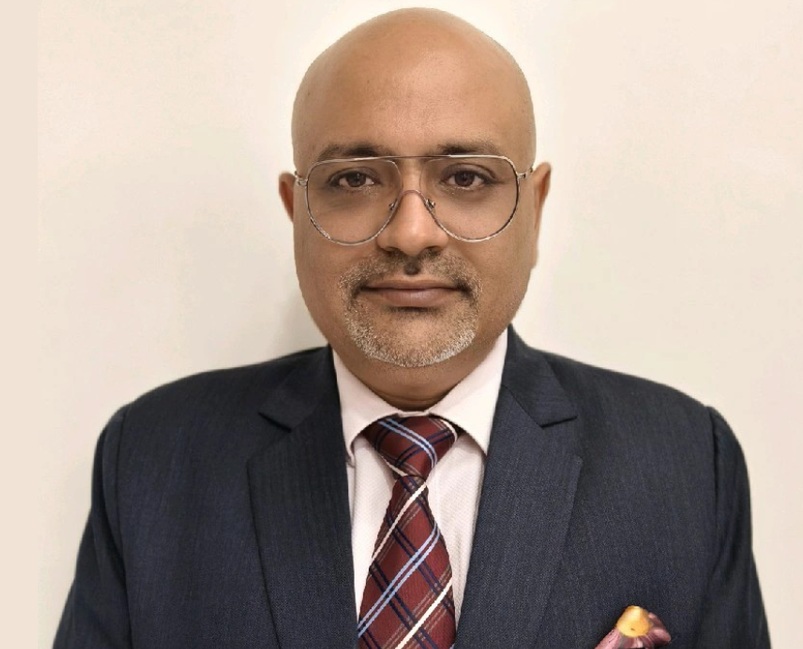
“The growing participation from over 12,000 schools across 705 districts reinforces the potential of vivo Ignite to become one of India’s largest school-level STEM innovation platforms.” – Geetaj Channana, Chief Corporate Communications Officer, vivo India
***
Top 10 Innovations of vivo Ignite 2026
The Top 10 projects were evaluated by a jury of academicians and industry experts on creativity, scientific application, feasibility, cost-effectiveness and potential social impact.
Rank 1: JALAAKAR – The Shape of Water: Predict, Alert, & Act
Developed by Dheyay Shah of RMG Maheshwari English School, Surat, Gujarat, JALAAKAR uses historical borewell records, rainfall and soil-related data to estimate groundwater availability through machine-learning techniques.
Rank 2: JalRakshak – Predicting Borewell Failure Before It Happens
Developed by Vidyut Sundar and Shreyan Limaye of Dhirubhai Ambani International School, Mumbai, Maharashtra, JalRakshak uses borewell-specific time-series analysis to predict water-level decline. It takes into account rainfall recharge and groundwater extraction patterns.
Rank 3: HydroPlastiNet
Developed by Anish Srinivas, Achyutha Pranav V. Subramanian and Akhilesh Ram R. of Padma Seshadri Bala Bhavan Senior Secondary School, Chennai, Tamil Nadu, HydroPlastiNet combines mechanical filtration with bentonite and activated charcoal. The project aims to trap microplastics and adsorb dissolved pollutants from water.
Rank 4: Project Unmuted – The Voice of Women
Developed by Anushka Bhattacharya of SNBP International School, Rahatani, Maharashtra, Project Unmuted uses artificial intelligence, cybersecurity and secure data management to provide structured guidance to women facing cybercrime. The project draws on existing deepfake-detection technology and seeks to support individuals navigating digital safety concerns.
Rank 5: Project IRIS – Infrared Reflective Interface System
Developed by Ayushman Choudhary of Bhavan’s B.P. Vidya Mandir, Ashti, Nagpur, Maharashtra, Project IRIS combines infrared reflectometry and inertial measurement to track eye direction and head movement. The project has potential applications in assistive technology and hands-free interaction.
Rank 6: AVRODH – Automated Verification for Restricted Operator Descent into Hazard
Developed by Shaurya Dubey of Army Public School, Bareilly Cantt, Uttar Pradesh, AVRODH uses safety interlocks, gas-threshold sensing, RFID-based presence detection and authorisation checks. The project is designed to help prevent unsafe entry into hazardous environments.
Rank 7: Smart Device for Instant Helping during Vehicle Accidents
Developed by Abhinav Srivastava of SJS Shaktinagar, Sonbhadra, Uttar Pradesh, this project uses sensors to detect potential vehicle accidents. It can shift to a backup power source before initiating a voice call to emergency number 112.
Rank 8: Project DrishtiBodh – LiDAR-Based Smart Safety Collar for Visually Impaired
Developed by Jitesh Ladda of Scottish Academy, Parbhani, Maharashtra, Project DrishtiBodh uses LiDAR sensors to detect nearby obstacles. A microcontroller triggers directional vibration alerts, supporting safer movement for visually impaired persons.
Rank 9: AquaSentinel AI – Smart Fluoride Safety Device for School
Developed by Sai Adhrit Singh of Dr. Virendra Swaroop Education Centre, Kanpur, Uttar Pradesh, AquaSentinel AI uses a colour-based chemical test, light sensing and an offline machine-learning model to estimate fluoride concentration in water.
Rank 10: Neuradrive – Movement for All
Developed by Advik Jain of The Emerald Heights International School, Indore, Madhya Pradesh, Neuradrive explores the use of electrooculography and electroencephalography signals to translate eye movements and brain activity into commands for assistive applications.
Together, the Top 10 ideas illustrate the breadth of innovation emerging from young students. The projects do not remain limited to conventional science-exhibition concepts. Instead, they attempt to address everyday issues that affect communities, public safety, inclusion and environmental sustainability.
The fourth edition received over 38,000 registrations and 6,100 student ideas from more than 12,000 schools across 705 districts in India.
***
Educators Recognised for STEM Innovation
Along with student innovators, vivo India also felicitated 10 educators under its National Teacher Innovation Fellowship. The fellowship is an extension of vivo Ignite and recognises teachers who are using innovative methods to make STEM education more practical, inclusive and engaging.
The selection committee chose the fellows from over 200 applications received across 14 states and 26 districts. Their recognition highlights the important role of educators in building a culture of curiosity, experimentation and scientific thinking among students.
A strong innovation ecosystem requires more than student participation. It also depends on teachers who can help young learners ask better questions, connect classroom concepts with social realities and develop confidence in experimenting with ideas. The National Teacher Innovation Fellowship seeks to acknowledge this role by celebrating educators who are shaping more engaging STEM learning environments.
***

Collaboration, Credibility and Process
The National Finale brought together student innovators, educators, programme partners and stakeholders from the technology, education and sustainability ecosystem. The event was attended by Dr. Panneerselvam Madanagopal, CEO of MeitY Startup Hub; Shri Ratnesh Jha, Executive Director of UN Global Compact Network India; and Dr. M. J. Shankar Raman, CEO of IITM Pravartak Technologies Foundation. The finale was hosted by technology commentator Rajiv Makhni.
The fourth edition of vivo Ignite was supported by IITM Pravartak Technologies Foundation, the Technology Innovation Hub of IIT Madras; Science Olympiad Foundation; and UN Global Compact Network India as knowledge partners. Grant Thornton served as the process validator.
Such partnerships add institutional depth to the programme. They bring together industry, education, technology and sustainability perspectives while ensuring that student ideas are assessed through a structured evaluation process.
For India, where young people will play a decisive role in shaping the country’s innovation and sustainability journey, platforms such as vivo Ignite can help build early exposure to problem-solving. The 2026 edition showed that students cannot only identify real challenges but also explore technology as a tool for creating meaningful change.
With JALAAKAR emerging as the national winner, vivo Ignite 2026 has placed the spotlight on the power of young minds to turn local concerns into technology-led solutions with wider social relevance.



