

• India CSR Awards 2026
  • India CSR Leadership Summit
  • Guest Posts
Wednesday, July 29, 2026
India CSR
  • Home
  • Corporate Social Responsibility
    • Art & Culture
    • CSR Leaders
    • Child Rights
    • Culture
    • Education
    • Gender Equality
    • Around the World
    • Skill Development
    • Safety
    • Covid-19
    • Safe Food For All
  • Sustainability
    • Sustainability Dialogues
    • Sustainability Knowledge Series
    • Plastics
    • Sustainable Development Goals
    • ESG
    • Circular Economy
    • BRSR
  • Corporate Governance
    • Diversity & Inclusion
  • Interviews
  • SDGs
    • No Poverty
    • Zero Hunger
    • Good Health & Well-Being
    • Quality Education
    • Gender Equality
    • Clean Water & Sanitation – SDG 6
    • Affordable & Clean Energy
    • Decent Work & Economic Growth
    • Industry, Innovation & Infrastructure
    • Reduced Inequalities
    • Sustainable Cities & Communities
    • Responsible Consumption & Production
    • Climate Action
    • Life Below Water
    • Life on Land
    • Peace, Justice & Strong Institutions
    • Partnerships for the Goals
  • Articles
  • Events
  • हिंदी
  • More
    • Business
    • Finance
    • Environment
    • Economy
    • Health
    • Around the World
    • Social Sector Leaders
    • Social Entrepreneurship
    • Trending News
      • Important Days
        • Festivals
      • Great People
      • Product Review
      • International
      • Sports
      • Entertainment
    • Case Studies
    • Philanthropy
    • Biography
    • Technology
    • Lifestyle
    • Sports
    • Gaming
    • Knowledge
    • Home Improvement
    • Words Power
    • Chief Ministers
No Result
View All Result
  • Home
  • Corporate Social Responsibility
    • Art & Culture
    • CSR Leaders
    • Child Rights
    • Culture
    • Education
    • Gender Equality
    • Around the World
    • Skill Development
    • Safety
    • Covid-19
    • Safe Food For All
  • Sustainability
    • Sustainability Dialogues
    • Sustainability Knowledge Series
    • Plastics
    • Sustainable Development Goals
    • ESG
    • Circular Economy
    • BRSR
  • Corporate Governance
    • Diversity & Inclusion
  • Interviews
  • SDGs
    • No Poverty
    • Zero Hunger
    • Good Health & Well-Being
    • Quality Education
    • Gender Equality
    • Clean Water & Sanitation – SDG 6
    • Affordable & Clean Energy
    • Decent Work & Economic Growth
    • Industry, Innovation & Infrastructure
    • Reduced Inequalities
    • Sustainable Cities & Communities
    • Responsible Consumption & Production
    • Climate Action
    • Life Below Water
    • Life on Land
    • Peace, Justice & Strong Institutions
    • Partnerships for the Goals
  • Articles
  • Events
  • हिंदी
  • More
    • Business
    • Finance
    • Environment
    • Economy
    • Health
    • Around the World
    • Social Sector Leaders
    • Social Entrepreneurship
    • Trending News
      • Important Days
        • Festivals
      • Great People
      • Product Review
      • International
      • Sports
      • Entertainment
    • Case Studies
    • Philanthropy
    • Biography
    • Technology
    • Lifestyle
    • Sports
    • Gaming
    • Knowledge
    • Home Improvement
    • Words Power
    • Chief Ministers
No Result
View All Result
India CSR
No Result
View All Result
Home Articles

Life after a humanitarian crisis: Collaborative response models as a key to rebuilding efforts

Recent natural disasters such as Cyclone Amphan in West Bengal and the floods in Assam and Bihar have further endangered the social safety nets of at-risk populations who were already coping with the impact of COVID-19.

India CSR by India CSR
September 8, 2020
in Articles, Prime
Reading Time: 4 mins read
India CSR
Share Share Share Share
WhatsApp icon
WhatsApp — Join Us
Instant updates & community
Google News icon
Google News — Follow Us
Get our articles in Google News feed
india csr awards
ADVERTISEMENT

We are witnessing concerning new trends in natural disasters that continue to endanger communities and businesses while debilitating state resources. The World Bank estimates that approximately 26 million people are pushed into poverty every year.

Natural disasters affect approximately 160 million people and cost the global economy over USD 520 billion annually.[1] According to the United Nations Office for Disaster Risk Reduction (UNDRR),[2] India experienced economic losses worth USD 79.5 billion due to natural hazards between 1998 and 2017.

raigarh csr summit
ADVERTISEMENT

Certain communities are far more vulnerable to disasters due to their exposure to climate change related risks. The frequency and complexity of extreme weather events continue to affect populations in areas where access to basic services is still limited or non-existent. 
Recent natural disasters such as Cyclone Amphan in West Bengal and the floods in Assam and Bihar have further endangered the social safety nets of at-risk populations who were already coping with the impact of COVID-19.

It is important, now more than ever before, to respond to these challenges with collaborative, participative and multi-stakeholder consortium-based approaches. Governments, international institutions, the private sector and civil society organisations can successfully leverage each other’s comparative advantages to usher in improved efficiencies and effectiveness in humanitarian responses.

Collaborations between the private sector and NGOs responding to disasters in South Asia have been characterised by a shared understanding of humanitarian principles – humanity, independence, neutrality and impartiality. Some of the other distinct features of these collaborations are touched upon below:

  • The government, particularly local bodies such as village councils, school management committees and village leaders, become critical stakeholders in such collaborations.
  • The private sector’s skills and expertise can ensure enhanced and transparent project management, as well as accountability, from inception to implementation.
  • The private sector’s wide-ranging experiences in designing solutions allow it to offer inputs on programme delivery and actively engage in in-house expertise at every step of the humanitarian response cycle.
  • The NGOs play a key role in mobilising local communities, ensuring their participation in key decisions, making sure that the solutions are sustainable and locally relevant and efficiently delivering them on ground

Patience and flexibility are necessary while working together in post-disaster environments that are often fragile or situated in conflict areas where communities have experienced extensive trauma and loss. The following approaches should be kept in mind while designing a disaster response model for effective humanitarian response:

  • The response model needs to ensure that the urgent needs of at-risk communities and their feedback are incorporated, wherever possible. Together, the private sector and NGOs can carry out assessments of affected communities, keeping their needs at the centre of the overall response design.
  • Partner organisations must be jointly accountable to the people. Any challenges faced on ground must be addressed based on mutual discussion and understanding between donors, grantees and community-level stakeholders.
  • The disaster response model needs to be flexible to adapt to the changing ground realities and ensure greater effectiveness.
  • While responding to emergencies, it is important to treat affected communities as equal partners and not just beneficiaries. Responders must respect and learn from the traditions of affected communities and incorporate local culture into project designs and social infrastructure being supported by projects. It is important to invest in developing a community’s capacity to build better post-disaster infrastructure.

Examples of the private sector and NGOs leveraging each other’s strengths to build trust and make a difference in complex geographies are a testament to the potential of such collaborative models. Each intervention shapes the understanding of individual roles in such models. This understanding is based on unique grassroots-level challenges.

Our experience of building a primary school after the floods in Pulwama (south Kashmir) through a participative model between 2016–17 demonstrates that the private sector and NGOs can successfully build trust by involving the community in an environment of instability. In Nepal, an intervention to build transient shelters for affected communities in the district of Gorkha benefited from the knowledge of an on-ground partner’s experience in logistics and transport.

Overall, interventions for humanitarian action that provide more long-term support to communities through resilience building and that put communities at the centre of design and delivery may be adapted for varied humanitarian needs and contexts. Going forward, the only effective way to build a collaborative disaster response model is to bring together a diverse set of stakeholders with broad competencies to find solutions which foreground. Such an approach will see the implementation of appropriate best practices to solve complex challenges where the ‘one size fits all’ model does not work.


[1] S. Hallegattte, A. Vogt. Schilb, M. Bangalore & J. Rozenburg. (2017). Unbreakable: Building the resilience of the poor in the face of natural disasters. Washington: The World Bank.

[2] UNISDR. (2017). Economic losses, poverty & Disasters 1998-2017. Belgium: Centre for Research on the Epidemiology of Disasters, United Nations Office for Disaster Risk Reduction.
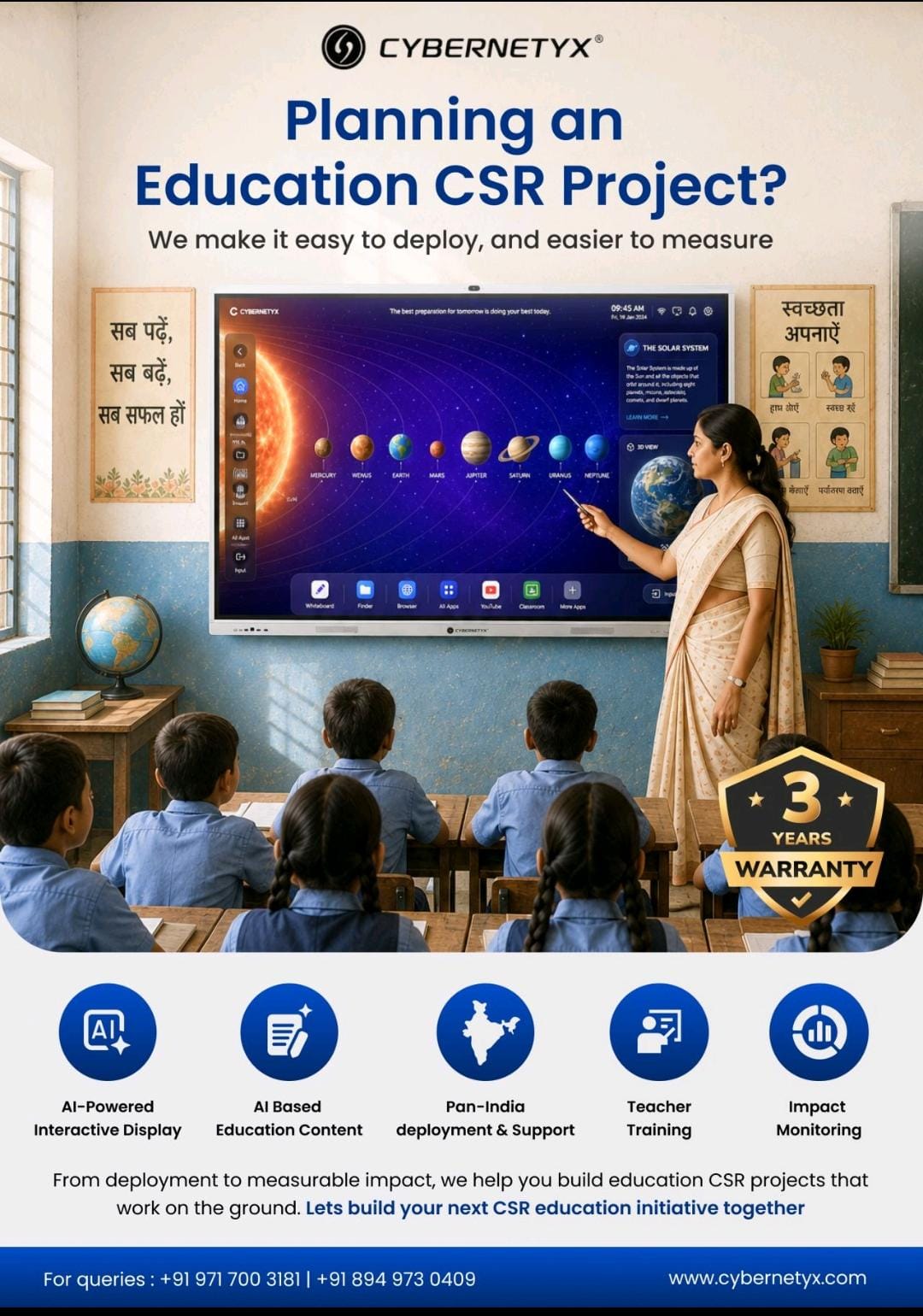

Tags: Jaivir SinghPwC India Foundation
19th India CSR Leadership Summit 2026
India CSR Image 1 India CSR Image 2

CSR, Sustainability, and ESG success stories hindustan zinc
ADVERTISEMENT
India CSR

India CSR

India CSR® is the largest media on CSR and sustainability offering diverse content across multisectoral issues on business responsibility. It covers Sustainable Development, Corporate Social Responsibility (CSR), Sustainability, and related issues in India. Founded in 2009, the organisation aspires to become a globally admired media that offers valuable information to its readers through responsible reporting.

Related Posts

The image is created by AI. India CSR
Articles

CSR Can Bridge the Healthcare Gap for India’s Underserved Communities

7 days ago
NCRBC 2026 Positions ESG as a Driver of India’s Economic Competitiveness
ESG

IICA NCRBC 2026 Positions ESG as a Driver of India’s Economic Competitiveness

2 weeks ago
India CSR
Articles

Hinduja Foundation – From Learning to Livelihood: Building Stronger Pathways for Young People

2 weeks ago
Suvarna Mishra, HR Director at Pluxee India.
Articles

Childcare as Workforce Infrastructure: Supporting Women Across Life Stages

2 weeks ago
Riya Khanduri
Articles

Real Impact Happens When Sectors Collaborate

2 weeks ago
India CSR
Articles

CSR – vivo Ignite: Empowering Young STEM Innovators for Social Transformation in India

3 weeks ago
Load More
bba
ADVERTISEMENT

Interviews

Hardeep S. Brar - BMW Group India CEO
Interviews

Skills Are the Starting Line, Jobs Are the Finish Line: BMW Group India CEO Hardeep S. Brar

by India CSR
July 21, 2026

Hardeep S. Brar discussing BMW India Foundation’s youth skill development programme.

Read moreDetails
Dr. Vikas Garg, Chairman, Ebix Group

CSR: Compliance Gives You a Floor, But Purpose Gives You a Legacy: Dr. Vikas Garg, Chairman, Ebix Group

June 29, 2026
Harkirat Kaur, CEO, Hartek Foundation

Building Resilient Communities Through Sustainable Development: Harkirat Kaur, CEO, Hartek Foundation

June 22, 2026
Indu Mehta, Chief Sustainability Officer (CSO) at Bhilwara Energy Limited @IndiaCSR

ESG in India Has Moved Beyond Storytelling: Bhilwara Energy’s Indu Mehta on Sustainability as an Operating Discipline

May 30, 2026
Load More
Ad 1 Ad 2 Ad 3 Ad 4 Ad 5 Ad 6
ADVERTISEMENT

CSR UPDATES

Industry and Social Leaders to Address CSR Raigarh Summit 2026 on August 5

Biocon Foundation, IISc Shape India’s Oral Cancer Elimination Strategy

Dalmia Bharat Foundation’s DIKSHa Kadapa Places 39 Vocational Trainees

CSR: Reliance Foundation rolls out Comprehensive Relief Efforts in Flood-hit Upper Assam

Kotak Kanya Scholarship: 500 Girls to Receive Rs. 1.5 Lakh Annually

Ramco Industries Spends Rs. 1.91 Crore on CSR, Exceeds FY 2025-26 Obligation

STEM Learning STEM Learning STEM Learning
ADVERTISEMENT
Facebook Twitter Youtube LinkedIn Instagram
India CSR Logo

India CSR is the largest tech-led platform for information on CSR and sustainability in India offering diverse content across multisectoral issues. It covers Sustainable Development, Corporate Social Responsibility (CSR), Sustainability, and related issues in India. Founded in 2009, the organisation aspires to become a globally admired media that offers valuable information to its readers through responsible reporting. To enjoy the premium services, we invite you to partner with us.

Follow us on social media:

Subscribe to Our Newsletter

Don't miss out on the latest updates in corporate social responsibility. Subscribe to our newsletter at indiacsr.in and be part of the positive change.
Please enable JavaScript in your browser to complete this form.
Loading

  • About India CSR
  • Team
  • India CSR Awards 2026
  • India CSR Leadership Summit
  • Partnership
  • Guest Posts
  • Services
  • ESG Professional Network
  • Content Writing Services
  • Business Information
  • Contact
  • Privacy Policy
  • Terms of Use
  • Donate

Copyright © 2026 - India CSR | All Rights Reserved

No Result
View All Result
  • Home
  • Corporate Social Responsibility
    • Art & Culture
    • CSR Leaders
    • Child Rights
    • Culture
    • Education
    • Gender Equality
    • Around the World
    • Skill Development
    • Safety
    • Covid-19
    • Safe Food For All
  • Sustainability
    • Sustainability Dialogues
    • Sustainability Knowledge Series
    • Plastics
    • Sustainable Development Goals
    • ESG
    • Circular Economy
    • BRSR
  • Corporate Governance
    • Diversity & Inclusion
  • Interviews
  • SDGs
    • No Poverty
    • Zero Hunger
    • Good Health & Well-Being
    • Quality Education
    • Gender Equality
    • Clean Water & Sanitation – SDG 6
    • Affordable & Clean Energy
    • Decent Work & Economic Growth
    • Industry, Innovation & Infrastructure
    • Reduced Inequalities
    • Sustainable Cities & Communities
    • Responsible Consumption & Production
    • Climate Action
    • Life Below Water
    • Life on Land
    • Peace, Justice & Strong Institutions
    • Partnerships for the Goals
  • Articles
  • Events
  • हिंदी
  • More
    • Business
    • Finance
    • Environment
    • Economy
    • Health
    • Around the World
    • Social Sector Leaders
    • Social Entrepreneurship
    • Trending News
      • Important Days
      • Great People
      • Product Review
      • International
      • Sports
      • Entertainment
    • Case Studies
    • Philanthropy
    • Biography
    • Technology
    • Lifestyle
    • Sports
    • Gaming
    • Knowledge
    • Home Improvement
    • Words Power
    • Chief Ministers

Copyright © 2026 - India CSR | All Rights Reserved

This website uses cookies. By continuing to use this website you are giving consent to cookies being used. Visit our Privacy and Cookie Policy.
