

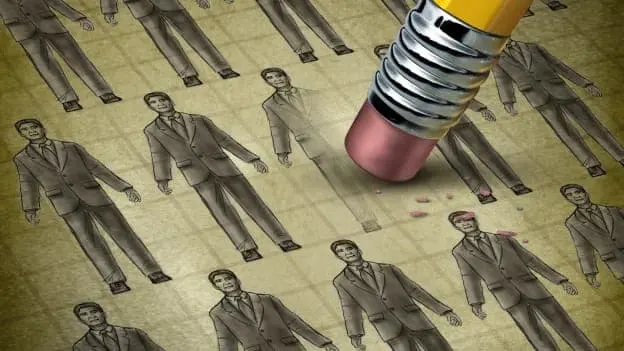



Suppose your performance is good; still, you may lose your job. It is a real concern in 2026. Redesigning roles, adopting AI, and reviewing workforce costs are some factors that companies have started looking at. Being employable is more important nowadays for career stability instead of staying with one employer. Hence, those professionals who match their competence with the changing skill demands can prepare themselves for uncertainty.
What is a Layoff?
When there is no need for a worker’s employment, then a layoff occurs. It can be for any reason, such as no longer needing that position or wanting to reduce its workforce. Business conditions usually govern this decision, not the employee’s performance.
Its consequences can be faced by anyone [one employee, a particular department, or thousands of employees]. The workforce reduction can be experienced by tech companies, financial services firms, retail businesses, etc. Know the factors that leave organisations with no other option than layoffs:

- Cost reduction: Employee expenses might be reduced when company revenue growth slows, or operational costs rise.
- Automation: Repetitive or process-driven responsibilities can be handled by AI and automated systems.
- Business restructuring: To close divisions, merge teams or discontinue certain services.
- Economic pressure: To control expenditure due to Inflation, weak demand and uncertain economic conditions.
- Skill shifts: Need new technical capabilities that existing roles were not originally designed to provide.
Don’t assume that layoff & termination are the same thing. You need to know the difference between layoff vs termination. Due to organisational or economic reasons, a layoff occurs. But a termination can be due to various reasons [performance concerns, misconduct, contractual issues, or any other employee-specific reason].
As job security in India evolves, this difference is particularly relevant. Your employability would only depend on the skills that you have. If it is valuable, you are in. Otherwise, your permanent role may provide stability today, not in future.
Layoffs Happening in 2026: Know Why?
Workplaces have changed significantly during the past few years. Businesses are investing in AI, cloud technologies, automation and data-led systems. To improve productivity & control costs, many companies are compelled to do something.
The core influence behind this is AI. Routine administrative work, basic analysis, customer support processes and certain technical tasks can now be completed faster with digital tools. This does not mean that technology will replace every professional. It does mean that many job descriptions are likely to change.
Another factor is workforce correction. Companies that hired aggressively during periods of rapid growth may later discover that their employee base exceeds current business requirements. When their demands decrease, they are forced to reduce their workforce to keep their business in good condition. So, those who want to match up with the new skills, you need to see the employment trends in 2026:
| Workplace Shift | Possible Effect on Professionals |
| More dependence on AI | Routine tasks or processes might be reduced. |
| Increased automation | Digital skills become more valuable. |
| Cost management | Fewer members are required then. |
| Role redesign | Need to have broader capabilities. |
| Industry changes quickly | Skills may become outdated sooner. |
The discussion about job security in India changes with these developments. Viewing employability as an active career responsibility benefits professionals more instead of relying on a particular designation for long-term stability.
What to Do to Stay Employable During Layoff Cycles?
If you create value in changing business environments, you are not going to face layoffs. Those who are regularly working on their skills may be better prepared for the good rewards, like new responsibilities, internal transitions, external opportunities, etc.
The personal skills review can be the most useful starting point. So, assess your current abilities against the job roles that your company may need in the upcoming two or three years. Once you are done with the comparison, you will identify the gaps in technical, managerial, or digital capabilities. Then, you can focus on the needed actions like:
- Learn how to apply AI tools in my profession
- Data interpretation & digital capabilities
- Communication & leadership capabilities
- An updated CV & professional profile
- Recruitment trends in the desired sector
- To create a portfolio of measurable professional achievements.
- Meaningful relationships with employees or employers.
If you want to gain capabilities in areas like AI, data analytics, finance, digital business, management, and leadership, the relevant upskilling courses can be more helpful in that.
Employees should not wait for a redundancy announcement before starting professional development. Regular learning can make career transitions less difficult and can help professionals respond faster when their sector experiences disruption.
The distinction between layoff vs termination also becomes useful during a job search. A professional affected by organisational downsizing can explain the situation confidently during interviews and then shift the conversation towards achievements, skills and readiness for the next role.
Layoff Happened: How to Reskill, Upskill or Get Career Recovery?
Besides financial & career pressure, career reassessment also becomes the main point when you lose your job. Focusing on new capabilities for a different role, function, or career path is the meaning of reskilling after layoff. If you are regularly upskilling yourself, it supports progression within an existing professional field. Career goals drive the right choice.
| Career Situation | Suitable approach |
| Working in a demanding profession | Upskill in the same field. |
| Your role is going to be automated | Reskill for an adjacent profession. |
| You are heading towards a management role | Business & leadership skills are required. |
| Technology driven works | Learn AI & digital/data capabilities. |
| Want senior responsibilities | Functional & managerial expertise needed. |
First, identify roles that match their existing abilities [transferable] before considering reskilling after layoff. Here is an example:
- A marketing professional may move towards digital analytics or marketing technology.
- A finance professional can enhance their expertise in financial analytics, fintech, or AI-assisted decision-making.
Similarly, well-selected upskilling courses can provide structured learning for professionals who want to remain competitive without changing their entire career direction. Programmes from established institutions can also expose learners to current business practices, peer networks and applied learning.
Stay Ready for the Next Career Opportunity
Layoffs can disrupt careers, but they do not have to define them. Those who remain adaptable, digitally capable, and committed to continuous learning are always the employer favourite. Long-term employability depends on different factors [regular skill reviews, relevant education and awareness of industry changes].
In unusual kinds of situations, those who are prepared can approach career transitions with greater confidence.



