



Trainees crowd a workbench and still cannot see the far side of a donated kettle. A skills session that starts from one flat photo needs an image to 3d draft before anyone argues about the handle.
The argument starts because the photo is honest about the front and silent about the back. Cardboard tracings and spoken guesses then eat the block that was reserved for assembly. Image To 3D is the place a trainer opens when the cohort needs a turnable draft instead of another debate about a hidden spout.
The Flat Photo Stops The Skills Bench
A youth skills bench often receives one product photo with a donation: a kettle, a hand tool, a small appliance. The photo is enough for a poster on the wall. It stops being enough when the lesson is how the handle meets the body on the side nobody photographed.
Trainees can hold the real kettle when the object is in the room. Many sessions have only the picture that arrived with the note. The cohort then spends the opening block pointing at a flat shape and describing a hidden side out loud. Two trainees can describe two different spouts, and both descriptions can sound plausible, because the photo cannot contradict them.
That is a time cost, not a materials cost. The block reserved for assembly practice disappears into a shape argument. The photo did not fail as a record of the front. It failed as the only reference for a lesson about volume, thickness, and the joint a hand has to find.
Cardboard Tracings Waste The Cohort Hour
The usual repair is cheap and thin. Someone traces the silhouette on cardboard, cuts a profile, and holds it up, and the profile matches the outline the camera saw. It still has no underside, no thickness at the handle joint, and no way to turn the object over.
A second repair is a spoken tour. The trainer describes the back from memory. Memory holds when that trainer handled the object the same morning. It collapses when the photo is all the bench has, or when another trainer takes the next cohort and was not in the room for the first description. The lesson then changes between groups. The change stays invisible until a trainee tries to fit a part that existed only in one person’s guess.
Both repairs look thrifty, and both create rework. The cohort either repeats the guessing next session or builds a practice piece around a shape the real object does not have. A skills program that reports practice hours should be able to point at one shared reference, not at a story that changes with the speaker.
Read The Estimate Then Spin The Draft
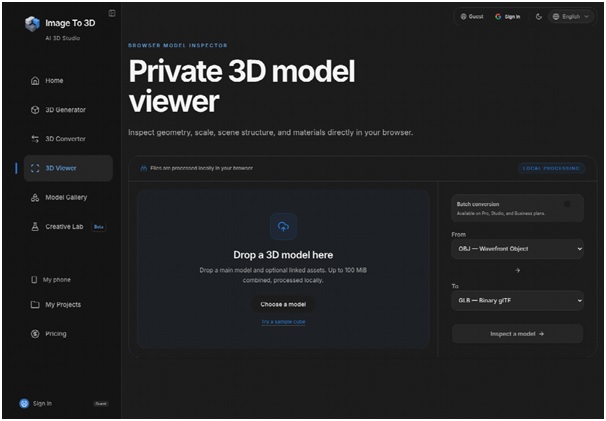
Image To 3D turns one visual reference into a mesh with depth and surfaces. The path on the bench is short, and it starts with the picture, not with a speech. Upload a JPG, PNG, or WebP that shows one complete subject. A front view or a three-quarter view is the reliable start. The subject should sit whole in the frame, with a sharp outline, even light, and space around that outline.
A heavy crop, motion blur, a pile of overlapping objects, or a mirror-like surface is a poor start. The generator can read a silhouette it can actually see. It cannot recover a handle that the crop already cut off. Keep the original photo. Later comparison needs that fixed source, not a second crop someone made on a phone.
Upload One Complete Kettle Photo First
Center the kettle and show the whole object, with even light so color and shadow are not the same smear. Prefer the front or a three-quarter angle, the views the workflow treats as a readable start. Do not begin from a collage of three products on one table. One subject is the rule that makes the draft something a cohort can discuss.
- One complete subject, centered, with space around the outline
- Sharp edges and even light, saved as JPG, PNG, or WebP
- A front or three-quarter view, plus the untouched original for later comparison
Spend A Quick Draft Before More Detail
Choose an available provider and read the credit estimate before generating. A standard generation is the reference figure published with the plans: about 180 credits. The live cost can sit anywhere from 20 to 360 credits, depending on the preset and the options. A quicker draft is the right first spend. It exists so the bench can compare proportions before paying more credits for detail.
A larger texture will not repair an unclear silhouette. If the handle is already in the wrong place relative to the body, more detail only decorates the wrong place. Credits used by a failed provider request are returned, so a failed job does not have to become a second budget argument. Purchased credits roll over and do not expire, which matters for a program that generates in bursts around cohort weeks rather than every day.
The bench should keep an image to 3d model only after someone has turned it and compared the visible side with the photo they uploaded. Until that comparison happens, the file is a candidate, not a teaching aid.
Reject A Mesh That Invents A Spout
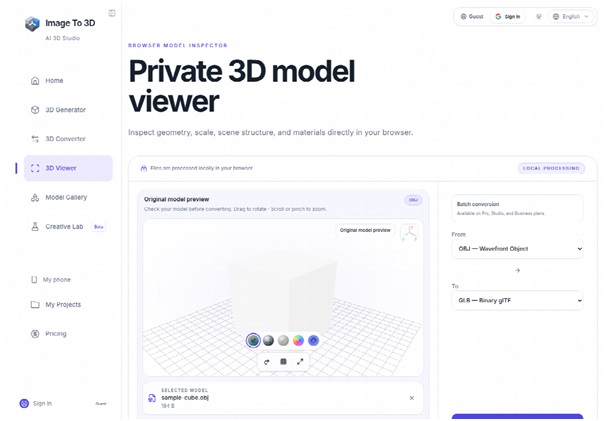
Rotate the result and check three places: the back, the underside, and the thin parts. Look once with the texture on and once with the texture off, so a shading trick is not mistaken for geometry. A draft can look convincing from the original camera angle and still hide a gap, a disconnected handle, or a spout the photo never contained.
The rejection rule is plain. If the turned mesh adds a part the source photo does not support, that mesh does not enter the cohort folder. Set it next to the source photo. If the front silhouette disagrees, the draft is wrong even when the render looks finished. Scale and origin belong in the same pass. A teaching blockout that opens enormous or tiny will waste the next hour before anyone discusses the handle.
Compare The Back With The Source Photo
The back is estimated, because a single image cannot show every surface, and the result is not a measured scan. For a skills bench that is acceptable only as a labeled draft. The trainer says so out loud, that this side was inferred, and trainees then practice spotting the inference. That is a better use of the hour than pretending the hidden side is a measurement.
| Bench question | Flat donor photo | Turnable draft |
| Photographed side | Visible when the shot is clear | Must still match that side |
| Back and underside | Absent from the frame | Present, and those surfaces are estimates |
| What a bad pass costs | A block spent on guessing | A rejected draft; failed provider credits come back |
| What enters the class folder | The photo, as a record of the front | The mesh only after the visible side agrees |
Read the table as a gate, not as a score. A draft that wins on “it turns” and loses on “the front still matches” stays out of the folder. The photo remains the record. The mesh earns a place only as a blockout the cohort can turn.
A Cohort Uses The Mesh As A Blockout
The accepted file is a starting point for the lesson, not a finished appliance. In a game pipeline the same kind of mesh would still need cleaner topology and a sensible pivot before a playable scene. On a skills bench the check is narrower. The cohort uses the mesh to agree on where the handle sits, then goes back to the assembly steps the program actually teaches.
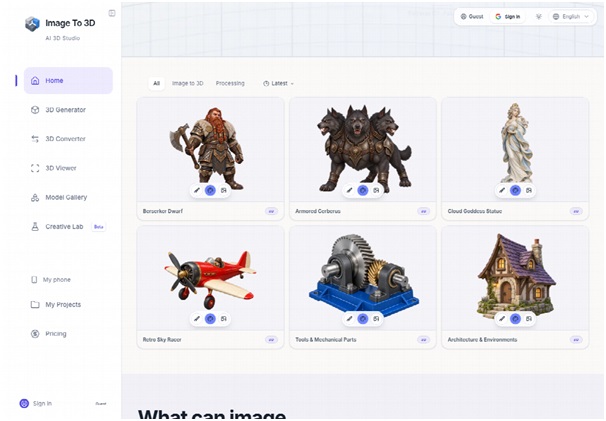
Image To 3D fits that stop. Download the result in a format the provider actually offers for that job, then open it where the cohort already gathers. The download list varies by provider and by result, and the bench does not need every format. It needs one file that turns, and a note that unseen surfaces were inferred.
The next cohort should not inherit a private spoken description. They inherit the photo plus the accepted mesh. The note about the estimated side is the difference between a shared teaching aid and a story that changes when the trainer changes. Print certification, real dimensions, and a closed watertight shell are different jobs. This program is teaching recognition and assembly, so the mesh stops at the blockout.
The Next Cohort Starts From The Same Check
A skills program that receives donor photos, and not always the objects, can put Image To 3D on the bench as the first turnable draft. The fit is a cohort that needs to see a hidden side before assembly practice, and that can spare one review against the source photo.
It is a poor fit when the lesson needs real dimensions, a print that must be watertight, or a measured record of the object. Those jobs still need the object, a caliper, or a scan built for measurement. One complete photo, one estimate read before generating, and one spin that can reject an invented spout are enough for the teaching blockout.
The next cohort then starts from the same check instead of from a new guess. That is the gain: less of the hour lost to a back nobody can see, and a folder the following group can open without asking who remembered the spout.