


Urban mobility is changing quickly. Across cities, more people are looking for transport options that are flexible, affordable, cleaner, and easier to use for everyday travel. While electric cars and public transport often dominate the conversation, electric bikes are becoming an increasingly important part of the short-distance mobility landscape.

For daily commuters, students, workers, parents, and older riders, an e-bike can offer a practical alternative for local trips. It can help reduce dependence on cars, ease short-distance travel, and support a more active lifestyle. But as e-bikes become more common, another question is becoming just as important as convenience: how safe and responsible are the products people are choosing?
This is where ul certified e-bikes play a growing role.
Certification is not simply a technical detail. It is part of a broader shift toward safer products, more accountable manufacturing, and more responsible urban mobility.
Safety Is Now Central to the E-Bike Conversation
In the early growth stage of the e-bike market, many buyers focused mainly on price, range, speed, and motor power. Those factors still matter, but they are no longer enough.
An e-bike is not just a bicycle with a motor. It is an integrated electrical system that includes a battery, charger, motor, controller, wiring, display, braking components, and frame structure. When these systems are well designed and properly tested, they can support reliable daily use. When they are poorly made or lack safety validation, the risks become much higher.
This is why more consumers are paying attention to safety standards.
For everyday riders, ul certified e-bikes provide an added layer of confidence. They show that the product has been evaluated against recognized safety criteria, especially in areas such as battery safety and electrical system reliability. In a market where many products may appear similar online, certification gives buyers a clearer signal of trust.
Responsible Mobility Begins With Product Accountability
Sustainable urban mobility is not only about reducing emissions. It is also about responsible product choices.
A transport solution cannot be considered truly responsible if it creates new safety risks for users, homes, workplaces, or communities. This is especially important for e-bikes, which are often stored and charged indoors, in apartments, offices, garages, and shared residential spaces.
Ul certified e-bikes help address this concern by encouraging stronger accountability across the product lifecycle. Brands that pursue certification are showing that safety is not an afterthought. They are investing in testing, quality control, and consumer confidence.
This matters for the future of electric mobility. As more people adopt e-bikes for commuting and local travel, the industry must move beyond low-cost competition and focus on reliable, safe, and responsible products.
Battery Safety Matters in Sustainable Transport
Battery safety is one of the most important issues in the e-bike sector.
Lithium-ion batteries are widely used in modern electric mobility because they offer strong energy density and practical range. However, they must be designed, assembled, charged, and maintained properly. Poor-quality battery packs, incompatible chargers, or weak electrical systems can create safety concerns.
For consumers, this can be difficult to evaluate. Most riders are not battery engineers. They cannot easily judge the internal quality of a battery pack by looking at a product photo or reading a short listing online.
Certification helps bridge that gap.
When e-bike batteries and electrical systems are tested according to recognized standards, consumers have a stronger basis for comparison. It helps riders move beyond marketing claims and look for evidence of safety commitment.
For responsible urban mobility, this is essential. Cleaner transportation should also be safer transportation.
E-Bikes Can Support Cleaner Short-Distance Travel
Many urban trips are short. A ride to work, a grocery run, a visit to a nearby shop, or a local errand may not require a car. Yet in many cities, cars are still used for trips that could be completed by lighter, more efficient transport options.
E-bikes can help change that pattern.
They make short-distance travel easier for people who may not want to rely only on a traditional bicycle. Electric assistance helps with hills, longer routes, heat, fatigue, and daily time pressure. This makes e-bikes more practical for a wider range of riders.
When used responsibly, e-bikes can help reduce traffic pressure, lower fuel dependence for short trips, and support more flexible urban lifestyles. They are especially useful in the space between walking and driving, where many daily journeys actually happen.
However, for e-bikes to become a trusted part of sustainable mobility, safety must remain a priority. Ul certified models can help build that trust.
Why Step Through Electric Bikes Support Inclusive Mobility
Responsible mobility should also be inclusive.
Not every rider feels comfortable with a high-step frame or aggressive riding position. Some commuters wear work clothes. Some older riders want easier mounting and dismounting. Some people carry bags, groceries, or daily essentials. Others simply prefer a bike that feels more approachable.
This is why stepping through electric bikes is becoming important in the broader mobility conversation.
A step-through frame lowers the barrier to riding. It allows users to get on and off the bike more easily, which can improve comfort and confidence. For everyday urban riders, this small design difference can make an e-bike feel much more practical.
Inclusive design matters because sustainable mobility will only grow if it works for many types of people, not just experienced cyclists. A step through electric bike can support commuters, casual riders, older adults, and people who want a simpler daily travel option.
In this sense, accessibility is part of sustainability.
Why Fat Tire Electric Bikes Add Stability and Versatility
Urban roads are not always smooth. Riders may face uneven pavement, potholes, gravel paths, wet surfaces, or mixed terrain between city streets and suburban routes. A fat tire electric bike can help improve stability and confidence in these conditions.
Fat tires provide a wider contact patch with the ground, which can make the ride feel more stable. For riders who are new to e-bikes or who want more control on varied surfaces, this can be an important benefit.
This does not mean every rider needs an all-terrain e-bike. But for people who want one bike for commuting, errands, weekend rides, and rougher local paths, fat tire models offer useful versatility.
In responsible urban mobility, practicality matters. The more confidently a rider can use an e-bike across real-world conditions, the more likely they are to choose it for everyday trips.
Product Spotlight: Puckipuppy Boxer ST
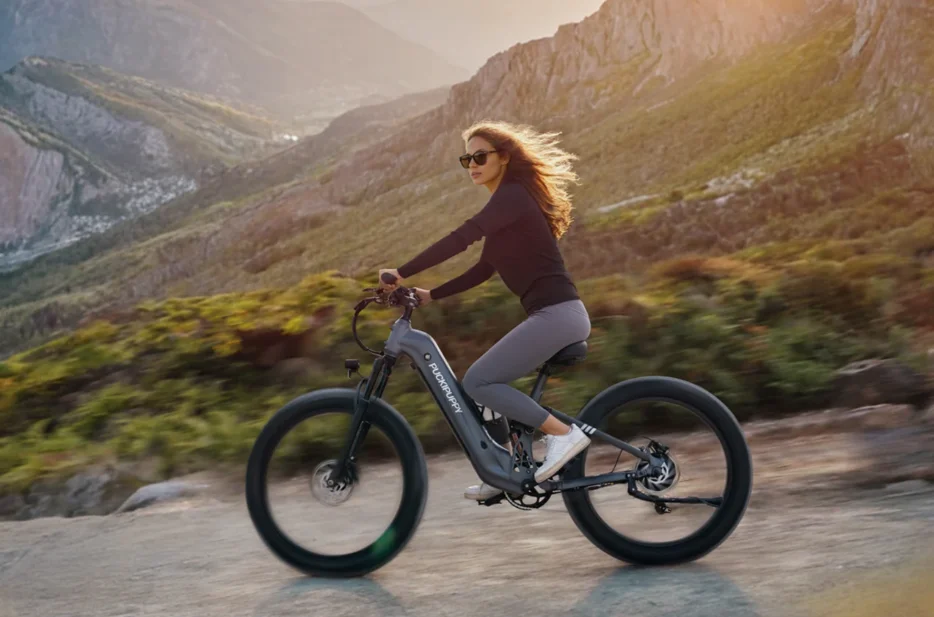
For riders looking for a ul certified e-bike that combines accessibility, comfort, and all-terrain confidence, the Puckipuppy Boxer ST is a strong option to consider.
The Boxer ST is positioned as both a step-through electric bike and a fat tire electric bike, making it suitable for adults who want easier access without giving up stability or performance. Its low-entry frame helps riders mount and dismount more comfortably, while its fat tires support a more confident ride across mixed surfaces. This combination makes it practical for commuting, neighborhood travel, weekend rides, and outdoor routes where comfort and control matter.
What makes the Boxer ST especially relevant to the responsible mobility conversation is its safety certification. Puckipuppy states that the Boxer ST has been ul certified to UL 2271 and UL 2849 by SGS, giving safety-conscious riders an added reason to trust its battery and electrical system. For consumers who want an e-bike that supports cleaner short-distance travel while also prioritizing ul certified safety, the Boxer ST reflects the kind of product direction the industry needs more of.
It is not only about moving faster. It is about moving with confidence, responsibility, and greater everyday usability.
Certified E-Bikes Can Build Consumer Trust
Trust is one of the biggest challenges in the fast-growing e-bike market.
Online shoppers may see many products with similar claims: long range, strong motors, comfortable rides, and attractive prices. But behind those claims, product quality can vary significantly. Without clear safety signals, consumers may struggle to understand which bikes are built for dependable long-term use.
UL certified e-bikes can help solve this problem.
They give consumers a more objective factor to consider. Instead of choosing only based on price or appearance, buyers can ask whether the e-bike’s battery and electrical systems have been tested according to recognized standards.
This is also good for responsible brands. Certification can help separate companies that invest in safety from those that compete only on low prices. Over time, this can raise expectations across the industry.
Urban Mobility Needs a Responsibility Mindset
The future of city transport will depend on many solutions working together. Public transport, walking, cycling, electric cars, shared mobility, and e-bikes all have a role to play.
E-bikes are especially valuable for short-distance mobility because they are compact, efficient, and accessible to many users. But their growth must be supported by responsible design, safe battery systems, proper charging habits, and informed consumer choices.
This is where a responsibility mindset becomes important.
Governments, companies, retailers, and consumers all have roles to play. Brands should prioritize testing and transparent product information. Retailers should educate customers about safety and proper use. Riders should follow local laws, use appropriate safety gear, and charge their bikes responsibly.
UL certified e-bikes are one part of this larger ecosystem. They help create a stronger foundation for safer adoption.
Safe Use Still Depends on the Rider
Certification is important, but it does not replace responsible use.
E-bike owners should always use the correct charger, follow the manufacturer’s instructions, avoid damaged batteries, and store the bike in a safe environment. Riders should also inspect brakes, tires, lights, and electrical components regularly.
Safe riding habits matter as well. Riders should follow traffic rules, respect pedestrians, wear appropriate protective gear, and understand the legal classification of their e-bike in their region.
Responsible mobility is a shared responsibility. A certified product is a strong starting point, but safe everyday behavior completes the picture.
The Future of E-Bikes Is Safer, Smarter, and More Accountable
As e-bikes become more mainstream, the industry will likely face higher expectations from consumers, regulators, and communities. Safety standards, battery quality, and responsible manufacturing will become more important in purchase decisions.
This is a positive development.
It means the e-bike market is maturing. Instead of being seen only as a convenient gadget or recreational vehicle, the e-bike is becoming part of serious urban mobility planning. With that shift comes the need for better quality, stronger trust, and clearer safety information.
Ul certified e-bikes are well positioned for this future. They support the idea that electric mobility should be not only cleaner and more convenient, but also safer and more accountable.
Final Thoughts
Ul certified e-bikes support safer and more responsible urban mobility by bringing trust, accountability, and safety awareness into the electric transportation conversation.
They help consumers make better choices. They encourage brands to invest in safer products. They support the growth of cleaner short-distance travel. And they make e-bikes more credible as part of the future urban mobility ecosystem.
For riders who want accessibility and stability, step through electric bikes and fat tire electric bikes offer practical advantages for daily use. Models like the Puckipuppy Boxer ST show how these design features can work together with safety ul certification to create a more responsible riding experience.
The future of urban mobility should not be measured only by how far or how fast people can travel. It should also be measured by how safely, responsibly, and sustainably they can move through everyday life.