


• India CSR Awards 2025
  • India CSR Leadership Summit
  • Guest Posts
Friday, February 13, 2026
India CSR
  • Home
  • Corporate Social Responsibility
    • Art & Culture
    • CSR Leaders
    • Child Rights
    • Culture
    • Education
    • Gender Equality
    • Around the World
    • Skill Development
    • Safety
    • Covid-19
    • Safe Food For All
  • Sustainability
    • Sustainability Dialogues
    • Sustainability Knowledge Series
    • Plastics
    • Sustainable Development Goals
    • ESG
    • Circular Economy
    • BRSR
  • Corporate Governance
    • Diversity & Inclusion
  • Interviews
  • SDGs
    • No Poverty
    • Zero Hunger
    • Good Health & Well-Being
    • Quality Education
    • Gender Equality
    • Clean Water & Sanitation – SDG 6
    • Affordable & Clean Energy
    • Decent Work & Economic Growth
    • Industry, Innovation & Infrastructure
    • Reduced Inequalities
    • Sustainable Cities & Communities
    • Responsible Consumption & Production
    • Climate Action
    • Life Below Water
    • Life on Land
    • Peace, Justice & Strong Institutions
    • Partnerships for the Goals
  • Articles
  • Events
  • हिंदी
  • More
    • Business
    • Finance
    • Environment
    • Economy
    • Health
    • Around the World
    • Social Sector Leaders
    • Social Entrepreneurship
    • Trending News
      • Important Days
        • Festivals
      • Great People
      • Product Review
      • International
      • Sports
      • Entertainment
    • Case Studies
    • Philanthropy
    • Biography
    • Technology
    • Lifestyle
    • Sports
    • Gaming
    • Knowledge
    • Home Improvement
    • Words Power
    • Chief Ministers
No Result
View All Result
  • Home
  • Corporate Social Responsibility
    • Art & Culture
    • CSR Leaders
    • Child Rights
    • Culture
    • Education
    • Gender Equality
    • Around the World
    • Skill Development
    • Safety
    • Covid-19
    • Safe Food For All
  • Sustainability
    • Sustainability Dialogues
    • Sustainability Knowledge Series
    • Plastics
    • Sustainable Development Goals
    • ESG
    • Circular Economy
    • BRSR
  • Corporate Governance
    • Diversity & Inclusion
  • Interviews
  • SDGs
    • No Poverty
    • Zero Hunger
    • Good Health & Well-Being
    • Quality Education
    • Gender Equality
    • Clean Water & Sanitation – SDG 6
    • Affordable & Clean Energy
    • Decent Work & Economic Growth
    • Industry, Innovation & Infrastructure
    • Reduced Inequalities
    • Sustainable Cities & Communities
    • Responsible Consumption & Production
    • Climate Action
    • Life Below Water
    • Life on Land
    • Peace, Justice & Strong Institutions
    • Partnerships for the Goals
  • Articles
  • Events
  • हिंदी
  • More
    • Business
    • Finance
    • Environment
    • Economy
    • Health
    • Around the World
    • Social Sector Leaders
    • Social Entrepreneurship
    • Trending News
      • Important Days
        • Festivals
      • Great People
      • Product Review
      • International
      • Sports
      • Entertainment
    • Case Studies
    • Philanthropy
    • Biography
    • Technology
    • Lifestyle
    • Sports
    • Gaming
    • Knowledge
    • Home Improvement
    • Words Power
    • Chief Ministers
No Result
View All Result
India CSR
No Result
View All Result
Home Education

Foreign Universities can operate, set up campuses in India

India CSR by India CSR
August 10, 2020
in Education, Prime
Reading Time: 5 mins read
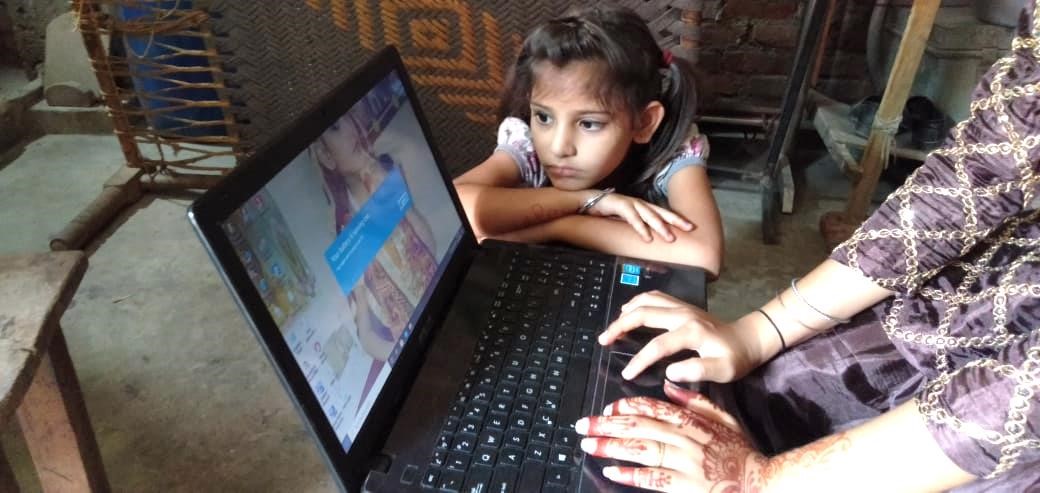
Representing Picture

Representing Picture

Share Share Share Share

Foreign Universities will now be able to set up campuses in India to raise the level of Indian Education, after the Centre on Wednesday introduced the new National Education Policy, to bring a complete and overhaul change in the Indian education system with a number of reforms to create more job providers and not job seekers.

The new National Education Policy allows foreign universities to set up campuses in India.

Foreign Universities will now be able to set up campuses in India to raise the level of Indian Education, after the Centre on Wednesday introduced the new National Education Policy, to bring a complete and overhaul change in the Indian education system with a number of reforms to create more job providers and not job seekers.

According to the new National Education Policy, foreign universities will now be able to operate in India. This move will add ease for students who would like to seek foreign education and save them a lot on dollars. It will also raise the quality of higher education and accessible for a larger section compared earlier.

India CSR
Book on India’ New Education Policy

The move will allow 200 top global universities to operate in India and provide quality education and raise standards of India varsities as well.

New National Education Policy | Key Highlights

  • This is the first education policy of the 21st century and replaces the thirty-four-year-old National Policy on Education (NPE), 1986.
  • The new policy aims for universalisation of education from pre-school to secondary level with 100 per cent Gross Enrolment Ratio (GER) in school education by 2030 and aims to raise GER in higher education to 50 per cent by 2025.
  • NEP 2020 will bring two crore out of school children back into the main-stream.
  • The 10+2 structure of school curricula is to be replaced by a 5+3+3+4 curricular structure corresponding to ages 3-8, 8-11, 11-14, and 14-18 years respectively. It will include 12 years of schooling and three years of Anganwadi and pre-schooling.
  • NCERT will develop a National Curricular and Pedagogical Framework for Early Childhood Care and Education (NCPFECCE) for children up to the age of eight.
  • NEP 2020 calls for setting up of a National Mission on Foundational Literacy and Numeracy by the Education Ministry.
  • States will prepare an implementation plan for attaining universal foundational literacy and numeracy in all primary schools for all learners by grade 3 by 2025. A National Book Promotion Policy is to be formulated.
  • All students will take school examinations in Grades 3, 5, and 8 which will be conducted by the appropriate authority. Board exams for Grades 10 and 12 will be continued, but redesigned with holistic development as the aim.
  • A new National Assessment Centre, PARAKH (Performance Assessment, Review, and Analysis of Knowledge for Holistic Development), will be set up as a standard-setting body.
  • NEP emphasises on setting up of Gender Inclusion Fund and also Special Education Zones for disadvantaged regions and groups.
  • Every state/district will be encouraged to establish ‘Bal Bhavans’ as a special daytime boarding school, to participate in art-related, career-related, and play-related activities.
  • Free school infrastructure can be used as Samajik Chetna Kendras.
  • A common National Professional Standards for Teachers (NPST) will be developed by the National Council for Teacher Education by 2022, in consultation with NCERT, SCERTs, teachers and expert organizations from across levels and regions.
  • States/UTs will set up independent State School Standards Authority (SSSA). The SCERT will develop a School Quality Assessment and Accreditation Framework (SQAAF) through consultations with all stakeholders.
  • NEP 2020 aims to increase the Gross Enrollment Ratio in higher education including vocational education from 26.3 per cent in 2018 to 50 per cent by 2035 and aims to add 3.5 crore new seats to higher education institutions.
  • The policy envisages broad-based, multi-disciplinary, holistic Under Graduate education with flexible curricula, creative combinations of subjects, integration of vocational education and multiple entry and exit points with appropriate certification.
  • An Academic Bank of Credit is to be established for digitally storing academic credits earned from different HEIs so that these can be transferred and counted towards final degree earned.
  • Multidisciplinary Education and Research Universities (MERUs), at par with IITs, IIMs, to be set up as models of best multidisciplinary education of global standards in the country.
  • The National Research Foundation will be created as an apex body for fostering a strong research culture and building research capacity across higher education.
  • Higher Education Commission of India(HECI) will be set up as a single overarching umbrella body for entire higher education, excluding medical and legal education.
  • Public and private higher education institutions will be governed by the same set of norms for regulation, accreditation and academic standards.
  • Affiliation of colleges is to be phased out in 15 years and a stage-wise mechanism is to be established for granting graded autonomy to colleges.
  • A new and comprehensive National Curriculum Framework for Teacher Education, NCFTE 2021, will be formulated by the NCTE in consultation with NCERT.
  • By 2030, the minimum degree qualification for teaching will be a 4-year integrated B.Ed.degree. Stringent action will be taken against substandard stand-alone Teacher Education Institutions (TEIs).
  • A National Mission for Mentoring will be established, with a large pool of outstanding senior/retired faculty who would be willing to provide short and long-term mentoring/professional support to university/college teachers.
  • The National Scholarship Portal will be expanded to track the progress of students receiving scholarships.
  • Private HEIs will be encouraged to offer larger numbers of free ships and scholarships to their students.
  • Measures such as online courses and digital repositories, funding for research, improved student services, credit-based recognition of MOOCs, etc.
  • , will be taken to ensure distance learning is at par with the highest quality in-class programmes.
  • A comprehensive set of recommendations for promoting online education consequent to the recent rise in epidemics and pandemics in order to ensure preparedness with alternative modes of quality education whenever and wherever traditional modes of education are not possible, has been covered.
  • A dedicated unit for the purpose of orchestrating the building of digital infrastructure, digital content and capacity building will be created in the HRD ministry to look after the e-education needs of both school and higher education.
  • An autonomous body, the National Educational Technology Forum (NETF), will be created to provide a platform for the free exchange of ideas on the use of technology to enhance learning, assessment, planning, administration.
  • NEP recommends setting an Indian Institute of Translation and Interpretation (IITI), National Institute (or Institutes) for Pali, Persian and Prakrit, strengthening of Sanskrit and all language departments in HEIs, and use mother tongue/local language as a medium of instruction in more HEI programmes.
  • Internationalisation of education will be facilitated through both institutional collaborations, and student and faculty mobility and allowing entry of top world ranked universities to open campuses in India.
  • Stand-alone technical universities, health science universities, legal and agricultural universities etc will aim to become multi-disciplinary institutions.
  • Policy aims to achieve 100% youth and adult literacy.
  • The Centre and the States will work together to increase the public investment in Education sector to reach 6 per cent of GDP at the earliest.
Tags: National Education Policy 2020

CSR, Sustainability, and ESG success stories hindustan zinc
ADVERTISEMENT
India CSR

India CSR

India CSR is the largest media on CSR and sustainability offering diverse content across multisectoral issues on business responsibility. It covers Sustainable Development, Corporate Social Responsibility (CSR), Sustainability, and related issues in India. Founded in 2009, the organisation aspires to become a globally admired media that offers valuable information to its readers through responsible reporting.

Related Posts

Chhattisgarh Cabinet Clears 40 Acres for NMIMS B-School Campus in Nava Raipur
Education

Why Mumbai Is Emerging as a Hub for International-Style Schooling

1 day ago
4 Things to Expect from A-Level Economics Tuition in Singapore
Education

4 Things to Expect from A-Level Economics Tuition in Singapore

2 days ago
Preschool Environment
Education

Essential Preschool Environment Elements Valued by Parents in Malad West

3 weeks ago
Understanding the Scope of Tech Disruption in Healthcare 
Education

Understanding the Scope of Tech Disruption in Healthcare 

1 month ago
SEBI Grade A Exam and Online Coaching
Education

In-Depth Breakdown of SEBI Grade A Exam and Online Coaching

2 months ago
KL University Students Win IndiaSkills Honours in Additive Manufacturing 2025
Education

KL University Students Win IndiaSkills Honours in Additive Manufacturing 2025

2 months ago
Load More
Ambedkar Chamber
ADVERTISEMENT
India Sustainability Awards 2026
ADVERTISEMENT

LATEST NEWS

HarshulRai’s Role in Shaping Indore as a Hub for Sustainable Health Innovation

Fintech Platform Endl Secures 1.5 Million Dollar Investment to Scale Global Payment Infrastructure

Baroda BNP Paribas debuts “Baroda BNP Paribas ESG Best-in-Class Strategy Fund” – good for investors and society

To Cut A Long Story Short: Eleven Stories That Look Closely at Choice, Chance, and Consequence

Securing High-Turnover Assets: Why Your Business Needs a Godrej Enterprises Group Gold Locker

Samsung Galaxy F70e – Redefining Everyday Performance

Economy India Largest Media on Indian Economy and Business
ADVERTISEMENT
Ad 1 Ad 2 Ad 3
ADVERTISEMENT
ESG Professional Network
ADVERTISEMENT

TOP NEWS

Hindustan Zinc Becomes World’s Largest Zinc Supplier, Powered by Rajasthan’s Resilient Workforce

Performance Driven Digital Marketing That Delivers Real Business Growth

Stronger Families, Stronger Bottom Lines: Why Childcare Support Is a Business Imperative

17-Year-Old Aditya Pandya Becomes India’s Youngest Male Analog Astronaut After Completing Aaka Space’s Lunar Habitat Mission

Indian Astrology Emerging as a Practical Life-Guidance System

Texvalley invites Franchisees for upcoming Fortune City, Erode

Load More
STEM Learning STEM Learning STEM Learning
ADVERTISEMENT

Interviews

Prof. Kang Sung Lee, PhD
Interviews

Prof. Kang Sung Lee on Academia, Policy, and Industry-Linked Career Pathways

by India CSR
February 5, 2026

Despite being an advanced economy, South Korea faces a severe demographic crisis.

Read moreDetails
Magma Group CEO and Founder, Neal Thakker

Embedding CSR in Responsible Manufacturing at Magma Group: An Interview with Neal Thakker

January 21, 2026
Sudeep Agrawal, CFO & Head – CSR, Ashirvad by Aliaxis

Integrating Financial Leadership With Impactful CSR Initiatives: An Interview with Sudeep Agrawal, Ashirvad by Aliaxis

December 29, 2025
Satish Jha

Interview with Satish Jha: Pioneering CSR in Education

December 5, 2025
Load More
Facebook Twitter Youtube LinkedIn Instagram
India CSR Logo

India CSR is the largest tech-led platform for information on CSR and sustainability in India offering diverse content across multisectoral issues. It covers Sustainable Development, Corporate Social Responsibility (CSR), Sustainability, and related issues in India. Founded in 2009, the organisation aspires to become a globally admired media that offers valuable information to its readers through responsible reporting. To enjoy the premium services, we invite you to partner with us.

Follow us on social media:


Dear Valued Reader

India CSR is a free media platform that provides up-to-date information on CSR, Sustainability, ESG, and SDGs. We need reader support to continue delivering honest news. Donations of any amount are appreciated.

Help save India CSR.

Donate Now

Donate at India CSR

  • About India CSR
  • Team
  • India CSR Awards 2025
  • India CSR Leadership Summit
  • Partnership
  • Guest Posts
  • Services
  • ESG Professional Network
  • Content Writing Services
  • Business Information
  • Contact
  • Privacy Policy
  • Terms of Use
  • Donate

Copyright © 2025 - India CSR | All Rights Reserved

No Result
View All Result
  • Home
  • Corporate Social Responsibility
    • Art & Culture
    • CSR Leaders
    • Child Rights
    • Culture
    • Education
    • Gender Equality
    • Around the World
    • Skill Development
    • Safety
    • Covid-19
    • Safe Food For All
  • Sustainability
    • Sustainability Dialogues
    • Sustainability Knowledge Series
    • Plastics
    • Sustainable Development Goals
    • ESG
    • Circular Economy
    • BRSR
  • Corporate Governance
    • Diversity & Inclusion
  • Interviews
  • SDGs
    • No Poverty
    • Zero Hunger
    • Good Health & Well-Being
    • Quality Education
    • Gender Equality
    • Clean Water & Sanitation – SDG 6
    • Affordable & Clean Energy
    • Decent Work & Economic Growth
    • Industry, Innovation & Infrastructure
    • Reduced Inequalities
    • Sustainable Cities & Communities
    • Responsible Consumption & Production
    • Climate Action
    • Life Below Water
    • Life on Land
    • Peace, Justice & Strong Institutions
    • Partnerships for the Goals
  • Articles
  • Events
  • हिंदी
  • More
    • Business
    • Finance
    • Environment
    • Economy
    • Health
    • Around the World
    • Social Sector Leaders
    • Social Entrepreneurship
    • Trending News
      • Important Days
      • Great People
      • Product Review
      • International
      • Sports
      • Entertainment
    • Case Studies
    • Philanthropy
    • Biography
    • Technology
    • Lifestyle
    • Sports
    • Gaming
    • Knowledge
    • Home Improvement
    • Words Power
    • Chief Ministers

Copyright © 2025 - India CSR | All Rights Reserved

This website uses cookies. By continuing to use this website you are giving consent to cookies being used. Visit our Privacy and Cookie Policy.

