


₹3,100 crore facility will use over 80% renewable power, recycle all its water and create nearly 1,000 jobs
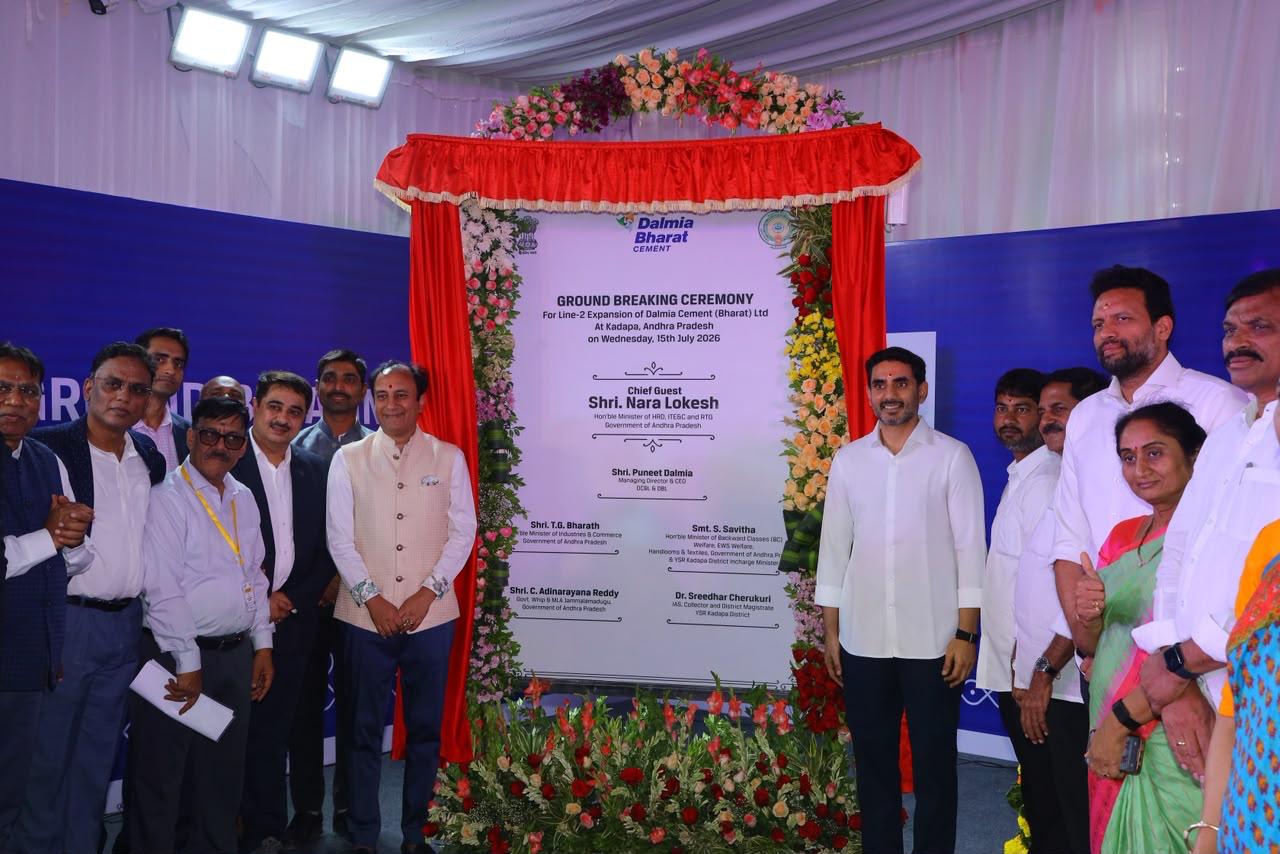
KAPADA, Andhra Pradesh (India CSR®): Dalmia Bharat Limited has laid the foundation stone for a new integrated cement manufacturing unit in Kadapa, Andhra Pradesh. Sustainability will be at the centre of the Rs. 3,100 crore project. The facility will meet more than 80% of its power requirement through renewable energy. It has also been designed to recycle all the water used in its operations. Dalmia Bharat said the plant would support its ambition to manufacture one of the world’s greenest cement products. The project brings together industrial expansion, cleaner energy, water conservation and employment generation. It is expected to create around 1,000 direct and indirect jobs after commissioning.

Sustainability at the Heart of Manufacturing
Cement production is energy-intensive and contributes significantly to industrial carbon emissions. The design of the new Kadapa plant seeks to address this challenge by increasing the use of renewable electricity and improving resource efficiency. More than 80% of the unit’s power will come from renewable sources. This is expected to reduce its dependence on conventional energy and lower the carbon intensity of cement production.
Water management will be another important feature. The facility plans to recycle all the water used within the manufacturing system. This approach is particularly relevant in water-sensitive regions, where industries must balance production requirements with the needs of communities and agriculture. Through these measures, the company aims to establish a new benchmark for sustainable cement manufacturing in India.
₹3,100 Crore Investment in Andhra Pradesh
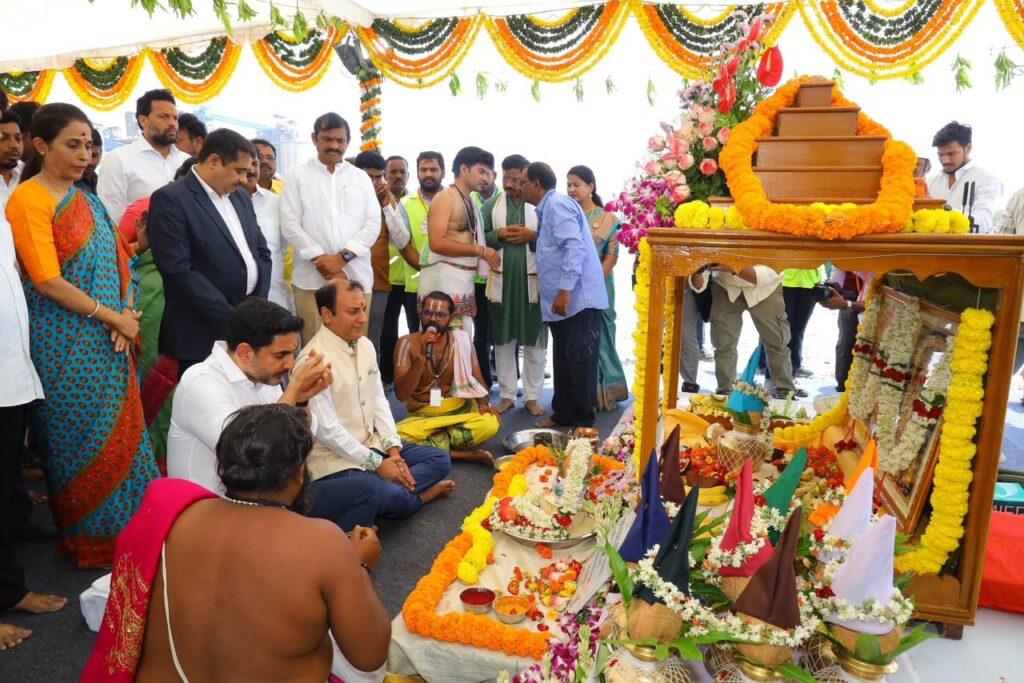
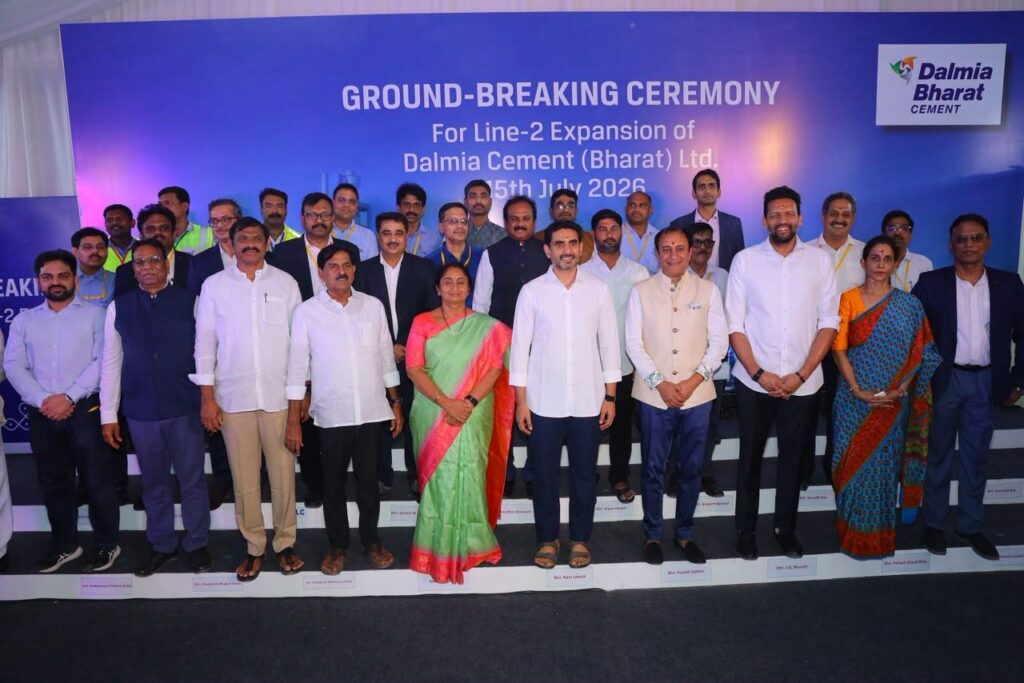
The Kadapa project involves an investment of Rs. 3,100 crore. It is part of the expansion programme announced by Dalmia Bharat in 2025. The foundation-stone ceremony was attended by Shri Nara Lokesh, Minister for Information Technology, Electronics and Communications, Real Time Governance and Human Resources Development, Government of Andhra Pradesh.
Puneet Dalmia, Managing Director and CEO of Dalmia Bharat Limited, senior government officials and members of the company’s leadership team were also present. The project will be Dalmia Bharat’s second manufacturing unit in Kadapa. It also represents a significant addition to Andhra Pradesh’s growing industrial and sustainable manufacturing ecosystem.
Largest Integrated Unit in Southern India
The new facility is scheduled to be commissioned by the third quarter of FY 2027–28. Once operational, it will become Dalmia Bharat’s largest integrated cement manufacturing facility in southern India. The plant will have a clinker production capacity of 6.1 million tonnes per annum. Its cement manufacturing capacity will be 9.6 million tonnes per annum.
The scale of the project is expected to strengthen the company’s presence in southern India, where demand for cement is growing alongside infrastructure development, housing and urbanisation. The expansion will also support the company’s wider capacity-growth plans while integrating sustainability into new manufacturing assets.
Andhra Pradesh Seeks Green Industrial Growth
Commending Dalmia Bharat’s investment, Nara Lokesh said the project aligned with Andhra Pradesh’s vision of building a competitive and future-ready economy through sustainable industrialisation. “We see in Dalmia Bharat a strong partner that wholeheartedly shares our vision of building a globally competitive, future-ready economy through sustainable industrialisation. We welcome the company’s continued faith in Andhra Pradesh and look forward to strengthening this partnership to create jobs, empower local communities, strengthen our industrial base and position our state as a global benchmark for green, technology-led growth,” Lokesh said.
The minister’s statement underlined the state government’s focus on attracting investments that combine economic growth with cleaner technologies and employment creation.
Building for a Low-Carbon Future
Puneet Dalmia said Andhra Pradesh had been an important part of the company’s growth journey for more than a decade. “Andhra Pradesh has been an integral part of our growth journey for over a decade. Under the visionary leadership of Hon’ble Chief Minister Shri N. Chandrababu Naidu Ji, Andhra Pradesh has emerged as one of India’s most progressive and investment-friendly states. Transparent governance, policy stability, world-class infrastructure and a strong commitment to ease of doing business have created an ecosystem that has encouraged Dalmia Bharat to make yet another significant investment in the state,” he said.
Dalmia described the new unit as part of the company’s long-term effort to transform cement manufacturing for a low-carbon economy. “This world-class unit is a clear reflection of our long-term vision of redefining cement manufacturing for a low-carbon future. We are creating a next-generation manufacturing ecosystem capable of producing one of the world’s greenest cements, while setting new benchmarks in efficiency and sustainability,” he said. “As a partner in Bharat’s growth journey, we are committed to building manufacturing assets that not only support the nation’s infrastructure needs today but also contribute to its sustainability goals,” he added.
Renewable Energy Commitments
Dalmia Bharat is the first cement company globally to commit to all three international initiatives—RE100, EP100 and EV100. RE100 focuses on the transition to renewable electricity. EP100 encourages businesses to improve energy productivity, while EV100 promotes the adoption of electric vehicles. The company’s participation in these initiatives reflects its broader effort to reduce emissions across electricity consumption, industrial operations and transportation. The high share of renewable power proposed for the Kadapa unit will support these commitments and strengthen the company’s clean-energy transition.
Employment and Local Business Opportunities
Beyond its environmental features, the project is expected to create approximately 1,000 direct and indirect employment opportunities. The development of the plant could also generate business for local micro, small and medium enterprises. Transporters, contractors, suppliers and service providers are expected to benefit from construction and operational requirements. Local skill development will be important to ensure that communities around the plant can participate in the emerging employment and business opportunities. The company said it would work with the administration and local communities to promote inclusive development in the region.
Community Development Programmes to Expand
Dalmia Bharat plans to increase its social-development programmes in areas surrounding the new facility. These programmes will focus on education, healthcare, skill development and community welfare. The activities will be implemented through the company’s flagship CSR programmes, DIKSHa and Gram Parivartan. DIKSHa focuses on skill development and livelihood opportunities, while Gram Parivartan supports integrated rural development. Their expansion could help connect industrial investment with improvements in community capacity and quality of life.
A New Model for Sustainable Industrialisation
The Kadapa project reflects a larger shift in industrial development. New manufacturing facilities are increasingly expected to deliver economic value while reducing their environmental footprint. Renewable energy, water recycling, efficient production and community participation will therefore be important measures of the project’s long-term impact. If implemented as planned, the new unit could demonstrate how large cement manufacturing projects can combine production capacity with cleaner energy, resource conservation and inclusive regional development.
About Dalmia Bharat
Founded in 1939, Dalmia Bharat Limited is one of India’s major cement manufacturers. The company is headquartered in New Delhi and is listed on the BSE and NSE under the symbol DALBHARAT. Dalmia Bharat, including its subsidiaries, currently has an installed capacity of 54.7 million tonnes. It operates 19 manufacturing units across 12 states and is India’s fourth-largest cement company by installed capacity. The company says it has one of the lowest carbon footprints in the global cement industry and is working to further reduce the environmental impact of its operations through renewable energy, energy efficiency, alternative fuels and resource conservation.