

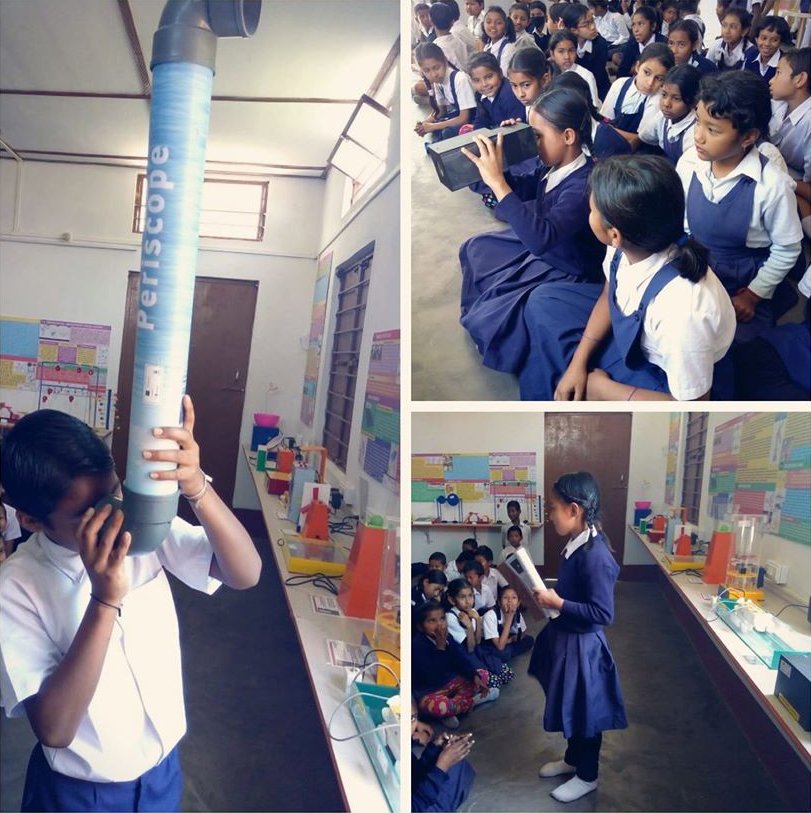



Bridging the Gap Between Potential and Opportunity
By Suhana Agrawal
Every child, regardless of whether they grow up in a bustling metropolis or a remote mountain village, carries within them the capacity to wonder, to question, and to innovate. Science, Technology, Engineering, and Mathematics – the disciplines grouped under the acronym STEM – are not simply academic subjects. They are ways of thinking: modes of inquiry that equip people to solve problems, navigate complexity, and participate meaningfully in an increasingly technological world. Yet for millions of students in rural schools across the globe, access to quality STEM education remains elusive, fragmented, and deeply inequitable.
The rural-urban divide in education is not new. It has persisted across decades, policies, and administrations. But as the global economy becomes ever more dependent on technological literacy, the stakes of this divide grow higher. Rural students who are shut out of rigorous STEM learning are not merely missing out on interesting classes – they are being excluded from the foundational preparation required for careers in medicine, engineering, data science, environmental management, agriculture technology, and countless other fields shaping the future. The consequences are both personal and societal: squandered talent, entrenched poverty cycles, and a national innovation base that is narrower than it needs to be.

This article examines the state of STEM education in rural schools – the challenges that define it, the innovations that are beginning to change it, and the policy imagination required to truly transform it.
The Landscape of Rural Education: A Structural Overview
Before addressing STEM specifically, it is important to understand the broader context in which rural schools operate. Rural schools are defined not merely by geography but by a constellation of characteristics: smaller student populations, greater distances between communities, lower median household incomes, and a tax base that is often insufficient to fund competitive educational programmes.
In India, roughly 65 percent of the population lives in rural areas, yet rural schools are chronically underfunded compared to their urban counterparts. Government data consistently shows that rural districts have higher pupil-to-teacher ratios, worse infrastructure, and significantly lower rates of trained subject specialists in science and mathematics. A similar pattern holds across much of the developing world – in sub-Saharan Africa, Southeast Asia, and Latin America – as well as in pockets of the United States, Canada, and Australia, where rural and remote communities face analogous structural disadvantages.
The term “rural school” itself encompasses enormous diversity. A school in rural Rajasthan is different from one in rural Assam, which differs still from a tribal school in Jharkhand or a hill-station school in Himachal Pradesh. Some rural schools have dedicated science teachers; others rely on a single teacher to cover every subject from mathematics to physical education. This heterogeneity must be kept in mind as we examine challenges and solutions: no single intervention fits every context.
The Specific Challenges Facing STEM in Rural Schools
1. Shortage of Qualified STEM Teachers
The most consistently cited and deeply felt challenge is the acute shortage of qualified STEM educators in rural schools. Teaching mathematics or physics or chemistry at even a basic level requires subject expertise that takes years to develop. Yet rural schools struggle to attract and retain teachers with such expertise, for several interconnected reasons.
Salaries in rural government schools are often lower than those available in urban private schools. Living conditions in remote areas – limited housing, poor infrastructure, social isolation – act as additional deterrents. Young graduates who have trained in science and mathematics have numerous opportunities in cities: in industry, in urban schools, in tutoring. The idea of relocating to a village school is, for many, an unattractive proposition.
The result is a chronic vacancy crisis. Many rural science laboratories are staffed by generalist teachers who lack confidence in the subject matter, who teach from rote notes, and who are unable to inspire curiosity or explain underlying concepts. In this environment, students learn to pass examinations rather than to think scientifically – a damaging outcome that shapes their relationship with STEM subjects for life.
2. Inadequate Infrastructure and Laboratory Facilities
STEM learning, particularly in the physical sciences and engineering, is fundamentally experiential. A student who has dissolved salt in water, observed a pendulum’s motion, assembled a basic circuit, or extracted DNA from a banana understands chemistry, physics, and biology in ways that no textbook description can replicate. The laboratory is not a luxury – it is the site where abstract concepts become tangible understanding.
Yet in a significant proportion of rural schools across India and the broader developing world, science laboratories either do not exist or exist only in name. Broken equipment, outdated reagents, non-functional microscopes, absent safety gear – these are commonplace findings in school inspection reports. Where laboratories do function, they are often used infrequently because teachers lack the training to conduct practicals confidently.
The digital infrastructure gap compounds this problem. Computer labs, where they exist, may have machines that are old, poorly maintained, or simply switched off to prevent theft. Internet connectivity in rural areas remains unreliable in many regions, making access to digital STEM tools and resources difficult. Without these resources, students are unable to develop coding skills, use simulations, access online course material, or participate in the digital economy that increasingly demands technological fluency.
3. The Curriculum-Context Disconnect
A further challenge is that the STEM curriculum, as designed at the national or state level, often fails to speak to the lived realities of rural students. Mathematics problems reference urban scenarios. Science examples are drawn from industrial settings. The examples and analogies used to explain concepts can feel alien and irrelevant to a child whose daily life is embedded in agriculture, forests, rivers, and livestock.
This disconnect is not merely cosmetic. When students cannot connect what they are learning to the world they inhabit, motivation declines. The idea that mathematics is “not for people like us” – an idea that is deeply harmful and entirely false – takes root when no effort is made to demonstrate that STEM is present in the land a farmer tills, the water a community draws from a well, or the stars that guide seasonal planting.
Contextualised, place-based STEM education – teaching concepts through problems drawn from local agriculture, ecology, water management, and community life – has significant potential. But designing such curriculum requires investment, teacher training, and a willingness to move away from one-size-fits-all national textbooks, which has historically been a politically and administratively complex undertaking.
4. Gender Inequality in Rural STEM
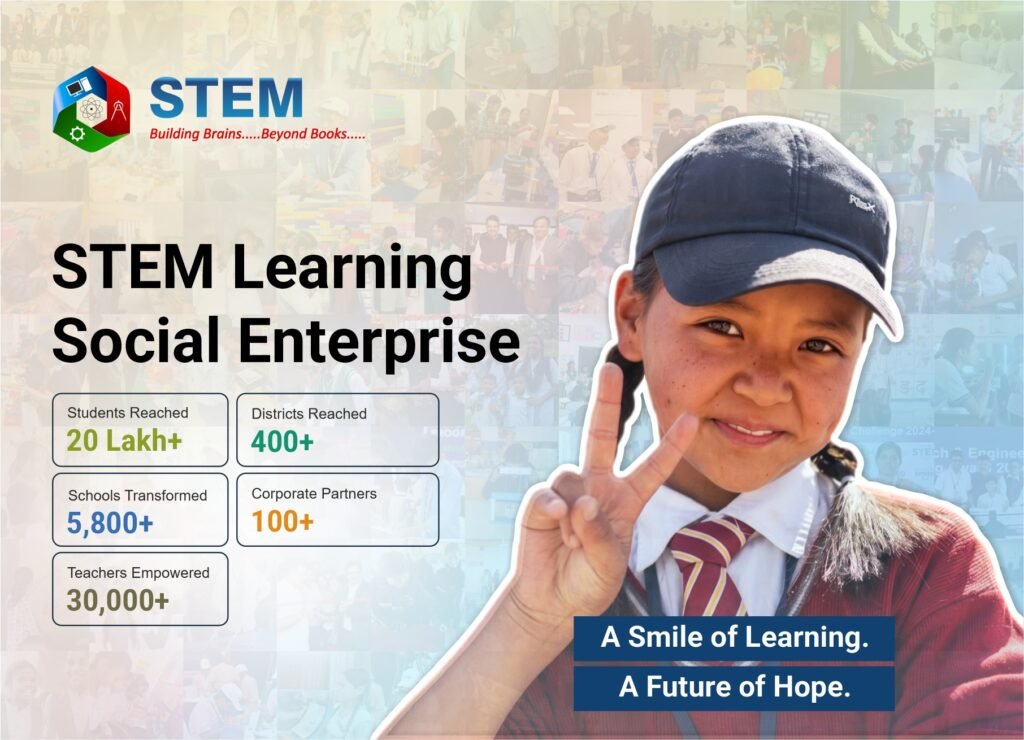
In rural areas, the gender gap in STEM education is pronounced and persistent. Girls in rural communities face a layered set of structural barriers: higher rates of early marriage, greater household responsibilities, lower family expectations of girls’ academic careers, and, in many communities, social norms that actively discourage girls from pursuing education in mathematics and science.
Studies across India, sub-Saharan Africa, and South Asia consistently show that girls in rural areas drop out of school at higher rates than boys, and that their dropout rates are higher in STEM subjects specifically. Female role models in STEM – women working as engineers, scientists, doctors, or agronomists – are rare in rural communities, making it difficult for girls to imagine themselves in such careers.
The consequences extend far beyond individual girls’ career trajectories. Communities with higher rates of educated women consistently show better health outcomes, lower birth rates, greater agricultural productivity, and more resilient local economies. Gender equity in STEM education is thus not only a matter of justice but of development strategy.
5. Economic Pressures and Opportunity Costs
In economically marginalised rural communities, education competes directly with economic necessity. Children, particularly from families working in agriculture or manual labour, may be expected to contribute to household income or domestic work during school hours or in the period between school and examinations. This reduces study time, increases fatigue, and undermines the consistent engagement that STEM learning – which builds cumulative understanding – particularly requires.
For many rural families, the perceived return on investing in a child’s STEM education is uncertain. Engineering and science degrees require years of higher study after schooling – an investment in time and money that is out of reach for many. Without clear pathways from rural STEM learning to tangible economic opportunity, motivation to persist in difficult subjects is naturally limited.
What is Working: Innovations and Interventions
Despite the challenges, there is genuine cause for optimism. Across the world, educators, technologists, governments, and civil society organisations have developed approaches to rural STEM education that are producing measurable results. Several deserve detailed examination.
Digital and Technology-Based Learning
The expansion of low-cost technology – tablets, smartphones, offline digital content – has opened new possibilities for rural STEM learning that did not exist even fifteen years ago. Platforms like Khan Academy, BYJU’S, Diksha (India’s national platform), and various state-specific portals have created high-quality STEM content that can, in principle, be accessed anywhere with a device and a charge.
Particularly promising are solutions designed specifically for low-connectivity environments. Offline-capable applications allow students to download lessons when connectivity is available and study them without an active internet connection. Solar-powered device charging stations have been deployed in remote schools in India, Kenya, and Bangladesh to ensure that the absence of reliable electricity does not become a barrier.
The key insight from successful technology-in-education programmes is that technology alone does not transform learning. It must be accompanied by trained teachers who can guide students through digital content, by reliable technical support, and by careful attention to how devices are used within the classroom rather than simply distributed and left.
The “Fab Lab” and Mobile Science Lab Models
Several organisations have pioneered the concept of mobile science laboratories – vehicles equipped with functional scientific equipment that travel a circuit of rural schools, spending a week or two at each location before moving to the next. This model allows schools that could not justify the cost of a permanent laboratory to provide students with genuine hands-on scientific experience.
Similarly, the Fab Lab (fabrication laboratory) concept, originally developed at MIT Media Lab, has been adapted for rural educational contexts. A Fab Lab is a workshop containing digital fabrication tools – 3D printers, laser cutters, basic electronics components, and computer-aided design software – that allows students to design and build physical objects. Several Indian states have introduced simplified versions of this concept in rural schools as part of innovation or tinkering programmes, including NITI Aayog’s Atal Tinkering Labs initiative, which has established over 10,000 tinkering laboratories in schools across the country, with specific emphasis on reaching underserved rural areas.
Contextualised and Culturally Embedded STEM Curricula
One of the most promising pedagogical shifts in rural STEM education is the move toward contextualised, place-based learning. Organisations like the Agastya International Foundation in India have developed STEM curricula that connect scientific concepts to agricultural and ecological contexts that are directly relevant to rural students.
For example, a lesson on soil chemistry can be taught using samples from a local farm field, with students testing pH levels and discussing implications for crop selection. A unit on biomechanics can use the design of traditional ploughs and farming tools as its starting point. A project on water quality can centre on a local river or pond that students know and use. This approach does not simplify or compromise the science – it anchors abstract principles in concrete, familiar experience, dramatically improving comprehension and retention.
Agastya’s “lab on bike” programme has brought hands-on science to over 15 million children in rural India, using a small motorcycle-mounted kit of science demonstrations to spark curiosity in communities far from urban educational resources. Their evaluations show significant improvements in scientific curiosity, questioning behaviour, and interest in further study among children who participate.
Teacher Development Programmes
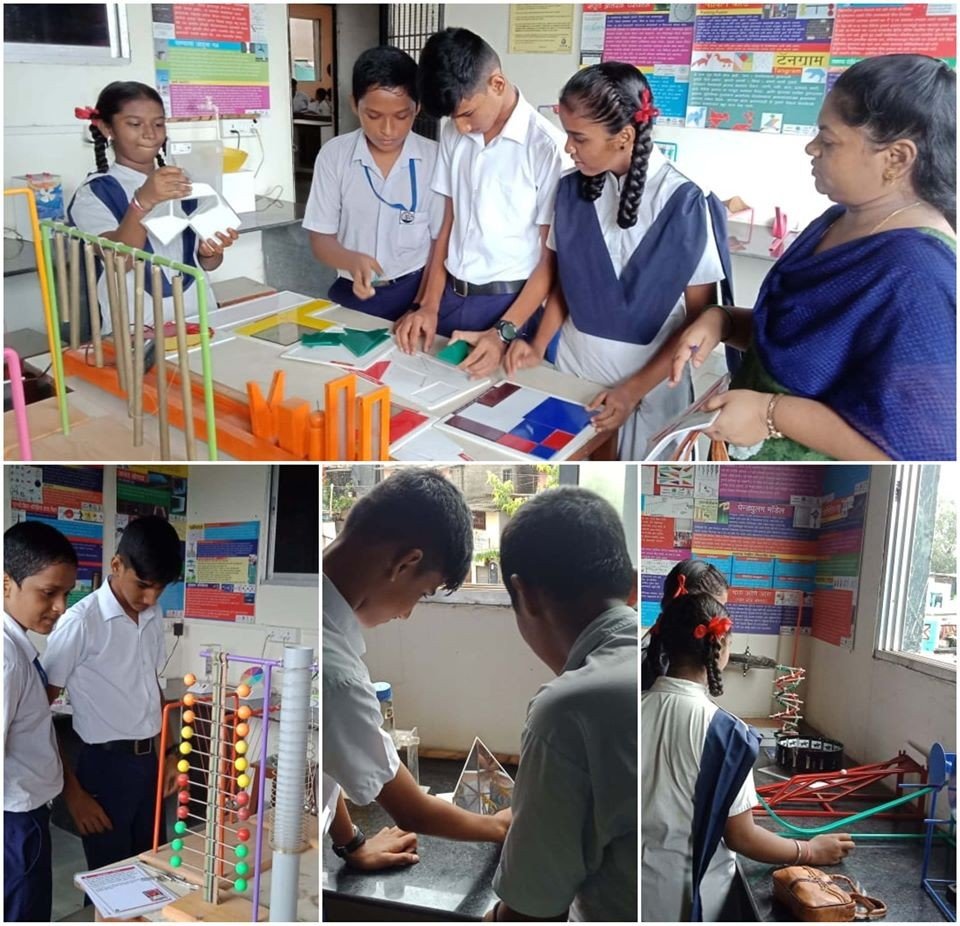
Several states and non-governmental organisations have developed dedicated in-service training programmes for rural STEM teachers, recognising that the teacher is the most critical lever for educational change. These programmes go beyond subject knowledge refreshment to include pedagogical training: how to teach through inquiry and investigation rather than lecture and memorisation, how to use low-cost materials for demonstrations, how to differentiate instruction for students of varying levels in multi-grade classrooms.
Organisations like Teach For India and the Pratham Education Foundation have worked in rural contexts to develop and test teacher development approaches. Peer learning circles – where rural science teachers from neighbouring schools meet regularly to share lesson ideas, troubleshoot challenges, and observe one another’s teaching – have proven particularly effective and low-cost.
STEM Competitions and Exposure Programmes
One of the most powerful tools for motivating rural students in STEM is direct exposure to scientists, engineers, and innovators – living proof that STEM careers are real and attainable. Science fairs, robotics competitions, mathematics olympiads, and coding hackathons can, when extended intentionally to rural schools, serve as transformative experiences that fundamentally shift students’ sense of what is possible for them.
The Indian Space Research Organisation’s (ISRO) outreach programmes have brought space science directly to rural schools through district-level visits, model rocket launches, and awareness camps. Several state governments have instituted junior science talent programmes that identify high-potential rural students and provide them with mentorship, residential study camps, and university visits.
Policy Frameworks and Government Initiatives
Governments have a foundational role in shaping the conditions for rural STEM education. Several policy developments are worth noting, with particular reference to the Indian context.
India’s National Education Policy (NEP) 2020 represents the most comprehensive reform framework the country has seen in three decades. The policy explicitly acknowledges the rural-urban divide in education quality and places significant emphasis on the importance of STEM learning at every stage of schooling. It promotes experiential, inquiry-based learning; calls for the integration of local knowledge and context in curriculum; emphasises teacher development; and supports the use of technology as a tool for equity.
The PM SHRI (Prime Minister Schools for Rising India) scheme, launched in 2022, aims to develop over 14,500 model schools across the country that exemplify the NEP’s vision – with well-equipped laboratories, digital infrastructure, and holistic STEM learning. Importantly, the scheme explicitly targets rural and semi-urban areas, seeking to demonstrate that high-quality education is not exclusively an urban privilege.
Globally, SDG 4 – Sustainable Development Goal 4, which calls for inclusive and equitable quality education for all by 2030 – provides an international framework for national commitments on rural education. Progress toward this goal has been uneven: while school enrolment rates have risen in many rural areas, learning outcomes in science and mathematics remain deeply unequal.
The Role of Community and Local Knowledge
Any serious discussion of STEM education in rural contexts must grapple with the relationship between Western scientific traditions and the deep bodies of indigenous and traditional knowledge that rural communities carry. Farmers who know their land’s drainage patterns, fisherpeople who understand seasonal current changes, traditional healers who possess detailed knowledge of medicinal plant properties – these are not people who lack scientific understanding. They possess a different kind of scientific knowledge: empirical, practical, place-specific, and accumulated over generations.
A culturally intelligent approach to rural STEM education does not dismiss this knowledge. Instead, it finds ways to connect it with formal scientific frameworks, creating a bridge that respects community heritage while expanding students’ access to the tools and concepts of modern science and technology. This is not merely a matter of cultural sensitivity – it is a matter of pedagogical effectiveness. Students learn best when they can connect new knowledge to existing frameworks of understanding.
Community involvement in rural STEM education more broadly – through parent engagement, local STEM champions, partnerships with local agricultural extension services, or collaborations with community health workers – can significantly strengthen the reach and resonance of school-based programmes.
Role of STEM Learning in Educating Rural India Through CSR Partnership
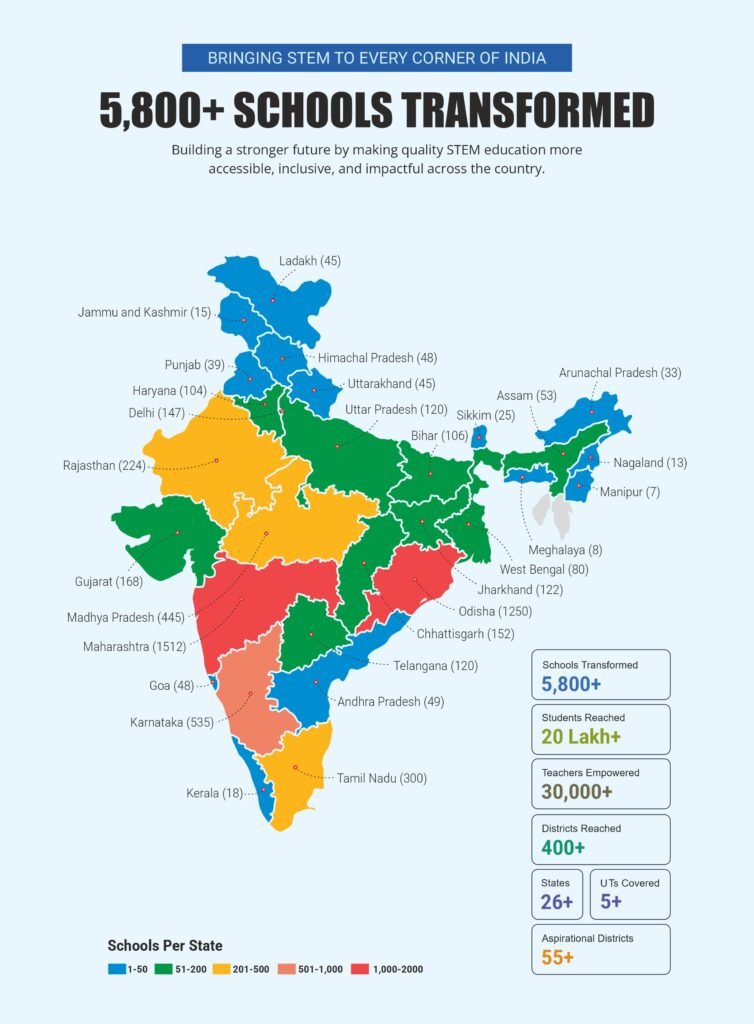
STEM Learning Social Enterprise is playing an important role in taking practical science education to rural and underserved India through strong CSR partnerships. In many government and low-resource schools, students often learn science only through textbooks. They have limited access to laboratories, models, experiments, and trained support. STEM Learning is changing this situation by bringing hands-on learning directly into classrooms.
With the support of corporate partners, the organisation has established Mini Science Centres, innovation labs, teacher training programmes, and experiential learning models across thousands of schools. These initiatives help children understand science, technology, engineering, and mathematics through experiments, working models, activities, and real-life examples. This makes learning joyful, simple, and meaningful.
CSR partnerships make this transformation possible. Corporate funding helps schools in remote and rural areas receive quality STEM infrastructure that they may not otherwise afford. At the same time, teacher training ensures that these tools are used effectively in daily classroom teaching.
The impact is wide and inspiring. STEM Learning has reached more than 20 lakh students, 5,800 schools, 30,000 teachers, and 400 districts. Its work is helping rural children build curiosity, confidence, problem-solving ability, and innovation skills. Through CSR, STEM Learning is preparing young minds for India’s future.
The Path Forward: What Needs to Change
The evidence, taken together, points toward a clear set of priorities for transforming STEM education in rural schools.
- Teacher recruitment and retention must be addressed with urgency and creativity. This means competitive salaries for rural postings, housing support, career development pathways that do not require migration to cities, and the use of remote teaching technologies that allow specialist teachers to support multiple rural schools simultaneously.
- Infrastructure investment must be sustained and targeted. Functional science laboratories, digital devices with offline capability, reliable electricity (including solar where grid power is unavailable), and adequate library resources are the floor below which quality STEM education cannot be delivered.
- Curriculum contextualisation must move from theory to practice. National curriculum bodies need to develop locally adaptive frameworks that allow teachers to teach core STEM concepts through local examples, local ecology, and local problems – without compromising the standards required for students to transition to higher education.
- Gender equity in rural STEM must be treated as a specific and urgent priority. Targeted scholarships, mentorship programmes connecting rural girls with women working in STEM fields, community engagement to address social barriers, and school safety provisions that enable girls to remain in education are all necessary components.
- Partnerships between government, civil society, and the private sector need to be deepened and formalised. The innovations that have worked – mobile labs, tinkering centres, contextualised curricula, peer teacher learning – must be scaled through institutional partnerships, sustained funding, and rigorous evaluation.
You Learn
The story of STEM education in rural schools is, ultimately, a story about the relationship between geography and destiny. In the world as it currently stands, where you are born significantly shapes what you are able to become. A child in rural Chhattisgarh, rural Mississippi, or rural Bihar faces structural barriers to quality STEM education that have nothing to do with their intelligence, curiosity, or potential.
That this is unjust is self-evident. But it is also economically irrational and socially wasteful. The innovators, scientists, engineers, and mathematicians the world needs in the coming decades are not produced only in cities. They grow up in villages, in farming communities, on river plains, and in forest margins. They just need the opportunity to encounter the ideas and tools that will allow their potential to unfold.
The gap between the STEM education rural children receive and the STEM education they deserve is not inevitable. It is a policy choice, and it can be unmade. The innovations already underway – contextualised curricula, mobile laboratories, digital learning, teacher peer networks, community engagement – demonstrate that change is possible. What is required now is the political will, the sustained investment, and the imaginative commitment to bring these innovations to scale, so that the accident of geography no longer determines whether a child’s scientific potential is nurtured or neglected.
Copyright@India CSR®
Also Read: STEM is the future of India, says Ashutosh Pandit, CEO STEM Learning – India CSR
About the Author
Suhana Agrawal is an Economics undergraduate at Christ (Deemed to be University), with a keen interest in research, analytical thinking, and effective communication. She has developed experience in academic writing, content development, and event management, and is particularly inclined towards applying economic concepts to real-world contexts. Her work reflects a balance of critical analysis and creativity, with a focus on producing clear, structured, and impactful outcomes.



