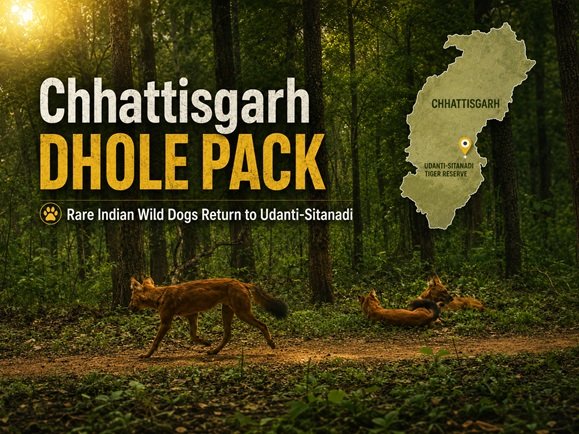


Dhole Pack Sighted in Chhattisgarh Tiger Reserve, Forest Department Calls It a Major Win
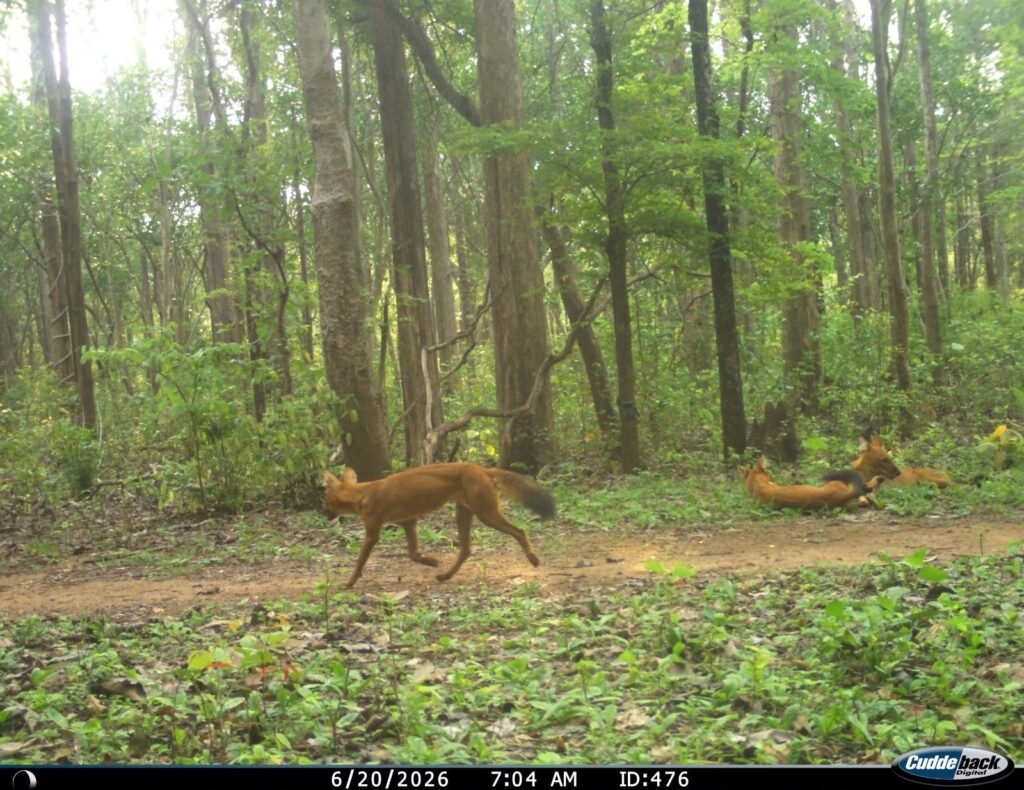
RAIPUR/GARIABAND (India CSR) — In a highly encouraging sign of ecological revival, a pack of four rare Indian wild dogs, commonly known as Dholes, has been recorded on camera traps at the Udanti-Sitanadi Tiger Reserve (USTR). Captured during the ongoing All India Tiger Estimation (AITE) 2026, the sighting is being hailed by the Forest Department as a major milestone in restoring the region’s natural habitat, Chhattisgarh forest department said.
The successful resurgence of these apex predators is largely being credited to the proactive conservation strategies and zero-tolerance policies implemented under the guidance of Chhattisgarh’s Forest and Climate Change Minister, Kedar Kashyap.

Over the past few years, the Forest Department, operating strictly on the Minister’s priorities, has aggressively cracked down on poaching and habitat destruction. As a direct result of this vision, the reserve has witnessed a healthy boom in its herbivore population, creating a secure and thriving environment that is now drawing elusive carnivores back to the top of the food chain.
The Ecological Importance of the Dhole
The Indian wild dog (Cuon alpinus) is among the most endangered carnivores in the country. Listed as “Endangered” on the IUCN Red List, the species enjoys the highest legal protection in India under Schedule-I of the Wildlife (Protection) Act, 1972.
Anti-Poaching Action Strengthens Wildlife Security, Udanti-Sitanadi Emerges as a Key Wildlife Conservation Zone.
Highly social and incredibly disciplined, Dholes hunt in organized packs. They play an indispensable role in maintaining the balance of forest ecosystems by controlling the populations of herbivores like chital, sambar, and wild boar. This natural population control prevents overgrazing, allowing native vegetation to flourish uninterrupted.
Transformative Steps Under the Minister’s Guidance
The USTR management has translated Minister Kashyap’s vision into concrete, ground-level actions, triggering a rapid turnaround for the reserve’s biodiversity. Key interventions that led to this success include:
Massive Anti-Encroachment Drives: Approximately 956 hectares of crucial forest land were freed from illegal encroachment. This land underwent extensive ecological restoration, successfully returning traditional wildlife corridors and natural habitats to the animals.
Crackdown on Wildlife Crime: In a sweeping move against illegal activities, authorities have arrested and jailed over 550 wildlife criminals, smugglers, and poachers, effectively breaking the back of local poaching networks.
Advanced Tech Surveillance: Anti-poaching campaigns have been significantly modernized. The reserve is now monitored around the clock using a robust camera-trap network and strengthened intelligence systems, supported by the active participation of local villagers and indigenous communities.
| Point | Details |
|---|---|
| Update | Four Dholes sighted in Udanti-Sitanadi Tiger Reserve |
| Place | Gariaband, Chhattisgarh |
| Recorded During | All India Tiger Estimation 2026 |
| Species | Dhole / Indian Wild Dog |
| Status | Endangered species |
| Importance | Sign of healthy forest, strong prey base and ecological recovery |
| Key Actions | Anti-poaching drive, encroachment removal, camera-trap monitoring |
| Forest Land Restored | Around 956 hectares |
| Wildlife Crime Action | Over 550 poachers/smugglers arrested |
| Leadership | Conservation push under Forest Minister Kedar Kashyap |
| Key Message | Udanti-Sitanadi is emerging as a stronger wildlife conservation zone |
A Thriving Ecosystem
“The success of any forest ecosystem is measured not just by the presence of tigers, but by the health of its entire food chain and biodiversity,” stated the Deputy Director of the Udanti-Sitanadi Tiger Reserve. “Thanks to the strict security protocols, encroachment clearance, and scientific management carried out under the effective guidance of Forest Minister Kedar Kashyap, a highly sensitive and endangered species like the Dhole is thriving here today. It is a powerful testament to the ground-level success of our conservation policies.”
The documented presence of this four-member Dhole pack during AITE 2026 is clear evidence that the USTR’s prey base and food web are stronger than they have been in years. Supported by decisive political will and rigorous departmental action, the Chhattisgarh reserve is rapidly emerging as one of Central India’s safest and most dynamic hubs for wildlife conservation.
Also read
Interstate Tiger Skin Smuggling Gang Busted on Chhattisgarh-Maharashtra Border I India CSR
(India CSR)