

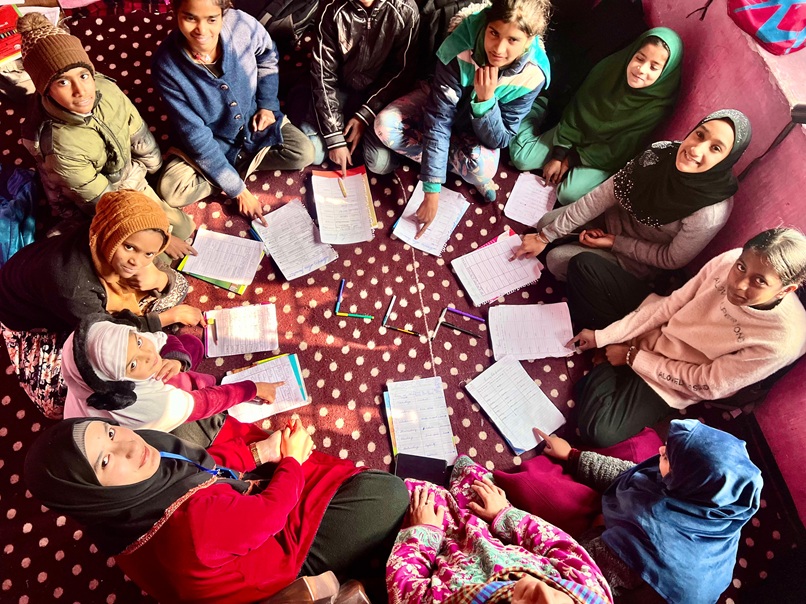


Ashok Leyland Foundation’s Road to School and Road to Livelihood programmes reach 6.26 lakh students across 4,585 government schools.
| 6,26,069+ Students Reached | 4,585 Schools | 9 States | 4,500+ Villages |
Ashok Leyland Foundation’s flagship education programmes have reached more than 6.26 lakh students across 4,585 government schools and over 4,500 villages. Through its Road to School and Road to Livelihood initiatives, the Foundation is addressing learning gaps, school retention, health, digital literacy, career readiness and livelihood development in underserved communities.
Launched in 2015, Road to School provides children with foundational literacy, numeracy, wellness, sports and creative-learning support. Road to Livelihood, introduced in 2022, prepares senior-school students for higher education, vocational training and employment through practical, career-oriented skills.
The programmes have helped reintegrate over 15,000 children into government schools, enabled 95% of participating students to complete Grade 10 and supported 85% of Grade 12 students in pursuing their preferred higher-education pathways. With a long-term goal of reaching one million students, the Foundation is building an integrated education-to-employment ecosystem across India.
Ashok Leyland Foundation
Ashok Leyland, the flagship of the Hinduja Group, is India’s 2nd largest commercial vehicle manufacturer, the 4th largest bus manufacturer in the world, and the 19th largest truck manufacturer globally. For over a decade, the company has maintained a strong commitment to Corporate Social Responsibility (CSR), contributing to sustainability, health and wellness, education, and community development.
The Ashok Leyland Foundation channels this commitment through multiple initiatives, including its flagship educational initiative — the Road to School (RTS) programme — developed and implemented in partnership with Learning Links Foundation (LLF), one of India’s leading education-focused NGOs. The programme is aligned with the United Nations Sustainable Development Goals and India’s national agenda for quality education.
ALF Flagship Initiative – Road to School
In India, millions of children continue to face barriers to quality education due to poverty, migration, gender disparities, and disability. While the country has made significant progress in improving enrolment at the primary level, ensuring that children stay in school and achieve meaningful learning outcomes remains a major challenge. The scale of the issue is evident in the fact that, out of every 100 children who enrol in primary education, only 28 go on to pursue higher education. This underscores the urgent need to strengthen learning in the early years of schooling with opportunities for holistic development to ensure education continuity and gain access better opportunities in life.
Aligned with UN Sustainable Development goals, the vision of the Road to School Program is to provide holistic development opportunities with focus on quality of education.
About the Programmes
Road to School (RTS) — Grades 1 to 8
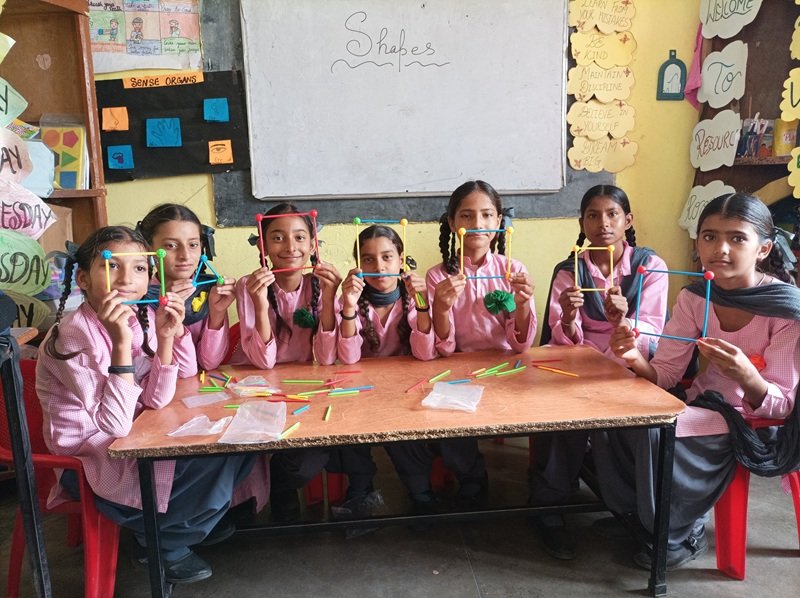
Launched in 2015, Road to School is built on the principle that every child deserves a strong foundation. The programme bridges learning gaps in government schools across underserved communities, addressing both scholastic achievement and the broader conditions that enable children to thrive.
Road to Livelihood (RTL) — Grades 9 to 12
Launched in 2022, Road to Livelihood builds on the RTS foundation to prepare older students for life beyond school. It equips them with practical skills in digital literacy, spoken English, financial literacy, career planning, and emotional wellness — enabling informed choices for higher education, vocational training, or employment.
Ashok Leyland Foundation Expands Education Impact Across 4,585 Government Schools
How It Works
Road to School
The RTS programme builds foundational literacy and numeracy (FLN) — the essential reading, writing, and arithmetic skills that form the basis of all future learning. Delivered through a sustainable and scalable model, the programme integrates:
- Foundational literacy and numeracy (FLN) interventions
- Personal hygiene and health awareness through wellness sessions
- Physical fitness through structured sports activities
- Creative development through arts
- Interactive and classrooms and engaging sessions to encourage continued enrolment and reduce dropout
This integrated approach has been operational since 2015, equipping government school students and underserved communities with the tools to thrive in life.
Road to Livelihood
RTL equips high school students with skills that matter in the real world:
- Digital literacy and communication skills
- Spoken English for professional confidence
- Career counselling with one-to-one psychometric assessments
- Financial literacy and life skills
- Wellness and emotional readiness
Community Development
Both programmes operate alongside a broader community engagement model — including awareness initiatives, health camps, door-to-door outreach, and home and community visits. The goal is a more developed, informed community that actively supports the attendance and wellbeing of its children.
Scale & Reach
What began in 2015 with 36 schools in Krishnagiri District, Tamil Nadu, has grown into one of India’s largest corporate-funded school education programmes. Today, the RTS and RTL programmes operate across 25 districts in 9 states, reaching over 6,26,000 students across 4,585 government schools in more than 4,500 villages. The programme serves students from Grades 2 to 12 through a comprehensive approach focused on improving access, learning outcomes, retention, and life opportunities.
The programme is implemented in collaboration with Samagra Shiksha Abhiyan and state governments across Tamil Nadu, Jammu & Kashmir, Rajasthan, Uttar Pradesh, Jharkhand, Andhra Pradesh, Meghalaya, Assam, and Maharashtra.
| State | Districts | Schools | Students Reached |
| Tamil Nadu RTS Sustainability -Since 2015, RTL – Since 2022, RTS – Since 2022 | Namakkal (Mohanur, Paramathy, Erumapatti, Kolli Hills, Namakkal and Tiruchengode) Krishnagiri (Shoolagiri, Thally, Kelamangalam, and Hosue) Salem (Sankari, Konganapuram and Magudanchavadi) Erode (Ammapettai, Anthiyur) Dharmapuri (Palacode, Kariamangalam) Chengelpet (Kattankolathur, Lathur) Ariyalur (Andimadam) Virudhunagar (Thiruchuli, Narikkudi) | 2,409 | 3,23,263 |
| Rajasthan RTS Sustainability – Since 2018, RTS – Since 2024 | Alwar (Malakhera) | 135 | 13,440 |
| Maharashtra RTS Sustainability – Since 2018 | Bhandara | 2 | 621 |
| Jharkhand RTS – Since 2024, RTL (Pilot) – 2025 | Ranchi (Bero) | 143 | 16,039 |
| Jammu & Kashmir RTS Sustainability – Since 2021, RTS – Since 2024, RTL (Pilot) – 2025 | Reasi, Rajouri, Udhampur, Bandipora, Baramulla, Kupwara, and Srinagar | 314 | 22,746 |
| Assam TEP Sustainability – Since 2022 | Dibrugarh (Lahoal and Joypur) | 82 | 15,291 |
| Karnataka RTS Sustainability – Since 2023 | Kalaburagi (Chittapur, Kalagi, Shahbad) | 242 | 28,700 |
| Andhra Pradesh RTS – Since 2025 | Guntur (Mangalgiri) and Krishna (Bapulapadu) | 123 | 7,463 |
| Meghalaya RTS – Since 2024 | East Kashi Hills (Mawphlang, and Mylliem) | 148 | 9,279 |
| Uttar Pradesh RTS – Since 2023, RTL (Pilot) – 2025 | Gorakhpur, Aligarh | 183 | 30,480 |
Impact at a Glance
The programme’s outcomes are measured against standardised education indicators. RTS schools consistently outperform national averages across key metrics:
- 15,000+ students reintegrated into government schools
- 98% of students successfully transitioned to high school
- 279 School Management Committees contributed to school development
- 95% of RTS students completed Grade 10
- 25–30% improvement in literacy and numeracy outcomes
- ₹50+ crore worth of government welfare benefits unlocked
- 85% of Grade 12 students pursued higher education of choice
- 634 Grade 8 students qualified for the NMMS scholarship through the programme
- 20% improvement in school performance ratings
- Increased participation from parents, School Management Committees (SMCs), and local communities
The mission: to reach 1 million students, ensuring every child in India has access to quality education.
Success Stories
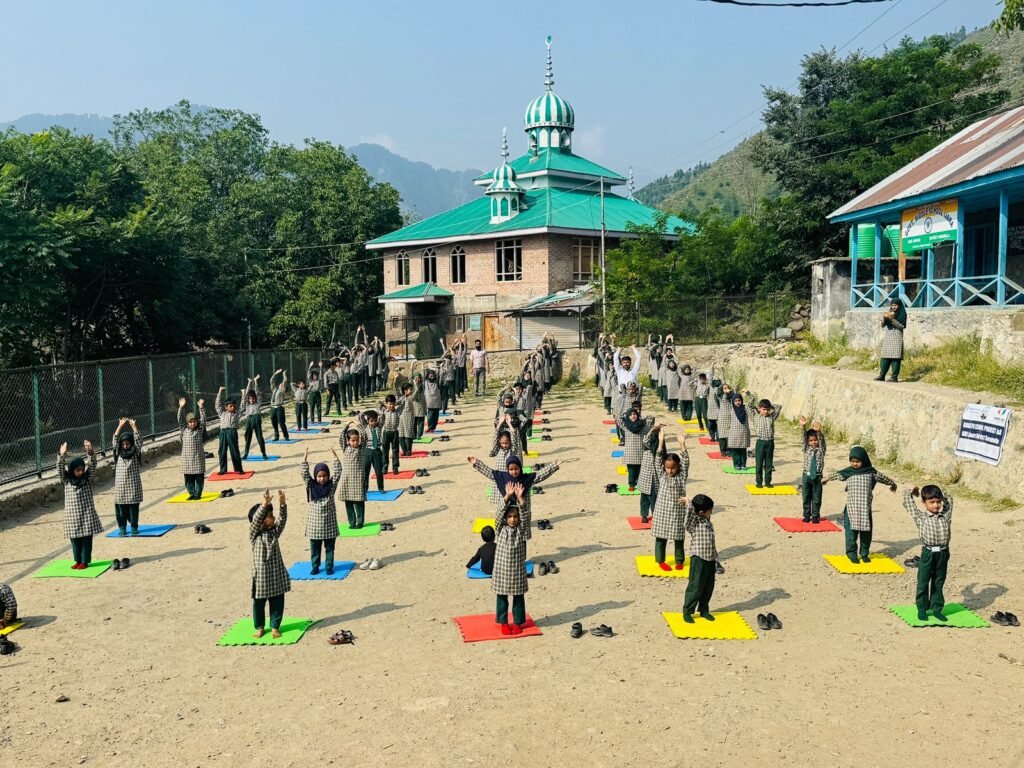
As the programme has grown from its inception to reaching over a million students, countless stories of change have emerged. This story stands out as a powerful reflection of that impact.
Road to School – Kolli Hills: Success Story
Kolli Hills is a remote tribal block in Namakkal district, Tamil Nadu, where 95% of the 40,000 residents are Scheduled Tribes. Scattered across 273 settlements with no colleges, poor healthcare, and difficult terrain, children here faced significant barriers to schooling.
The Road to School (RTS) programme operates across 58 government schools, supporting 3,515 tribal students in Grades 1–8 through a team of 48 RTS team members – Resource Persons, Life Skill Coordinators, and Senior Resource Persons.
Academic outcomes improved markedly — NMMS scholarship results rose from 3 qualifiers (2019–20) to 7 (2021–22); over 5,750 literacy and numeracy workbooks were distributed; 3,165 students attended Summer Resource Camps; and 373 students benefited from tablet-based learning.
Community impact has been equally significant. The team co-ordinated a COVID-19 vaccination drive across 142 villages, reaching 4,163 beneficiaries and vaccinating 2,167 community members. Health camps reached 3,292 students, and eye screenings covered 601 community members across two years. A school renovation, a restored community water well, a new Community Learning Centre, and street lighting for a tribal hamlet were all secured through the programme’s advocacy.
The programme has earned recognition from the Namakkal District Collector, senior SSA officials, and the Kolli Hills MLA — testament to its credibility as a trusted partner in one of Tamil Nadu’s most underserved communities.
Beyond the numbers are the children the programme was built for. Here are three stories from 2025–26.
Transforming Lives Through Livelihood Opportunities- Social Development in Tamil Nadu. In six districts of Tamil Nadu — Thiruvallur, Erode, Salem, Namakkal, Dharmapuri, and Krishnagiri — 550 women made a choice. A choice to learn, to earn, and to build a future on their own terms.
For many of these women, aged between 19 and 45, economic dependence was not a circumstance — it was an inheritance. Limited access to skill training, few formal employment pathways, and systemic barriers kept financial independence out of reach. 314 women came from RTS parent communities and 236 from the wider community — but all shared a common aspiration: a dignified livelihood and the confidence that comes with earning it. Through the Road to School programme’s livelihood initiative, they enrolled in structured, market-relevant skill training programmes that open doors to employment.
The skills were chosen to reflect genuine market demand — 340 trained in Tailoring and Aari Work, 61 in Soap and Product Making, 49 in Mushroom Cultivation, 37 in Aari Specialisation, 20 in Beautician training, 18 in Masonry through the Industrial Training Institute in Hosur, 15 in Jute Bag Making, 6 in Electrician training, and 4 in Agriculture in partnership with Iris Biotech. A robust ecosystem of 12 partner organisations — spanning government bodies, financial institutions, and skill training organisations — ensured that training was rigorous and that pathways to employment were real and accessible.
The results speak for themselves. 159 women secured placement or employment in garments and other industries — generating a combined monthly income of INR 2,81,500. For many, it was their first paycheck. For all, it was a turning point.
This initiative is proof that the Road to School ecosystem extends well beyond the classroom. When women are equipped with relevant skills, supported by strong partnerships, and given real access to opportunity, transformation follows. Tamil Nadu’s livelihood programme is not just a success story. It is a replicable model for what community empowerment can look like at scale.
Beyond Education
Ashok Leyland Foundation’s work extends beyond classrooms into the sustainability and health of the communities it serves.
Water Management & Conservation
- Rainwater harvesting ponds, roof systems, and community harvesting structures in Alwar and Uttarakhand
- Watershed management in Alwar
- Spring shed management in the Gaula River, Nainital
Health & Wellness
- Type 1 Diabetes Support Programme — providing treatment, research support, awareness, and education to young patients from low-income backgrounds across multiple sites in India. Benefitted approximately 3700 children.
- Mobile Medical Clinics — free screening for defective vision, diabetes, hypertension, and AIDS awareness, with general health counselling for drivers and communities. Benefitted over 4 lac people.
Community Development
- Young Grampreneur Program at Kolli Hills – to identify and mentor young entrepreneurs from the tribal communities of Kolli Hills, to provide livelihood opportunities and reduce migration in search of work.
The Road Ahead
Ashok Leyland Foundation’s mission is to create meaningful and lasting impact in underserved communities across India. Through the Road to School programme, the Foundation aims to reach over one million students, working towards a future where every child, regardless of geography or circumstance, has access to quality education and the opportunity to thrive.
Looking ahead, the Foundation remains committed to expanding its presence in new geographies, strengthening engagement in existing communities, and building robust systems, partnerships, and educator capacity to ensure sustainable impact for generations to come.



