

PhysicsWallah founder supports rural students who walk up to 10 kilometres daily for education
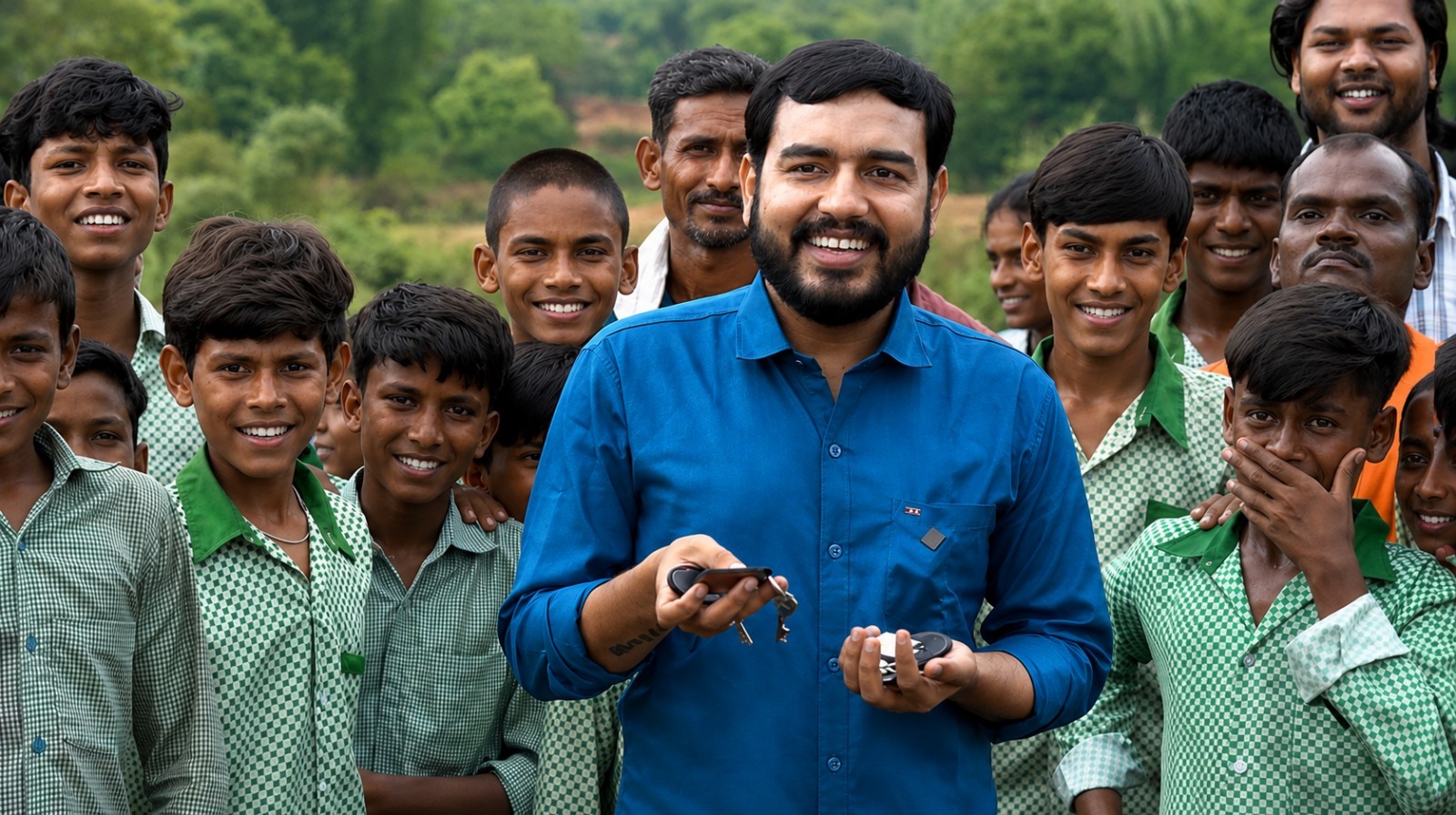
JHARKHAND (India CSR): In a move aimed at easing one of the most basic yet persistent barriers to rural education, PhysicsWallah Founder and CEO Alakh Pandey has donated more than 100 bicycles to school-going children in Dhowapaat, located in Singho village of Jharkhand. Many of the beneficiary students travel between four and five kilometres each way to attend school, covering as much as 10 kilometres on foot every day. The bicycles are expected to reduce their travel time, physical exhaustion and dependence on limited local transport facilities.
The initiative emerged during Pandey’s visit to the region for the inauguration of a free digital library in the nearby village of Laxmipur in Tisri. During conversations with students, parents and local residents, he learned that the long daily commute was affecting children’s ability to attend school regularly and participate fully in classroom learning. For families living in rural and remote areas, access to education is often shaped by factors that go beyond the availability of schools and teachers. Distance, lack of affordable transport, difficult terrain and the time required to reach school can significantly influence whether children continue their education.
Bicycles to Reduce Daily Travel Burden
Responding to the challenge, Pandey arranged for the distribution of more than 100 bicycles among students from the area. The bicycles will allow the children to reach school faster and with less physical strain. The support is also expected to give students more time for homework, revision, rest and participation in activities beyond the classroom.
For children who previously spent a considerable part of their day walking, access to a bicycle can make a meaningful difference. It can reduce the risk of late arrival, improve punctuality and make the journey to school safer and more manageable.
The initiative is particularly relevant for students from economically disadvantaged families who may not be able to afford bicycles or regular transportation.
Access to education isn’t only affected by the availability of learning resources but also by the practical challenges students face every day. I hope this small effort encourages them to keep studying, dream bigger, and move closer to the life they want to build. – Alakh Pandey, PhysicsWallah Founder and CEO
Improving Access Beyond the Classroom
Speaking about the initiative, Alakh Pandey said that educational access is influenced not only by learning materials and teaching resources but also by the practical difficulties faced by students in their everyday lives. “Access to education isn’t only affected by the availability of learning resources but also by the practical challenges students face every day. I hope this small effort encourages them to keep studying, dream bigger, and move closer to the life they want to build,” he said.
His remarks highlighted the importance of identifying and addressing the less visible barriers that often interrupt the educational journeys of rural children.
While digital learning platforms and educational content have expanded opportunities for students across India, many children continue to face fundamental infrastructure and mobility challenges. In such circumstances, interventions such as bicycles, libraries and community learning spaces can complement formal education systems.
Digital Library Inaugurated in Laxmipur
Pandey’s visit to Jharkhand also included the inauguration of a free digital library for students in Laxmipur village in Tisri.The facility is intended to improve access to digital educational resources, particularly for students who may not have computers, internet connectivity or suitable study environments at home.
Digital libraries can play an important role in rural communities by connecting students with online classes, academic material, competitive examination resources and skill-development content. They can also serve as shared learning spaces where children receive exposure to technology and new forms of education.
The combination of the digital library and bicycle distribution reflects a broader approach to educational inclusion—one that addresses both access to learning resources and the physical ability of students to reach educational institutions.
Long Distances Affect Rural School Attendance
Students in rural areas frequently travel considerable distances to reach schools, particularly at the secondary and higher-secondary levels. In villages where public transport is limited or unavailable, walking often becomes the only option. Long travel distances can affect attendance, concentration and academic performance. Students may arrive tired, miss classes during extreme weather or gradually lose motivation to continue their studies.
Girls can face additional safety and mobility concerns, especially when schools are located far from their homes. Access to bicycles can therefore support not only school attendance but also greater independence and confidence among students. By reducing travel time, bicycles may also help families feel more secure about sending their children to school regularly.
Supporting Students’ Time, Energy and Aspirations
The bicycle distribution initiative is expected to deliver benefits beyond transportation. Students will be able to conserve energy for classroom participation and studies. The time saved during the daily commute can be used for completing assignments, preparing for examinations or helping with responsibilities at home without compromising education.
A bicycle can also expand a student’s access to libraries, coaching centres, community learning spaces and other educational opportunities located outside the immediate village. For rural children, such mobility can contribute to greater exposure and encourage them to pursue higher education and professional ambitions.
Commitment to Accessible Education
Alakh Pandey, widely known as Alakh Sir among students, has built a strong following through his work in affordable education and digital learning. Through PhysicsWallah, he has focused on making academic support and competitive examination preparation accessible to students from different economic backgrounds. The Jharkhand initiative extends that commitment beyond online and classroom-based learning by responding to the practical difficulties experienced by students on the ground.
The bicycle donation also demonstrates how educational interventions can become more effective when organisations and leaders engage directly with communities and understand local needs. Rather than treating access to education as a single issue, the initiative recognises that students require a supportive ecosystem that includes learning resources, mobility, infrastructure, encouragement and community participation.
A Small Intervention with Long-Term Potential
For the students of Dhowapaat and Singho village, the bicycles are more than a means of transportation. They represent easier access to school, greater control over time and renewed encouragement to continue learning. The impact of such an initiative will ultimately be reflected in improved attendance, reduced travel fatigue and the confidence of students who can now reach school with greater ease.
By addressing a simple but significant challenge, the initiative underlines how timely, locally relevant support can help remove barriers between children and their educational aspirations. The distribution of more than 100 bicycles, alongside the inauguration of a free digital library, sends a clear message that meaningful educational access requires attention to both technology and everyday realities. For the students who once walked several kilometres to school, the road to education may now become shorter, faster and filled with greater possibility.
(India CSR)