

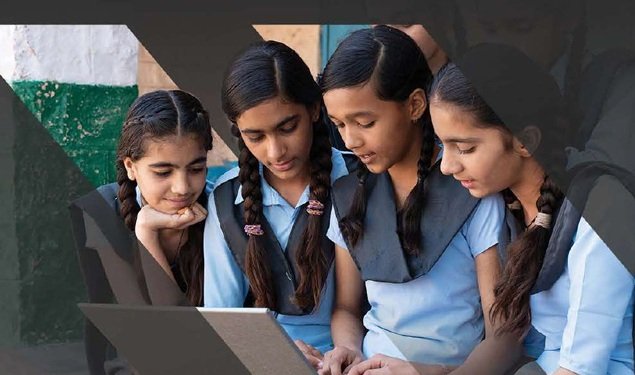



Dr. Kavita Sanghvi, Director – Education, Kotak Education Foundation explains how primary teachers are using empathy, STEM, language support and innovation to make inclusive education work for every child.
By Dr. Kavita Sanghvi
A child who hesitates to read aloud, a girl who believes mathematics is not for her, a first-generation learner struggling with an unfamiliar language, or a child who needs additional time to understand a concept. Every primary classroom brings together children with different abilities, backgrounds and aspirations. The challenge is no longer merely ensuring that every child attends school, but that every child participates, learns and experiences a sense of belonging.
Having spent nearly 25 years in education, as a teacher, school leader and now working closely with government school educators, I have witnessed an important shift. Teachers increasingly recognise that inclusivity is not an additional responsibility; it is fundamental to meaningful education.
Inclusive education begins with a simple conviction: every child matters, irrespective of gender, socioeconomic background, language, disability, learning difficulty or geographical location.
Through my interactions with teachers across tribal, Zilla Parishad, municipal, PM SHRI and private schools, one quality consistently stands out: their unwavering commitment to students. Despite varying resources and challenging circumstances, these teachers demonstrate remarkable dedication and a genuine desire to make a difference.
During a visit to a tribal school, I witnessed an experience that reinforced my belief that education should not be transactional; it must be transformational.
A teacher in a tribal school was conducting a Grade 3 mathematics assessment. She noticed that some children were struggling with questions involving two-digit addition. Interestingly, they could perform the calculations when numbers were presented directly but struggled to comprehend the word problems. Rather than concluding that they lacked mathematical ability, she recognised that the barrier was comprehension, not calculation. She allowed the other students to continue their assessment while gathering those who needed support. Patiently, she walked them through the questions, helping them understand what was being asked. Once the language barrier was addressed, the children answered more comfortably.
What impressed me further was what happened afterwards. The teacher created charts and posters reinforcing the concepts, ensuring that students could revisit them whenever needed.
This was inclusivity in action. She did not lower expectations or label children as weak. She identified the barrier, responded sensitively and created opportunities for continued improvement.
Another inspiring experience unfolded during my visit to a PM SHRI school in Solapur. The school had received an impressive collection of STEM resources from the government, but teachers initially lacked the training to use them effectively. One passionate teacher decided to change that. She contacted the company that had supplied the resources and requested training for the school’s teachers. The company responded, walking them through the equipment and instructional manuals. What followed was remarkable. The teacher integrated experimentation and experiential learning into classroom instruction, transforming STEM from abstract concepts into exciting discoveries.
During my visit, primary school students enthusiastically demonstrated experiments and confidently explained concepts involving planets, velocity, reflection and Newton’s rings. Their curiosity, conceptual understanding and confidence were striking. The initiative did not stop within the school. With institutional support, the teacher organised an interschool science project event, enabling students and teachers from neighbouring schools to participate, exchange ideas and learn together. It took one teacher’s initiative to unlock the potential of resources already available. The impact extended beyond one classroom, demonstrating how inclusive STEM education can nurture curiosity, confidence and scientific thinking when children are given opportunities to explore and experiment.
A school in Sambhaji Nagar offered another heartwarming example. Students interacted with me confidently in English, enthusiastically expressing their thoughts. Their teacher had received a gifted subscription to a children’s newsletter featuring current affairs, science, history, sports, careers, general knowledge, activities and games. Every week, she shared the newsletter with students, encouraging them to read and return prepared for discussions. These conversations strengthened their English proficiency, broadened their knowledge and encouraged participation.
What stayed with me was how a simple resource became an opportunity for children with different interests to find their voices. Inclusivity extends beyond academic learning. It is equally about nurturing empathy, respect and acceptance of differences.
A private school in Delhi offers a beautiful example of this philosophy. During its Annual Day celebrations, the school ensures that every student performs on stage, with students with disabilities taking centre stage rather than remaining on the sidelines. The significance of this practice goes far beyond a school performance. Children learn that the world does not revolve around their individual achievements or abilities. They learn to celebrate others, appreciate differences and recognise that every individual deserves dignity, respect and an opportunity to shine.
By making inclusion a shared experience, the school nurtures empathy not merely as a value taught in textbooks, but as something children practise and experience together. When children learn to celebrate another child’s success as enthusiastically as their own, education begins to shape not just capable learners, but compassionate human beings.
However, inclusive education cannot depend solely on goodwill. Teachers need continuous professional development, appropriate resources, supportive school leadership and the autonomy to innovate. These experiences reaffirm that inclusivity is not simply about accommodating differences. It is about recognising potential, removing barriers and creating opportunities. Across the schools I have visited, teachers share a common aspiration, irrespective of geography or infrastructure: they want their students to learn, grow and succeed.
An inclusive classroom is not one where every child learns in the same way, but one where every child has a genuine opportunity to participate, discover and flourish. Ultimately, the true measure of education is not how much we teach, but how many children we enable to learn. That is when education becomes truly transformational.
About the Author
A National Awardee (2022), Ms. Sanghvi brings decades of experience to Kotak Education Foundation, having most recently served as the Principal of SVKM’s CNM School, Mumbai. Her academic credentials include a Master’s in Physics, Education, and Philosophy of Education, along with a Certificate in Advanced Educational Leadership from Harvard University. Her career reflects a lifelong commitment to academic excellence, progressive pedagogy, and inclusive education. Ms. Sanghvi has been recognized globally for her contributions to education, including the prestigious Derozio Award (2024) from the CISCE Council and induction into the National Mission for Mentoring by the Ministry of Education (2023). She has also been a Teach SDG’s Ambassador, Climate Action Ambassador, Scientix Ambassador for India, and a Global Teacher Accreditation recipient by the British Council. In her new role at KEF, Ms. Sanghvi will spearhead strategic educational programs, curriculum development, teacher training, and innovations aimed at empowering under-resourced communities through quality education. Her groundbreaking work—such as the Global Outlook STEAM curriculum and the internationally accessed Build Your STEM Competency course—demonstrates her ability to drive systemic educational change.



