

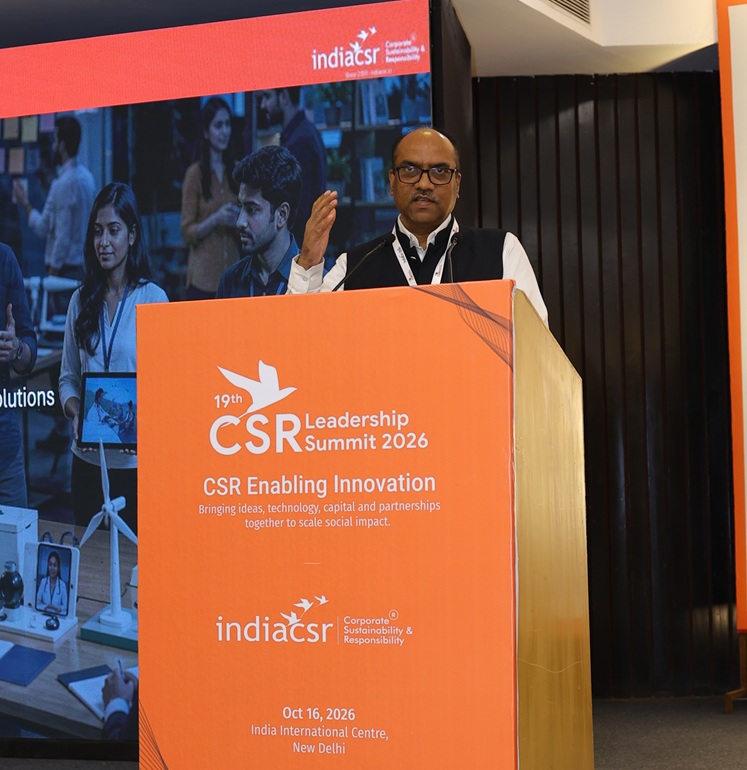



The Jubilant Ingrevia CSR leader said companies should use CSR to test ideas, build evidence, enable social entrepreneurs and scale solutions for underserved communities.
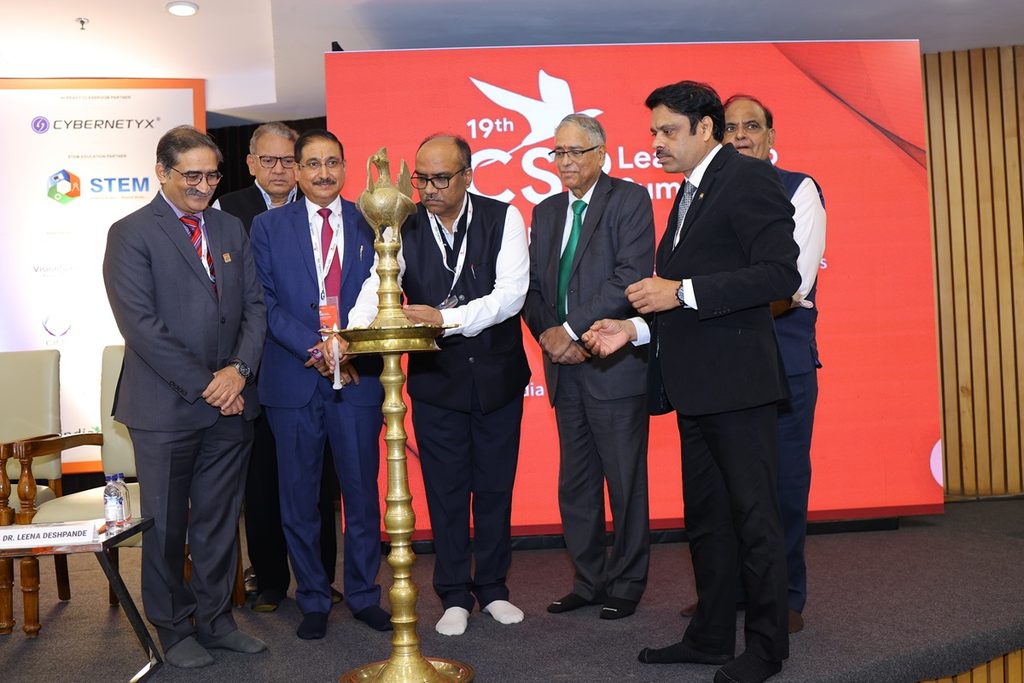
NEW DELHI (India CSR): Vivek Prakash, Senior Vice President and Head–CSR, Jubilant Ingrevia Limited, said CSR must evolve beyond a funding mechanism into a platform for “new ideas, new models and new possibilities,”. Corporate social responsibility must evolve from a funding mechanism into a platform for new ideas, models and possibilities. Delivering the keynote address at the 19th India CSR Summit 2026, held at the India International Centre on October 16, he said rapid technological change, shifting social norms and rising aspirations require faster, more accessible and inclusive development solutions. Prakash congratulated India CSR for selecting the theme, “CSR Enabling Innovation”, which he described as timely and transformative. He said CSR projects often begin within defined geographies and therefore offer an appropriate setting to test innovations. According to him, a small intervention can become a pilot, a successful pilot can become a proven model, and proven models can be replicated by companies, NGOs and governments to reach many more people.
Solutions Must Travel
Prakash said the success of CSR should not be measured only by the number of people directly served through an individual programme. It should also be assessed by how widely an organisation’s solution can travel beyond the geography, company or project through which it was first developed. He said corporates have a unique opportunity to create social impact while retaining the flexibility to experiment with approaches that may not initially be adopted at scale by other institutions. This capacity to test, learn and improve, he said, gives CSR an important role in responding to complex social challenges. The CSR sector should continue supporting established priorities such as health, education and livelihoods, but it should not rely only on familiar delivery models. Prakash said organisations need to use their resources, expertise and partnerships to create evidence-backed approaches that can later be adapted, replicated or institutionalised by others.
Social R&D Essential
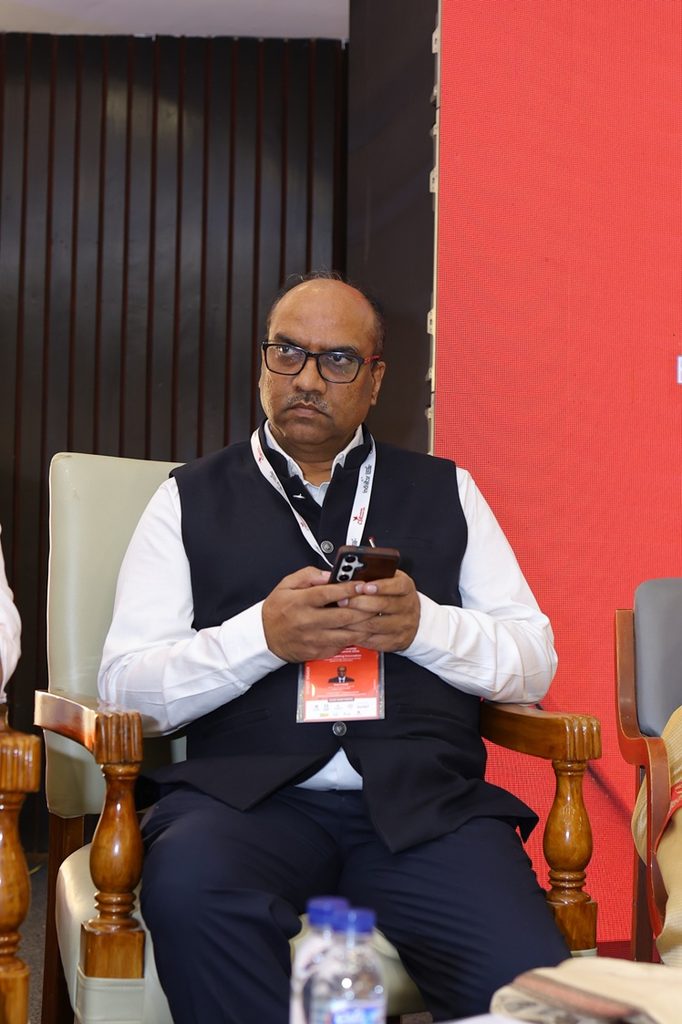
Prakash called for greater emphasis on Social R&D, arguing that the same seriousness given to research and development for business growth should also be applied to social development. He said Social R&D can help organisations understand community needs, identify root causes, test new approaches and establish evidence on what works. Innovation, he said, is not limited to technology. It can also involve changes in behaviour, better delivery systems and stronger community ownership. Physical infrastructure, he said, remains important but should not be treated as sufficient by itself. A school building may create access, but it cannot alone create curiosity; similarly, a health facility may provide care, but improved health also depends on awareness and preventive behaviour. Prakash said the next generation of CSR should combine infrastructure with behaviour, technology with empathy, and investment with community ownership to create more enduring social change.
Education Builds Character
On education, Prakash said academic excellence remains important, but CSR programmes must also consider whether children are being prepared to build a better society. He said Jubilant Ingrevia had developed a curriculum on value education and essential life skills that promotes gratitude, respect, humility, integrity, courage, trust, focus, commitment, kindness, caring, hope, equality, safety and responsibility. Participatory activities, he said, help children practise these values rather than merely learn about them in theory. The initiative also involves training local youth as volunteers and equipping government teachers to integrate the programme into the regular learning environment. Prakash said India may become one of the world’s strongest economies, but economic progress alone cannot sustain a nation. A developed society, he said, must be prosperous in its economy and rich in its values. Education must therefore develop capable professionals, responsible citizens and good human beings.
Healthcare Removes Barriers
Prakash said basic healthcare remains inaccessible or unaffordable for many people despite substantial investment in the sector. The barriers, he said, may include distance, cost and language. Through the JUBICARE platform, Jubilant Ingrevia is exploring how technology and social innovation can make basic healthcare more accessible and inclusive. He said the organisation is examining an AI-enabled system that could listen to patients describing symptoms in their own language, interpret the information for doctors in suitable clinical terminology and convey medical advice back to patients in a language they understand. Prakash said technology in this setting is not intended to replace doctors. Instead, it is intended to reduce barriers between patients and medical professionals. He said Artificial Intelligence will become truly meaningful when it helps essential services become not only faster, but also more inclusive, humane and easier to access for communities.
Entrepreneurs Need Support
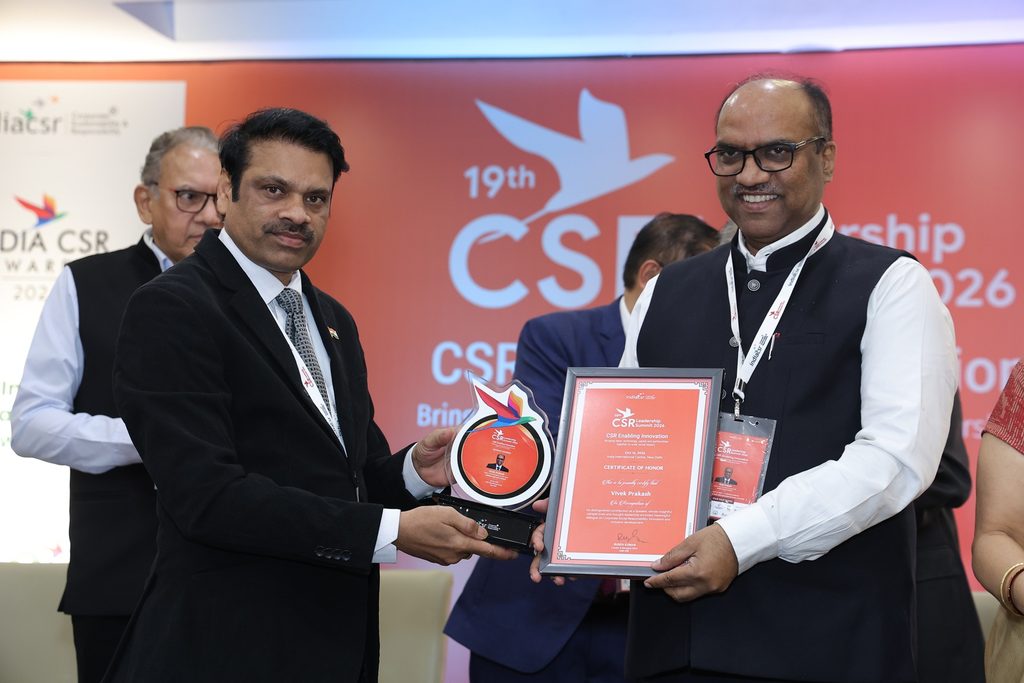
Prakash said entrepreneurs across India are developing solutions for education, healthcare, livelihoods, agriculture, climate action and social inclusion, but many lack early support, mentorship, networks and opportunities to test their ideas. Jubilant Ingrevia, he said, is incubating social start-ups that seek to address societal problems through economically viable models. Supporting start-ups through CSR may appear unconventional, he said, but innovation often begins with unconventional ideas. A successful social enterprise can solve a problem, create employment, attract investment and expand impact without remaining permanently dependent on philanthropy. Prakash said CSR should not only ask what project a company can implement; it should also ask whose idea it can enable. He said this shift can help companies support people and institutions capable of developing practical, sustainable solutions to challenges faced by underserved communities across India.
Patient Capital Matters
Corporates have a particular opportunity to deploy CSR funds in areas where conventional market capital may be unwilling to invest, Prakash said. He identified deep-tech solutions in healthcare, climate resilience, agriculture, water and affordable diagnostics as areas that require patient capital and long development cycles. CSR, he said, can help de-risk innovation by supporting pilots, proof-of-concepts and early-stage incubation. This support can help promising technologies cross what is often described as the “valley of death” between research and commercial adoption. Prakash said CSR can become the first believer in an innovation and, in some cases, its first customer. This can give innovators an opportunity to demonstrate both the effectiveness of their solution and its relevance in underserved communities. He also said Schedule VII offers corporates an opportunity to support innovation through incubators and help nurture the next generation of developmental solutions.
Innovation Enables Scale
Government has the responsibility of serving citizens at an enormous scale and may not always be able to experiment with every emerging idea, Prakash said. CSR can complement public systems by creating space for responsible pilots, bringing together technology experts, NGOs, academia and communities, and developing evidence-based models that can later be adopted and scaled by government and other institutions. He said a social innovation achieves its highest purpose when it travels beyond the organisation that created it. Replication by another corporate, improvement by an NGO or institutionalisation by government, he said, should all be considered measures of success. Prakash described CSR as India’s potential social innovation laboratory, where different stakeholders can collaborate to design and test solutions before they are expanded. The role of CSR, he said, is not to replace government, but to help develop practical and proven models that can support wider public benefit.
Action Needs Courage
Concluding his address, Prakash said the time had come to reimagine CSR. He urged corporates to continue supporting health, education, livelihoods and other development priorities while avoiding the repetition of old approaches merely because they are familiar. He called for a dedicated share of CSR resources to be used for Social R&D and for companies to take up a few bold ideas alongside their regular programmes. Organisations, he said, should test solutions, learn from failures, measure outcomes and scale approaches that demonstrate results. Companies may not be able to serve the whole country directly, he said, but through innovation they can develop solutions that enable government and society to address challenges at a much larger scale. Prakash called for a shift from charity to change, projects to possibilities, isolated interventions to scalable solutions and social spending to social innovation.



