

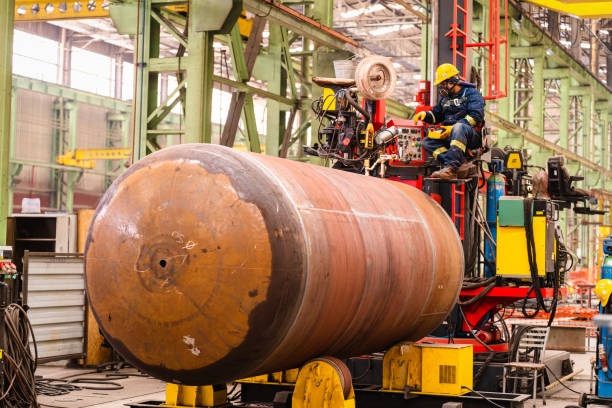



Which drawing did the workshop use? During pressure vessel fabrication, changes to connections, material requirements or inspection arrangements can separate the workshop’s instructions from the purchaser’s expectations, even when the completed vessel looks consistent with the version supplied to the inspector. Drawing revisions and material traceability deserve attention before cutting and forming begin. Finished shells cannot explain undocumented decisions.
Responsible industrial purchasing means being able to connect the equipment received with the duty and requirements agreed. For pressure vessels, that connection runs through material identity, released drawings, fabrication stages and inspection records. Understanding how those stages work helps buyers recognize when a proposed change needs engineering review and when a document is merely awaiting routine completion.
What pressure vessel fabrication turns into hardware
ChannelVessel lists drawing release, material preparation, forming, fit-up welding, assembly and interface work, surface treatment, and final inspection among its manufacturing stages. Its custom fabrication discussions use drawings, datasheets and process conditions.

Those stages translate a design into a physical object, but they cannot settle an undefined service requirement by themselves, leaving buyers with a reason to separate unresolved design questions from manufacturing decisions that already have an agreed basis. Production needs an authorized instruction.
Consider a connection moved to avoid nearby plant piping. The change may affect more than its position on a sketch: access, attached components and the associated design documents need review. Fabrication should proceed from the revised instruction once the responsible parties have accepted the consequences. A verbal request followed by an old released drawing leaves conflicting descriptions of the same vessel.
Storage tanks begin with a clear containment duty
Storage tanks hold material between process steps. Buyers should state how the tank is filled, emptied, vented and connected to surrounding equipment, since the fabricator needs relevant requirements from both the operating description and the mechanical drawing to understand what is being requested. Neither document should be assumed complete.
Familiar shapes can encourage assumptions about duty. An upright cylindrical shell does not establish whether the intended service belongs within a particular pressure-equipment design scope. Have the responsible designer determine that scope from the actual conditions rather than treating “storage tank” as an answer.
For fabrication planning, tie the agreed duty to the connections and material specification. If a later process change adds a new cleaning medium or changes how the tank empties, review the design basis before reusing the old details. Copying a previous tank can reproduce geometry while missing a changed requirement.
Reactors add internals that the shell drawing must accommodate
Reactors may combine containment with mixing or thermal functions. Agitators, jackets, coils and internals therefore deserve attention while the fabrication drawings remain open for review. Their locations can affect access and the order in which the proposed assembly is practical to manufacture.
Unresolved internals leave a shell drawing incomplete. Ask how the current internal design relates to manways, process connections and planned maintenance, then have the engineering and fabrication teams resolve any dependent dimensions before treating those parts of the drawing as released for production.
Where an internal component will be supplied separately, identify whose drawing controls its interface. This is particularly useful when a buyer nominates an agitator or another purchased component. The vessel fabricator should not have to infer the mating arrangement from a catalogue illustration, and the purchaser should not assume that a later accessory choice will fit an already completed shell.
Heat exchangers require a coordinated assembly description
ChannelVessel’s public range includes heat exchangers, reactors, storage tanks and pressure vessels. Its requested fabrication inputs include orientation, nozzles, manways, drains, vents and instruments, as well as drawings and interface details.
Identify the selected heat exchanger construction first. Because different arrangements create different assembly and access questions, a drawing showing external dimensions cannot be assumed to define the associated process connections and all the components that must be inspected, serviced or replaced.
Review the proposed maintenance method with the arrangement drawing. If an assembly is intended to be removed, establish the access and handling provisions before freezing nearby connections. Where the arrangement does not allow that removal, discuss the intended alternative rather than leaving the issue for the operating team to discover. Fabrication drawings should express the selected construction clearly enough that inspection records can be matched to the equipment actually supplied.
Material grades need identity that survives fabrication
The material grades listed on ChannelVessel’s homepage include 304, 316L, duplex stainless steel and carbon steel. It also requests fluid and corrosion conditions when discussing the material specification for custom equipment.
Grade names alone leave identity unresolved. When material is cut, shaped or incorporated into an assembly, buyers should have an agreed method for keeping the supplied material records connected to the relevant parts through the changes that occur during manufacturing. Appropriate record detail depends on the governing requirements and the contract.
Ask the fabricator to explain the identification route from incoming material to the finished item. If a piece is divided, how is its identity retained in the manufacturing records? When a substitution is proposed, who reviews its suitability and updates the documentation? Request answers before accepting the substitution. Polished surfaces cannot resolve an unexplained break in that record.
Drawing release establishes the instruction for forming
Forming gives the material its intended shape. Cutting and shaping commit the workshop to particular dimensions, so the revision used at that stage matters even when a newer drawing is already in the buyer’s inbox but has not replaced the instruction released to production.
Agree how the fabricator acknowledges receipt and implementation of a revised drawing. That acknowledgement should make clear which work the revision affects and whether any affected parts already exist. Email delivery proves little by itself. Production and inspection need the same authorized instruction.
Changes after forming need a decision by the responsible specialists. Ask them to describe the disposition of affected work and the records that will show it. Depending on the change, a drawing update alone may be insufficient. Keeping this discussion tied to actual parts prevents a document correction from being mistaken for a completed physical correction.
Fit-up welding connects preparation with final geometry
Fit-up positions the parts for joining. Comparing their arrangement with the released drawing at this stage gives the team an opportunity to check the proposed assembly before welding makes later changes more involved, especially where the arrangement includes connections or internal components. Buyers can ask which agreed checks occur without prescribing workshop technique.
Have the fabrication team identify checks relevant to the specified geometry, connections and internal components. Where the contract requires a purchaser or other party to witness a stage, agree the notification and release arrangements in advance. Otherwise, a required observation can be missed even while production follows its normal schedule.
Inspection after welding answers a different set of questions from checking the parts beforehand. Specify the required examination with the responsible engineer and the applicable design requirements. General assurances are insufficient. An acceptance basis should identify the work being examined and the record expected, while leaving the approved technical methods to the qualified parties responsible for them.
Pressure vessel inspection records must refer to the supplied item
ASME’s public Section VIII Division 1 scope addresses design, fabrication, inspection, testing and certification of vessels under internal or external pressure exceeding 15 psig. That description does not establish a manufacturer’s certification status.
Records need an identifiable subject. Whatever requirements govern a project, agree how vessel identification, drawing revisions and relevant material and examination records will be connected, so that a reader receiving the finished dossier can tell what each document covers and which supplied item it concerns.
Request the proposed dossier contents while fabrication planning is still underway. Some records depend on observations made during production and cannot be recreated simply by inspecting the finished exterior. If documentation is missing at handover, distinguish a delayed copy from an activity that was never recorded or performed. Those situations need different responses from the responsible parties.
What to resolve before releasing fabrication
Before requesting ChannelVessel custom vessel fabrication, assemble the duty description and the drawings that express it, then use the discussion to identify open technical decisions and agree which documents authorize production. Workshop planning and purchaser acceptance need that shared reference.
- Confirm the service conditions and who resolves outstanding design questions.
- Agree the material specification and how identity will follow the relevant parts.
- Identify the released drawing revision and the process for subsequent changes.
- Set the required inspection stages and any witness arrangements before production.
- Define the final records and how they will identify the supplied vessel.
Traceability makes a fabrication history readable. Combined with controlled drawing revisions, it allows an acceptance decision to connect the original requirement, the work performed and the finished equipment. That connection is far more useful than discovering, after shipment, that an attractive shell has an incomplete history.