




Corporate responsibility conversations usually focus on where materials come from and how they are made. In research supply, one of the most practical forms of transparency is narrower and easier to check: does the supplier show, batch by batch, what is in the product it sells? For research peptides, the document that answers that question is the certificate of analysis.
The research peptide market has grown fast, and growth has brought sellers whose documentation ranges from careful to nonexistent. That makes transparency a buyer’s tool as much as a supplier’s virtue. This guide looks at what a transparent peptide supplier discloses, why the certificate is the center of it, how to compare suppliers on disclosure, and what buyers can ask for. It concerns laboratory research only.
What a transparent supplier discloses
Transparency in this market is not a mission statement. It is a set of specific disclosures a buyer can check.

| Disclosure | What it tells the buyer | What opacity looks like |
| A certificate for every lot | Which batch was tested and what it contained | One old report for the whole product |
| Identity, purity and net content | The compound, its share of the material, and the amount per vial | A purity figure alone |
| Test methods named | How each result was measured | Numbers with no method |
| Laboratory named, with a reference number | Who tested it, and a way to confirm the report | An unnamed lab or no way to verify |
| Lot number on the vial | Which certificate applies to the product in hand | No lot printed, or lots that match nothing |
| A stated policy if results disagree | What happens if an outside test finds a problem | No answer |
Each row is something a buyer can confirm in minutes. Taken together, they show whether a supplier is willing to be checked.
Why the certificate sits at the center
Every other claim a supplier makes, about quality, consistency or sourcing, depends on whether the material matches its label. The certificate of analysis is where that is measured.
It records three results that matter for research peptides:
· Identity, usually by mass spectrometry, confirming the compound is what the label names.
· Purity, usually by high-performance liquid chromatography, showing what share of the material is the target peptide.
· Net content, showing how much peptide is in the vial apart from residual water and salts.
Net content is the disclosure most often missing, and from a transparency standpoint it is the most revealing. A supplier that publishes it is telling buyers exactly how much they are paying for. A supplier that leaves it out leaves price comparisons resting on the label alone.
Comparing two common research compounds
Two compounds show how disclosure plays out in practice.
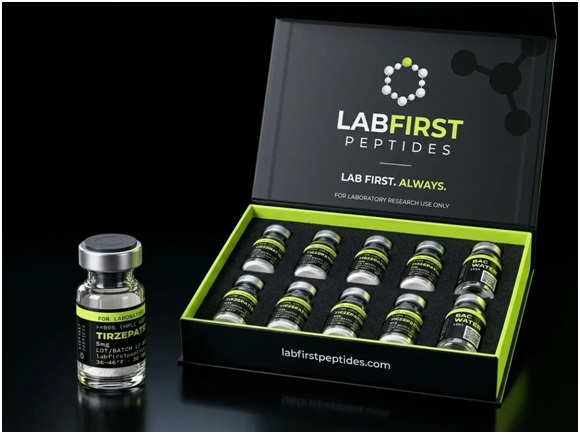
Tirzepatide. Research interest in tirzepatide has drawn many sellers into the market, and listings vary widely in what they disclose. A buyer comparing tirzepatide peptide suppliers can sort them quickly by asking for a lot-matched certificate and checking that it reports identity, purity with method, and net content.
Retatrutide. The same pattern, sharper. As one of the most searched research peptides, retatrutide attracts the widest range of sellers. Transparent ones publish a certificate per lot that the laboratory will confirm. Opaque ones point to the word “tested.” A buyer weighing retatrutide peptide options should expect the first and treat the second with caution.
In both cases the question is the same: can the supplier show, for the lot it is selling, what an independent laboratory found?
How buyers can push the market toward transparency
Buyers shape supplier behavior more than they realize. Suppliers publish what buyers ask for. A few habits help:
1. Ask for the certificate before ordering, for the exact product, size and lot.
2. Check the lot number on the certificate against what will ship.
3. Read all three results, and ask about any that are missing.
4. Confirm the report with the laboratory using its reference number.
5. Ask what happens if an outside test disagrees, and note the answer.
6. Prefer suppliers that publish certificates openly, linked from the product page, over those that send them only on request.
When enough buyers do this, the suppliers who cannot meet the standard lose business to the ones who can. That is how disclosure becomes normal in a market.
Transparency signals worth noticing
Beyond the certificate itself, a few signals suggest a supplier takes disclosure seriously:
· A published written standard for what every batch must meet
· A page listing every lot’s certificate, searchable by lot number
· Plain research-use language, with no medical or dosing claims
· A clear contact for questions about a specific lot
· Consistent lot numbering between the vial, the product page and the certificate
None of these guarantees quality on its own. Together, they describe a supplier that expects to be checked and has organized itself around it.
Opacity signals worth noticing
· Certificates available only by email, after purchase
· The same certificate image reused across many products
· Purity figures with no identity result
· No laboratory named
· Health or outcome claims on a research-use product, which suggests the seller is not following the rules for its own category
Where this leaves a careful buyer
Supplier transparency in research peptides comes down to one habit: the supplier publishes what was tested, for the lot being sold, in a form the buyer can verify. The certificate of analysis is the place to start and, often, the place to stop. A supplier that cannot produce a lot-matched, verifiable certificate has answered the transparency question already.
As one example of the practice, LabFirst Peptides publishes a certificate for each lot with measured identity, purity and net content, and a reference number for confirming it with the laboratory. Its approach to documentation across the catalog is described on the LabFirst Peptides site.
Common questions
What does supplier transparency mean for research peptides? Publishing, for each batch sold, what an independent laboratory found: identity, purity and net content, with methods, a named lab and a way to verify the report.
Why is net content important? It shows how much peptide is in the vial. Without it, the labeled amount cannot be checked and price comparisons between suppliers are unreliable.
Should certificates be published or sent on request? Published is better. A certificate linked from the product page, by lot number, can be checked before purchase.
How do I confirm a certificate is genuine? Use the report’s reference number with the issuing laboratory and check that the lot number matches the product.
Products discussed are sold for laboratory research use only and are not intended for human or animal use. This guide is general information, not medical advice.