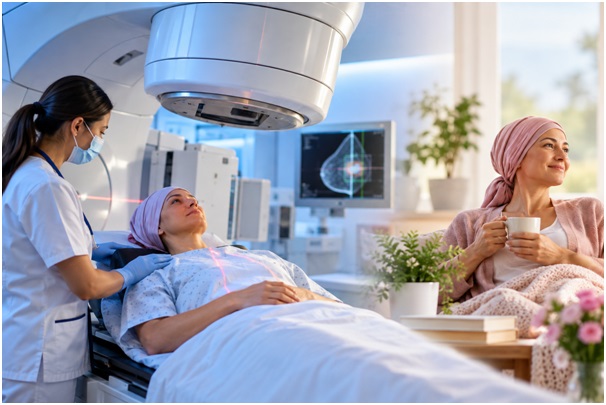



Breast cancer treatment may involve a combination of surgery, radiation therapy, chemotherapy, hormone therapy or targeted treatment, depending on the individual diagnosis. For some women, radiation therapy is recommended after breast-conserving surgery or, in selected situations, after a mastectomy.
A common question after surgery is: “If the cancer has already been removed, why do I still need radiation?” Radiation is used to treat microscopic cancer cells that may remain in the treated area and to reduce the risk of the cancer returning in or around the breast or chest wall. The treatment plan is individualised according to the patient’s cancer characteristics and previous treatment.
Why Is Radiation Therapy Given After Breast Cancer Surgery?
Surgery removes the visible tumour, but microscopic cancer cells may sometimes remain in the surrounding breast tissue or nearby areas. Radiation therapy uses carefully planned high-energy radiation to destroy these remaining cancer cells.

After breast-conserving surgery, radiation is commonly considered because it can reduce the risk of cancer returning in the treated breast. For some patients who undergo mastectomy, radiation may also be recommended depending on factors such as tumour size, lymph-node involvement and other features of the cancer.
Radiation does not mean that surgery was unsuccessful. Instead, it is often used as an additional treatment to improve local cancer control.
Who May Need Radiation After Breast Surgery?
The recommendation for radiation depends on several aspects of the individual cancer rather than on surgery alone.
Your treatment team may consider:
- Type and stage of breast cancer
- Type of surgery performed
- Tumour size and characteristics
- Whether cancer cells are present in lymph nodes
- Margins of the surgical specimen
- Age and overall health
- Other treatments being given, such as chemotherapy, hormone therapy or targeted therapy
Not every patient requires the same radiation approach. Your radiation oncologist and surgical/medical oncology team will review your pathology and treatment history before recommending a radiation plan.
How Many Radiation Sessions Are Usually Needed?
Q: How many days will I have to visit the hospital?
There is no single number of sessions that is appropriate for every patient. Breast radiation schedules have evolved, and shorter treatment courses are now commonly used for many patients, while longer courses may still be appropriate in selected situations.
Depending on the treatment plan, radiation may be delivered over a shorter course of several treatment sessions or a longer course extending over several weeks. Some patients may also require an additional focused dose, called a boost, to the area where the tumour was removed.
Q: Does everyone need the same number of sessions?
No. The number of sessions depends on the treatment area, cancer characteristics, previous surgery and the radiation oncologist’s recommendation.
Your doctor will explain exactly how many appointments you need before treatment begins, allowing you to plan work, travel and other daily activities.
What Happens During a Radiation Therapy Session?
A typical breast radiation appointment involves several steps:
1. Treatment planning:
Before treatment starts, imaging such as a CT scan may be performed to map the treatment area. The radiation team uses this information to design an individualised treatment plan.
2. Positioning:
You will lie in a specific position on the treatment table. The radiation therapists carefully position you so that the planned treatment area is accurately aligned.
3. Radiation delivery:
The treatment machine delivers radiation to the planned area. The radiation therapists leave the treatment room during delivery but monitor you closely using an audiovisual system.
4. Completion of the session:
The actual radiation delivery is generally brief. The overall time in the department may be longer because positioning and verification are required.
Radiation therapy itself is not usually painful, although some patients may develop side effects as treatment progresses.
What Does Daily Life Look Like During Radiation Therapy?
Many women are able to continue substantial parts of their normal routine during breast radiation, although energy levels can vary.
- Work and routine: If you feel well, you may be able to continue working. Some patients prefer adjusted working hours as treatment progresses.
- Exercise and activity: Light to moderate physical activity, such as walking, may be beneficial if your medical team considers it appropriate. Avoid activities that cause pain or significant discomfort.
- Eating and hydration: Maintain a balanced diet and drink adequate fluids. There is usually no need for a special diet solely because you are receiving breast radiation.
- Travel and commuting: Daily travel to the radiation centre may be required during the treatment course. Planning transportation in advance can make appointments easier.
- Skin care: The treated skin may become more sensitive. Follow your radiation team’s instructions regarding moisturisers, bathing and products to use on the treatment area.
- Rest and fatigue: Fatigue can develop during treatment. Listen to your body and allow sufficient time for sleep and recovery.
Every patient responds differently. It is important to tell your treatment team if side effects begin affecting your normal activities.
Common Side Effects of Breast Radiation
Side effects vary from person to person and may depend on the treatment area and radiation dose.
Common effects can include:
- Skin redness, dryness, darkening or irritation in the treated area
- Breast or chest-wall tenderness
- Mild swelling or a feeling of tightness
- Fatigue
- Changes in breast skin texture
Some side effects may develop gradually during treatment and may temporarily increase after treatment ends before improving. Your radiation team can recommend appropriate measures to manage them.
What Symptoms of Breast Cancer in Women Should Not Be Ignored?
Recognising the symptoms of breast cancer in women can encourage earlier medical evaluation. Concerning changes may include:
- A new lump or thickening in the breast or underarm
- Change in breast size or shape
- Skin dimpling or unusual skin changes
- Persistent nipple changes or discharge, particularly bloody discharge
- Nipple turning inward when this is new
- Persistent breast pain or swelling
Many breast changes are not cancer. However, a new or persistent change should be evaluated rather than self-diagnosed.
When to Consult a Breast Cancer Specialist in Pune
If you have been diagnosed with breast cancer and are unsure whether radiation is necessary, discuss your pathology report and treatment plan with your oncology team. You should also contact your treatment team if side effects become difficult to manage or interfere with daily activities.
If you are experiencing possible symptoms of breast cancer in women, such as a new breast lump, persistent skin changes or nipple abnormalities, timely clinical evaluation is important.
If you are looking for a breast cancer specialist in Pune, schedule a consultation with a qualified oncology team to discuss diagnosis, treatment options and radiation recommendations.
What to Ask Your Doctor Before Starting Radiation
Before beginning treatment, consider asking:
- How many radiation sessions will I need?
- Which area will receive radiation?
- Will I need a boost after the main treatment?
- What side effects should I expect?
- How should I care for the treated skin?
- Can I continue working and exercising?
- What activities should I avoid?
- When should I report side effects?
- What follow-up appointments will I need after radiation?
Understanding your treatment plan before the first session can make the process easier to manage and help you prepare for your daily routine.
Conclusion
Radiation therapy after breast surgery is an important part of treatment for many women, but the need for radiation and the number of sessions vary according to the individual cancer and treatment history. Modern radiation planning allows treatment to be carefully targeted while limiting exposure to surrounding healthy tissues.
If you notice symptoms of breast cancer in women or have questions about radiation after surgery, speak with your oncology team. A consultation with a breast cancer specialist in Pune can help you understand your pathology, treatment options, expected side effects and follow-up plan.