


Two mobile medical units will screen 50,000 people for cancer, while 2,100 safety kits will support communities in saltwater crocodile-prone areas.
Port Blair (India CSR): SBI Foundation has launched two major community-focused CSR initiatives worth Rs. 10 crore in the Andaman and Nicobar Islands, combining cancer-care access with wildlife conservation and community safety. The programmes aim to address two important local priorities: early cancer detection and safer coexistence between coastal communities and saltwater crocodiles.
The initiatives include SBIF Cancer Care, implemented in partnership with Ashray Foundation, and SBIF CONSERW: Reducing Human–Saltwater Crocodile Conflict in the Andaman Islands, implemented with Dakshin Foundation. Together, the interventions seek to improve access to preventive healthcare, strengthen awareness, support referral pathways, and promote safer livelihood practices in vulnerable coastal locations.
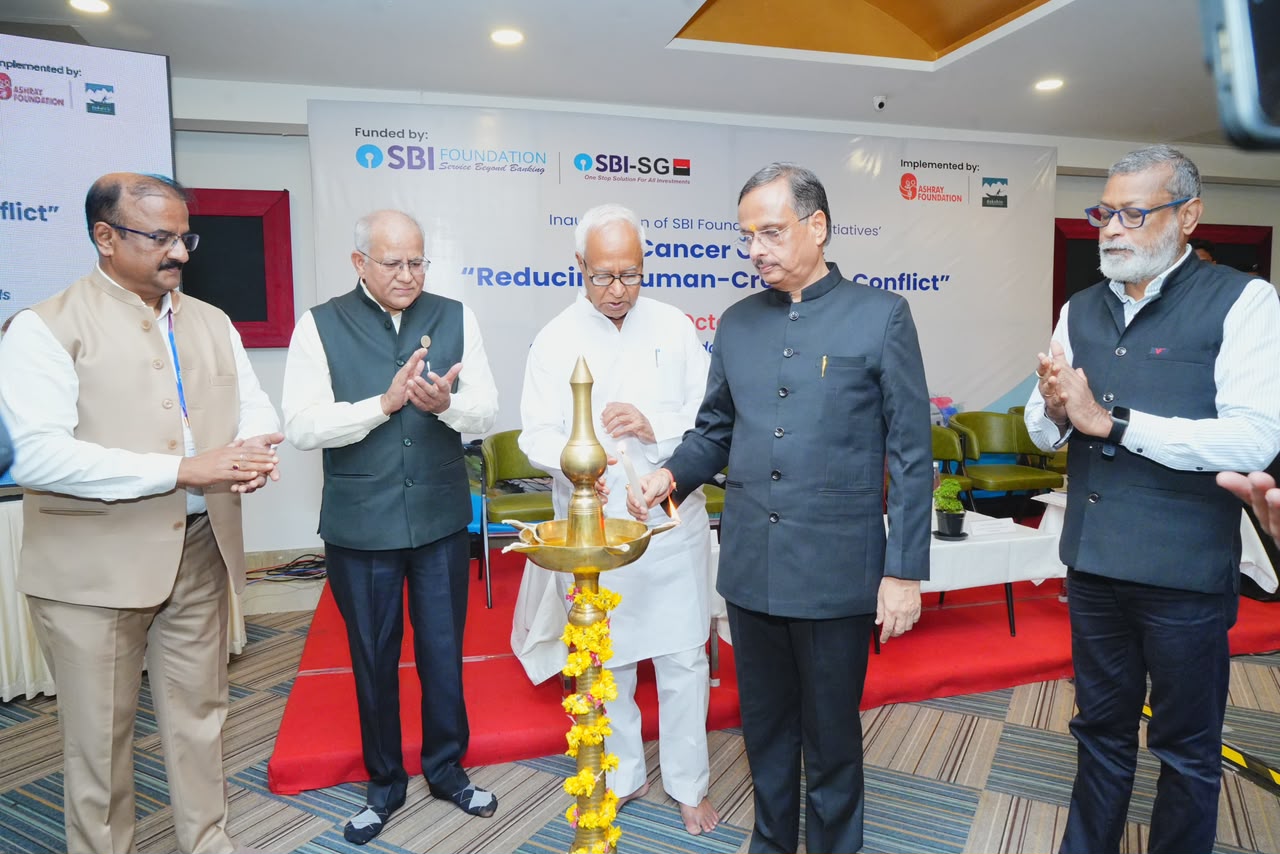
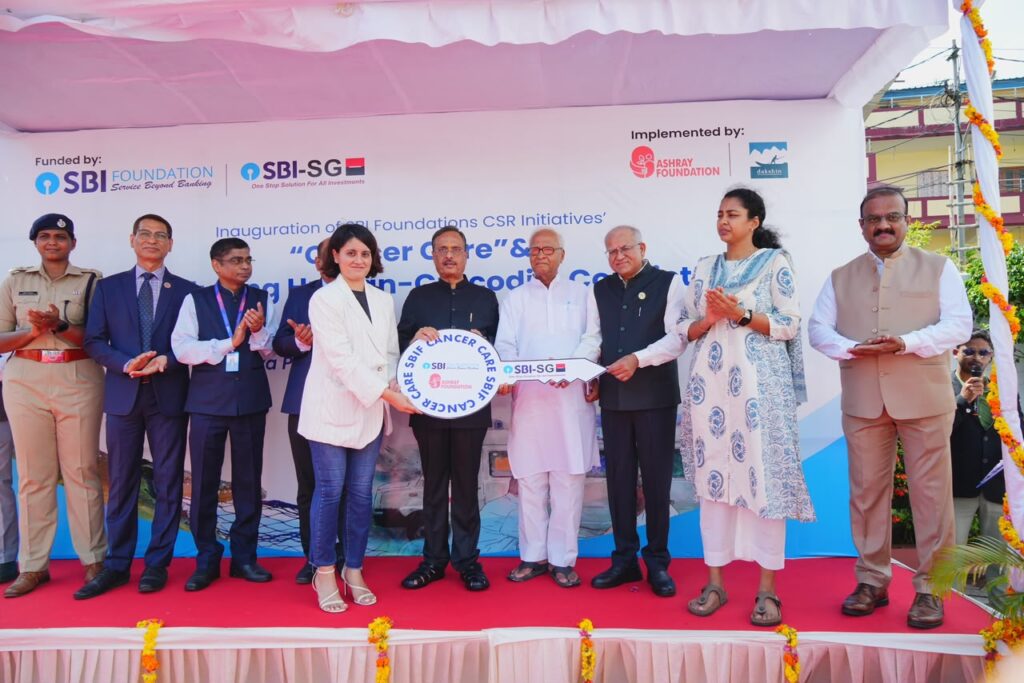
The launch event was attended by Prof. (Dr.) Dinesh Sharma, Hon’ble Lt. Governor of Andaman and Nicobar Islands; G. S. Rana, Deputy Managing Director (HR) and Chief Development Officer, State Bank of India; officials from SBI Foundation; and representatives of the implementing partner organisations.
The Rs. 10 crore CSR commitment reflects SBI Foundation’s effort to bring health, environmental sustainability and community resilience under one development framework. While the cancer-care programme is designed to take screening and awareness closer to people, the crocodile-conflict intervention focuses on protecting fishing and coastal communities whose livelihoods are linked to waters where saltwater crocodiles are present.
***
Cancer Care Closer to Communities
Cancer screening and early diagnosis remain critical to improving health outcomes, particularly where people may face difficulty in reaching specialised medical services. Through SBIF Cancer Care, SBI Foundation plans to expand access to screening for breast, cervical and oral cancers through two dedicated Mobile Screening Units.
The project has set a target of screening 50,000 people across the Andaman and Nicobar Islands. The mobile units will enable the programme to reach communities more directly, helping bring preventive healthcare services beyond conventional hospital settings.
The programme will also undertake community awareness and cancer-prevention sessions expected to reach 2 lakh people. These sessions will focus on improving awareness around cancer prevention, the importance of timely screening, warning signs, and the need to seek medical advice without delay when concerns arise.
An important component of the intervention is its referral mechanism. High-risk individuals identified through screening will be supported with referrals to advanced cancer-care facilities. The programme will also assist eligible patients in accessing government healthcare schemes, including Ayushman Bharat.
This approach connects awareness, screening, referral and access to available healthcare support. It recognises that screening alone is not enough unless people are also able to navigate the next steps in diagnosis, treatment and financial support.
By partnering with Ashray Foundation, SBI Foundation aims to bring specialised community engagement and healthcare outreach into the programme. The initiative is expected to strengthen local understanding of cancer prevention while creating a pathway for people requiring further medical attention.
***
Supporting Safer Coastal Livelihoods
The second initiative, SBIF CONSERW, addresses the challenge of human–saltwater crocodile conflict in South Andaman. Coastal and fishing communities in certain areas may face safety risks while carrying out livelihood activities near creeks, mangroves and other water bodies inhabited by saltwater crocodiles.
Through its partnership with Dakshin Foundation, SBI Foundation will support awareness, outreach and practical safety measures for communities living and working in crocodile-prone areas.
A total of 2,100 safety kits will be distributed under the initiative. These kits are intended to support safer practices among people engaged in fishing and related livelihood activities in locations vulnerable to human–crocodile interactions.
The project will also conduct awareness and outreach workshops to strengthen community understanding of safety measures. These workshops will encourage informed responses to potential conflict situations and promote practices that can reduce avoidable risk.
The initiative is significant because it places local communities at the centre of conservation. Human–wildlife conflict cannot be addressed only through enforcement or isolated interventions. It requires awareness, local participation, safety preparedness and a better understanding of the ecological landscape in which communities earn their livelihoods.
By linking conservation with community safety, the programme seeks to support both people and the unique biodiversity of the Andaman and Nicobar Islands. The intervention also recognises that sustainable conservation must protect lives and livelihoods while respecting the ecological importance of the region.
***
A Holistic Development Approach
Speaking at the launch, Prof. (Dr.) Dinesh Sharma, Hon’ble Lt. Governor of Andaman and Nicobar Islands, said, “The true measure of development lies in building a healthy and secure society while preserving the natural environment for generations to come. The launch of SBI Foundation’s Cancer Care and Fishermen Safety initiatives in the Andaman and Nicobar Islands reflects this holistic vision of development.”
He added, “While the Cancer Care initiative seeks to strengthen early detection, awareness and access to timely treatment, the Fishermen Safety initiative focuses on protecting the lives and livelihoods of local fishing communities while promoting harmonious coexistence with wildlife. These initiatives underscore the importance of collaborative efforts in addressing critical social, health and environmental challenges through community participation, scientific interventions and sustainable solutions.”
“I commend SBI Foundation, its implementing partners and all stakeholders for their commitment towards improving community health and well-being and safeguarding the unique ecological heritage of the Islands. I am confident that these efforts will create meaningful and lasting impact in the lives of the people of Andaman and Nicobar Islands,” he said.
G. S. Rana, DMD (HR) and CDO, State Bank of India, said the interventions align with the broader national effort to make development more inclusive and sustainable.
“By expanding its footprint of Corporate Social Responsibility in Andaman and Nicobar, State Bank of India reaffirms its commitment to building an inclusive, accessible and sustainable society. The interventions undertaken in these remote corners are in alignment with the efforts of the Government of India,” he said.
“By supporting cancer screening and prevention, alongside efforts to mitigate human–saltwater crocodile conflict, we aim to contribute to meaningful, lasting change in the lives of communities in the Andaman and Nicobar Islands. These initiatives reflect our belief that responsible development must place people, communities and the environment at its core,” Rana added.
Swapan Dhar, Managing Director, SBI Foundation, said the initiatives demonstrate the Foundation’s continued focus on locally relevant solutions to social and environmental challenges.
“SBI Foundation continues to expand its footprint across India by supporting locally relevant solutions to critical social and environmental challenges. Through Cancer Care initiatives, we aim to improve access to cancer screening, awareness and referral services, while environment and wildlife conservation efforts seek to strengthen community safety and promote coexistence between people and wildlife,” he said.
“Our partnerships with Ashray Foundation and Dakshin Foundation bring together specialised expertise and community engagement to address these needs. We remain committed to building resilient communities and advancing sustainable, long-term impact through collaborative action,” Dhar added.
***
Partnerships for Lasting Impact
The two initiatives demonstrate how CSR can respond to diverse community needs through focused partnerships. Ashray Foundation brings healthcare outreach and cancer-care expertise to the screening programme, while Dakshin Foundation will support the wildlife-conservation and community-safety intervention.
The combined effort also presents a broader model of responsible development. Health, safety, livelihoods, biodiversity and access to services are closely connected in geographically distinctive regions such as the Andaman and Nicobar Islands. Addressing these concerns together can help create stronger and more resilient communities.
With its cancer-care initiative, SBI Foundation is seeking to make screening, awareness and referrals more accessible. Through SBIF CONSERW, it is supporting the safety of coastal communities while encouraging a more informed and sustainable relationship between people and wildlife.
The initiatives reinforce SBI Foundation’s commitment to long-term, community-centred CSR interventions that improve well-being, support essential services and contrib