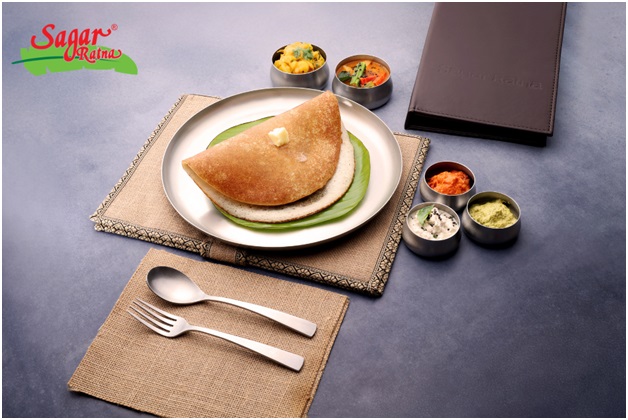


Benne dosa is a must-try dish for South Indian food lovers. Its golden crispiness and rich, buttery taste linger on your palate, making it too appetising. But not many know about its origin, as Davangere benne dosa, and that it is a dish born out of necessity.
From South to North India, benne dosa can be found in an authentic South Indian restaurant in Gurgaon.
Let’s discuss in this blog how a simple meal sold near a theatre in Davangere eventually became one of Karnataka’s most recognised contributions to South Indian cuisine.
A Dosa Closely Connected to Davangere
In Kannada, butter is called “benne”. But, Davangere benne dosa is not just an ordinary dosa with extra ghee spread over it.
Its character is derived from the batter, the thickness, the method of cooking, and the presentation. The dosa is crisp and golden brown on the outside and soft and slightly spongy in the middle.
It is typically served with coconut chutney and a mildly spiced potato palya. The accompaniments combine to match the richness of the butter without obscuring the flavour of the dosa.
Among the many types of dosas found across India, this one stands apart because it carries the name, history, and food identity of a single Karnataka city.
Davangere Benne Dosa Origin Story
Benne dosa is one of the most favourite breakfast dishes in Karnataka, but its story is not the story of a big restaurant, a celebrity chef, or a recipe born in a palace kitchen. It started with a migrant woman, Chennamma, a practical cook and mother, who began selling food in Davangere in the late 1920s to support her children.
She was a working mother who is said to have migrated with her family from the Beedaki village in the Belagavi region during the late-1920s. The family was seeking a way to make a living during a difficult period of drought and economic hardship.
Chennamma is said to have started a small food stall near the Savalagi Drama Theatre in Davangere sometime in 1927 or 1928. Late at night, the theatre drew crowds, giving her a steady stream of hungry patrons.
She sold dosas, chutney, potato dishes and other hearty food. Her stall helped to feed her children and eventually build a reputation for her cooking.
From that modest beginning, the dish grew into a regional icon and eventually a national food obsession.
The details of this history are based mainly on family accounts and stories passed through generations. There is limited archival evidence, but the Chennamma story remains the most widely accepted explanation of how Benne Dosa began.
The Earliest Version Was Different
The first dosa of Chennamma was probably not the dosa that people know today. Popular accounts have it that she used ragi because it was cheap, filling, and easily available.
The dosa came with ghee, chutney and plain sides. It proved a good, inexpensive meal for theatregoers, workers and the local community.
This early version shows how practical many of the classics of South Indian food used to be. They were developed to feed people well, with ingredients appropriate to the local economy and daily life.
The dish only developed its modern identity when the next generation began changing the recipe.
How the Recipe Evolved
By around 1938, Chennamma’s sons had become more involved in the family food business. They gradually replaced ragi with rice and introduced ingredients such as lentils and puffed rice.
Puffed rice helped give the dosa a softer and lighter centre. Rice and lentils created a familiar fermented base, while butter became the defining ingredient used during cooking.
This transformation produced the texture now associated with benne dosa. The dosa developed a crisp surface on the hot tawa, but it remained tender inside.
The butter was not merely added for decoration. It melted into the surface while the dosa cooked, creating its rich aroma, golden colour, and distinctive flavour.
This is where the dish moved beyond being one of many local types of dosas. It became a recognisable recipe with its own name and loyal following.
From One Stall to a Local Food Tradition
The family business is believed to have divided around 1944. Chennamma’s sons, including Shantappa and Mahadeveppa, continued the tradition through separate establishments in Davangere.
As demand grew, employees from early benne dosa eateries began opening their own shops. This helped the style spread across Davangere without remaining limited to one family outlet.
Soon, Benne Dosa became something that people visiting the city had to try. It became part of the daily culture and public identity of Davangere.
This growth matters because famous food traditions don’t often start from a single recipe. They come when a community as a whole learns, reproduces, adapts, and safeguards a particular way of cooking.
What Makes an Authentic Benne Dosa?
A dosa does not become authentic simply because butter has been placed on top. A proper Davangere benne dosa depends on several elements working together.
- The Batter
Benne dosa batter is generally made from rice, lentils and puffed rice. It should ferment enough to give flavour and softness but not be too sour.
- The Thickness
It’s spread a bit thicker than a thin paper dosa. The surface is crisp, but the centre will stay soft.
- The Butter
The dosa is cooked, and a generous amount of butter is applied. It should melt over the surface and give flavour but not make the plate unpleasantly greasy.
- The Accompaniments
Coconut chutney and potato palya are the traditional partners. Their mild spice and freshness help balance the richness.
- The Cooking Surface
Older establishments are sometimes associated with firewood cooking and well-seasoned iron tawas. These methods can add gentle smokiness and an old-style character.
These details explain why Benne Dosa tastes different from a standard butter dosa. Its identity comes from the complete cooking method, not one ingredient alone.
How Benne Dosa Travelled Beyond Karnataka
As people moved between cities, their food memories travelled with them. Demand for regional dishes encouraged South Indian restaurants outside Karnataka to add benne dosa to their menus.
Today, versions can be found in Bengaluru, Delhi, Mumbai, Kolkata, and several other cities. Some remain close to the traditional style, while others introduce masala fillings or fusion toppings.
Diners are well-informed now due to the introduction of regional types of dosas. Now, many enquire about the batter, cooking style, origin, and side dishes before they order.
If you are looking for a South Indian restaurant in Gurgaon, you may get more than plain and masala dosa. Now, regional food is part of the broader culinary experience.
Similarly, large congregations are also adding regional breakfast menus, opening up the scope for catering services in Delhi NCR to serve authentic dosa stations, chutneys and freshly prepared accompaniments.
A familiar brand such as the Sagar Ratna restaurant helps introduce these regional flavours to diners beyond southern India while keeping the experience approachable.
A Dish That Continues to Change
Modern chefs have created several interpretations of the classic recipe. Some serve benne masala dosa, open dosa, cheese-filled versions, or smaller-tasting portions.
These variations may attract new diners, but the traditional style remains the reference point. Without the soft centre, crisp surface, butter-rich finish, chutney, and palya, much of the original character is lost.
This balance between tradition and change is common across South Indian food. Recipes travel, adapt, and take new forms, but their origins still matter.
A thoughtful South Indian restaurant can offer innovation while explaining what separates the new version from the original.
More Than a Butter Dosa
The story of benne dosa is one of endurance, family business, and slow reinvention. Chennamma’s tiny stall next to the theatre was not designed to make a famous regional dish.
It began as a practical way to earn a living and feed customers. Her sons later refined the recipe, family businesses carried it forward, and local cooks helped turn it into a city-wide tradition.
Today, Davangere benne dosa is more than just butter and batter. It holds the memory of one woman’s effort, one family’s adaptation, and a city that took the dish and made it its own. That history is what gives every authentic plate its deeper flavour.