

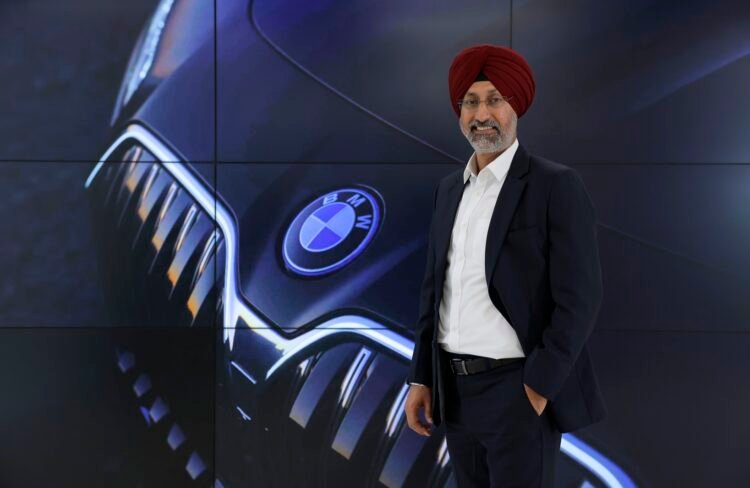


BMW Group India CEO Hardeep S. Brar discusses training 15,000 underserved youth, achieving 80% placements and integrating AI into skilling.
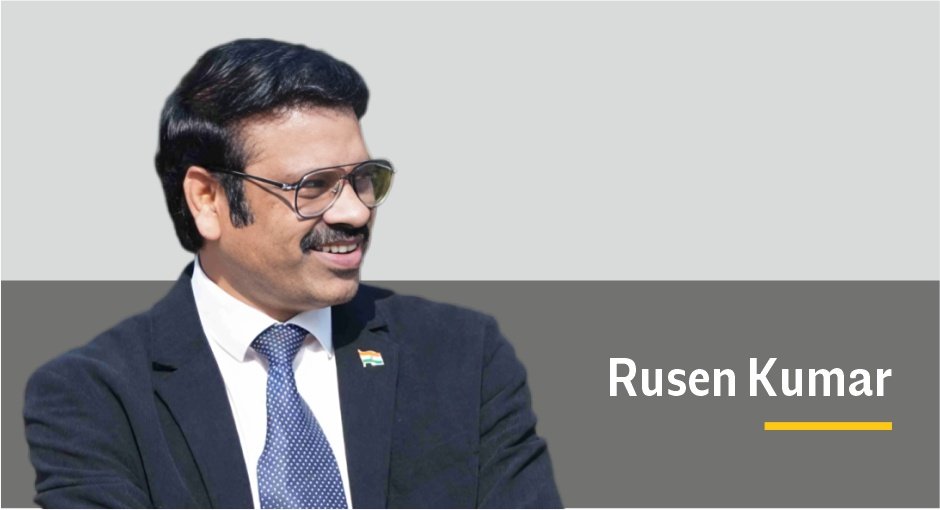
By Rusen Kumar
India’s demographic dividend can deliver meaningful economic progress only when young people possess relevant skills and access to employment. For youth from underserved communities, the transition from education to the workplace is often constrained by limited exposure, inadequate career guidance and a lack of job-ready skills.
BMW India Foundation, in partnership with Magic Bus, is working to address this gap through its “Childhood to Livelihood” initiative. The programme combines life skills, spoken English, digital and financial literacy, workplace readiness, career counselling and placement support. According to the Foundation, more than 15,000 young people have been trained since 2018, with around 80% of participants securing employment after completing the programme.
In an exclusive interview with Rusen Kumar, Editor of India CSR, Hardeep S. Brar, President and Chief Executive Officer, BMW Group India, discusses the partnership’s journey, the role of sports and skills in youth empowerment, measurable employment outcomes and plans to integrate artificial intelligence and advanced digital literacy into future training.
Excerpts:
Could you share an overview of the partnership between BMW India Foundation and Magic Bus, and the vision behind launching this initiative?
We have been partners with Magic Bus for over a decade now. The idea was to give young people, who are unable to earn a living a platform to succeed. The ‘Childhood to Livelihood’ initiative began small, working with adolescents, and grew into a proper skilling course over time. BMW Group India was one of the first companies to partner with Magic Bus on it, which we are immensely proud about. It sharpened up once we set up the BMW India Foundation in 2018. Since then, over 15,000 young people have been trained, and a lot of them have jobs now, across sectors.
India’s got a huge young population, a demographic dividend, but one that only counts for something if youngsters, especially from downtrodden communities, have the required skills for which they can be hired for jobs. The programme not only imparts life skills but also workplace readiness and helps them figure out a career at the end of it.
India’s demographic dividend counts only when young people, particularly those from underserved communities, have the skills employers require.- Hardeep S. Brar, President and CEO, BMW Group India
Why did BMW India Foundation choose sports and skill development as focus areas for empowering youth from underserved communities?
Sports and skill development foster qualities that can’t always be learned in the classrooms. Skills like talking to people, solving problems, and working in a team get people hired. Sports, on the other hand, give youngsters confidence and discipline and foster a never-give-up attitude. Plenty of young people from underprivileged backgrounds often don’t have the required skills that corporate set-ups demand.
The project, while backing the government’s Skill India initiative, also aligns with BMW Group’s focus on Sustainable Development Goals (SDGs), with core initiatives also focusing heavily on environmental conservation and responsible resource management, apart from skill development and community well-being.
How does the programme help bridge the gap between education, life skills, and future employability for young individuals?
There is a visible gap in India between finishing education with high grades and being good at a job. So many young people, especially from underserved communities, don’t have the confidence to land a job despite completing schooling and higher education, due to a lack of exposure. We built a course, which includes life skills, employability training, and career guidance, that could help the youngsters upskill themselves and apply for jobs with confidence.
The initiative focuses on communication, working together, critical thinking, problem-solving, and socio-emotional skills, which help bring confidence to youngsters to apply for jobs. It also helps them see what they are good at and pick a career direction for themselves.
‘Childhood to Livelihood’ keeps the whole life of a youngster joined up, from school right through to a job. Meanwhile, mock interviews and time spent with prospective employers ensure what challenges are to be expected. The initiative prepares youngsters to not only get the job but also keep it.
Skills are the starting line and jobs are the finish line. We want real opportunities waiting for our graduates. – Hardeep S. Brar, President and CEO, BMW Group India
What kind of on-ground interventions and training modules are being implemented as part of the initiative?
The on-ground interventions and training modules implemented as part of the initiative are structured and built around a single outcome, which is to secure lasting jobs for youngsters. The course usually runs eight or nine weeks and kicks off with mobilisation, counseling, and enrollment. Each person is assessed and a plan built around them. They are presented with the first four modules, which include life skills, like communication, teamwork, and problem-solving; employability and spoken English and money basics; workplace readiness that includes how to carry yourself, customer service, managing your time, and career prep, preparing CVs for interviews and applying for jobs. We lean hard on peer-to-peer learning all the way through. From the placement perspective, usual hirings are done by sectors like retail, BFSI, and IT-enabled services.
Have you witnessed any notable impact or transformation among the participating youth since the programme’s launch?
As much as 80% of the youngsters are placed after completing the programme. And a large number of them are still in those jobs well past the first few months. For a lot of these youngsters, they are often the first person in their family to earn a formal wage.
But it’s not just the money that sees a change, but also how they walk in, how they speak, and how sure they are of their own worth. Inculcating life skills into the programme allows them to handle the challenges of their jobs. A large number of participants in the project are young women who are trying to make meaningful changes in their lives through the programme.
We are not chasing metrics at our skill development centre; we are driven by meaningful, long-term employment outcomes. – Hardeep S. Brar, President and CEO, BMW Group India
How does BMW India Foundation plan to strengthen and expand this initiative to create a larger community impact across India?
At the BMW India Foundation, we decided to take a different route. At our skill development center in Chennai, we aren’t chasing metrics but are driven by long-term outcomes. We do not just launch a program, we monitor, gather data, and pivot constantly with our implementation partners to ensure what we teach is exactly what the industry needs right now. Meanwhile, the job market is moving fast. To keep our youth competitive, we are integrating AI, advanced digital literacy, and sharp communication skills directly into our training modules.
We understand that skills are just the starting line and jobs are the finish line. So, we are working on our employer partnerships across sectors to ensure there are real opportunities waiting for our graduates. The plan is to build a sustainable, plug-and-play model for youth empowerment that actually aids India’s economic growth.
(India CSR)


