

• India CSR Awards 2026
  • India CSR Leadership Summit
  • Guest Posts
Tuesday, July 21, 2026
India CSR
  • Home
  • Corporate Social Responsibility
    • Art & Culture
    • CSR Leaders
    • Child Rights
    • Culture
    • Education
    • Gender Equality
    • Around the World
    • Skill Development
    • Safety
    • Covid-19
    • Safe Food For All
  • Sustainability
    • Sustainability Dialogues
    • Sustainability Knowledge Series
    • Plastics
    • Sustainable Development Goals
    • ESG
    • Circular Economy
    • BRSR
  • Corporate Governance
    • Diversity & Inclusion
  • Interviews
  • SDGs
    • No Poverty
    • Zero Hunger
    • Good Health & Well-Being
    • Quality Education
    • Gender Equality
    • Clean Water & Sanitation – SDG 6
    • Affordable & Clean Energy
    • Decent Work & Economic Growth
    • Industry, Innovation & Infrastructure
    • Reduced Inequalities
    • Sustainable Cities & Communities
    • Responsible Consumption & Production
    • Climate Action
    • Life Below Water
    • Life on Land
    • Peace, Justice & Strong Institutions
    • Partnerships for the Goals
  • Articles
  • Events
  • हिंदी
  • More
    • Business
    • Finance
    • Environment
    • Economy
    • Health
    • Around the World
    • Social Sector Leaders
    • Social Entrepreneurship
    • Trending News
      • Important Days
        • Festivals
      • Great People
      • Product Review
      • International
      • Sports
      • Entertainment
    • Case Studies
    • Philanthropy
    • Biography
    • Technology
    • Lifestyle
    • Sports
    • Gaming
    • Knowledge
    • Home Improvement
    • Words Power
    • Chief Ministers
No Result
View All Result
  • Home
  • Corporate Social Responsibility
    • Art & Culture
    • CSR Leaders
    • Child Rights
    • Culture
    • Education
    • Gender Equality
    • Around the World
    • Skill Development
    • Safety
    • Covid-19
    • Safe Food For All
  • Sustainability
    • Sustainability Dialogues
    • Sustainability Knowledge Series
    • Plastics
    • Sustainable Development Goals
    • ESG
    • Circular Economy
    • BRSR
  • Corporate Governance
    • Diversity & Inclusion
  • Interviews
  • SDGs
    • No Poverty
    • Zero Hunger
    • Good Health & Well-Being
    • Quality Education
    • Gender Equality
    • Clean Water & Sanitation – SDG 6
    • Affordable & Clean Energy
    • Decent Work & Economic Growth
    • Industry, Innovation & Infrastructure
    • Reduced Inequalities
    • Sustainable Cities & Communities
    • Responsible Consumption & Production
    • Climate Action
    • Life Below Water
    • Life on Land
    • Peace, Justice & Strong Institutions
    • Partnerships for the Goals
  • Articles
  • Events
  • हिंदी
  • More
    • Business
    • Finance
    • Environment
    • Economy
    • Health
    • Around the World
    • Social Sector Leaders
    • Social Entrepreneurship
    • Trending News
      • Important Days
        • Festivals
      • Great People
      • Product Review
      • International
      • Sports
      • Entertainment
    • Case Studies
    • Philanthropy
    • Biography
    • Technology
    • Lifestyle
    • Sports
    • Gaming
    • Knowledge
    • Home Improvement
    • Words Power
    • Chief Ministers
No Result
View All Result
India CSR
No Result
View All Result
Home Business

Paper Recycling in a Circular System

India CSR by India CSR
July 20, 2026
in Business
Reading Time: 8 mins read
India CSR
Share Share Share Share
WhatsApp icon
WhatsApp — Join Us
Instant updates & community
Google News icon
Google News — Follow Us
Get our articles in Google News feed

Paper recycling keeps cellulose fibers circulating through repeated production cycles rather than routing them directly to disposal.
india csr awards
ADVERTISEMENT

Keeping Paper Fibers in Use

Recovered paper fibers reenter production instead of entering landfill or incineration streams. Each cycle recovers cellulose that would otherwise represent lost raw material investment.

Mills schedule recovered fiber alongside virgin pulp according to grade requirements.

Recycling, Reuse, and Virgin Fiber

Recycling differs from reuse because fibers are broken down and reformed rather than kept intact as a finished sheet. Virgin fiber supplies the strength that repeated recycling gradually reduces.

Papermakers blend both fiber types to balance cost, strength, and available supply.
raigarh csr summit
ADVERTISEMENT

Recyclability and Actual Recovery

A paper product can be technically recyclable while never entering an actual recycling stream. Recovery depends on collection infrastructure, sorting accuracy, and local mill demand for a given grade.

Products with coatings, laminates, or heavy contamination often remain recyclable in theory but are rejected in practice. Recyclability claims should distinguish design potential from measured recovery rates.

How Paper Waste Is Recovered

Recovered paper originates from manufacturing residues and consumer waste streams before reaching a recycling mill.

Pre-Consumer and Post-Consumer Paper Waste

Pre-consumer waste includes trimmings and rejects generated during manufacturing before a product reaches a customer. Post-consumer waste includes packaging, office paper, and print material discarded after use.

Both streams carry different contamination levels and fiber quality.

Collection and Sorting

Collection systems gather paper through curbside programs, commercial bins, and dedicated drop-off points. Sorting separates material by grade, since cardboard, office paper, and mixed paper require different processing paths.

Automated optical sorters and manual screening remove obvious contaminants before baling. Poor sorting lowers the value of recovered bales and increases rejects at the mill.

Contamination and Recovered Paper Quality

Contamination includes plastic film, food residue, glass, and non-paper packaging mixed into collected loads. Mills typically set contamination thresholds below 5% for accepted bales, since higher levels raise processing cost.

Wet or greasy paper also weakens fiber bonding during repulping. Contaminated loads may be downgraded or rejected before reaching the pulping stage.

Internal Mill Broke Recycling

Mill broke refers to trim, rejects, and process waste generated inside a paper mill itself. This fiber returns directly to the pulping system without leaving the facility.

Broke recycling reduces raw material loss during production.

How Recovered Paper Becomes Recycled Pulp

Recovered paper undergoes mechanical and chemical processing before recycled fibers rejoin the papermaking stream.

Repulping Recovered Paper

Repulping mixes baled paper with water inside a pulper, where mechanical agitation separates the sheet into individual fibers. Heat and agitation time influence how thoroughly fibers separate from bonded material.

The resulting slurry, called stock, still contains contaminants that require further removal before use.

Screening and Cleaning Recycled Pulp

Screens remove oversized particles such as plastic fragments and staples from the pulp slurry. Cleaners use centrifugal force to separate denser contaminants like sand and metal.

Multiple screening stages improve fiber purity for sensitive paper grades.

Deinking Printed Paper

Deinking removes printing ink from recovered fiber through flotation or washing methods, depending on ink type and paper grade. Flotation attaches ink particles to air bubbles that rise and are skimmed away.

Deinked pulp achieves higher brightness suited to graphic paper and tissue production. Residual ink can limit brightness even after repeated washing stages.

Refining and Stock Preparation

Refining mechanically treats recycled fibers to restore bonding capacity lost during earlier processing cycles. Controlled refining improves sheet strength without excessively shortening fiber length.

Stock preparation adjusts consistency and additive levels before the stock moves through downstream paper mill equipment.

How Recycled Fibers Return to Papermaking

Recycled stock combines with process water and additives before forming into new paper sheets.

Blending Recycled and Virgin Pulp

Papermakers blend recycled fiber with virgin pulp to balance strength, brightness, and cost across different paper grades. Recycled content ratios vary by product, since packaging grades tolerate higher recycled shares than premium graphic paper.

Blending ratios shift with fiber availability, mill capability, and end-use demand.

Forming Recycled Paper on a Paper Machine

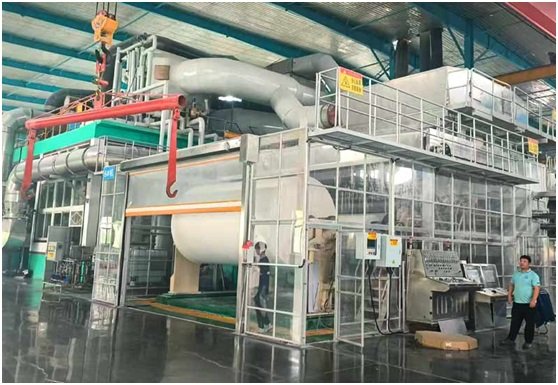
During the recycled paper production process, diluted stock flows onto a moving wire, where water drains and fibers bond into a continuous sheet. Pressing and drying sections then remove the remaining moisture before winding.

Machine speed and fiber quality together determine sheet uniformity.

Packaging Paper and Paperboard Production

Recycled fiber supplies much of the material used in corrugated medium, linerboard, and container board. These grades tolerate shorter fibers and visible fiber variation better than printing paper.

Multiple recycled layers can be combined to reach a required board thickness.

Tissue and Graphic Paper Production

Tissue production favors deinked recycled fiber for softness and absorbency rather than raw strength. Graphic paper production requires higher brightness and more consistent fiber quality.

Both grades limit the recycled fiber share when performance targets cannot be met.

How Recycling Extends Fiber Use

Fiber circulation through multiple production cycles reduces demand on newly harvested wood pulp.

Closed-Loop and Open-Loop Recycling

Closed-loop recycling returns fiber into the same product category, such as cardboard becoming new cardboard. Open-loop recycling shifts fiber into a different product type, often one requiring lower fiber quality.

Open-loop pathways extend fiber utility even after closed-loop options become impractical.

Cascading Fibers into Lower-Grade Products

Fibers weakened by repeated recycling move toward products with lower strength needs, such as core board or molded packaging. This cascading extends total fiber lifespan across several product generations.

Cascading delays final disposal rather than preventing it entirely.

Reducing Disposal and Virgin Fiber Demand

Each recycling cycle diverts material from landfill and lowers the volume of virgin pulp a mill must source. The effect depends on collection rates and available mill capacity for recycled grades.

Regional infrastructure gaps can limit how much diversion recycling actually achieves.

Designing Paper Products for Recycling

Product structure and material choices determine whether paper items are recovered efficiently after use.

Repulpable Paper Structures

Repulpable structures rely on fiber-to-fiber bonding rather than plastic films, foils, or heavy laminates that resist breakdown in water. Simple single-material construction repulps more completely than multilayer composites.

Designers limit added materials where product function allows, improving recovery outcomes at the mill.

Coatings and Adhesives

Coatings improve moisture resistance, printability, or surface appearance but can interfere with repulping and fiber separation. Water-dispersible adhesives generally separate more easily than solvent-based or heavy-duty bonding agents.

Coating and adhesive selection therefore involves a tradeoff between product performance and recyclability.

Wet-Strength Additives

Wet-strength resins keep paper products intact when exposed to moisture, which benefits packaging and tissue applications. These same resins resist fiber separation during repulping.

Reduced-strength formulations exist to balance moisture resistance with recovery potential.

Packaging Designed for Fiber Recovery

Recovery-friendly packaging limits the use of foil linings, plastic windows, and non-repulpable inserts. Clear labeling helps sorting systems route material to the correct recycling stream.

Design choices at this stage directly influence downstream recovery rates.

Limits of Paper Fiber Circularity

Paper fibers cannot circulate indefinitely, since mechanical and chemical processing gradually degrades their properties.

Fiber Shortening and Strength Loss

Each pulping and refining cycle shortens cellulose fibers and reduces their bonding capacity. Fibers typically withstand approximately 5 to 7 recycling cycles before becoming too short for papermaking.

Shortened fibers still contribute to lower-grade products even after losing suitability for stronger sheets.

Process Rejects and Yield Losses

Screening, cleaning, and deinking remove contaminants along with a portion of usable fiber, lowering overall yield. Rejected material typically goes to disposal or energy recovery.

Yield losses accumulate across repeated recycling generations.

The Continued Role of Virgin Fiber

Virgin fiber restores strength and length that recycled stock alone cannot supply. Some paper grades need a minimum virgin fiber share to meet performance standards.

Fiber circularity therefore depends on ongoing virgin fiber input rather than existing as a closed loop.


India CSR Image 1 India CSR Image 2

CSR, Sustainability, and ESG success stories hindustan zinc
ADVERTISEMENT
India CSR

India CSR

India CSR® is the largest media on CSR and sustainability offering diverse content across multisectoral issues on business responsibility. It covers Sustainable Development, Corporate Social Responsibility (CSR), Sustainability, and related issues in India. Founded in 2009, the organisation aspires to become a globally admired media that offers valuable information to its readers through responsible reporting.

Related Posts

Suntech Infra Solutions Reports Record Revenue of ₹176.27 Crore in FY 2025–26
Business

Suntech Infra Solutions Reports Record Revenue of ₹176.27 Crore in FY 2025–26

8 minutes ago
The Home That Looks Like You Aishwarya Interiors’ Approach to Bespoke Interiors in Bangalore
Business

10 Key Points To Consider Before Buying A Premium Home In Bangalore

4 hours ago
Traceability and Accountability of AI and Responsibility of User Community
Business

Traceability and Accountability of AI and Responsibility of User Community

21 hours ago
Chinese Film Exhibition Arrives in India, Blades of the Guardians: Wind Rises in the Desert Ignites Enthusiastic On-site Exchanges
Business

Chinese Film Exhibition Arrives in India, Blades of the Guardians: Wind Rises in the Desert Ignites Enthusiastic On-site Exchanges

21 hours ago
Gaurav Gupta Presents His Latest India Couture Collection “Light Song” in Mumbai
Business

Gaurav Gupta Presents His Latest India Couture Collection “Light Song” in Mumbai

21 hours ago
How Bachat Pay Is Building an All-in-One Digital Platform for Payments, Travel, Banking, and Everyday Savings
Business

How Bachat Pay Is Building an All-in-One Digital Platform for Payments, Travel, Banking, and Everyday Savings

21 hours ago
Load More
indiacsr-awards-2026
ADVERTISEMENT
CSR Raigarh Summit 2026
ADVERTISEMENT
bba
ADVERTISEMENT
FKCCI
ADVERTISEMENT

Interviews

Hardeep S. Brar - BMW Group India CEO
Interviews

Skills Are the Starting Line, Jobs Are the Finish Line: BMW Group India CEO Hardeep S. Brar

by India CSR
July 21, 2026

Hardeep S. Brar discussing BMW India Foundation’s youth skill development programme.

Read moreDetails
Dr. Vikas Garg, Chairman, Ebix Group

CSR: Compliance Gives You a Floor, But Purpose Gives You a Legacy: Dr. Vikas Garg, Chairman, Ebix Group

June 29, 2026
Harkirat Kaur, CEO, Hartek Foundation

Building Resilient Communities Through Sustainable Development: Harkirat Kaur, CEO, Hartek Foundation

June 22, 2026
Indu Mehta, Chief Sustainability Officer (CSO) at Bhilwara Energy Limited @IndiaCSR

ESG in India Has Moved Beyond Storytelling: Bhilwara Energy’s Indu Mehta on Sustainability as an Operating Discipline

May 30, 2026
Load More
Ad 1 Ad 2 Ad 3 Ad 4 Ad 5 Ad 6
ADVERTISEMENT

CSR UPDATES

Sarvodaya Hospital, Faridabad Launches CSR Initiative to Provide 100 Paediatric Cardiac Surgeries for Underprivileged Children

Ashok Leyland: CSR Initiative Bridges Learning Gaps Among Underserved Communities

ONGC CSR Spending Reaches Record ₹929 Crore in FY 2024–25

ONGC CSR Funding Row: Karnataka Congress Seeks Transparency Over Alleged Grants to RSS-Linked Organisations

CSR: Vedanta Forays into Bihar, Launches 1,000 Nand Ghars

Reimagining CSR: Biogas as a Tool for Climate and Livelihood

STEM Learning STEM Learning STEM Learning
ADVERTISEMENT
Facebook Twitter Youtube LinkedIn Instagram
India CSR Logo

India CSR is the largest tech-led platform for information on CSR and sustainability in India offering diverse content across multisectoral issues. It covers Sustainable Development, Corporate Social Responsibility (CSR), Sustainability, and related issues in India. Founded in 2009, the organisation aspires to become a globally admired media that offers valuable information to its readers through responsible reporting. To enjoy the premium services, we invite you to partner with us.

Follow us on social media:

Subscribe to Our Newsletter

Don't miss out on the latest updates in corporate social responsibility. Subscribe to our newsletter at indiacsr.in and be part of the positive change.
Please enable JavaScript in your browser to complete this form.
Loading

  • About India CSR
  • Team
  • India CSR Awards 2026
  • India CSR Leadership Summit
  • Partnership
  • Guest Posts
  • Services
  • ESG Professional Network
  • Content Writing Services
  • Business Information
  • Contact
  • Privacy Policy
  • Terms of Use
  • Donate

Copyright © 2026 - India CSR | All Rights Reserved

No Result
View All Result
  • Home
  • Corporate Social Responsibility
    • Art & Culture
    • CSR Leaders
    • Child Rights
    • Culture
    • Education
    • Gender Equality
    • Around the World
    • Skill Development
    • Safety
    • Covid-19
    • Safe Food For All
  • Sustainability
    • Sustainability Dialogues
    • Sustainability Knowledge Series
    • Plastics
    • Sustainable Development Goals
    • ESG
    • Circular Economy
    • BRSR
  • Corporate Governance
    • Diversity & Inclusion
  • Interviews
  • SDGs
    • No Poverty
    • Zero Hunger
    • Good Health & Well-Being
    • Quality Education
    • Gender Equality
    • Clean Water & Sanitation – SDG 6
    • Affordable & Clean Energy
    • Decent Work & Economic Growth
    • Industry, Innovation & Infrastructure
    • Reduced Inequalities
    • Sustainable Cities & Communities
    • Responsible Consumption & Production
    • Climate Action
    • Life Below Water
    • Life on Land
    • Peace, Justice & Strong Institutions
    • Partnerships for the Goals
  • Articles
  • Events
  • हिंदी
  • More
    • Business
    • Finance
    • Environment
    • Economy
    • Health
    • Around the World
    • Social Sector Leaders
    • Social Entrepreneurship
    • Trending News
      • Important Days
      • Great People
      • Product Review
      • International
      • Sports
      • Entertainment
    • Case Studies
    • Philanthropy
    • Biography
    • Technology
    • Lifestyle
    • Sports
    • Gaming
    • Knowledge
    • Home Improvement
    • Words Power
    • Chief Ministers

Copyright © 2026 - India CSR | All Rights Reserved

This website uses cookies. By continuing to use this website you are giving consent to cookies being used. Visit our Privacy and Cookie Policy.