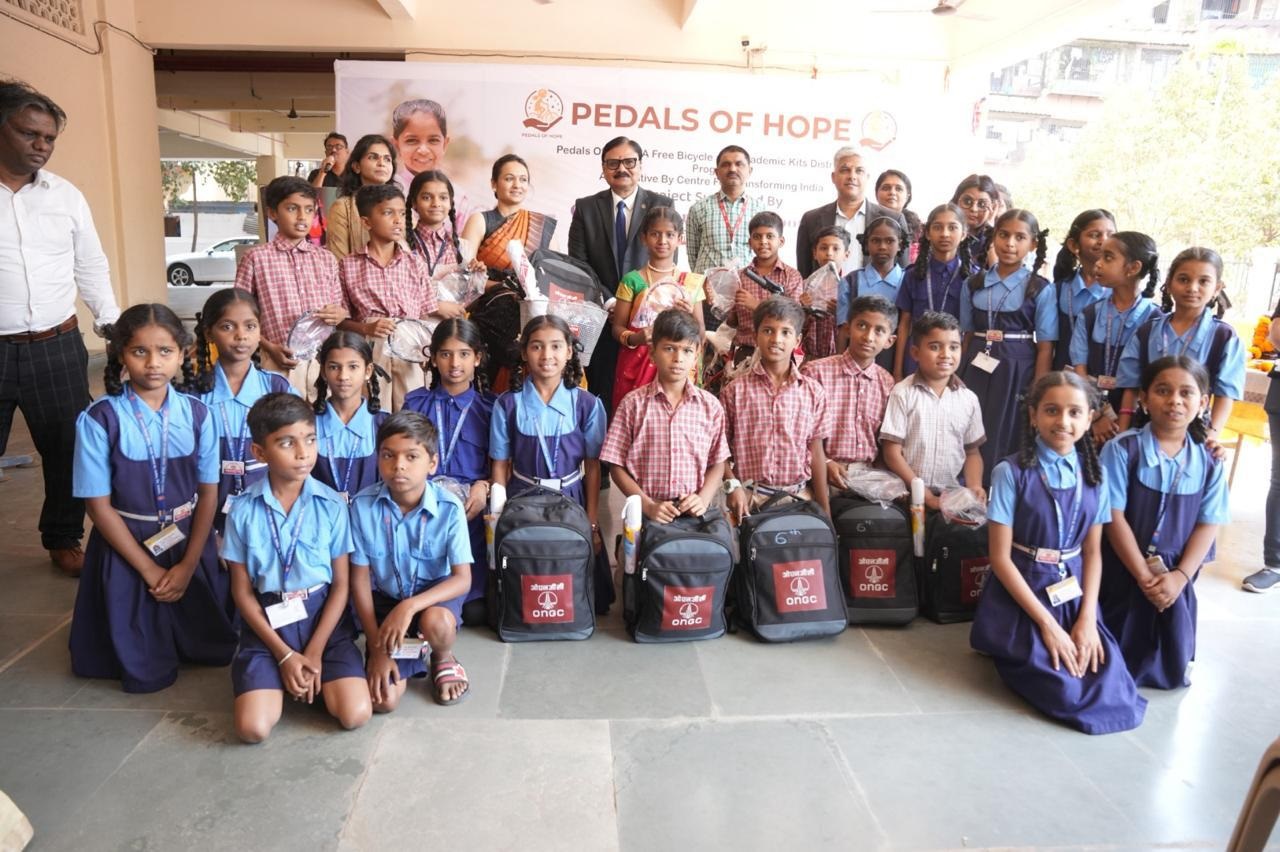



MUMBAI (India CSR): In a step towards strengthening access to education and empowering young learners, ONGC has distributed bicycles and academic kits to 350 students across Zilla Parishad schools in Kherane, Bhatan, and Chindhran villages in Maharashtra.
The initiative, carried out in partnership with the Centre for Transforming India, was launched on the occasion of Gudi Padwa and is aligned with national priorities under the National Education Policy (NEP) 2020 and the ‘Padhe Bharat’ mission.
For many students, particularly girls, the support marks a turning point in their educational journey, addressing long-standing challenges related to distance, safety, and school attendance.
From Daily Struggles to New Possibilities
Until recently, several students in these villages had to walk nearly three kilometres each day to reach school. The daily commute often resulted in fatigue, irregular attendance, and safety concerns, especially for young girls.
With the distribution of bicycles, this routine has undergone a significant transformation. Students can now travel to school more comfortably and safely, allowing them to focus better on their studies.
“Access to transportation is a critical factor in ensuring continuity in education, particularly in rural areas,” a representative associated with the initiative said, highlighting the broader impact of such interventions.

Academic Kits Add Dignity to Learning
Alongside bicycles, students were also provided with complete academic kits, including essential learning materials. These kits aim to reduce the financial burden on families while ensuring that students have the necessary tools to participate actively in classroom learning.
Education experts note that such support not only improves academic engagement but also instils a sense of dignity and confidence among students.
The initiative has been designed to create an enabling environment where children can pursue education without logistical or economic barriers.
Focus on Girls’ Education and Empowerment
A key focus of the programme is to support girls’ education by addressing challenges that often lead to dropouts in rural areas. Improved mobility and access to resources are expected to encourage higher enrolment and retention among female students.
Stakeholders involved in the initiative emphasised that empowering girls through education has a multiplier effect, contributing to social and economic development within communities.
“When a girl continues her education with confidence, it influences not just her own future but also inspires others around her,” an official said.

Aligned with National Education Goals
The programme aligns with the objectives of NEP 2020, which emphasises equitable access to quality education, and initiatives like ‘Padhe Bharat’, aimed at strengthening foundational learning.
By combining infrastructure support with educational resources, the initiative reflects a holistic approach to addressing barriers in rural education.
Community Impact and Way Forward
Local communities have welcomed the initiative, noting its immediate and visible impact on students’ daily lives. Parents expressed optimism that improved access to school will lead to better academic outcomes and brighter futures for their children.
ONGC officials indicated that such interventions are part of a broader commitment to social responsibility and inclusive development.
As India continues to prioritise education as a key driver of growth, initiatives like these highlight the role of corporate partnerships in bridging gaps and creating opportunities for underserved communities.
(India CSR)