• India CSR Awards 2025
  • India CSR Leadership Summit
  • Guest Posts
Thursday, February 12, 2026
India CSR
  • Home
  • Corporate Social Responsibility
    • Art & Culture
    • CSR Leaders
    • Child Rights
    • Culture
    • Education
    • Gender Equality
    • Around the World
    • Skill Development
    • Safety
    • Covid-19
    • Safe Food For All
  • Sustainability
    • Sustainability Dialogues
    • Sustainability Knowledge Series
    • Plastics
    • Sustainable Development Goals
    • ESG
    • Circular Economy
    • BRSR
  • Corporate Governance
    • Diversity & Inclusion
  • Interviews
  • SDGs
    • No Poverty
    • Zero Hunger
    • Good Health & Well-Being
    • Quality Education
    • Gender Equality
    • Clean Water & Sanitation – SDG 6
    • Affordable & Clean Energy
    • Decent Work & Economic Growth
    • Industry, Innovation & Infrastructure
    • Reduced Inequalities
    • Sustainable Cities & Communities
    • Responsible Consumption & Production
    • Climate Action
    • Life Below Water
    • Life on Land
    • Peace, Justice & Strong Institutions
    • Partnerships for the Goals
  • Articles
  • Events
  • हिंदी
  • More
    • Business
    • Finance
    • Environment
    • Economy
    • Health
    • Around the World
    • Social Sector Leaders
    • Social Entrepreneurship
    • Trending News
      • Important Days
        • Festivals
      • Great People
      • Product Review
      • International
      • Sports
      • Entertainment
    • Case Studies
    • Philanthropy
    • Biography
    • Technology
    • Lifestyle
    • Sports
    • Gaming
    • Knowledge
    • Home Improvement
    • Words Power
    • Chief Ministers
No Result
View All Result
  • Home
  • Corporate Social Responsibility
    • Art & Culture
    • CSR Leaders
    • Child Rights
    • Culture
    • Education
    • Gender Equality
    • Around the World
    • Skill Development
    • Safety
    • Covid-19
    • Safe Food For All
  • Sustainability
    • Sustainability Dialogues
    • Sustainability Knowledge Series
    • Plastics
    • Sustainable Development Goals
    • ESG
    • Circular Economy
    • BRSR
  • Corporate Governance
    • Diversity & Inclusion
  • Interviews
  • SDGs
    • No Poverty
    • Zero Hunger
    • Good Health & Well-Being
    • Quality Education
    • Gender Equality
    • Clean Water & Sanitation – SDG 6
    • Affordable & Clean Energy
    • Decent Work & Economic Growth
    • Industry, Innovation & Infrastructure
    • Reduced Inequalities
    • Sustainable Cities & Communities
    • Responsible Consumption & Production
    • Climate Action
    • Life Below Water
    • Life on Land
    • Peace, Justice & Strong Institutions
    • Partnerships for the Goals
  • Articles
  • Events
  • हिंदी
  • More
    • Business
    • Finance
    • Environment
    • Economy
    • Health
    • Around the World
    • Social Sector Leaders
    • Social Entrepreneurship
    • Trending News
      • Important Days
        • Festivals
      • Great People
      • Product Review
      • International
      • Sports
      • Entertainment
    • Case Studies
    • Philanthropy
    • Biography
    • Technology
    • Lifestyle
    • Sports
    • Gaming
    • Knowledge
    • Home Improvement
    • Words Power
    • Chief Ministers
No Result
View All Result
India CSR
No Result
View All Result
Home Articles

How Digital Education Can Solve the 5 Biggest Educational Challenges that India is Facing?

How do we measure progress and result of the initiatives taken as per the vision and goals of NEP 2020 and UN SDGs cited above in this article?

India CSR by India CSR
July 9, 2023
in Articles
Reading Time: 9 mins read
5 Biggest Educational Challenges that India

5 Biggest Educational Challenges that India

Share Share Share Share

India’s education system has shown improvement, with the literacy rate rising from 64.9% in 2001 to 73% in 2011, with a further 5.07% increase from 2011 to 2018, taking India’s literacy rate up to 74.37% . However, with a growing population and the right to education being fundamental, the country still grapples with numerous educational challenges. The emerging field of digital learning holds potential to address these issues and unlock the full potential of Indian students. Despite the hurdles, India is tirelessly working to enhance its education sector.

Digital education is using digital technologies and tools to enhance teaching and learning outcomes. It can include online courses, interactive platforms, multimedia content, gamified learning, artificial intelligence, machine learning and more.

Digital education has the potential to transform the Indian education system by addressing some of the key challenges that it faces, such as access, quality, equity, relevance and innovation. One of the key features of NEP 2020, which aims to transform the Indian education system, is the recognition of the importance and potential of digital education in enhancing access, quality, equity, relevance and innovation in education.

In this article, we will discuss how digital education can solve the five biggest educational challenges faced by India, based on the latest data, facts and figures.

India CSR

Challenge 1: Digital Divide

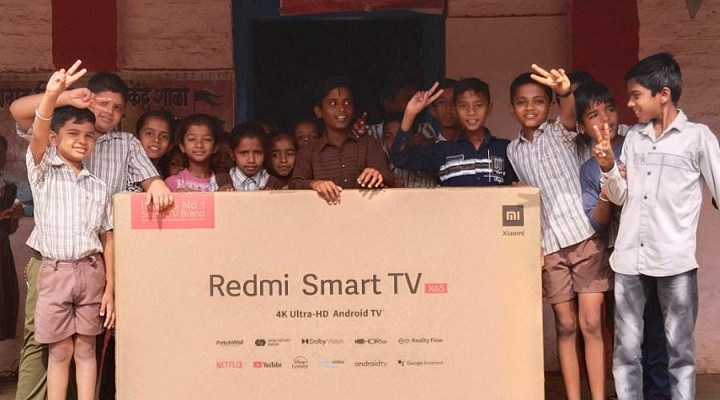
The digital divide refers to the gap between those who have access to digital devices and internet connectivity and those who do not. According to a report by IAMAI and Nielsen, only 45% of India’s population had internet access as of November 2020, with a huge disparity between urban (67%) and rural (31%) areas.

This means that more than half of the population is excluded from the benefits of digital education. This poses a major obstacle to NEP’s vision and goals of enabling access, quality, equity, relevance and innovation in education.

Solution

Digital Libraries in Schools

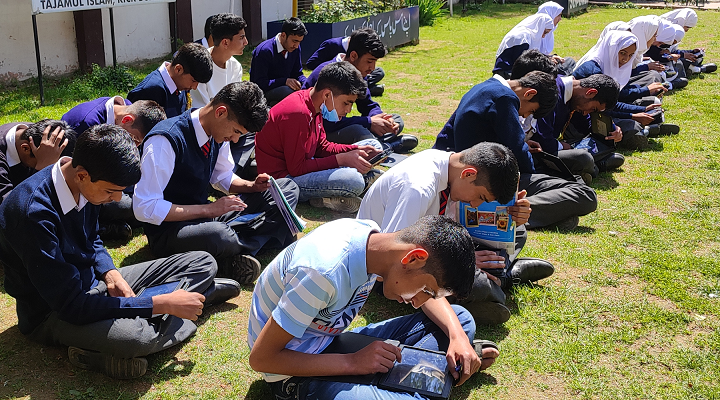
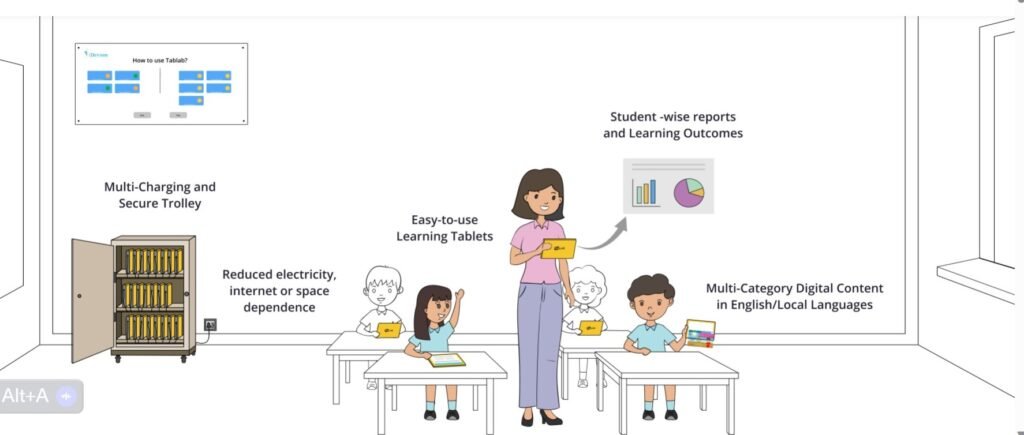
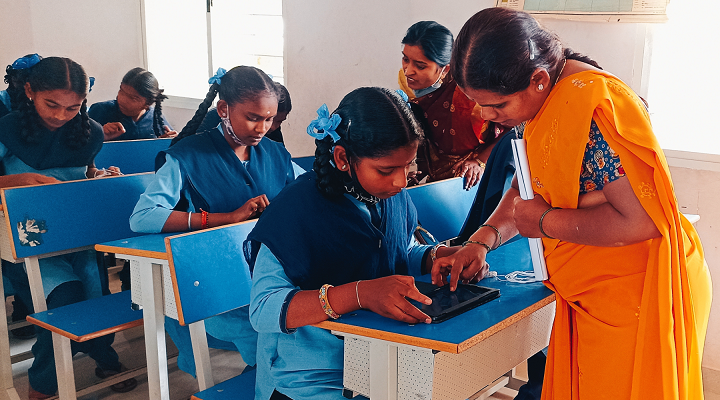
With CSR & Govt initiatives focussing on providing basic infrastructure and introducing initiatives such as Digital Libraries (or Smart  ICT Labs) in schools that are aligned with recommendations under the revised ICT Policy, the challenge posed due to lack of infrastructure can be overcome at scale. Digital Libraries with learning tablets that work without the internet, also come with charging racks. The tablets are pre-loaded with learning content and can work for up to 8 hours a day without charging. The charging racks are in a trolley that can easily move from one room to another.

This adds to flexibility in case there is a limitation of the number of classrooms and also removes electricity dependence. Digital Libraries typically come with an integration to learning plans as per the school curriculum, best suited to compliment learning and making it effective. Students can have access to their own profiles, and a teacher’s dashboard allows teachers to keep a track of learning of their students. Digital Libraries are also replacing traditional libraries as these labs can host a rich collection of books apart from content related to school curriculum.

India CSR

Challenge 2: Low Enrolment Rates, Drop-outs and Low Attendance

It has been found that there is still a gap in enrolment rates in Government Schools, especially in secondary schools, where nationally, the enrolment rate is 72.8% as per UDISE 2021-22 data. Schools in India also struggle with low attendance and drop outs. Government and Civil Society Organizations are working to overcome these challenges. 

Solution

Enriching and Engaging Learning Content

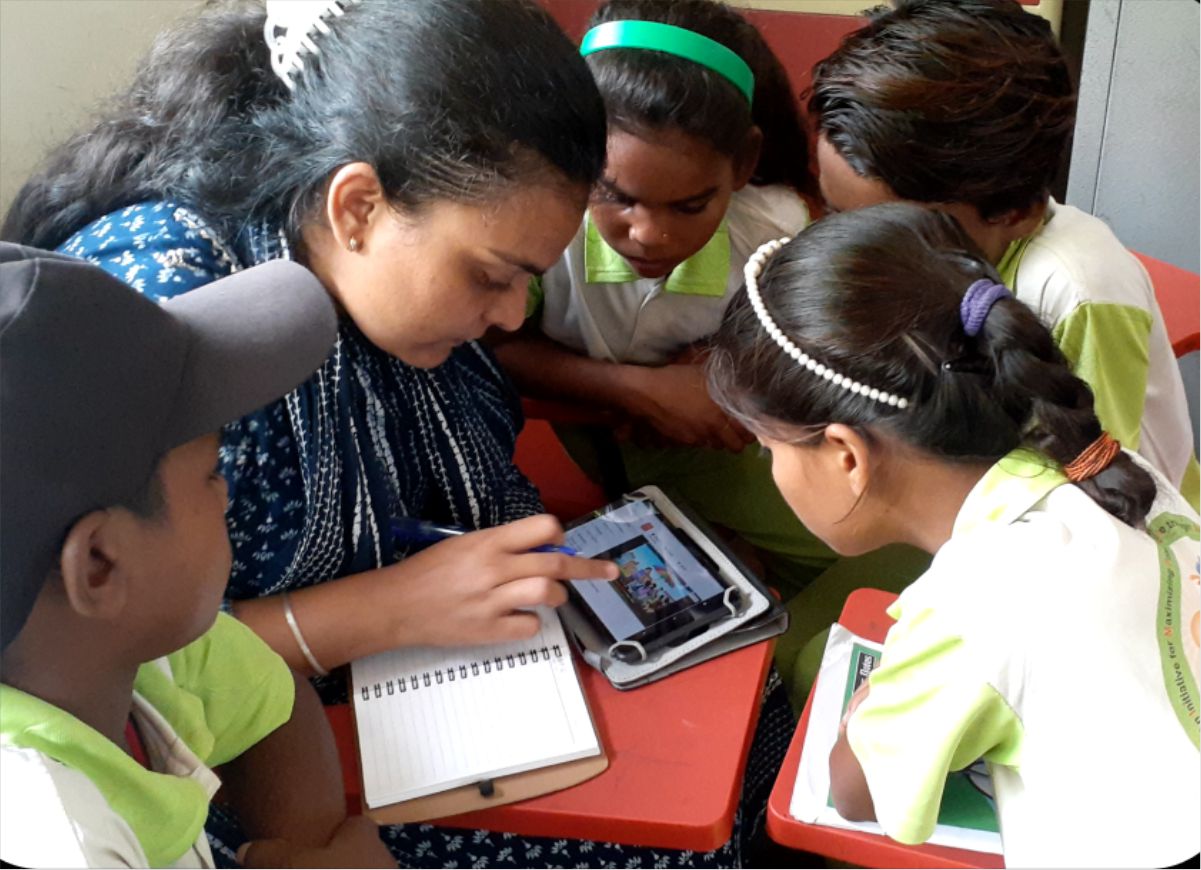
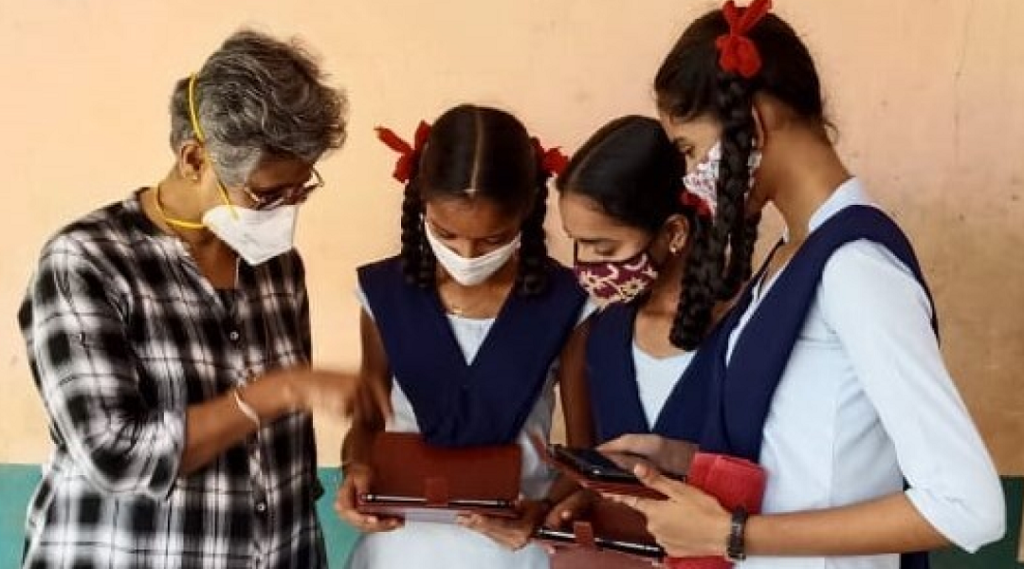
Most of the students in rural areas have a natural affinity of Android devices/smartphones, As per Vishal Goswamy, Head – Growth & Outreach at iDream Education, an organization that works to bring digital learning to last-mile K-12 learners, learning Tablets based learning, Smart Classes and Digital Libraries show an increase in interest levels of students. This is because learning is more interactive and easier. With content ranging from curriculum, to videos, practice assessments, notes, students find these mediums to be more engaging and gratifying. 

India CSR
India CSR
India CSR

Challenge 3: Historical Learning Gap of Previous Years

Global Sustainable Goal 4, also a goal for India is to ensure inclusive and quality education and promote lifelong learning opportunities for all. India faces challenges in quality and these reflect in ‘the Learning Gap’. This trend is clearly visible in the Annual Status of Education Report (Rural) 2022. Historical Learning Gaps pose a major challenge where most Government school students are 2-4 grades lower than their current grades in terms of Learning Levels.

Another challenge is to make quality learning content available in different languages (India has 22 languages and multiple state boards). Standardizing quality content and consolidating in different languages is a mammoth task and a challenge posed in front of the Indian Education System.

Solution

Providing Personalized & Adaptive Learning Solutions and Proactive Mentoring by Teachers

Learning applications that are accessible to teachers to take Smart Classes, and students to practice through Digital Libraries, and tablets make standardized education available to all. K-12 EdTech organizations consolidate different state board curriculums and make these available in different language mediums. There are also efforts being made as per the State and National Curriculum Framework and State Governments to improve the situation with digital content, using state-of-the-art pedagogies, content types that include videos, practicals, notes, ebooks, assessments, and animated content that makes learning joyful and universal.

Personalized Adaptive Learning as a solution can help solve this problem by empowering students to cover up their historical learning gaps in a joyful, guided and non judgemental personalized environment. Personalized Adaptive Learning through Tablets has already been adopted by some State Governments and is a direct solution to bridge the learning gap.

India CSR

Challenge 4: Gender Disparity

India traditionally has been a patriarchal society. A lot of initiatives have been taken by the Government in recent years to fix Gender Disparity. However, the challenge posed in front of the India Education System is to overcome the legacy effect of gender inequality that presents a significant part of the Girl Child population not attending school regularly, and being in the fold of household duties and susceptibility to early marriages.

As of April 2021, just over 20 percent of female children between the ages of 15 and 19 in India completed at least 12 years of schooling.

Solution

Public-Private Partnership for Girl Child Empowerment & Education Initiatives

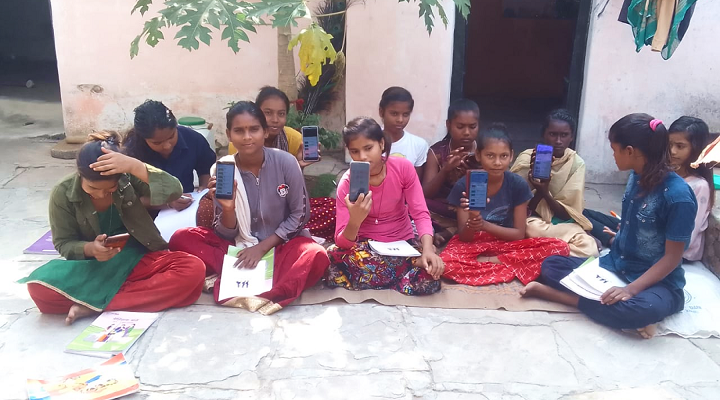
CSR, NGOs, Government, Civil Society organizations are working to remove the gender disparity at the grassroot level. While communities and parents struggle with allowing girls to travel to schools and also continue their education in higher classes, digital learning can bring the best of education to their homes. There will have to be more focus on this and special digital education programmes for Girl Children such as the Bharat Ed Tech Initiative (where 6000 rural Girl Students in UP were recently offered the iPrep Learning App with mentoring support and usage analytics), will have to be the ‘new world order’ to increase engagement of Girl Children and bringing them into the fold of Education through Digital Learning Access.

The project was a perfect example of empowerment of the girl child and girl child education and more such initiatives are needed to combat the multi-level challenge posed to Girl Child Education in India.

Challenge 5: Measuring Progress and Learning Outcomes

Challenge 5: Measuring Progress and Learning Outcomes

How do we measure progress and result of the initiatives taken as per the vision and goals of NEP 2020 and UN SDGs cited above in this article? One key challenge that comes from planning and implementing Education for a country of the size and population of India is how to measure and what to measure. Unless there is a centralized repository and standard metrics for measuring learning outcomes, it is virtually impossible to have a standardized yardstick to measure impact and present impact.

Solution

Digital Monitoring & Reporting of Data

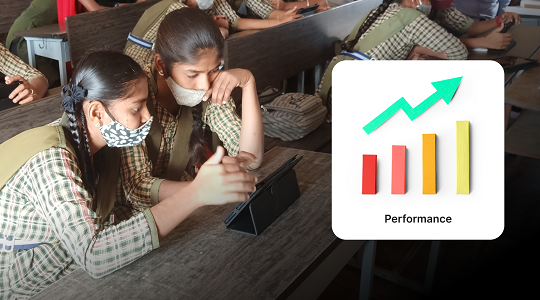
Digital Learning enables the tracking of usage seamlessly. These systems extract usage data of students and teachers and put them into a central repository that can be visualized into a dashboard and also integrated with Government databases (UDISE+ for example) or other databases through API integration. If CSRs and NGOs adopt centralized reporting of their work and integrate it with the Government’s database, significant measurement of outcomes is possible. Irrespective, attendance rates, performance of students, assessments (before and after the programme) are also sharp indicators of outcomes of programmes that aim for bringing impact in Education.


Conclusion

Digital education is a powerful tool that can transform the Indian education system by solving some of the biggest challenges that it faces. However, it also requires careful planning, implementation, and evaluation to ensure that it is inclusive, effective and sustainable for all stakeholders. By addressing the critical challenges of Infrastructure, attendance, quality, gender disparity and measurement,  digital education can unlock the potential of millions of learners across India.

(Copy Right @ India CSR)
Tags: Digital EducationEducational ChallengesiDream Education

CSR, Sustainability, and ESG success stories hindustan zinc
ADVERTISEMENT
India CSR

India CSR

India CSR is the largest media on CSR and sustainability offering diverse content across multisectoral issues on business responsibility. It covers Sustainable Development, Corporate Social Responsibility (CSR), Sustainability, and related issues in India. Founded in 2009, the organisation aspires to become a globally admired media that offers valuable information to its readers through responsible reporting.

Related Posts

Childcare
Articles

Stronger Families, Stronger Bottom Lines: Why Childcare Support Is a Business Imperative

5 days ago
Satish Jha
Articles

Satish Jha: India Has Grown But Not Flourished

7 days ago
Corporate Social Responsibility
Articles

From Compliance to Impact: Designing Site-Specific and Need-Based CSR Programs

2 weeks ago
Gaurav Sharma, CHRO of Balancehero India.
Articles

Youth, Rural India and Sustainability — Why CSR Must Focus on Empowerment, Not Just Relief

2 weeks ago
Carbon Neutral Manufacturing: Technology Pathways and Investment Strategies
Articles

Carbon Neutral Manufacturing: Technology Pathways and Investment Strategies

1 month ago
CSR in India
Articles

Corporate Social Responsibility (CSR) Must Include Environmental Responsibility: Supreme Court Judgment

2 months ago
Load More
Ambedkar Chamber
ADVERTISEMENT
India Sustainability Awards 2026
ADVERTISEMENT

LATEST NEWS

Hindustan Zinc Becomes World’s Largest Zinc Supplier, Powered by Rajasthan’s Resilient Workforce

The Ultimate Family Guide to Hong Kong Disneyland Tickets

4 Things to Expect from A-Level Economics Tuition in Singapore

How to Pay Yourself in a Pvt Ltd: Salary, Dividend or Director Remuneration? | Taxlegit

India CSR Summit 2026: Advancing Aspirational Districts and Aspirational Blocks for Viksit Bharat

Vocallabs Named Among Top 5 AI Startups in Karnataka by State Government

Economy India Largest Media on Indian Economy and Business
ADVERTISEMENT
Ad 1 Ad 2 Ad 3
ADVERTISEMENT
ESG Professional Network
ADVERTISEMENT

TOP NEWS

Vedanta Udaipur World Music Festival 2026 Lights Up Zinc City

Top 5 Historical Places in Jaipur You Must Visit

From Friends and Family to Everyone You Love, Myntra has Valentine’s Day Gifting Covered

Niloufer Expands Its Culinary Footprint with the Launch of Niloufer Chath in Hyderabad

BITM Student CEO Announces AI Cyber Shield at Bengaluru Tech Summit

Nisschal Zaveri to Present ‘Whispers of the Infinite – Spring Edit’ at Kala Ghoda Arts Festival 2026 Alongside Usha Uthup and Ricky Kej | 6th February

Load More
STEM Learning STEM Learning STEM Learning
ADVERTISEMENT

Interviews

Prof. Kang Sung Lee, PhD
Interviews

Prof. Kang Sung Lee on Academia, Policy, and Industry-Linked Career Pathways

by India CSR
February 5, 2026

Despite being an advanced economy, South Korea faces a severe demographic crisis.

Read moreDetails
Magma Group CEO and Founder, Neal Thakker

Embedding CSR in Responsible Manufacturing at Magma Group: An Interview with Neal Thakker

January 21, 2026
Sudeep Agrawal, CFO & Head – CSR, Ashirvad by Aliaxis

Integrating Financial Leadership With Impactful CSR Initiatives: An Interview with Sudeep Agrawal, Ashirvad by Aliaxis

December 29, 2025
Satish Jha

Interview with Satish Jha: Pioneering CSR in Education

December 5, 2025
Load More
Facebook Twitter Youtube LinkedIn Instagram
India CSR Logo

India CSR is the largest tech-led platform for information on CSR and sustainability in India offering diverse content across multisectoral issues. It covers Sustainable Development, Corporate Social Responsibility (CSR), Sustainability, and related issues in India. Founded in 2009, the organisation aspires to become a globally admired media that offers valuable information to its readers through responsible reporting. To enjoy the premium services, we invite you to partner with us.

Follow us on social media:


Dear Valued Reader

India CSR is a free media platform that provides up-to-date information on CSR, Sustainability, ESG, and SDGs. We need reader support to continue delivering honest news. Donations of any amount are appreciated.

Help save India CSR.

Donate Now

Donate at India CSR

  • About India CSR
  • Team
  • India CSR Awards 2025
  • India CSR Leadership Summit
  • Partnership
  • Guest Posts
  • Services
  • ESG Professional Network
  • Content Writing Services
  • Business Information
  • Contact
  • Privacy Policy
  • Terms of Use
  • Donate

Copyright © 2025 - India CSR | All Rights Reserved

No Result
View All Result
  • Home
  • Corporate Social Responsibility
    • Art & Culture
    • CSR Leaders
    • Child Rights
    • Culture
    • Education
    • Gender Equality
    • Around the World
    • Skill Development
    • Safety
    • Covid-19
    • Safe Food For All
  • Sustainability
    • Sustainability Dialogues
    • Sustainability Knowledge Series
    • Plastics
    • Sustainable Development Goals
    • ESG
    • Circular Economy
    • BRSR
  • Corporate Governance
    • Diversity & Inclusion
  • Interviews
  • SDGs
    • No Poverty
    • Zero Hunger
    • Good Health & Well-Being
    • Quality Education
    • Gender Equality
    • Clean Water & Sanitation – SDG 6
    • Affordable & Clean Energy
    • Decent Work & Economic Growth
    • Industry, Innovation & Infrastructure
    • Reduced Inequalities
    • Sustainable Cities & Communities
    • Responsible Consumption & Production
    • Climate Action
    • Life Below Water
    • Life on Land
    • Peace, Justice & Strong Institutions
    • Partnerships for the Goals
  • Articles
  • Events
  • हिंदी
  • More
    • Business
    • Finance
    • Environment
    • Economy
    • Health
    • Around the World
    • Social Sector Leaders
    • Social Entrepreneurship
    • Trending News
      • Important Days
      • Great People
      • Product Review
      • International
      • Sports
      • Entertainment
    • Case Studies
    • Philanthropy
    • Biography
    • Technology
    • Lifestyle
    • Sports
    • Gaming
    • Knowledge
    • Home Improvement
    • Words Power
    • Chief Ministers

Copyright © 2025 - India CSR | All Rights Reserved

This website uses cookies. By continuing to use this website you are giving consent to cookies being used. Visit our Privacy and Cookie Policy.