

• India CSR Awards 2026
  • India CSR Leadership Summit
  • Guest Posts
Friday, October 16, 2026
India CSR®
  • Home
  • Corporate Social Responsibility
    • Art & Culture
    • CSR Leaders
    • Child Rights
    • Culture
    • Education
    • Gender Equality
    • Around the World
    • Skill Development
    • Safety
    • Covid-19
    • Safe Food For All
  • Sustainability
    • Sustainability Dialogues
    • Sustainability Knowledge Series
    • Plastics
    • Sustainable Development Goals
    • ESG
    • Circular Economy
    • BRSR
  • Corporate Governance
    • Diversity & Inclusion
  • Interviews
  • SDGs
    • No Poverty
    • Zero Hunger
    • Good Health & Well-Being
    • Quality Education
    • Gender Equality
    • Clean Water & Sanitation – SDG 6
    • Affordable & Clean Energy
    • Decent Work & Economic Growth
    • Industry, Innovation & Infrastructure
    • Reduced Inequalities
    • Sustainable Cities & Communities
    • Responsible Consumption & Production
    • Climate Action
    • Life Below Water
    • Life on Land
    • Peace, Justice & Strong Institutions
    • Partnerships for the Goals
  • Articles
  • Events
  • हिंदी
  • More
    • Business
    • Finance
    • Environment
    • Economy
    • Health
    • Around the World
    • Social Sector Leaders
    • Social Entrepreneurship
    • Trending News
      • Important Days
        • Festivals
      • Great People
      • Product Review
      • International
      • Sports
      • Entertainment
    • Case Studies
    • Philanthropy
    • Biography
    • Technology
    • Lifestyle
    • Sports
    • Gaming
    • Knowledge
    • Home Improvement
    • Words Power
    • Chief Ministers
No Result
View All Result
  • Home
  • Corporate Social Responsibility
    • Art & Culture
    • CSR Leaders
    • Child Rights
    • Culture
    • Education
    • Gender Equality
    • Around the World
    • Skill Development
    • Safety
    • Covid-19
    • Safe Food For All
  • Sustainability
    • Sustainability Dialogues
    • Sustainability Knowledge Series
    • Plastics
    • Sustainable Development Goals
    • ESG
    • Circular Economy
    • BRSR
  • Corporate Governance
    • Diversity & Inclusion
  • Interviews
  • SDGs
    • No Poverty
    • Zero Hunger
    • Good Health & Well-Being
    • Quality Education
    • Gender Equality
    • Clean Water & Sanitation – SDG 6
    • Affordable & Clean Energy
    • Decent Work & Economic Growth
    • Industry, Innovation & Infrastructure
    • Reduced Inequalities
    • Sustainable Cities & Communities
    • Responsible Consumption & Production
    • Climate Action
    • Life Below Water
    • Life on Land
    • Peace, Justice & Strong Institutions
    • Partnerships for the Goals
  • Articles
  • Events
  • हिंदी
  • More
    • Business
    • Finance
    • Environment
    • Economy
    • Health
    • Around the World
    • Social Sector Leaders
    • Social Entrepreneurship
    • Trending News
      • Important Days
        • Festivals
      • Great People
      • Product Review
      • International
      • Sports
      • Entertainment
    • Case Studies
    • Philanthropy
    • Biography
    • Technology
    • Lifestyle
    • Sports
    • Gaming
    • Knowledge
    • Home Improvement
    • Words Power
    • Chief Ministers
No Result
View All Result
India CSR®
No Result
View All Result
Home News

Capturing Unpaid Household Work by Women: A Complicated Conceptual Knot

Valuing unpaid work using market equivalence and input cost approaches is ineffective

India CSR by India CSR
May 10, 2023
Reading Time: 4 mins read
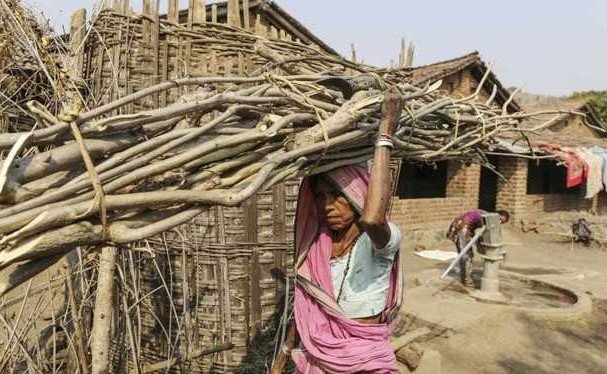
Household Work by Women

Household Work by Women

Share Share Share Share
WhatsApp icon
WhatsApp — Join Us
Instant updates & community
Google News icon
Google News — Follow Us
Get our articles in Google News feed
india csr awards
ADVERTISEMENT

Untangling the conceptual knot of capturing women’s unpaid household work is a complicated endeavor


The government is reportedly considering methods to quantify unpaid household work by women to provide richer data on national income accounts. However, this dataset has limited applicability in arriving at numbers for the gross domestic product (GDP) due to a conceptual knot over interoperability. For instance, is parenting at home the same as childcare in a kindergarten?

  • Gender patterns in time devoted to unpaid care work cut across geographic regions, household income and societies.

Complications in Defining Leisure

Incorporating unpaid work into a data stream of work that can be transacted faces an added complication with the definition of leisure. Cooking and eating a meal at home can be a chore or a form of leisure activity. It becomes challenging to determine the value of unpaid work done by women at home without double-counting. For example, helping a neighboring subsistence farmer with their harvest is treated as non-market activity, whereas the owner’s labour on their farm is a component of current GDP statistics.

19th India CSR Leadership Summit 2026
ADVERTISEMENT

Unpaid care work

Unpaid care work is both an important aspect of economic activity and an indispensable factor contributing to the well-being of individuals, their families and societies (Stiglitz et al., 2007). Every day individuals spend time cooking, cleaning and caring for children, the ill and the elderly. Despite this importance for well-being, unpaid care work is commonly left out of policy agendas due to a common misperception that, unlike standard market work measures, it is too difficult to measure and less relevant for policies. Yet, neglecting unpaid care work leads to incorrect inferences about levels and changes in individuals’ well-being and the value of time, which in turn limit policy effectiveness across a range of socio-economic areas, notably gender inequalities in employment and other empowerment areas.

The Gendered Burden of Unpaid Care Work

Women typically spend more time than men on unpaid care work due to gendered social norms that consider it a female responsibility. Regardless of their socio-economic status, cultural background, or geographic location, women dedicate a significant part of their day to fulfilling domestic and reproductive duties, in addition to their paid employment, resulting in a “double burden” of work. The way society and policy makers address care issues is crucial for achieving gender equality, as it can either expand women’s and men’s capabilities and choices or constrain women to traditional gender roles associated with femininity and motherhood. The unequal allocation of unpaid care work infringes upon women’s rights, according to the United Nations (2013), and hinders their economic empowerment.

Approaches to Valuation

To capture data on unpaid work by women, time-use surveys are typically employed, where respondents disclose the hours spent on household activities the previous day. Valuing unpaid work using market equivalence and input cost approaches is ineffective. In the first case, it is not an apples-to-apples comparison, while in the second case, the labour input requires an imputed value.

Harmonising Methodologies and Subordinate Dataset

Surveys often fail to match the speed of collecting transaction data, leading to wide variations in GDP estimates based on assumptions on valuation and leisure. Harmonizing methodologies among countries is crucial for reconfiguring GDP data. However, a better approach is to use estimates of unpaid household work as a subordinate dataset to national accounts, which would inform policy without destabilizing the best available metric for economic performance.

Policy Grief

This policy brief argues that gender inequality in unpaid care work is the missing link that influences gender gaps in labour outcomes. The gender gap in unpaid care work has significant implications for women’s ability to actively take part in the labour market and the type/quality of employment opportunities available to them. Time is a limited resource, which is divided between labour and leisure, productive and reproductive activities, paid and unpaid work. Every minute more that a woman spends on unpaid care work represents one minute less that she could be potentially spending on market-related activities or investing in her educational and vocational skills.

Using time-use data, this policy brief analyses the impact of gender gaps in time devoted to unpaid care activities on gender gaps in labour outcomes. The first section provides an overview of gender inequalities in caring responsibilities. The second section shows that gender inequalities in unpaid care work are related to gender gaps in labour outcomes, such as labour participation, wages and job quality. The third sections assesses the key role of discriminatory social institutions for understanding gender inequalities in unpaid care work. Finally, the fourth section proposes policy recommendations to lift the constraints on women’s time by both reducing the burden of unpaid care work borne by women as well as redistributing the caring responsibilities between women and men, and between the family and the State.

Conclusion

Valuing unpaid work done by women at home is a complex and challenging task, and incorporating it into GDP estimates is not straightforward. However, using estimates of unpaid household work as a subordinate dataset to national accounts could inform policy without destabilising the existing metric for economic performance. Harmonising methodologies among countries is necessary to generate reconfigured GDP data.


Tags: Household Work by Women
csr education cybernetyx
ADVERTISEMENT
India CSR Image 1 India CSR Image 2

CSR, Sustainability, and ESG success stories hindustan zinc
ADVERTISEMENT
India CSR

India CSR

India CSR® is the largest media on CSR and sustainability offering diverse content across multisectoral issues on business responsibility. It covers Sustainable Development, Corporate Social Responsibility (CSR), Sustainability, and related issues in India. Founded in 2009, the organisation aspires to become a globally admired media that offers valuable information to its readers through responsible reporting.

Related Posts

India CSR®
News

Hindustan Zinc Partners with Uber for Business to Digitally Transform Employee Mobility Experience

Godawari Power
News

Godawari Power Arm Gets Environmental Clearance for 20 GWh Battery Storage Facility in Maharashtra

India CSR®
News

Hindustan Zinc Digital Metal Commerce Grows Over 50% as B2B Buying Shifts Online

Vedanta Will Exist for 200–300 Years, Says Anil Agarwal on Aap Ki Adalat
News

Vedanta Will Exist for 200–300 Years, Says Anil Agarwal on Aap Ki Adalat

Varun Karad, Co-Founder and Chief Executive Officer, REnergy Dynamics
News

Varun Karad appointed Co-Chair of CII Committee on Compressed Biogas

MRPL Fire in Mangaluru
News

MRPL Fire in Mangaluru: One Dead, Worker Undergoing Treatment After Coker Unit Rupture

Load More
csr education cybernetyx
ADVERTISEMENT
bba
ADVERTISEMENT

Interviews

Vishwa Bandhu Bhattacharya, Director – Global Sustainability, Tata Consumer Products-India CSR
Interviews

Our Focus Remains on Embedding ESG Priorities into the Fabric of the Organisation: Vishwa Bandhu Bhattacharya, Director – Global Sustainability, Tata Consumer Products

by India CSR

ESG progress, renewable energy, circular packaging, water positivity and Net Zero 2040.

Read moreDetails
Dr Rajeev Gautam, President, HORIBA India @Indiacsr

“Wellness Doesn’t Replace Ambition, It Makes Ambition Sustainable”: Shilpa Bhagat, Co-Founder, Fitistan

From L to R- Olayinka Hakeem Babalola, Rotary International President (2026-27) and M. Muruganandam (MMM), Vice President (2026-27)

“Peace Is the Foundation That Allows All Other Progress to Take Root”: Rotary International

India CSR®

Interview: Ravi Mahajan on India’s Shift from Diesel to Solar-Powered Telecom Towers

Load More
Ad 1 Ad 2 Ad 3 Ad 4 Ad 5 Ad 6
ADVERTISEMENT

CSR UPDATES

NABARD Supports 21-Day Livelihood and Enterprise Development Programme for 60 SHG Women in Delhi

HSBC India commits Rs. 200 Crore to Advance Financial Literacy 

CSR: Reliance Foundation, Estée Lauder Partner to Empower 1 Million Girls in India

MediaTek, ThinkStartup to Equip 6,000 Students with Entrepreneurial Skills

CSR: NTPC Bongaigaon Commits Rs. 13.28 Crore for Mizoram Archery Academy

CSR: Zeta Opens Hyderabad Centre, Plans 360 Youth Training Places Across 3 Cities

STEM Learning STEM Learning STEM Learning
ADVERTISEMENT
Facebook Twitter Youtube LinkedIn Instagram
India CSR Logo

India CSR® is the largest tech-led platform for information on CSR and sustainability in India offering diverse content across multisectoral issues. It covers Sustainable Development, Corporate Social Responsibility (CSR), Sustainability, and related issues in India. Founded in 2009, the organisation aspires to become a globally admired media that offers valuable information to its readers through responsible reporting. To enjoy the premium services, we invite you to partner with us.

Follow us on social media:

Subscribe to Our Newsletter

Don't miss out on the latest updates in corporate social responsibility. Subscribe to our newsletter at indiacsr.in and be part of the positive change.
Please enable JavaScript in your browser to complete this form.
Loading

  • About India CSR®
  • Team
  • India CSR® Awards 2026
  • India CSR® Leadership Summit
  • Partnership
  • Guest Posts
  • Services
  • ESG Professional Network
  • Content Writing Services
  • Business Information
  • Contact
  • Privacy Policy
  • Terms of Use
  • Donate

Copyright © 2026 - India CSR® | All Rights Reserved

No Result
View All Result
  • Home
  • Corporate Social Responsibility
    • Art & Culture
    • CSR Leaders
    • Child Rights
    • Culture
    • Education
    • Gender Equality
    • Around the World
    • Skill Development
    • Safety
    • Covid-19
    • Safe Food For All
  • Sustainability
    • Sustainability Dialogues
    • Sustainability Knowledge Series
    • Plastics
    • Sustainable Development Goals
    • ESG
    • Circular Economy
    • BRSR
  • Corporate Governance
    • Diversity & Inclusion
  • Interviews
  • SDGs
    • No Poverty
    • Zero Hunger
    • Good Health & Well-Being
    • Quality Education
    • Gender Equality
    • Clean Water & Sanitation – SDG 6
    • Affordable & Clean Energy
    • Decent Work & Economic Growth
    • Industry, Innovation & Infrastructure
    • Reduced Inequalities
    • Sustainable Cities & Communities
    • Responsible Consumption & Production
    • Climate Action
    • Life Below Water
    • Life on Land
    • Peace, Justice & Strong Institutions
    • Partnerships for the Goals
  • Articles
  • Events
  • हिंदी
  • More
    • Business
    • Finance
    • Environment
    • Economy
    • Health
    • Around the World
    • Social Sector Leaders
    • Social Entrepreneurship
    • Trending News
      • Important Days
      • Great People
      • Product Review
      • International
      • Sports
      • Entertainment
    • Case Studies
    • Philanthropy
    • Biography
    • Technology
    • Lifestyle
    • Sports
    • Gaming
    • Knowledge
    • Home Improvement
    • Words Power
    • Chief Ministers

Copyright © 2026 - India CSR® | All Rights Reserved

This website uses cookies. By continuing to use this website you are giving consent to cookies being used. Visit our Privacy and Cookie Policy.
