


BALCO Medical Centre in Naya Raipur offers integrated, affordable cancer care with advanced oncology services.
The 170-bed tertiary oncology facility in Naya Raipur has treated over 67,000 patients and delivered advanced services including chemotherapy, complex surgeries, and bone marrow transplants.
Cancer care is a long and often demanding journey, encompassing diagnosis, treatment, and extended follow-up, while placing emotional, logistical, and financial strain on patients and their families. When these stages are spread across multiple hospitals, patients are left to navigate a fragmented system at a time when continuity of care is critical.
Established by the Vedanta Group under the Vedanta Medical Research Foundation, BALCO Medical Centre (BMC) in Naya Raipur, Chhattisgarh, is a not-for-profit initiative addressing this gap by improving access to quality cancer care in Central India. As a 170-bed tertiary care oncology facility, BMC integrates the entire spectrum of cancer care within a single system, enabling seamless transitions across each stage of treatment. This integrated approach ensures that care is not only accessible, but also coordinated, consistent, and comprehensive.
Enabling this seamless continuum of care is a strong multidisciplinary system. At BMC, cancer care is delivered through close collaboration among medical, surgical and radiation oncologists, alongside haematologists, radiologists, pathologists, transplant teams, and specialists in psychology, physiotherapy, nutrition, and palliative care.
Treatment decisions are made collectively, with these teams working in tandem to design and deliver personalised care plans for each patient. This coordinated approach enables BMC to manage complex cancers with precision, while ensuring continuity, consistency, and a seamless experience across every stage of care.
This collaborative model is supported by a highly experienced clinical team. The doctors and specialists at BMC bring extensive training and experience from leading national and international institutions. Working within an integrated system, they are able to deliver advanced and complex treatments typically associated with large metropolitan hospitals, now accessible within Central India, while adhering to the highest quality standards and care.
Since its inception, BMC has treated over 67,000 patients and recorded more than 4.35 lakh OPD visits. The scale of services includes over 86,000 chemotherapy sessions and more than 12,500 surgeries. The hospital has also performed over 150 bone marrow transplants, strengthening access to specialised and high-end cancer care in the region.
For patients, this has translated into access to complex treatments closer to home. A 48-year-old patient diagnosed with borderline resectable pancreatic cancer underwent a Whipple pancreaticoduodenectomy with portal vein resection at the centre, a very complex procedure usually limited to a few specialised institutions. Two years later, he returned for follow-up, healthy and back to his routine life. Receiving this level of care locally allowed him to continue both treatment and work without the trouble of relocation.
Another such journey is that of a 28-year-old patient from Kondagaon, a town nearly 250 kilometres from Raipur, who was diagnosed with a rare and aggressive blood cancer. The patient underwent multiple cycles of chemotherapy followed by an autologous stem cell transplant, all within BMC. Such complex, multi-stage treatment often require patients to move across institutions, increasing the risk of disruption or discontinuation. In this case, the entire course of care was delivered seamlessly within a single system, with the cost of treatment supported through the Chief Minister’s Relief Fund. Today, the patient is cancer-free.
BMC has also put in place strong support systems to help patients overcome logistical barriers and continue treatment without interruption. Free transport services enable patients from remote districts to access the hospital and remain connected to their care. The Sukh Sarai facility offers accommodation for patients and caregivers during treatment, easing the burden of extended stays. In addition, patients undergoing chemotherapy are provided with a complimentary high-protein diet to support their recovery and overall well-being.
Furthermore, BMC has taken a proactive and structured approach to address two of the most common challenges in cancer care- late diagnosis and financial toxicity.
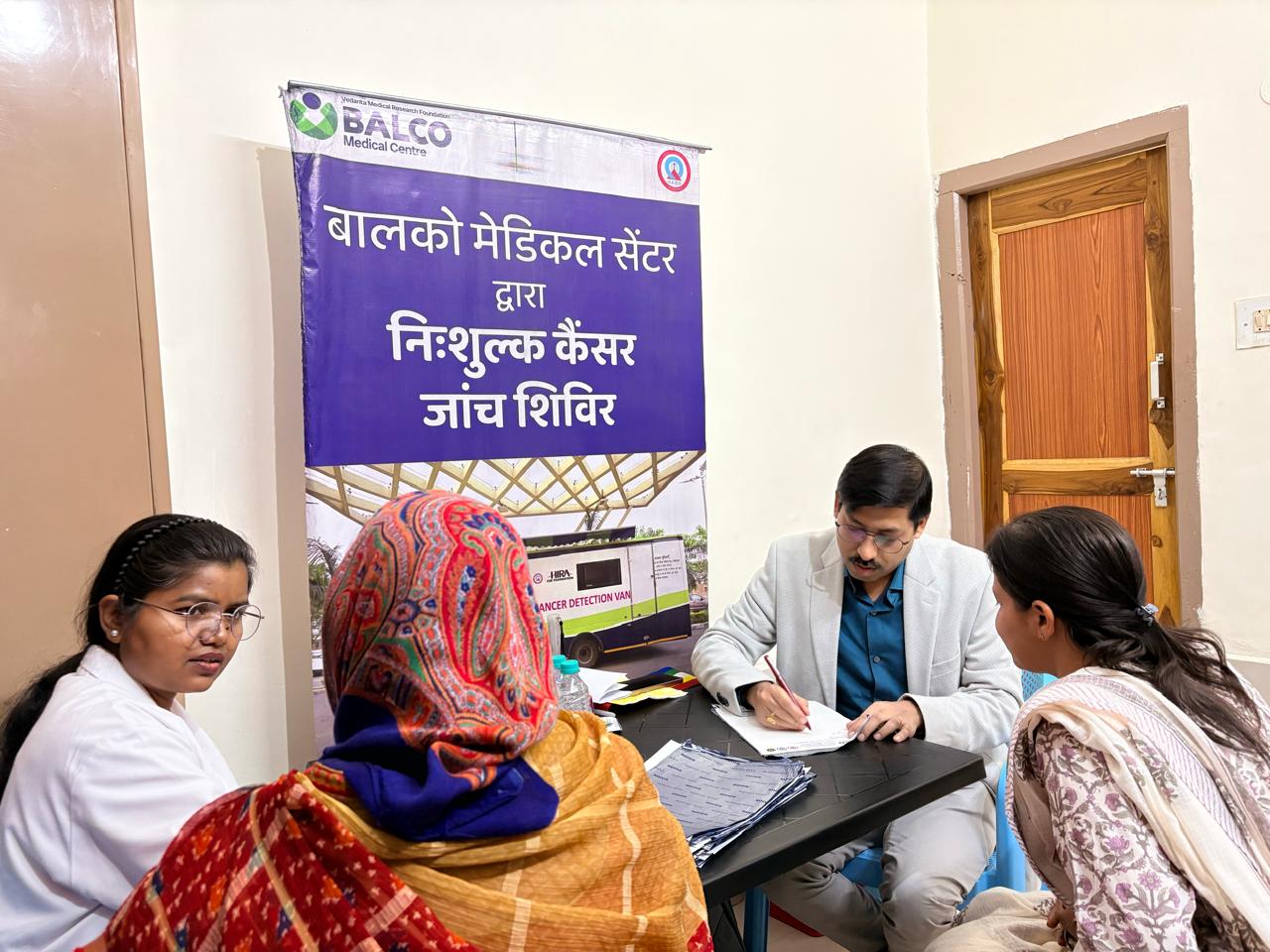
Late diagnosis is being addressed through extensive cancer screening initiatives across the interiors of Chhattisgarh and Odisha. Regular screening camps are conducted for common cancers such as breast, head and neck, and cervical cancers, expanding access to early detection. These efforts aim to drive migration from advanced stages (III and IV) to earlier stages (stage 0 and I), improving treatment outcomes and gradually changing the prevailing pattern of late presentation.
To reduce financial burden, the BMC Charitable Fund supports patients by bridging gaps in diagnostic and treatment costs. In parallel, BMC has partnered with like-minded organisations across the country, including the Indian Cancer Society, Nargis Dutt Foundation, and Cuddles Foundation, to provide comprehensive support throughout the cancer journey.
The centre is also empanelled with leading insurance providers and offers treatment under a wide range of government schemes, ensuring that more patients can access care without financial barriers.
Backed by a coordinated, multidisciplinary model and deep clinical expertise, BMC is reshaping cancer care in Central India, bringing advanced treatment and end-to-end, integrated care within reach, closer to where patients live.
(India CSR)