


Temperature problems rarely start loudly. A cold room drifts by two degrees. A process tank heats more slowly than expected. A storage area crosses its safe limit after a shift change. A cable route makes sensor wiring painful, so the team delays monitoring one more week.
That is how small gaps become expensive gaps. A WiFi temperature sensor is often the first term people search for when they want remote temperature monitoring. In industrial plants, the better term is usually a wireless temperature sensor. The goal is the same: collect temperature readings without running long signal cables through difficult areas.
Tempsens works in this space with wireless temperature transmitters and receivers made for industrial temperature monitoring. The system helps teams measure, transmit, and review temperature data from RTD and thermocouple sensors without depending on long wired layouts.

Why Industrial Users Search for WiFi Temperature Sensor
The phrase “WiFi temperature sensor” is common because people connect wireless monitoring with WiFi. That makes sense in offices, homes, and small commercial spaces. Industrial plants need a stricter view.
WiFi works well in many controlled settings, but plant areas can be tougher. Distance, metal structures, thick walls, electrical noise, outdoor routes, and battery life all affect signal quality. That is why industrial wireless temperature monitoring often uses long-range wireless communication such as LoRa.
Tempsens highlights LoRa technology for its wireless temperature sensors. LoRa is designed for long-range, low-power data transfer. That makes it useful where the sensor does not need to send heavy data, only reliable temperature values at set intervals.
What the Tempsens System Does
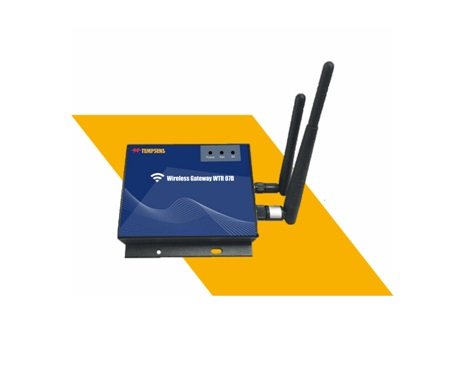
A wireless temperature monitoring setup has three main parts: the sensor, the transmitter, and the receiver or gateway.
The sensor measures temperature. This can be an RTD or thermocouple, based on the process need. The transmitter collects the signal and sends it wirelessly. The receiver collects the data and makes it available for monitoring, logging, and action.
Tempsens wireless temperature transmitters and receivers are built to measure temperatures from RTD and thermocouple sensors. That gives plants more flexibility than a fixed built-in probe. A team can choose the sensing element based on range, accuracy needed, mounting style, and process condition.
That flexibility matters. A pharma room does not ask the same thing as a furnace-adjacent zone. A food storage chamber does not behave like a rotating machine area.
Where Wireless Temperature Monitoring Helps
Wireless monitoring fits best where wiring is difficult, expensive, or slow.
Manufacturing plants use it for machine areas, process lines, storage zones, ovens, dryers, and utility sections. Pharmaceutical facilities use it for rooms, chambers, cold storage, and controlled environments. Food processing units use it for storage, handling, and process temperature checks. HVAC teams use it across ducts, rooms, and plant spaces. Data centers use temperature sensors to watch rack zones and hot spots.
Cold chain teams also need this kind of visibility. A temperature drift during storage or movement can damage sensitive material. A wireless setup gives teams a better chance to catch that drift early.
Range Matters, but Site Conditions Matter More
A product sheet can state open-air range. Real plants are not open air. They have steel, motors, concrete, walls, cable trays, tanks, ducts, and moving people.
That does not make range data useless. It gives a starting point. Tempsens mentions LoRa-based wireless transmission up to 1 kilometer in open air, and WTT 07 references show open-area ranges that can go higher in certain configurations. The actual site result depends on layout, mounting height, antenna position, interference, and receiver placement.
Good engineering starts with a site check. Place the transmitter well. Keep the receiver in a practical line. Test signal strength. Then finalise the layout.
Accuracy Still Comes First
Wireless does not excuse weak measurement. The sensor still has to be right.
Temperature accuracy depends on the sensing element, calibration, placement, process contact, and transmitter quality. For example, a sensor placed near a door may not represent the room average. A probe too close to a heat source can exaggerate readings. A sensor hidden behind airflow obstruction can miss the real pattern.
This is why placement matters as much as the device. The best wifi temperature sensor, or any wireless temperature sensor, gives poor value if it sits in the wrong spot.
Battery Operation Makes Installation Easier
Wireless transmitters are often chosen because they reduce wiring work. Battery operation adds another advantage. It lets teams monitor places where power access is awkward.
This helps during temporary studies too. A plant may need temperature data for a trial, audit, validation run, or equipment check. A wireless transmitter can be deployed faster than a full wired installation.
That speed matters when production cannot wait for a long electrical job.
Better Alarms, Better Records, Better Response
Temperature monitoring becomes more valuable when readings turn into action.
Wireless systems can help teams create logs, review history, and respond to temperature drift faster. In regulated or quality-sensitive industries, records matter. They show whether the temperature stayed within the planned window.
Alarms matter too. A delayed alert can cost inventory, machine health, or process quality. A timely alert gives the team a chance to check the issue before it becomes a shutdown or rejection.
This is the quiet value of wireless monitoring. It not only measures. It keeps watch.
Final Word
A wifi temperature sensor search usually begins with a simple need: see temperature without standing near the sensor point. In industrial work, the need often grows into a stronger requirement: reliable wireless temperature monitoring across distance, equipment, rooms, and process areas.
Tempsens answers those needs with wireless temperature transmitters and receivers built around RTD and thermocouple measurement. LoRa-based communication helps cover distance. Battery operation supports easier installation. Flexible sensor input helps match the application.
The result is direct. Less wiring. Faster deployment. Better visibility. More control over temperature-critical areas.