
• India CSR Awards 2026
  • India CSR Leadership Summit
  • Guest Posts
Friday, July 3, 2026
India CSR
  • Home
  • Corporate Social Responsibility
    • Art & Culture
    • CSR Leaders
    • Child Rights
    • Culture
    • Education
    • Gender Equality
    • Around the World
    • Skill Development
    • Safety
    • Covid-19
    • Safe Food For All
  • Sustainability
    • Sustainability Dialogues
    • Sustainability Knowledge Series
    • Plastics
    • Sustainable Development Goals
    • ESG
    • Circular Economy
    • BRSR
  • Corporate Governance
    • Diversity & Inclusion
  • Interviews
  • SDGs
    • No Poverty
    • Zero Hunger
    • Good Health & Well-Being
    • Quality Education
    • Gender Equality
    • Clean Water & Sanitation – SDG 6
    • Affordable & Clean Energy
    • Decent Work & Economic Growth
    • Industry, Innovation & Infrastructure
    • Reduced Inequalities
    • Sustainable Cities & Communities
    • Responsible Consumption & Production
    • Climate Action
    • Life Below Water
    • Life on Land
    • Peace, Justice & Strong Institutions
    • Partnerships for the Goals
  • Articles
  • Events
  • हिंदी
  • More
    • Business
    • Finance
    • Environment
    • Economy
    • Health
    • Around the World
    • Social Sector Leaders
    • Social Entrepreneurship
    • Trending News
      • Important Days
        • Festivals
      • Great People
      • Product Review
      • International
      • Sports
      • Entertainment
    • Case Studies
    • Philanthropy
    • Biography
    • Technology
    • Lifestyle
    • Sports
    • Gaming
    • Knowledge
    • Home Improvement
    • Words Power
    • Chief Ministers
No Result
View All Result
  • Home
  • Corporate Social Responsibility
    • Art & Culture
    • CSR Leaders
    • Child Rights
    • Culture
    • Education
    • Gender Equality
    • Around the World
    • Skill Development
    • Safety
    • Covid-19
    • Safe Food For All
  • Sustainability
    • Sustainability Dialogues
    • Sustainability Knowledge Series
    • Plastics
    • Sustainable Development Goals
    • ESG
    • Circular Economy
    • BRSR
  • Corporate Governance
    • Diversity & Inclusion
  • Interviews
  • SDGs
    • No Poverty
    • Zero Hunger
    • Good Health & Well-Being
    • Quality Education
    • Gender Equality
    • Clean Water & Sanitation – SDG 6
    • Affordable & Clean Energy
    • Decent Work & Economic Growth
    • Industry, Innovation & Infrastructure
    • Reduced Inequalities
    • Sustainable Cities & Communities
    • Responsible Consumption & Production
    • Climate Action
    • Life Below Water
    • Life on Land
    • Peace, Justice & Strong Institutions
    • Partnerships for the Goals
  • Articles
  • Events
  • हिंदी
  • More
    • Business
    • Finance
    • Environment
    • Economy
    • Health
    • Around the World
    • Social Sector Leaders
    • Social Entrepreneurship
    • Trending News
      • Important Days
        • Festivals
      • Great People
      • Product Review
      • International
      • Sports
      • Entertainment
    • Case Studies
    • Philanthropy
    • Biography
    • Technology
    • Lifestyle
    • Sports
    • Gaming
    • Knowledge
    • Home Improvement
    • Words Power
    • Chief Ministers
No Result
View All Result
India CSR
No Result
View All Result
Home Articles

The Environmental Impact of Public Transportation: Reducing Carbon Footprints

The social benefits of public transportation are equally noteworthy.

India CSR by India CSR
July 19, 2024
in Articles
Reading Time: 6 mins read
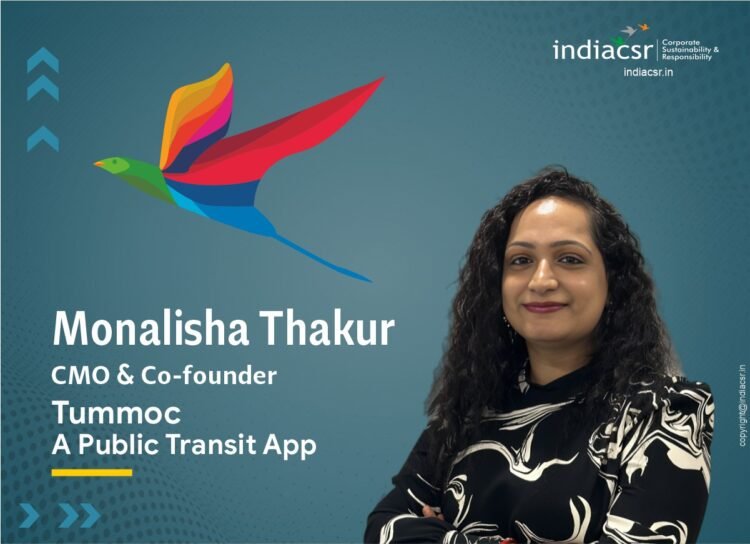
Monalisha Thakur CMO & Co-founder at Tummoc-A Public Transit App-India CSR

Monalisha Thakur CMO & Co-founder at Tummoc-A Public Transit App-India CSR

Share Share Share Share
WhatsApp icon
WhatsApp — Join Us
Instant updates & community
Google News icon
Google News — Follow Us
Get our articles in Google News feed

India CSR

The relentless expansion of cities and ever-growing populations paints a stark picture – sustainability is no longer a buzzword, it’s a pressing need. As we navigate the daily grind of our commutes, the subsequent environmental cost becomes increasingly evident. Traditional reliance on personal vehicles leaves a trail of carbon emissions, a reality that demands a change in direction. Public transportation emerges as a game-changer, offering a path towards a cleaner, greener future.

The transportation sector — particularly personal vehicles — is a major contributor to greenhouse gas emissions. These vehicles spew vast quantities of carbon dioxide and other pollutants into the atmosphere, leaving a toxic legacy. The consequences of these emissions are far-reaching. Climate change, air pollution, and associated health risks like respiratory illnesses are all grim realities fueled by our dependence on personal vehicles.

Driving around any major Indian city the effects of this reliance on personal vehicles are painfully clear. Gridlocked traffic jams are the norm rather than the exception, and the resulting pollution is palpable, stinging our eyes and clogging our lungs.

Public transportation offers a powerful solution to this crisis. By consolidating passengers into a single vehicle, public transit systems drastically reduce the number of cars on the road. This translates directly into a multitude of benefits – lower carbon emissions, less traffic congestion, and improved air quality. Studies reveal the impressive impact of public transit. A fully occupied bus can replace up to 40 individual cars, resulting in a substantial reduction in emissions.

Take the case of electric metro systems. Powered by cleaner energy sources, they further minimise pollution compared to fossil fuel-powered vehicles. Real-world examples like the Delhi Metro showcase the effectiveness of public transit in mitigating environmental harm. The expansion of the metro network has led to measurable improvements in air quality, standing as a testament to the transformative power of public transportation.

Imagine waking up in a city where the air feels fresher, the skies look clearer, and the honking horns of endless traffic are replaced by the quiet hum of electric buses and trains. This isn’t a distant dream; it’s a reachable reality if we collectively embrace public transportation.

The advantages of public transportation extend far beyond the environment. It offers significant economic benefits for individuals and cities alike. Public transit is generally more cost-effective than personal vehicles. Users save money on fuel, maintenance, and parking, freeing up resources for other needs. Imagine the relief of not having to worry about the fluctuating fuel prices or the ever-increasing costs of vehicle maintenance. Those savings can be redirected towards improving our quality of life – be it through better education, healthcare, or simply more leisure activities.

Cities, too, benefit from robust public transportation systems. They require less investment in maintaining extensive road networks, leading to lower infrastructure costs. The savings from reduced road maintenance can be channelled into other critical areas such as healthcare, education, and housing, further enhancing the quality of urban life.

The social benefits of public transportation are equally noteworthy. It fosters inclusivity, providing reliable mobility options for those who may not be able to afford private vehicles. This bridges social and economic gaps, ensuring that everyone has access to essential transportation needs. Public transportation empowers individuals, allowing them to participate more actively in the community and workforce, regardless of their socioeconomic background.

Consider a young professional starting their career, or a student attending college across the city. Reliable public transport can mean the difference between easily accessing opportunities and being left behind. It’s about creating an inclusive environment where everyone, regardless of their financial situation, can thrive.

Despite the clear advantages, widespread adoption of public transportation faces some challenges. Funding constraints are a major hurdle, hindering investments in modernising infrastructure and expanding services. Outdated infrastructure, with ageing buses and unreliable schedules, can deter potential users. Additionally, a lack of public awareness about the benefits of public transit can create a perception of inconvenience.

However, these obstacles are not insurmountable. With innovative solutions and collaboration between the public and private sectors, we can overcome them. Investing in modernising infrastructure is crucial. Electric buses, with zero tailpipe emissions, and efficient train networks powered by renewable energy sources are key components of a sustainable public transportation system.

The good news is that there are already success stories we can look to. Cities like Curitiba in Brazil and Vienna in Austria have successfully integrated comprehensive public transportation networks that serve as models for urban mobility. These cities demonstrate that with the right vision and commitment, public transportation can be an integral part of a sustainable urban future.

Public awareness campaigns play a vital role in promoting public transportation use. Highlighting the environmental and economic benefits, along with the convenience of integrated ticketing systems and real-time arrival information, can encourage a shift in mindset. Additionally, implementing policies that incentivize public transit use, such as tax breaks on public transportation passes or congestion charges for personal vehicles in city centres, can significantly increase ridership.

Let’s not underestimate the power of storytelling in driving change. Sharing personal success stories of individuals who have embraced public transportation can inspire others. For instance, imagine the narrative of a family that has switched from two cars to using the metro and bus for their daily commutes, discovering not only cost savings but also an improved quality of life with less stress and more time together.

The future of urban mobility is brimming with exciting advancements. Electric buses, with zero emissions and quieter operation, are paving the way for a cleaner and more pleasant commuting experience. Autonomous vehicles, piloted by advanced technology, hold the potential to revolutionize public transportation by offering on-demand services and increased efficiency.

Furthermore, integrated Mobility as a Service (MaaS) platforms are poised to make public transportation seamless and user-friendly. These platforms will allow users to plan their journeys, compare different transportation options, and purchase tickets through a single app. Imagine being able to book a bus, metro, and even a shared bike all from one app, simplifying the entire travel experience.

These innovations hold the promise of creating cleaner, more efficient, and user-friendly public transit systems, making them the preferred choice for a growing number of people. The potential of smart technologies in public transportation is immense, offering new ways to reduce carbon footprints and improve overall urban mobility.

Shifting towards sustainable transportation requires a collective effort. Individuals can make a significant difference by choosing public transit whenever possible, even for short trips. Advocating for better infrastructure and supporting policies that promote public transportation use can further drive systemic change.

By working together, we can create a future where clean, efficient, and inclusive public transportation systems are the norm. This will pave the way for healthier, more sustainable cities and a greener planet. Picture a future where our streets are no longer choked with traffic, where the air is cleaner, and where commuting is a stress-free part of our day.

Public transportation isn’t merely a mode of transportation; it’s a paradigm shift. It’s about building cleaner, healthier, and more inclusive cities. Let’s embrace its potential and create a future where our cities thrive, and our planet flourishes.

About the Author

Monalisha Thakur, CMO & Co-founder at Tummoc – A Public Transit App

(India CSR)

#
ADVERTISEMENT
FKCCI
ADVERTISEMENT
Ambedkar Chamber
ADVERTISEMENT
ESG Professional Network
ADVERTISEMENT
India CSR Image 1 India CSR Image 2
Tags: Monalisha ThakurPublic Transportation

CSR, Sustainability, and ESG success stories hindustan zinc
ADVERTISEMENT
India CSR

India CSR

India CSR® is the largest media on CSR and sustainability offering diverse content across multisectoral issues on business responsibility. It covers Sustainable Development, Corporate Social Responsibility (CSR), Sustainability, and related issues in India. Founded in 2009, the organisation aspires to become a globally admired media that offers valuable information to its readers through responsible reporting.

Related Posts

Bridging the Digital Divide
Articles

Bridging the Digital Divide: From Access to Outcomes in India’s Digital Economy

1 day ago
When Systems Scale, People Strain
Articles

When Systems Scale, People Strain

1 day ago
Dr. Nirmal Singh at farmland
Articles

From Hardship to Hope: How Dr. Nirmal Singh, Anmol Sewa Foundation, is Changing Punjab & Haryana Agriculture

4 days ago
Social Stock Exchanges
Articles

Social Stock Exchanges Make CSR Spending Strategic and Transparent

1 week ago
CSR Spend Jumps from ₹10,065 Cr to ₹34,908 Cr in 2024
Articles

CSR Spend Jumps from ₹10,065 Cr to ₹34,908 Cr in 2024

3 weeks ago
FCRA Amendment Bill
Articles

FCRA Amendment Bill: Expanding State Control Over Civil Society?

3 weeks ago
Load More
BBA - CSR, Sustainability and ESG, Rungta International Skills University Bhilai
ADVERTISEMENT
FKCCI
ADVERTISEMENT

Interviews

Dr. Vikas Garg, Chairman, Ebix Group
Interviews

CSR: Compliance Gives You a Floor, But Purpose Gives You a Legacy: Dr. Vikas Garg, Chairman, Ebix Group

by India CSR
June 29, 2026

Ebix Group aligns CSR with technology, financial inclusion and digital literacy.

Read moreDetails
Harkirat Kaur, CEO, Hartek Foundation

Building Resilient Communities Through Sustainable Development: Harkirat Kaur, CEO, Hartek Foundation

June 22, 2026
Indu Mehta, Chief Sustainability Officer (CSO) at Bhilwara Energy Limited @IndiaCSR

ESG in India Has Moved Beyond Storytelling: Bhilwara Energy’s Indu Mehta on Sustainability as an Operating Discipline

May 30, 2026
Sourabh Lohtia, Chief Marketing & Communications Officer, PNB MetLife

Targeted Skilling Can Build Confident Futures for Underprivileged Women: Sourabh Lohtia, PNB MetLife

May 29, 2026
Load More
Ad 1 Ad 2 Ad 3 Ad 4 Ad 5 Ad 6
ADVERTISEMENT

CSR UPDATES

REC Provides Rs.4.22 Cr under CSR to establish 100 Smart Classrooms in Assam

CSR: Yamaha Strengthens Community Welfare in Noida

Gautam Adani’s Vande Bharatam to Search for India’s Next Grassroots Entrepreneurs

TSF Investments CSR Spending Report FY 2025-26

HDFC Life Spent Rs 11.67 Crore on CSR in FY26, Reached 8.54 Lakh People Across India

Arham Technologies CSR Spending Report FY 2025-26

STEM Learning STEM Learning STEM Learning
ADVERTISEMENT
Facebook Twitter Youtube LinkedIn Instagram
India CSR Logo

India CSR is the largest tech-led platform for information on CSR and sustainability in India offering diverse content across multisectoral issues. It covers Sustainable Development, Corporate Social Responsibility (CSR), Sustainability, and related issues in India. Founded in 2009, the organisation aspires to become a globally admired media that offers valuable information to its readers through responsible reporting. To enjoy the premium services, we invite you to partner with us.

Follow us on social media:

Subscribe to Our Newsletter

Don't miss out on the latest updates in corporate social responsibility. Subscribe to our newsletter at indiacsr.in and be part of the positive change.
Please enable JavaScript in your browser to complete this form.
Loading

  • About India CSR
  • Team
  • India CSR Awards 2026
  • India CSR Leadership Summit
  • Partnership
  • Guest Posts
  • Services
  • ESG Professional Network
  • Content Writing Services
  • Business Information
  • Contact
  • Privacy Policy
  • Terms of Use
  • Donate

Copyright © 2026 - India CSR | All Rights Reserved

No Result
View All Result
  • Home
  • Corporate Social Responsibility
    • Art & Culture
    • CSR Leaders
    • Child Rights
    • Culture
    • Education
    • Gender Equality
    • Around the World
    • Skill Development
    • Safety
    • Covid-19
    • Safe Food For All
  • Sustainability
    • Sustainability Dialogues
    • Sustainability Knowledge Series
    • Plastics
    • Sustainable Development Goals
    • ESG
    • Circular Economy
    • BRSR
  • Corporate Governance
    • Diversity & Inclusion
  • Interviews
  • SDGs
    • No Poverty
    • Zero Hunger
    • Good Health & Well-Being
    • Quality Education
    • Gender Equality
    • Clean Water & Sanitation – SDG 6
    • Affordable & Clean Energy
    • Decent Work & Economic Growth
    • Industry, Innovation & Infrastructure
    • Reduced Inequalities
    • Sustainable Cities & Communities
    • Responsible Consumption & Production
    • Climate Action
    • Life Below Water
    • Life on Land
    • Peace, Justice & Strong Institutions
    • Partnerships for the Goals
  • Articles
  • Events
  • हिंदी
  • More
    • Business
    • Finance
    • Environment
    • Economy
    • Health
    • Around the World
    • Social Sector Leaders
    • Social Entrepreneurship
    • Trending News
      • Important Days
      • Great People
      • Product Review
      • International
      • Sports
      • Entertainment
    • Case Studies
    • Philanthropy
    • Biography
    • Technology
    • Lifestyle
    • Sports
    • Gaming
    • Knowledge
    • Home Improvement
    • Words Power
    • Chief Ministers

Copyright © 2026 - India CSR | All Rights Reserved

This website uses cookies. By continuing to use this website you are giving consent to cookies being used. Visit our Privacy and Cookie Policy.