

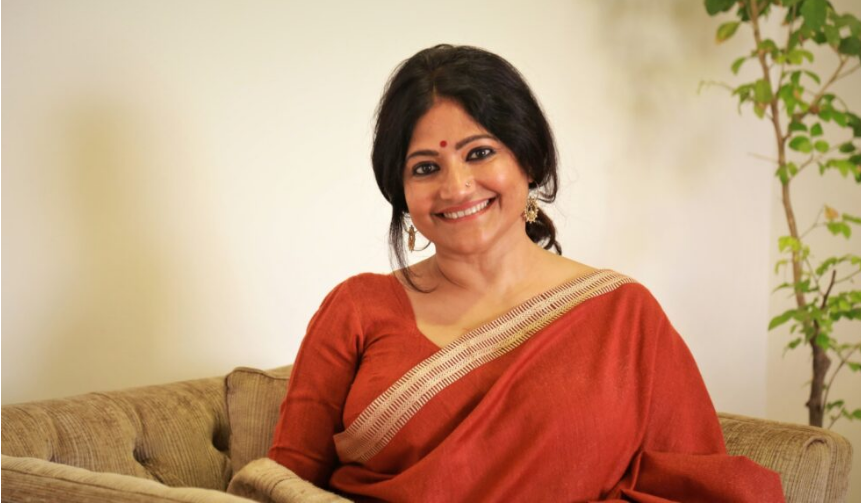



Founder of Friendship Bangladesh is recognised for building sustained healthcare, climate resilience, education and livelihood opportunities for people living on vulnerable river islands.
NEW DELHI (India CSR): Runa Khan of Bangladesh has been named a recipient of the 2026 Ramon Magsaysay Award, recognising her decades-long work to bring dignity, essential services and opportunity to communities living in the country’s riverine and coastal margins. Khan is the founder of Friendship Bangladesh, an organisation advancing healthcare, education, climate adaptation, livelihoods and social justice for people too often left beyond the reach of public services.
The Ramon Magsaysay Award Foundation honoured Khan for her “profound empathy for the poorest of the poor” and her courage, vision and tenacity in building and leading Friendship. Her work centres particularly on people living on chars—temporary islands and sandbars formed by river silt—which are isolated, erosion-prone and vulnerable to climate shocks.
Serving Forgotten Communities
Bangladesh’s geography is both a source of abundance and a cause of deep vulnerability. Floods, river erosion, cyclones and rising sea levels can disrupt homes, livelihoods and access to health and education. At least one in twenty Bangladeshis live on chars, according to the award citation, often with limited access to social protection and basic facilities.
Khan first visited a char on the Brahmaputra River in 1997. Moved by what she witnessed, she studied the needs of its residents, opened a hospital ship in 2002 and founded Friendship Bangladesh in the same year. The organisation began with 24 field medical and hospital staff and four people in its head office. It now employs more than 7,500 people, many drawn from the communities it serves.
Healthcare With Continuity
Friendship has developed a three-tier health system linking primary care with specialist support. Its network includes seven hospital ships, two land-based hospitals, 550 mobile clinics and 700 trained Friendship Community Medic Aides. The services reach riverine, coastal and refugee communities, including Rohingyas displaced from Myanmar.
For Khan, treatment must be sustained rather than episodic. “Healthcare cannot be a one-time intervention,” she has said. In difficult-to-reach locations, that principle means ensuring access to follow-up care, health information and referrals—not simply providing a single consultation.
Resilience At Scale
Climate adaptation is another core pillar. Friendship has developed Bangladesh’s first solar villages, afforested more than 200 hectares of mangroves and trained over 10,000 volunteers in rescue and relief. Its 137 Sustainable Economic Development Hubs have supported more than 205,000 people in finding new employment opportunities.
By joining livelihood support with disaster preparedness and local capacity, the organisation aims to help families rebuild more securely after floods, erosion and displacement. The model moves beyond relief towards resilience that is anchored in community participation.
Schools That Move
Friendship has also responded to climate migration through prefabricated schools that can be dismantled in hours and rebuilt when erosion threatens a community. Guided by the idea of “movable schools for climate migrants,” the programme has reached nearly 30,000 students. Its students achieved a 90.05 per cent average in Bangladesh’s Secondary School Certificate national examinations, according to the award citation.
The organisation’s wider programme includes community paralegals who help people understand their rights and cultural workers who preserve local skills and practices. This combines essential services with citizenship, identity and participation.
Award For Dignity
The Foundation said Khan’s work has moved char communities “from inaccessibility to sustained service, from dependency to participation, from vulnerability to resilience, from invisibility to recognition, and from despair to hope.” Her leadership is shaped by proximity: rather than work from a distance, she chose to walk alongside the people whose lives Friendship seeks to improve.
Accepting the recognition, Khan said the honour belongs to the unaddressed communities who allow Friendship “to walk beside them,” and to the organisation’s team and supporters. She described it as “a wonderful responsibility.”
Khan joins fellow 2026 Ramon Magsaysay Awardees Tommy Koh of Singapore, recognised for diplomacy and public service, and Myanmar human-rights advocate Bo Kyi. The formal presentation will take place at the 68th Ramon Magsaysay Awards Presentation Ceremonies at the Metropolitan Theater in Manila, Philippines, at 4:30 PM on Sunday, November 15, 2026.
For India’s CSR and development sector, Khan’s recognition is a strong reminder that resilient development requires more than relief: it requires institutions that stay, adapt with communities and place dignity at the centre of every intervention.