

Green hydrogen, waste heat recovery and circular economy measures strengthen low-carbon manufacturing
HISAR (India CSR®): Jindal Stainless’ Hisar manufacturing facility increased the share of renewable electricity in its power mix to 67% during the first quarter of FY 2026–27, compared with 58% in the corresponding period of the previous year. The facility also recorded a 12% reduction in greenhouse gas emission intensity, strengthening the company’s efforts to build a low-carbon, resource-efficient and future-ready stainless steel manufacturing ecosystem.
The improved performance reflects investments in renewable energy, green hydrogen, energy-efficient equipment, waste heat recovery and responsible resource management. These measures are intended to reduce emissions from manufacturing while supporting operational efficiency and India’s transition towards greener industrial production.
Cleaner Energy Mix
The Hisar unit is advancing its decarbonisation roadmap by expanding renewable power procurement and rooftop solar generation. It has also adopted green hydrogen in annealing operations, representing an important shift towards cleaner fuel alternatives in energy-intensive manufacturing processes. The facility commissioned an energy-efficient centrifugal compressor and additional waste heat recovery systems during the quarter. Waste heat recovery enables the unit to capture heat generated during manufacturing and reuse it within operations, helping reduce energy consumption and associated emissions.
Several energy conservation projects are also being implemented across manufacturing processes to improve equipment performance, optimise electricity consumption and minimise avoidable energy losses.
Circular Manufacturing
The Hisar facility has been certified “Zero Waste to Landfill” with a Platinum+ rating for FY 2024–25. The certification indicates progress in diverting operational waste from landfills through reuse, recovery, recycling and other responsible waste-management practices. Circularity is particularly relevant to stainless steel production because the material can be recycled repeatedly without losing its essential properties. Jindal Stainless manufactures stainless steel using the electric arc furnace route, which allows the use of recyclable scrap and generates significantly lower greenhouse gas emissions than many conventional primary steelmaking processes.
The company said its sustainability strategy integrates decarbonisation, resource efficiency, waste management and technological innovation. Its registration with the Science Based Targets initiative is another step towards developing emissions-reduction targets aligned with climate science and international climate goals.

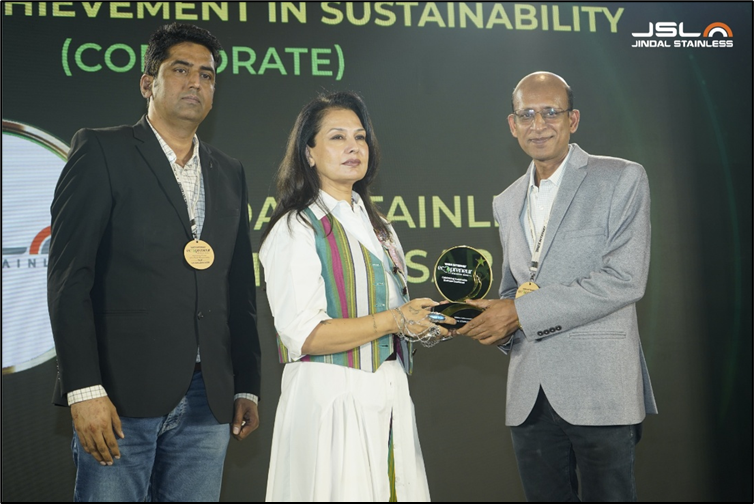
The Hisar unit’s sustainability performance was recognised with the Times Internet Ecopreneur Award 2026 for Lifetime Achievement in Sustainability.
Responsible Growth
Managing Director Abhyuday Jindal said industrial growth and environmental responsibility must progress together. He attributed the sustainability gains to the collective contribution of employees, partners and stakeholders and reiterated the company’s commitment to accelerating decarbonisation and innovation. Hisar Unit Head Vijay Kumar Bindlish said the facility would continue implementing renewable energy, green hydrogen, rooftop solar, energy conservation and waste heat recovery projects across its operations.
Jindal Stainless reported an annual turnover of Rs. 42,955 crore in FY 2025–26 and has an annual melt capacity of 4.2 million tonnes. As of March 2026, it operated 16 stainless steel manufacturing and processing facilities in India and overseas, including Spain and Indonesia, with a network spanning 12 countries.
The recognition further reinforces Jindal Stainless’ commitment to integrating sustainable practices across its operations while supporting India’s transition towards greener manufacturing, the company said.
Key Impact
| Indicator | Reported Performance |
|---|---|
| Renewable electricity share in Q1 FY27 | 67% |
| Renewable electricity share in Q1 FY26 | 58% |
| Increase in renewable power share | 9 percentage points |
| Reduction in GHG emission intensity | 12% |
| Waste-management certification | Zero Waste to Landfill, Platinum+ |
| Annual melt capacity | 4.2 million tonnes |
| FY26 annual turnover | ₹42,955 crore |
| Global manufacturing and processing facilities | 16 |
Copyright Disclaimer: All rights reserved. No part of this report may be reproduced, republished or distributed without prior written permission from India CSR®.