

World Environment Day: Sustainability Emerges as the New Foundation of Industrial Growth
NEW DELHI (India CSR): On World Environment Day, leaders across cement, construction materials, natural stone and technology sectors have underlined a common message: sustainability is no longer a choice. It is now central to industrial growth, business competitiveness, climate responsibility and long-term trust.
From cement plants to global technology platforms, from natural stone sourcing to cyber protection services, the idea of responsible growth is gaining new urgency. Industry leaders are increasingly speaking about net zero, circular economy, cleaner technologies, resource efficiency, responsible sourcing, renewable energy, carbon mitigation and transparent governance.
The statements from Parth Jindal, Dr Raghavpat Singhania, Rishabh Jain and Alona Geckler reflect how different sectors are responding to the same global challenge. Each leader brings a distinct perspective. Yet their voices converge on one important point: the future of business will be shaped by how responsibly companies use resources, reduce emissions, protect the environment and build trust.
Cement Industry Aligns with India’s Net Zero Vision
The Indian Cement Industry occupies a critical position in the country’s development journey. Cement is essential for housing, roads, bridges, ports, airports, industrial corridors and urban infrastructure. At the same time, the cement sector is also energy-intensive and resource-intensive. This makes its sustainability journey especially important.
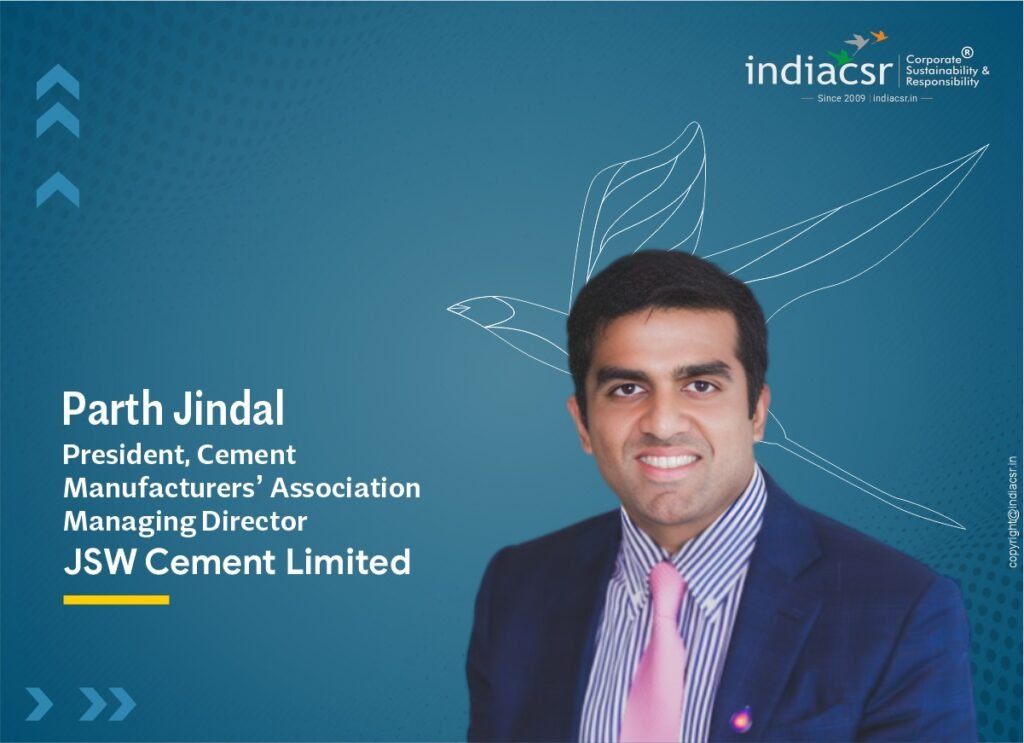
Parth Jindal, President, Cement Manufacturers’ Association (CMA) and Managing Director, JSW Cement Limited, highlighted the sector’s strong alignment with India’s climate goals. He said, “The Cement Manufacturers’ Association (CMA) appreciates the Government of India’s commitment to achieving Net Zero and its efforts to create an enabling policy environment that supports sustainability, innovation and responsible industrial growth.”
His statement reflects the growing partnership between government policy and industry action. India’s net zero ambition has pushed sectors to rethink how they manufacture, consume energy, use raw materials and manage waste. For the cement industry, this means adopting cleaner technologies, improving resource efficiency and moving towards low-carbon production systems.
Jindal further said, “The Indian Cement Industry is aligned to the Government’s commitments on carbon mitigation and is accelerating the adoption of cleaner technologies, resource efficiency and circular economy practices while actively exploring the potential of Carbon Capture, Utilisation and Storage (CCUS) as a critical pathway for deep decarbonisation.”
This is a significant statement because it points towards the next stage of industrial decarbonisation. Cleaner fuels and energy efficiency can reduce emissions, but deep decarbonisation in cement may require advanced solutions such as Carbon Capture, Utilisation and Storage. CCUS is increasingly being discussed globally as a major technology for sectors where emissions are difficult to eliminate completely.
Waste as a Resource: Cement Sector’s Circular Economy Role
One of the most powerful parts of Mr Jindal’s message is his emphasis on circular economy. The cement industry has the ability to use industrial by-products and waste streams as alternative raw materials and fuels. This reduces pressure on natural resources and also helps other sectors manage their waste more responsibly.
Jindal explained, “One of the most powerful ideas in sustainability is that waste from one sector can become a resource for another. By coprocessing industrial by-products and waste streams that would otherwise require disposal, the Indian Cement Industry helps close material loops, conserve natural resources and reduce the environmental footprint of multiple sectors simultaneously.”
This approach shows how sustainability can move beyond individual companies. When one sector uses the waste of another sector as a productive input, the environmental benefit becomes larger. It reduces landfill pressure. It lowers the demand for virgin raw materials. It promotes resource efficiency. It also builds an industrial ecosystem where responsibility is shared.
The cement industry’s use of alternative fuels and raw materials is therefore not only a technical practice. It is a sustainability model. It connects industries. It reduces waste. It turns disposal problems into productive solutions.
Sustainability Embedded in Cement Manufacturing
Jindal also emphasized that sustainability is not a recent addition to the cement sector’s agenda. It has become deeply linked with manufacturing, innovation and investment decisions.
He said, “Alongside this, the Cement Industry has made significant progress in improving energy efficiency, increasing the use of alternative fuels and raw materials and reducing its environmental footprint. Sustainability has long been embedded in the way we manufacture and is increasingly shaping how we innovate, invest and grow.”
This is an important shift in industrial thinking. Sustainability is no longer being seen only as compliance. It is becoming a driver of business strategy. Companies are investing in cleaner technology not only to meet regulations, but also to remain competitive, responsible and future-ready.
On World Environment Day, Jindal reaffirmed the sector’s commitment to national development and environmental responsibility. He said, “On the occasion of World Environment Day, the Indian Cement Industry reaffirms its commitment to supporting India’s development aspirations while contributing meaningfully to its climate and sustainability goals.”
This balance between development and sustainability is crucial for India. The country needs infrastructure growth, housing expansion and industrial progress. But this growth must be achieved with lower environmental impact. The cement sector’s commitment is therefore central to India’s sustainable development story.
Built Environment Must Look Beyond Emissions
Dr Raghavpat Singhania, Vice President, Cement Manufacturers’ Association and Managing Director, J K Cement Limited, brought a broader view of sustainability in the built environment. His statement focused not only on emissions, but also on resource use, waste reduction and responsible infrastructure creation.
He said, “India’s commitment to sustainable development and its Net Zero ambitions are helping accelerate the adoption of cleaner technologies and more resource efficient industrial practices.”
This reflects the momentum created by national climate commitments. When a country sets a long-term sustainability direction, industries begin to align their operations, investments and innovations accordingly.
Dr Singhania made an important observation when he said, “Sustainability in the built environment cannot be measured by emissions alone. It is equally about how efficiently we use resources, how effectively we minimise waste and how responsibly we create the infrastructure that will serve future generations.”
This statement expands the meaning of green construction. It reminds policymakers, builders, manufacturers and consumers that sustainability is not limited to carbon numbers. It also includes durability, responsible material use, waste minimisation and the long-term impact of infrastructure.
A building, road or bridge is not sustainable merely because its immediate emissions are lower. It must also use resources wisely. It must last longer. It must reduce waste during construction and operation. It must serve people without damaging the environment unnecessarily.
Cement as the Foundation of India’s Development
Dr Singhania also underlined the responsibility of the cement sector in India’s growth journey. Cement is not an optional material. It is foundational to development. But that very importance creates an obligation to grow responsibly.
He said, “As a sector that forms the foundation of India’s development, the Indian Cement Industry has a responsibility to balance growth with environmental stewardship.”
This balance is one of the most important challenges before India’s infrastructure sectors. India will continue to build. Urbanization will continue. Rural infrastructure will expand. Industrial corridors will grow. Housing demand will rise. The cement industry will remain central to all these developments.
The question is not whether India will build. The question is how India will build. Dr Singhania’s statement offers a clear answer: growth must go hand in hand with environmental stewardship.
Innovation, Circularity and Better Manufacturing Practices
Dr Singhania further explained that the Indian Cement Industry is already advancing sustainability through several routes.
He said, “The Indian Cement Industry is advancing this objective through greater resource efficiency, increased circularity, continuous technological innovation and ongoing improvements in manufacturing practices.”
These four pillars are crucial. Resource efficiency reduces material and energy waste. Circularity helps reuse waste and industrial by-products. Technological innovation creates new ways to reduce emissions and improve productivity. Better manufacturing practices improve environmental performance across operations.
On World Environment Day, Dr Singhania reaffirmed the industry’s commitment, saying, “On World Environment Day, we reaffirm our commitment to supporting India’s climate ambitions while delivering the materials needed for resilient, durable and sustainable infrastructure.”
His message connects climate responsibility with infrastructure quality. India needs infrastructure that is not only large in scale, but also strong, resilient and sustainable. Cement manufacturers have a key role in making this possible.
Natural Stone Industry Sees Rising Demand for Sustainable Materials
While cement leaders focused on industrial decarbonisation and circularity, Rishabh Jain, Director – International Business, Petros Stone LLP, brought attention to the global shift in construction materials. His statement highlighted how natural materials such as marble, granite and quartzite are likely to gain greater importance as environmental concerns reshape construction choices.
He said, “Global construction is steadily moving towards sustainable and environmentally responsible materials.”
This trend is visible across international markets. Architects, builders, developers and consumers are increasingly asking questions about the origin, processing, durability and environmental impact of materials. Materials are no longer judged only by appearance and cost. Their sustainability profile is becoming important.
Rishabh Jain referred to global regulatory developments, saying, “With developments such as Australia’s ban on engineered quartz and stricter environmental regulations in Europe, the focus on natural materials like marble, granite, and quartzite is expected to grow significantly.”
This statement shows how regulation can reshape markets. When countries introduce stricter environmental and health standards, industries are forced to adapt. Natural stone, when sourced and processed responsibly, can become a preferred material in markets looking for durability, authenticity and lower environmental concern.
Sustainability Beyond the Product
Rishabh Jain also made an important point that sustainability in natural stone cannot be judged only by the final product. It must include the full chain of sourcing, processing, packaging and transportation.
He said, “Sustainability in the natural stone industry goes beyond the product itself — from responsible sourcing to reducing plastic-based packaging, every step matters in building a greener future.”
This statement reflects a complete lifecycle approach. A product may be natural, but the industry must still ensure responsible quarrying, fair practices, efficient processing, reduced waste and eco-friendly packaging. Sustainability requires discipline at every stage.
For the natural stone sector, this creates both responsibility and opportunity. Companies that invest in responsible sourcing, better packaging and transparent supply chains can build stronger trust with global buyers. They can also position natural stone as a premium sustainable material for the future of construction.
Technology Sector Links Sustainability with Trust and Governance
Alona Geckler, SVP of Business Operations and Chief of Staff at Acronis, brought a different but equally important dimension to the discussion. Her statement shows how sustainability is now deeply connected with business trust, digital transformation, artificial intelligence and governance.
She said, “Sustainability today is not just an environmental issue – it is a business, technology and trust issue.”
This is a powerful statement because it expands sustainability beyond traditional environmental boundaries. In the digital age, companies are judged not only by their emissions, but also by how responsibly they use technology, manage data, deploy artificial intelligence and govern their operations.
As businesses adopt AI and digital platforms at high speed, responsible innovation becomes essential. Sustainability now includes ethical technology, transparency, cyber resilience and governance strength.
Responsible Innovation in the Age of AI
Alona Geckler further said, “At Acronis, we believe organizations must balance innovation with responsibility as they navigate rapid digital and AI transformation.”
This message is especially relevant at a time when artificial intelligence is transforming every industry. AI can improve productivity, automation, security and decision-making. But it also raises questions around ethics, data use, governance, energy consumption and accountability.
Acronis’ approach, as described by Geckler, is to connect innovation with responsibility. This is an important lesson for the wider technology sector. Rapid growth without responsibility can create risk. Responsible innovation, on the other hand, can build long-term trust.
Acronis Reports Emission Reduction and Renewable Electricity Progress
Geckler also shared specific progress from Acronis’ ESG journey. She said, “Our 2025 ESG Report reflects this commitment, including a 40% year-over-year reduction in total Scope 1–3 greenhouse gas emissions, 70% renewable electricity matching, and continued investments in responsible AI and strong governance.”
This quote brings measurable outcomes into the sustainability discussion. Scope 1, 2 and 3 emissions cover direct emissions, purchased energy emissions and value-chain emissions. A reduction across all three categories reflects a broader commitment to climate responsibility.
The mention of 70% renewable electricity matching also shows how technology companies are increasingly linking their operational energy needs with cleaner power sources. For digital companies, energy use is a growing sustainability issue. Renewable electricity matching is one way to reduce environmental impact and respond to stakeholder expectations.
ESG as Value for Partners and Customers
Alona Geckler also emphasized that ESG performance is not only about internal responsibility. It creates value for partners and customers.
She said, “For our partners, this creates real value: it helps them meet rising customer and compliance expectations, strengthen their own ESG story, and deliver cyber protection services backed by a vendor that is focused on transparency, resilience, and responsible innovation.”
This statement shows how ESG has become part of business relationships. Companies increasingly prefer vendors, suppliers and partners who can support their own sustainability and compliance goals. A responsible vendor strengthens the ESG story of its partners.
In this way, sustainability becomes part of market competitiveness. Transparency, resilience and responsible innovation are no longer soft values. They are business advantages.
A Shared Message Across Sectors
The four leaders represent different industries, but their messages are connected by a common thread. Mr Parth Jindal speaks about cement, circular economy, CCUS and responsible industrial growth. Dr Raghavpat Singhania speaks about cleaner technologies, efficient resource use and sustainable infrastructure. Rishabh Jain speaks about natural materials, responsible sourcing and reduced plastic packaging. Alona Geckler speaks about ESG, responsible AI, renewable electricity, governance and trust.
Together, they show that sustainability is not confined to one sector. It is now a common language of business leadership. Whether a company produces cement, supplies natural stone or delivers cyber protection solutions, the direction is clear. Growth must become cleaner. Innovation must become responsible. Resources must be used wisely. Waste must be reduced. Trust must be earned.
World Environment Day as a Moment of Commitment
World Environment Day is not merely a symbolic occasion. It is a reminder that industries must look at their role in shaping the planet’s future. The statements from these leaders show that Indian and global businesses are increasingly recognizing their responsibilities.
For the cement industry, the challenge is to support national infrastructure while reducing carbon intensity. For the natural stone industry, the challenge is to promote responsible sourcing and sustainable supply chains. For technology companies, the challenge is to ensure that digital and AI transformation is guided by governance, transparency and environmental responsibility.
The future will belong to companies that understand this connection. Sustainability will influence investment decisions. It will shape consumer choices. It will affect global trade. It will define corporate reputation. It will also determine how industries contribute to society.
Conclusion: Responsible Growth Is the New Industrial Vision
The leaders’ statements make one thing clear: sustainability has moved from the margins to the centre of business strategy. It is now linked with climate action, technology, infrastructure, materials, governance and trust.
Mr Parth Jindal’s focus on circular economy and deep decarbonisation shows the cement sector’s readiness to support India’s net zero journey. Dr Raghavpat Singhania’s emphasis on resource efficiency and responsible infrastructure broadens the meaning of sustainability in the built environment. Rishabh Jain’s perspective highlights the rising importance of natural and responsibly sourced materials in global construction. Alona Geckler’s statement shows how technology companies are connecting ESG with responsible innovation and business trust.
Together, these voices create a strong message for World Environment Day. The path ahead is not about stopping development. It is about making development more responsible. It is about building industries that grow with conscience. It is about using technology with accountability. It is about turning waste into resources. It is about creating infrastructure that serves future generations.
In this new industrial vision, sustainability is not a burden. It is a responsibility, an opportunity and a promise to the future.