

• India CSR Awards 2026
  • India CSR Leadership Summit
  • Guest Posts
Wednesday, October 7, 2026
India CSR®
  • Home
  • Corporate Social Responsibility
    • Art & Culture
    • CSR Leaders
    • Child Rights
    • Culture
    • Education
    • Gender Equality
    • Around the World
    • Skill Development
    • Safety
    • Covid-19
    • Safe Food For All
  • Sustainability
    • Sustainability Dialogues
    • Sustainability Knowledge Series
    • Plastics
    • Sustainable Development Goals
    • ESG
    • Circular Economy
    • BRSR
  • Corporate Governance
    • Diversity & Inclusion
  • Interviews
  • SDGs
    • No Poverty
    • Zero Hunger
    • Good Health & Well-Being
    • Quality Education
    • Gender Equality
    • Clean Water & Sanitation – SDG 6
    • Affordable & Clean Energy
    • Decent Work & Economic Growth
    • Industry, Innovation & Infrastructure
    • Reduced Inequalities
    • Sustainable Cities & Communities
    • Responsible Consumption & Production
    • Climate Action
    • Life Below Water
    • Life on Land
    • Peace, Justice & Strong Institutions
    • Partnerships for the Goals
  • Articles
  • Events
  • हिंदी
  • More
    • Business
    • Finance
    • Environment
    • Economy
    • Health
    • Around the World
    • Social Sector Leaders
    • Social Entrepreneurship
    • Trending News
      • Important Days
        • Festivals
      • Great People
      • Product Review
      • International
      • Sports
      • Entertainment
    • Case Studies
    • Philanthropy
    • Biography
    • Technology
    • Lifestyle
    • Sports
    • Gaming
    • Knowledge
    • Home Improvement
    • Words Power
    • Chief Ministers
No Result
View All Result
  • Home
  • Corporate Social Responsibility
    • Art & Culture
    • CSR Leaders
    • Child Rights
    • Culture
    • Education
    • Gender Equality
    • Around the World
    • Skill Development
    • Safety
    • Covid-19
    • Safe Food For All
  • Sustainability
    • Sustainability Dialogues
    • Sustainability Knowledge Series
    • Plastics
    • Sustainable Development Goals
    • ESG
    • Circular Economy
    • BRSR
  • Corporate Governance
    • Diversity & Inclusion
  • Interviews
  • SDGs
    • No Poverty
    • Zero Hunger
    • Good Health & Well-Being
    • Quality Education
    • Gender Equality
    • Clean Water & Sanitation – SDG 6
    • Affordable & Clean Energy
    • Decent Work & Economic Growth
    • Industry, Innovation & Infrastructure
    • Reduced Inequalities
    • Sustainable Cities & Communities
    • Responsible Consumption & Production
    • Climate Action
    • Life Below Water
    • Life on Land
    • Peace, Justice & Strong Institutions
    • Partnerships for the Goals
  • Articles
  • Events
  • हिंदी
  • More
    • Business
    • Finance
    • Environment
    • Economy
    • Health
    • Around the World
    • Social Sector Leaders
    • Social Entrepreneurship
    • Trending News
      • Important Days
        • Festivals
      • Great People
      • Product Review
      • International
      • Sports
      • Entertainment
    • Case Studies
    • Philanthropy
    • Biography
    • Technology
    • Lifestyle
    • Sports
    • Gaming
    • Knowledge
    • Home Improvement
    • Words Power
    • Chief Ministers
No Result
View All Result
India CSR®
No Result
View All Result
Home Finance

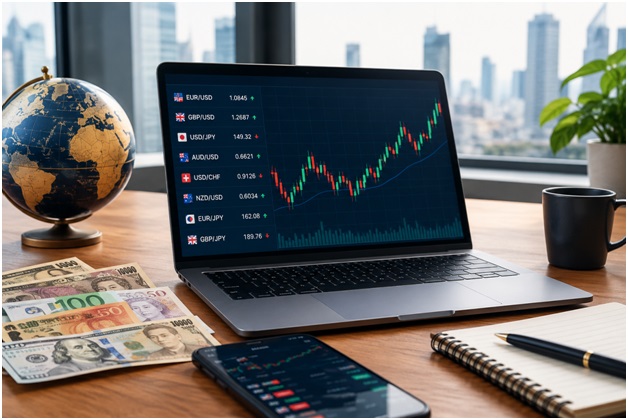
How to Get Started with Forex Trading in 2026

India CSR by India CSR
October 7, 2026
Reading Time: 6 mins read
Forex Trading
Share Share Share Share
WhatsApp icon
WhatsApp — Join Us
Instant updates & community
Google News icon
Google News — Follow Us
Get our articles in Google News feed
india csr awards
ADVERTISEMENT

Forex trading involves taking positions based on movements in currency exchange rates. For Indian residents, however, the permitted route is different from what many offshore platforms advertise. Retail participants can trade eligible currency derivatives through recognised Indian exchanges using a trading account with a SEBI-registered broker. Before getting started, understand the permitted instruments, margin requirements, costs, and regulatory conditions.

What Can You Trade?

Indian residents cannot freely participate in the global over-the-counter forex market. Currency trading in India is primarily available through exchange-traded c murrency derivatives on recognised exchanges such as NSE, BSE and MSE.

Eligible currency pairs include four rupee pairs:
19th India CSR Leadership Summit 2026
ADVERTISEMENT
  • USD-INR
  • EUR-INR
  • GBP-INR
  • JPY-INR

Exchange-traded cross-currency contracts are also available for EUR-USD, GBP-USD and USD-JPY, subject to the applicable exchange and regulatory framework.

These contracts are cash-settled in Indian rupees. This means you are taking a position on changes in the exchange rate rather than buying or receiving the underlying foreign currency.

Before trading, understand the applicable FEMA and RBI requirements. Currency derivatives involving the Indian rupee are subject to conditions related to foreign exchange risk exposure. The regulatory framework also sets limits and documentation requirements, so check the latest requirements and complete any declaration your broker requests before placing an order.

Step 1: Open and Activate a Trading Account

The first step is to open a trading account with a broker registered with SEBI. You can verify the broker’s registration details through the SEBI website before opening an account.

The account-opening process generally involves completing KYC requirements and submitting details such as PAN, Aadhaar, and bank account information. Depending on the broker and the segment you want to trade, you may also need to provide additional financial information or income-related documents.

If you already have a trading account for equity investments, you may not need to open another account. However, you need to activate the currency derivatives segment separately. You may also need to provide the required declaration regarding your underlying foreign exchange exposure.

A Demat Account is not essential for currency derivatives because these contracts are cash-settled. However, some investors maintain a Demat Account alongside their Trading Account to manage different investments through the same financial setup.

Step 2: Understand Contract Size

Currency derivative contracts have standardised lot sizes. Understanding the lot size matters because it determines your position’s notional value and helps you assess the required margin.

For example, a USD-INR futures contract generally represents 1,000 US dollars. If USD-INR is trading at ₹88, one lot has a notional value of about ₹88,000.

The contract value does not mean you must pay the full amount upfront. Currency derivatives are traded on margin, with the exchange and clearing corporation determining the applicable margin.

Trading hours and expiry schedules vary by contract. Check the latest exchange specifications for the trading session, contract expiry, settlement mechanism and available contracts before placing an order.

Futures and options also work differently. A futures contract creates an obligation for both parties, while an option gives the buyer a right, not an obligation, subject to the contract terms. Options also involve a premium, making their risk and payoff structure different from futures.

Step 3: Understand Margin and Risk

Currency derivatives require you to maintain the applicable margin rather than paying the full notional value of the contract. The margin can include components such as SPAN and exposure margins, depending on the contract and exchange requirements.

When you trade with margin, even a small change in the exchange rate can greatly affect the money you have invested in that position. Higher volatility can also increase margin requirements.

Positions may be marked to market, meaning gains and losses are adjusted according to the applicable settlement process. If your available margin falls below the required level, you may need to add funds. Failure to meet a margin requirement can result in the broker closing the position.

This makes position sizing particularly important. Starting with a smaller position can help you understand how price movements, margin requirements and daily profit or loss affect your account before taking larger positions.

Step 4: Place and Monitor a Trade

Once your currency segment is active and you have sufficient margin, you can place an order through your broker’s trading platform.

Before entering a position, define your trading objective, entry level and exit strategy. Consider how much you are prepared to lose if the market moves against you, and use appropriate risk-management measures.

Also monitor the position after execution. Currency markets can respond to factors such as interest rate decisions, inflation, economic data, central bank actions and geopolitical developments. A position that appears stable can change as market conditions shift.

Beginners may benefit from observing the market and understanding one contract cycle before increasing their position size. Currency derivatives require a clear understanding of leverage, margin and market risk.

Costs and Taxation

The cost of a currency trade is not limited to brokerage. Depending on the transaction, charges may include exchange transaction charges, SEBI turnover fees, GST and applicable stamp duty.

Currency derivatives generally do not attract Securities Transaction Tax (STT), unlike certain other market transactions. However, applicable charges and rates can change, so check the latest schedule before trading.

Tax treatment also depends on the nature of the transaction and the applicable income-tax provisions. Currency derivative transactions undertaken through recognised exchanges may generally be treated as non-speculative business transactions when the relevant conditions are met. Profits are therefore generally considered business income rather than capital gains.

Tax treatment of losses, set-off provisions, carry-forward rules and audit requirements can depend on your circumstances. Regular traders should consult a qualified tax professional to understand the applicable provisions and filing requirements.

What Should You Avoid?

Indian residents should be careful when dealing with offshore platforms that offer forex trading with very high leverage or access to currency pairs outside the permitted domestic framework.

Trading forex through unauthorised platforms, including certain spot forex and CFD platforms, can create regulatory and financial risks. Sending money overseas for margin or trading purposes does not automatically make such activity permissible. The Liberalised Remittance Scheme also has specific permitted-purpose conditions that you should understand before making any remittance.

RBI maintains an Alert List of entities that are not authorised to deal in foreign exchange or operate electronic trading platforms for forex transactions. Importantly, RBI has clarified that an entity not appearing on the Alert List should not be assumed to be authorised.

Before transferring funds or opening an account, verify whether the platform and intermediary are authorised for the activity they offer. Avoid platforms that promise unusually high returns, excessive leverage or guaranteed profits.

Conclusion

Getting started with forex trading in India requires more than choosing a currency pair and placing an order. You need to understand the permitted market, activate the appropriate trading segment, learn how contract sizes and margins work, and account for trading costs and tax implications.

Currency markets can respond quickly to economic and policy developments, and leveraged positions can magnify both gains and losses. Starting with a clear understanding of the rules and risk-management principles can help you approach currency derivatives more responsibly. Always check the latest RBI, SEBI and exchange requirements before placing a trade, as regulatory provisions and contract specifications may change.

csr education cybernetyx
ADVERTISEMENT
India CSR Image 1 India CSR Image 2

CSR, Sustainability, and ESG success stories hindustan zinc
ADVERTISEMENT
India CSR

India CSR

India CSR® is the largest media on CSR and sustainability offering diverse content across multisectoral issues on business responsibility. It covers Sustainable Development, Corporate Social Responsibility (CSR), Sustainability, and related issues in India. Founded in 2009, the organisation aspires to become a globally admired media that offers valuable information to its readers through responsible reporting.

Related Posts

India CSR®
Finance

How to Match Mutual Fund Types With Your Financial Objectives

India CSR®
Finance

Why Is a Mortgage Loan Application Rejected: Common Gaps to Avoid

India CSR®
Finance

Top 10 Factors Affecting the Second Hand Car Price

personal loans in india
Finance

Personal Loan With a Credit Score of 600: Eligibility and Approval Factors

term life insurance
Finance

Is Term Life Insurance Still Worth Buying in 2026?

Alternatives for Receiving Money. Image: India CSR
Finance

7 Best Stripe Alternatives for Receiving Money in India in 2026

Load More
csr education cybernetyx
ADVERTISEMENT
bba
ADVERTISEMENT

Interviews

Dr Rajeev Gautam, President, HORIBA India @Indiacsr
Interviews

“Wellness Doesn’t Replace Ambition, It Makes Ambition Sustainable”: Shilpa Bhagat, Co-Founder, Fitistan

by India CSR

Fitistan Co-Founder Shilpa Bhagat discusses wellness, balance, community support and the small habits behind sustainable health.

Read moreDetails
From L to R- Olayinka Hakeem Babalola, Rotary International President (2026-27) and M. Muruganandam (MMM), Vice President (2026-27)

“Peace Is the Foundation That Allows All Other Progress to Take Root”: Rotary International

India CSR®

Interview: Ravi Mahajan on India’s Shift from Diesel to Solar-Powered Telecom Towers

Sanjay Hande, Head Of Manufacturing And Technology Management, Bosch India @india csr

Giving Becomes Participation, and Participation Creates a Deeper Connection: Sanjay Hande, Bosch India

Load More
Ad 1 Ad 2 Ad 3 Ad 4 Ad 5 Ad 6
ADVERTISEMENT

CSR UPDATES

CSR: Delta Exchange India Gives Rs 4 Crore to Feed 27,000 Telangana Students

Vedanta Power CSR Benefits 87,000 People in FY26, Nearly 4 Lakh to Date

Bharat Electronics Reports Rs 107.79 Crore CSR Obligation for FY 2025-26, 21.4 Lakh Beneficiaries

BEML Spends Rs 7.27 Crore on CSR in FY 2025-26, Exceeds Statutory Obligation

Flybrary at Khajuraho Airport: AAI Turns Waiting Time into Reading Time

CSR: GHCL Foundation Supports 40,000 Farmers Across 175 Villages in Gujarat

STEM Learning STEM Learning STEM Learning
ADVERTISEMENT
Facebook Twitter Youtube LinkedIn Instagram
India CSR Logo

India CSR® is the largest tech-led platform for information on CSR and sustainability in India offering diverse content across multisectoral issues. It covers Sustainable Development, Corporate Social Responsibility (CSR), Sustainability, and related issues in India. Founded in 2009, the organisation aspires to become a globally admired media that offers valuable information to its readers through responsible reporting. To enjoy the premium services, we invite you to partner with us.

Follow us on social media:

Subscribe to Our Newsletter

Don't miss out on the latest updates in corporate social responsibility. Subscribe to our newsletter at indiacsr.in and be part of the positive change.
Please enable JavaScript in your browser to complete this form.
Loading

  • About India CSR®
  • Team
  • India CSR® Awards 2026
  • India CSR® Leadership Summit
  • Partnership
  • Guest Posts
  • Services
  • ESG Professional Network
  • Content Writing Services
  • Business Information
  • Contact
  • Privacy Policy
  • Terms of Use
  • Donate

Copyright © 2026 - India CSR® | All Rights Reserved

No Result
View All Result
  • Home
  • Corporate Social Responsibility
    • Art & Culture
    • CSR Leaders
    • Child Rights
    • Culture
    • Education
    • Gender Equality
    • Around the World
    • Skill Development
    • Safety
    • Covid-19
    • Safe Food For All
  • Sustainability
    • Sustainability Dialogues
    • Sustainability Knowledge Series
    • Plastics
    • Sustainable Development Goals
    • ESG
    • Circular Economy
    • BRSR
  • Corporate Governance
    • Diversity & Inclusion
  • Interviews
  • SDGs
    • No Poverty
    • Zero Hunger
    • Good Health & Well-Being
    • Quality Education
    • Gender Equality
    • Clean Water & Sanitation – SDG 6
    • Affordable & Clean Energy
    • Decent Work & Economic Growth
    • Industry, Innovation & Infrastructure
    • Reduced Inequalities
    • Sustainable Cities & Communities
    • Responsible Consumption & Production
    • Climate Action
    • Life Below Water
    • Life on Land
    • Peace, Justice & Strong Institutions
    • Partnerships for the Goals
  • Articles
  • Events
  • हिंदी
  • More
    • Business
    • Finance
    • Environment
    • Economy
    • Health
    • Around the World
    • Social Sector Leaders
    • Social Entrepreneurship
    • Trending News
      • Important Days
      • Great People
      • Product Review
      • International
      • Sports
      • Entertainment
    • Case Studies
    • Philanthropy
    • Biography
    • Technology
    • Lifestyle
    • Sports
    • Gaming
    • Knowledge
    • Home Improvement
    • Words Power
    • Chief Ministers

Copyright © 2026 - India CSR® | All Rights Reserved

This website uses cookies. By continuing to use this website you are giving consent to cookies being used. Visit our Privacy and Cookie Policy.
