


Introduction
In the demanding sectors of outdoor equipment, new energy infrastructure, and automotive manufacturing, the premature failure of galvanized steel parts — manifesting as early edge corrosion, zinc layer ablation, and subtle micro-cracking — is a costly and persistent nightmare. These issues often lead to catastrophic field failures, expensive recalls, and severe supply chain disruptions, even when parts appear acceptable upon initial inspection.
The root cause rarely lies in the base material itself. Instead, failure stems from uncontrolled thermal input during cutting, mismatched process parameters for the zinc coating, and a supplier’s quality system that overlooks long-term reliability in favor of short-term cost savings. This article provides a systematic framework to evaluate laser cutting partners beyond unit price, focusing on thermodynamic process control, material-specific expertise, and a traceable quality system rooted in authoritative standards to extend part lifespan and avoid budget overruns.

What Separates a Qualified Custom Laser Cutting Manufacturer from a Basic Job Shop for Galvanized Steel?
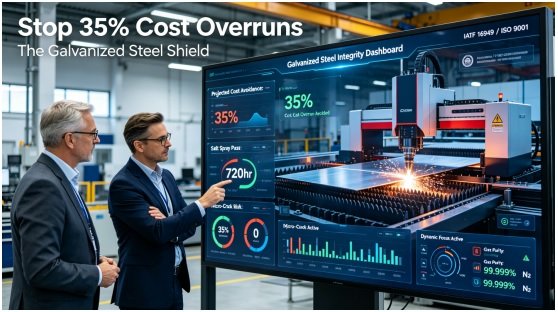
Selecting a supplier for galvanized steel goes far beyond comparing price-per-cut. A qualified custom laser cutting manufacturer is defined by its mastery of dynamic focus compensation for varying zinc coating thicknesses (e.g., Z275), its use of high-purity (99.999%) assist gases to prevent oxidation, and a quality management system backed by verifiable IATF 16949 and ISO 9001 audit data, not just certificate displays. This technical and systemic rigor, aligned with NIST emphasis on smart manufacturing process control, is what separates reliable partners from basic job shops.
l The Critical Role of Dynamic Focus and Gas Purity: Unlike standard carbon steel, the zinc coating on galvanized steel has a lower vaporization point, requiring precise beam control. A qualified supplier utilizes dynamic focus compensation to automatically adjust the focal point based on coating thickness, preventing uneven ablation. Furthermore, high-purity nitrogen is non-negotiable; impurities in lower-grade gases lead to dross and compromised corrosion resistance, directly impacting the part’s long-term durability.
l IATF 16949 as a Baseline, Not a Bonus: For automotive and structural applications, IATF 16949 certification is a fundamental requirement. However, the real test is in the data. A serious manufacturer will provide actual First Article Inspection (FAI) reports and Material Test Reports (MTRs) that demonstrate process capability indices (Cpk), proving their system’s consistency rather than merely displaying a certificate on the wall.
l Verifying Smart Process Control Capabilities: Following NIST guidelines for smart manufacturing, a capable partner employs real-time monitoring of cutting parameters (power, speed, gas pressure). This data-driven approach allows for predictive maintenance and adaptive control, ensuring each batch meets the stringent requirements for critical components where failure is not an option.
How Does Advanced Dynamic Focus Control Achieve Both Precision and Zero Dross in Galvanized Sheet Metal Laser Cutting?
Achieving high precision and zero dross simultaneously on galvanized sheet metal is a significant engineering challenge. The solution lies in advanced dynamic focus control technology, which intelligently locks the laser’s focal point below the material surface, combined with high-pressure nitrogen assistance. This setup expels molten material before zinc vapor can interfere, achieving hole position tolerances of ±0.03mm and surface roughness of Ra 1.6-3.2μm, making parts immediately suitable for automated assembly without secondary grinding.
1. The Physics of Zinc Vapor Management
During cutting, the zinc layer vaporizes first, creating a high-pressure gas that can disrupt the laser beam and lead to poor edge quality. Dynamic focus control counters this by maintaining an optimal standoff distance, while high-pressure nitrogen (20 bar+) creates a clean, oxide-free cut by blowing away the molten steel before zinc vaporization becomes problematic.
2. Precision Metrics for Automated Production
For parts destined for robotic assembly, dimensional stability is paramount. The combination of a stable thermal environment (controlled HAZ) and precise focal point management results in exceptional repeatability. This level of galvanized sheet metal laser cutting precision ensures that every part fits perfectly in the fixture, eliminating assembly line stoppages due to dimensional variation.
3. The Economic Impact of Eliminating Secondary Operations
The primary cost saving of zero-dross cutting is the elimination of manual deburring or grinding. By delivering a ready-to-install part directly from the laser bed, manufacturers save on labor costs, reduce handling damage, and significantly compress the lead time from order to final assembly.
Why is Micro-Cracking a Hidden Menace in Structural Components, and How Can It Be Eliminated?
Micro-cracking in structural components like solar mounting brackets or heavy machinery arms is a catastrophic failure mode that often remains undetected until it’s too late. It is primarily caused by liquid metal embrittlement (LME), where zinc penetrates the grain boundaries of the steel under heat stress. Eliminating this risk requires a high-frequency pulsed laser strategy with forced convection cooling to reduce the heat-affected zone (HAZ) and prevent the material from reaching the critical temperature range where LME occurs.
1. The Mechanism of Liquid Metal Embrittlement
When the heat input is too high during laser cutting, the base metal can exceed the temperature at which zinc becomes liquid and penetrates the steel’s microstructure. This creates microscopic cracks that propagate under load. For parts subject to fatigue or dynamic stress, this is a primary point of failure that standard visual inspection cannot detect.
2. Process Solutions for Brittle Zone Mitigation
To combat this, advanced suppliers employ a modulated pulse waveform that reduces the average power, preventing bulk heating. Coupled with specialized nozzles that provide jet cooling, this process keeps the cut edge below the LME threshold, ensuring the mechanical integrity of the part is preserved.
3. Validation Through Bend and Salt Spray Testing
The effectiveness of this controlled process is validated through 180-degree bend tests (to check for cracking) and ASTM B117 salt spray tests. A properly cut part should pass a 720-hour salt spray test without red rust and show no signs of cracking at the bend radius, confirming the elimination of the hidden menace.
How Does DFM Optimization for Custom Galvanized Steel Parts Directly Lower Total Sourcing Cost?
Design for Manufacturability (DFM) is the most powerful lever for reducing the total cost of ownership for custom galvanized steel parts. By optimizing part geometry for nesting efficiency and adjusting features like hole diameters and bend reliefs during the design phase, engineers can increase material utilization by 8-12% and eliminate costly redesigns. A professional galvanised steel laser cutting service provides this analysis upfront, transforming a simple quote into a value-engineering session.
1. Nesting Algorithms and Material Yield
The largest cost driver in laser cutting is often the raw material. Advanced CAD/CAM software uses nesting algorithms to arrange parts on a sheet to minimize scrap. A supplier with strong DFM expertise will suggest minor, non-functional changes to part contours to improve nesting density, directly lowering the material cost per part.
2. Feature Optimization for Laser Constraints
A common mistake is designing holes too small for the laser’s kerf width or placing cutouts too close to bend lines. Proactive DFM feedback guides designers to increase internal radii and adjust tolerances to suit the laser’s capabilities, preventing manufacturing defects and ensuring the part can be produced reliably at volume.
3. The Ripple Effect of Early Collaboration
Engaging a manufacturing partner during the design phase avoids the exponential cost of changes later in the process. By incorporating DFM principles early, companies reduce not only material waste but also the risk of project delays and tooling rework, making the entire sourcing process more predictable and cost-effective.
Beyond Unit Price: What Cost Variables Truly Define a Laser Cutting Galvanized Steel Service Quote?
A laser cutting galvanized steel service quote based solely on “price per cut” is a trap. The true total cost is defined by hidden variables: the type of assist gas (high-purity N₂ vs. air), the nesting efficiency, and the inclusion of quality assurance steps like FAI and salt spray testing. A transparent quote will break down these elements, revealing that a higher initial price often results in a lower total cost of ownership by eliminating rework and ensuring field reliability.
1. The True Cost of Assist Gas Selection: Using compressed air instead of high-purity nitrogen may lower the line item on a quote, but it inevitably leads to dross formation and oxidized edges. The subsequent cost of manual grinding, delayed assembly, and potential corrosion failure in the field far outweighs the savings on gas. A professional quote justifies the use of nitrogen by highlighting the downstream savings.
2. The Impact of Setup and Quality Assurance: A lowball quote often excludes setup charges and comprehensive inspection. A reputable supplier includes the cost of CMM inspection and documentation (like FAI reports) in their base price. This investment in quality control prevents the catastrophic cost of a batch rejection or a field failure, which can include warranty claims and reputational damage.
3. Evaluating Quotes for Long-Term Value: Smart procurement managers evaluate quotes based on lifecycle cost. They prioritize suppliers who offer transparent pricing models that include all critical process parameters. This allows for an apples-to-apples comparison and ensures that the selected custom laser cutting service partner is aligned with the goal of long-term reliability, not just the lowest upfront cost.
Conclusion
Selecting a partner for galvanized steel laser cutting is a strategic decision that directly impacts product longevity and total cost. Moving beyond simple price comparisons to evaluate a supplier’s process control expertise, material-specific knowledge, and quality system maturity is essential to avoid the high cost of premature part failure. By treating galvanized steel fabrication as a precision engineering discipline rather than a simple commodity service, manufacturers can secure a reliable supply chain for their most demanding applications.
FAQs
Q: How can I verify if a laser cutting service truly has the capability to prevent zinc layer ablation on my galvanized parts?
A: Request cross-sectional micrographs of cut edges and data on the heat-affected zone (HAZ) width. A capable service will demonstrate a controlled HAZ of ≤0.08mm and provide ASTM B117 test reports to validate corrosion resistance claims.
Q: We need parts for automotive applications. What specific certifications should we prioritize in a laser cutting supplier?
A: IATF 16949 is mandatory for automotive components. Supplement this with evidence of ISO 9001-based process control and the ability to provide full material traceability and FAI reports for every batch.
Q: What is the biggest mistake companies make when getting a quote for laser cutting galvanized steel?
A: Comparing quotes based only on unit price while ignoring the assist gas type and quality assurance inclusions. This often leads to higher total costs due to secondary processing and field failures.
Q: Can a single supplier handle both the laser cutting and subsequent forming/welding of our galvanized steel assemblies?
A: Yes. An integrated supplier offering laser cutting, CNC bending, and welding simplifies supply chain management, improves quality accountability, and reduces overall lead times by eliminating multi-vendor handoffs.
Q: How quickly can we expect a professional DFM analysis and quote for a new galvanized steel part design?
A: A proficient custom laser cutting service should deliver a detailed DFM report and transparent quote within 24-48 hours of receiving clean CAD files (STEP/IGES), including nesting suggestions and cost optimization recommendations.
Author Bio
The author is a seasoned expert in precision sheet metal fabrication and laser cutting technologies, with over a decade of experience solving complex manufacturing challenges in the automotive and energy sectors. He is part of the engineering leadership team at LS Manufacturing, a provider of high-performance custom laser cutting service and galvanised steel laser cutting service solutions. The company’s IATF 16949 and ISO 9001 certified processes are designed to help engineers navigate the complexities of galvanized steel fabrication, ensuring parts meet stringent performance and durability standards from prototype to production.