

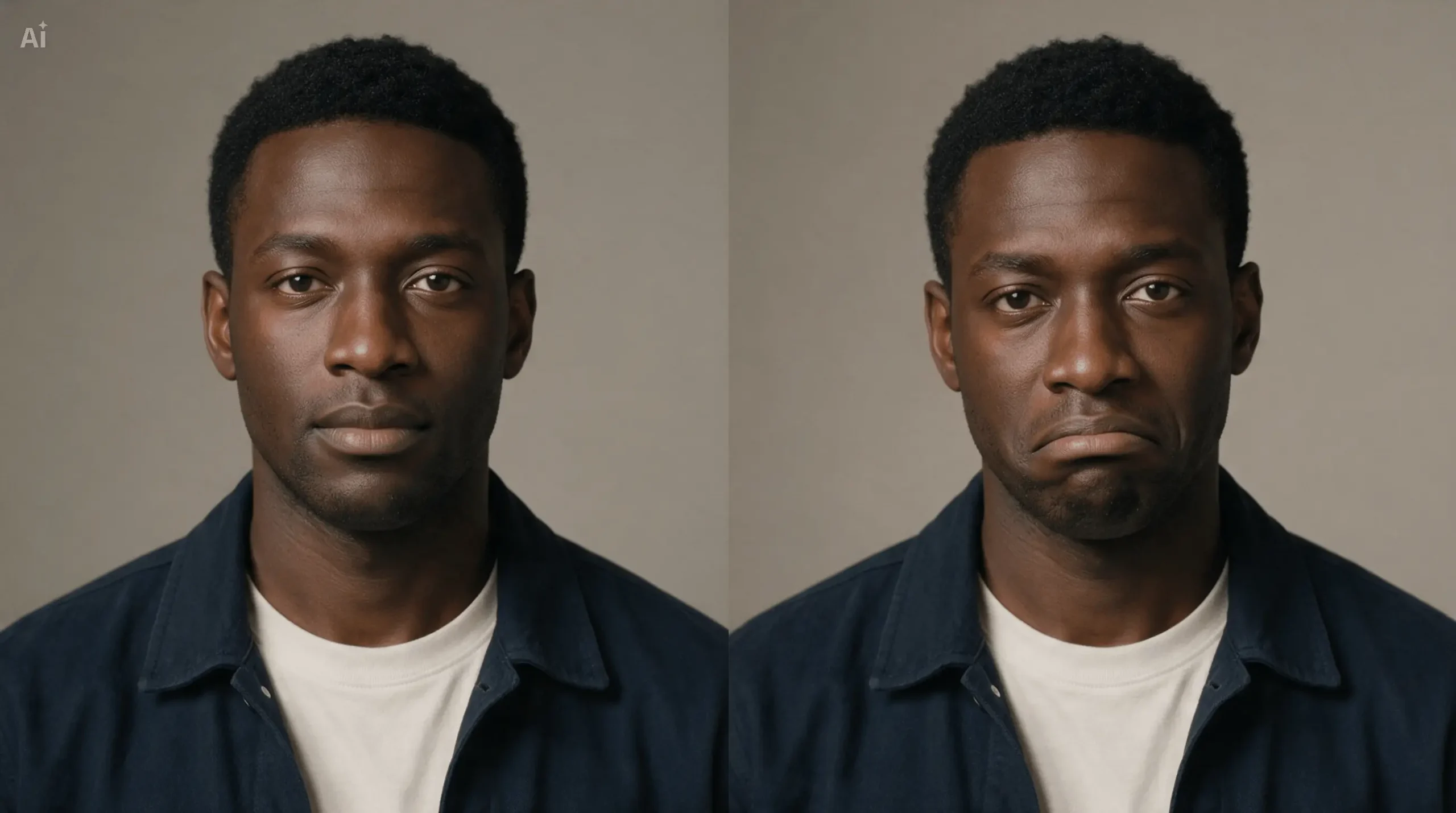


Photography has turned out to be a huge component of daily communication, digital. Photos and videos are used by people to share memories, express their personalities, and stay in touch with friends on social media. Producing engaging visual content is now more than ever simpler with the advancement of photo-editing technology. The latest editing devices enable them to manipulate color, enhance lighting, add creative effects, and edit facial expressions without the need of professional photography knowledge.
A common example is the frown filter which is a filter that modifies the facial expression of a person to make it look more serious, sad or displeased. Such an effect shows that the technology of facial editing can transform an average selfie into something amusing, expressive, or unexpected. Expression-based filters provide individuals with novel methods of conveying feelings via online pictures whether it’s entertainment, social media posts or creative experiments.
The Growing Popularity of Photo Filters
Photo filters have been developed considerably during the last 10 years. The initial editing programs were primarily concerned with the basic manipulation of the brightness, contrast, and color tone. Nowadays, facial recognition and artificial intelligence are utilized in numerous applications to add effects directly to the face of a person.
These characteristics have enabled digital editing to reach a larger audience. People do not require high level software or technical knowledge to produce interesting photos. They can also just tap a few times and get to experiment with various appearances and generate content that is within their own style.
This growth has also been facilitated by social media. Selfies, short videos and reaction images tend to be based on visual effects to generate attention. The filters enable creators to create engaging content, as well as, provide regular moments with a more unique look.
How Facial Recognition Technology Works
A lot of contemporary facial filters are based on facial recognition software. This system distinguishes significant features on the face of a person, such as eyes, eyebrows, nose, lips and jawline. The software takes these points to know the location and shape of the face.
After detecting the face, the application is able to add an effect to areas of choice. An example is a filter could alter the placement of eyebrows, the corners of the mouth, or other facial features to produce a different expression.
These changes can be made more natural using some sophisticated tools that rely on machine learning. They are capable of changing effects with various lighting, head location, and facial shapes. The real time processing also enables filters to track facial movements when the individual is recording a video.
Though the technologies may give convincing results, the quality of an effect is based on the software, image resolution and the conditions of lighting.
Creative Ways to Use Face Filters
Face filters offer more than simple entertainment. When wisely utilized, they can aid a variety of digital creativity.
1. Making Social Media Engaging.
Artists also tend to employ visual effects to make their post more entertaining. A surprise face can transform an ordinary selfie into a funny reaction picture or a video with a definite funny intent.
These influences are also capable of assisting creators to come up with a recognizable style. They can create unique content using filters, colors and compositions without having to spend a lot of money to get the desired effect.
2. Inserting Humor into Ordinary Photos.
One of the most frequent occasions that make people play with facial effects is humor. An otherwise ordinary photograph can be altered to appear unexpected or over-the-top.
These effects could be used by friends in informal communications, group photos, or video clips. In the case where the effect is equal to the situation, it may serve to convey a joke or emotion better than text.
3. Exploring Digital Self-Expression
Personality and mood can also be conveyed through photography. The filters enable the user to play with various visual identities, and to experiment with how facial expressions can alter the meaning of an image.
There are those who like minor upgrades and those ones who like drastic changes. Both can be applicable to the personal projects in case people are aware that edited pictures might not reflect their natural look.
4. Supporting Creative Projects
Facial effects can now be added to the visual narrative by digital artists, bloggers, and content creators. An expression shift can be used to define the mood of a character, describe a response, or provide some diversity to a series of images.
Used in conjunction with other elements like lighting, backgrounds, and captions, filters can be integrated into a larger creative idea and not a single effect.
Tips for Getting Better Results
Most of the filters are user-friendly, however, there are some practical methods that can enhance the end product.
– Select proper lighting: Soft and even lighting assists facial recognition software to recognize features more precisely.
– Maintain the face: Do not conceal any significant parts of the face with hands, hair, or objects in applying effects based on expression.
– Try the angles: Only a slight variation in head position can make a difference in the appearance of a filter.
– Thin effects sparingly: Drastic transformations can be appealing to the eye but more delicate changes can yield more believable effects.
– Review the final image: Look at the final photo before posting it to ensure that the effect is correct and does not produce undesired distortions.
Faces can be handled differently by different applications and therefore experimentation can help the user to find out which result can be useful.
Privacy and Responsible Photo Editing
With the development of more advanced facial editing tools, more attention should be paid to privacy. Certain applications can process images on a device itself, whereas others might need users to upload pictures to servers on the Internet. It can be useful to grasp the way an application processes images to make well-informed choices.
Read the privacy policies and permissions of the application before posting personal pictures. Do not post sensitive photos with third party services, and think over whether an edited photo contains other individuals who did not give their consent to be published.
Creative editing and misleading representation are also important to differentiate. Filters can be quite harmless in case of entertainment, but by offering highly distorted photographs as valid evidence, confusion may arise. Honesty in significant edits is crucial in keeping the audiences trustful.
The Future of AI-Powered Photo Editing
AI keeps on enhancing the digital photography capabilities. Modern technology is able to detect facial expressions with greater accuracy, in real time effects, and create edits that are less artificial when merged with the original picture.
The future usage can provide more customized controls, where individual facial features can be adjusted, whilst the lighting and image quality stays the same. Video editing can also be more adaptable and the effects can react well to changing expressions and camera angles.
Nonetheless, the technical advances will not eradicate the significance of imagination and discretion. One of the elements of a successful image is a filter. The way the photograph is composed, taken, the context, and the message behind the photo are also equally significant.
Conclusion
Face filters have revolutionized digital photography by simplifying, making visual experimentation more accessible, and enjoyable. Humorous self-photos to inventive social media initiatives, these applications assist individuals in expressing feelings and creating unique visual language.
Learning the principles of facial recognition technology, selecting the right effects and adhering to the basic privacy rules would enable the users to utilize those technologies more effectively. With AI-based editing still in its infancy, expression-based filters will still be an exciting example of how technology can help introduce new opportunities into daily creativity.



