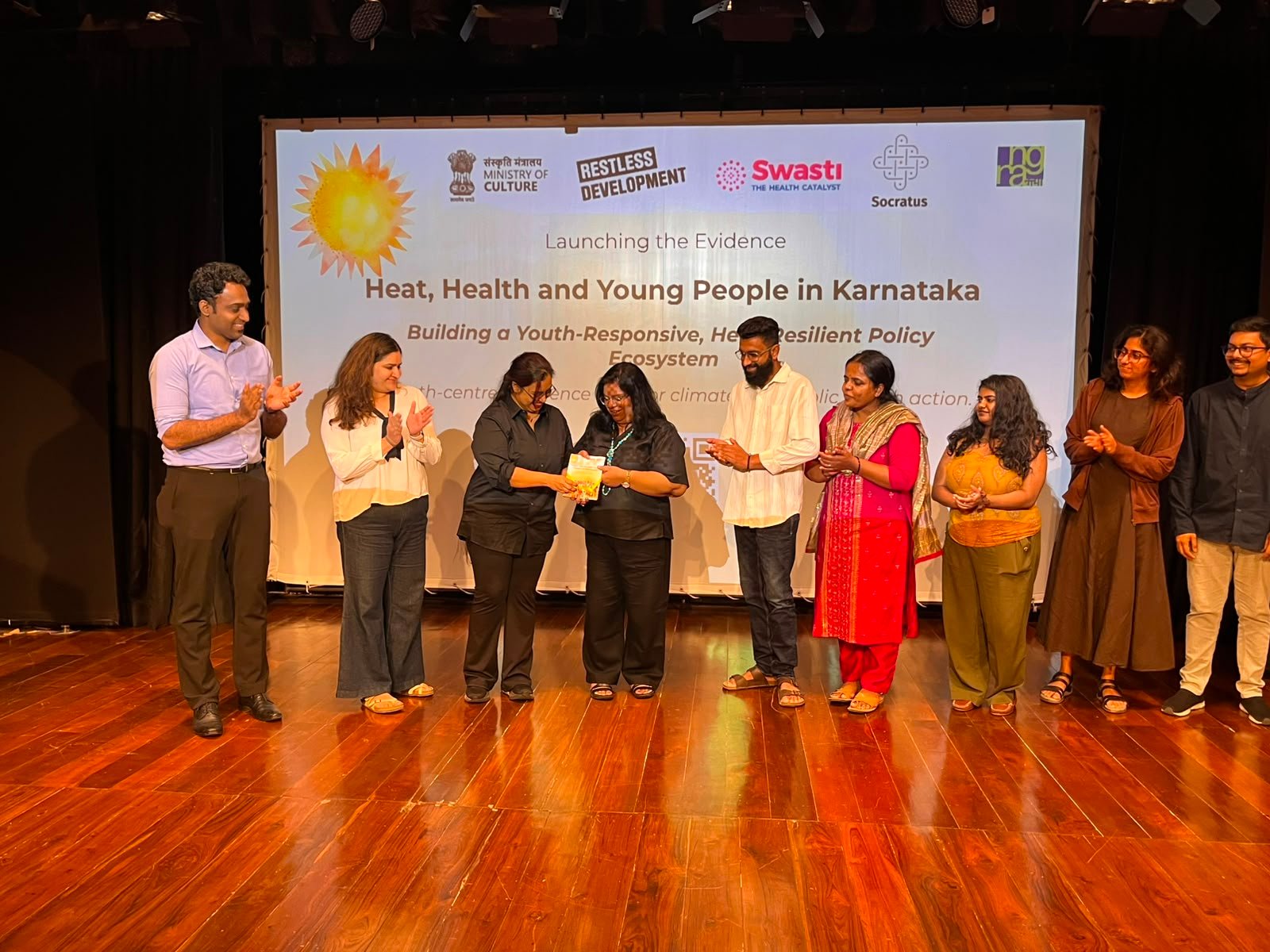


Restless Development and Swasti Launch Evidence Paper Calling for a Youth-Responsive Heat-Resilient Policy Ecosystem in Karnataka
BENGALURU (India CSR): Restless Development, in partnership with Swasti, launched Heat, Health and Young People in Karnataka: Building a Youth-Responsive, Heat-Resilient Policy Ecosystem, an evidence paper that examines how rising temperatures are reshaping the lives of young people across Karnataka. Bringing together insights from research, lived experiences, expert perspectives, and youth-led consultations, the report calls for climate and public health responses that place young people at the centre of planning, decision-making, and action.
Heat is no longer an isolated environmental concern. Across Karnataka, rising temperatures are increasingly affecting physical and mental health, education, livelihoods, mobility and everyday wellbeing, particularly for young people navigating a critical stage of life. The report finds that heat acts as a risk multiplier, amplifying existing inequalities linked to occupation, housing, water access, infrastructure and geography. Yet, despite experiencing these impacts most directly, young people remain largely absent from climate and heat governance processes.
The evidence paper responds to this gap through a mixed-methods, youth-centred approach that combines an interdisciplinary literature review with qualitative listening exercises across four socio-ecological settings in Karnataka (urban, coastal, tribal, and arid agrarian regions). The research also incorporates expert consultations and a youth co-design workshop, creating a comprehensive evidence base that reflects both scientific understanding and lived realities. Rather than portraying young people solely as vulnerable populations, the report recognises them as knowledge holders, community responders, and essential partners in building resilience.
New research highlights how rising temperatures are affecting young people’s health, livelihoods and wellbeing, while positioning youth as partners in shaping climate and public health policy.
“Young people are among those experiencing the impacts of rising heat most acutely, yet their voices are often missing from the conversations that shape climate action. This evidence paper demonstrates that young people are not only adapting to these challenges but also bringing valuable knowledge, lived experience, and solutions to the table. We hope these findings encourage greater investment in youth leadership and more meaningful participation in building climate-resilient communities across Karnataka.” says Nalini Nupur Paul, Regional Director, Restless Development.
The report proposes a youth-responsive, heat-resilient policy ecosystem that is for, of, and by young people, encouraging greater integration of youth perspectives across health, education, labour, urban planning, and climate governance. It also highlights the importance of place-based solutions that respond to Karnataka’s diverse ecological contexts while strengthening collaboration between government, civil society, academia, and young people themselves.
The evidence paper was launched at the National Gallery of Modern Art, Bengaluru. The convening brought together representatives from government, academia, civil society, youth networks, and development organisations, and featured a guided walkthrough of the Heat Experience Centre, a short film documenting the research journey, presentations of key findings and a youth voices panel discussion.
“Heat is a growing public health and development challenge that affects how young people learn, work, travel, and thrive. By combining scientific evidence with lived experiences from across Karnataka, this report highlights the need for systems and policies that are responsive to diverse local realities and grounded in young people’s perspectives. We hope it serves as a catalyst for stronger collaboration across sectors to build a healthier, more resilient future.” says Shrirupa Sengupta, CEO, Swasti.
The report will now be disseminated through policy dialogues, academic engagements, and partner networks to support evidence-informed action towards a more heat-resilient Karnataka.