

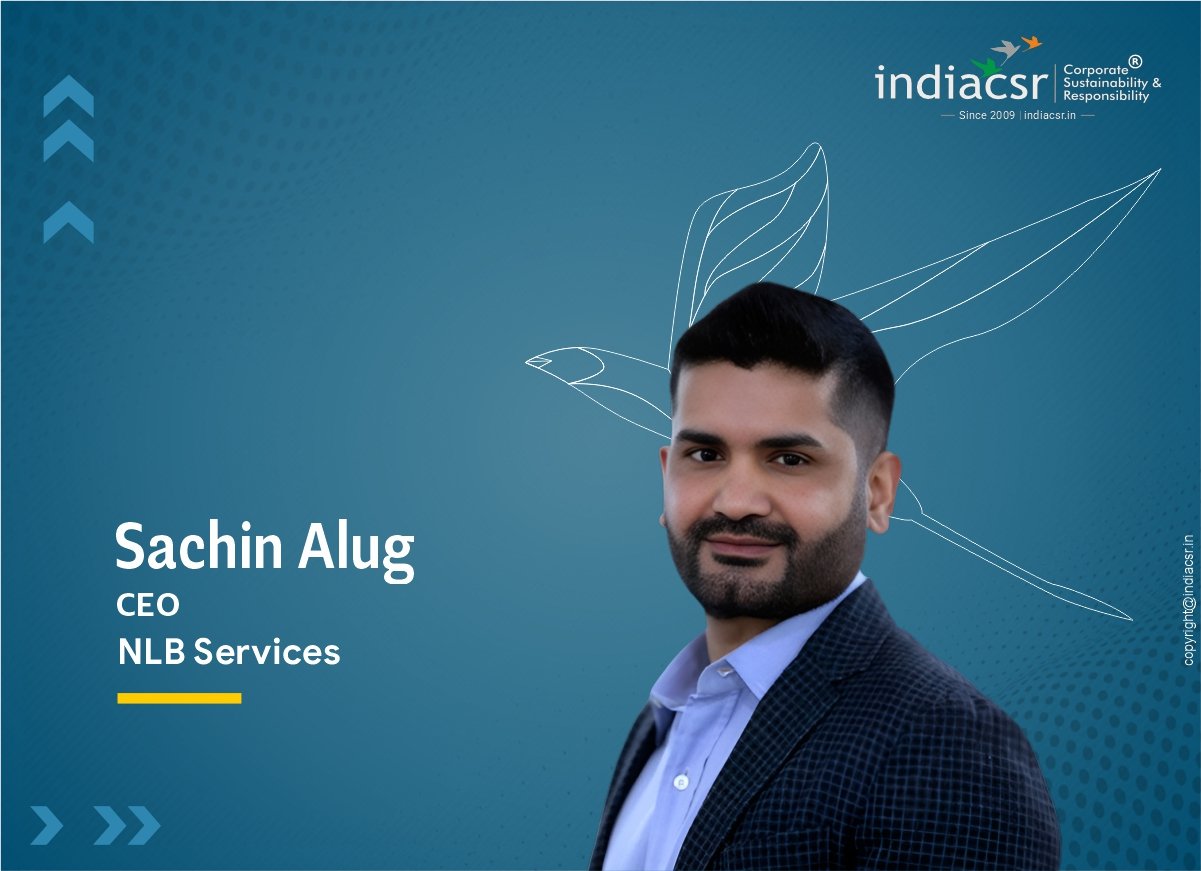


Sachin Alug, CEO of NLB Services, shares his perspective on the evolving workforce landscape and the role of talent solutions in shaping future-ready businesses.
By Sachin Alug
For years, the ESG conversation has been dominated by carbon targets, renewable energy investments, and the race toward net zero. The next era of business sustainability will not be defined solely by carbon reduction targets or environmental commitments. It will be determined by an organization’s ability to build a workforce capable of adapting, learning, and thriving amid relentless change.
The reality is that an organization’s ability to adapt may soon matter as much as its ability to decarbonize. While businesses continue to make significant progress on environmental commitments, the next frontier of ESG lies in building workforces that can continuously evolve alongside technological, environmental, and economic change. In an era where disruption is constant rather than occasional, workforce resilience is rapidly becoming one of the strongest indicators of long-term business sustainability.
Resilience has evolved beyond crisis recovery
Traditionally, resilience was viewed through the lens of crisis management. Businesses focused on recovering from disruptions such as economic downturns, natural disasters, or public health emergencies. However, the nature of disruption itself has changed. Instead of isolated events, organizations now face constant and overlapping transformations.
As a result, resilience must evolve from a reactive capability to a continuous organizational competency. The question is no longer whether change will occur, but how effectively organizations can adapt to it.
The dual disruption of AI and Climate Transition
The dual disruption of AI and the climate transition highlight why workforce resilience has become a strategic imperative. Artificial intelligence is expected to transform millions of jobs globally. While some roles may disappear, many more will be redesigned, requiring entirely new skill sets. Simultaneously, the transition to a low-carbon economy is creating demand for green jobs while reshaping workforce requirements across industries.
These changes are not only redefining the nature of work but also influencing where and how work gets done. Organizations must therefore prepare employees to navigate both technological and environmental shifts simultaneously.
Reskilling and lifelong Learning are no longer optional
In this environment, reskilling and lifelong learning are no longer employee development initiatives – they are business imperatives. Companies that invest consistently in learning ecosystems will be better positioned to respond to future disruptions. The most successful organizations will move beyond periodic training programs and create cultures where continuous learning becomes embedded in everyday work.
Building agile workforce ecosystems
Workforce resilience is not solely about individual capability. It also requires organizations to rethink how talent is sourced, deployed, and developed. Leading organizations are increasingly building agile workforce ecosystems that combine full-time employees, contingent talent, project-based specialists, and technology-enabled capabilities. Such models provide the flexibility needed to respond quickly to changing market demands, emerging skills gaps, and environmental disruptions.
Making workforce resilience an ESG metric
As ESG frameworks mature, workforce resilience should become a measurable indicator rather than an aspirational concept. Investors increasingly recognize that human capital performance directly influences long-term business value. Metrics such as reskilling participation, workforce adaptability, internal mobility, employee wellbeing, leadership readiness, and future-skills preparedness can offer meaningful insights into an organization’s resilience capacity.
Human Capital and Sustainability must converge
Perhaps the most important shift required is the integration of human capital strategy with sustainability strategy. Too often, organizations pursue workforce planning and ESG goals separately. Yet every sustainability ambition – from achieving climate targets to accelerating digital transformation – depends on people with the right skills and capabilities. Human capital and sustainability strategies must therefore be designed together, not in parallel. Organizations that align these priorities will be better positioned to drive innovation, strengthen competitiveness, and create lasting value.
The future of ESG is human-centered
As we observe World Environment Day, it is worth recognizing that sustainability is ultimately about creating systems that endure. Businesses have made important strides toward net-zero ambitions, but environmental commitments alone will not define future success. The organizations that lead in the coming decade will be those that invest as deeply in human resilience as they do in environmental stewardship. Workforce resilience is no longer a supporting pillar of sustainability – it is becoming one of its defining measures.
The Author: Sachin Alug, CEO, NLB Services, one of the fastest-growing global technology and digital talent solutions providers.



