


• India CSR Awards 2025
  • India CSR Leadership Summit
  • Guest Posts
Monday, May 4, 2026
India CSR
  • Home
  • Corporate Social Responsibility
    • Art & Culture
    • CSR Leaders
    • Child Rights
    • Culture
    • Education
    • Gender Equality
    • Around the World
    • Skill Development
    • Safety
    • Covid-19
    • Safe Food For All
  • Sustainability
    • Sustainability Dialogues
    • Sustainability Knowledge Series
    • Plastics
    • Sustainable Development Goals
    • ESG
    • Circular Economy
    • BRSR
  • Corporate Governance
    • Diversity & Inclusion
  • Interviews
  • SDGs
    • No Poverty
    • Zero Hunger
    • Good Health & Well-Being
    • Quality Education
    • Gender Equality
    • Clean Water & Sanitation – SDG 6
    • Affordable & Clean Energy
    • Decent Work & Economic Growth
    • Industry, Innovation & Infrastructure
    • Reduced Inequalities
    • Sustainable Cities & Communities
    • Responsible Consumption & Production
    • Climate Action
    • Life Below Water
    • Life on Land
    • Peace, Justice & Strong Institutions
    • Partnerships for the Goals
  • Articles
  • Events
  • हिंदी
  • More
    • Business
    • Finance
    • Environment
    • Economy
    • Health
    • Around the World
    • Social Sector Leaders
    • Social Entrepreneurship
    • Trending News
      • Important Days
        • Festivals
      • Great People
      • Product Review
      • International
      • Sports
      • Entertainment
    • Case Studies
    • Philanthropy
    • Biography
    • Technology
    • Lifestyle
    • Sports
    • Gaming
    • Knowledge
    • Home Improvement
    • Words Power
    • Chief Ministers
No Result
View All Result
  • Home
  • Corporate Social Responsibility
    • Art & Culture
    • CSR Leaders
    • Child Rights
    • Culture
    • Education
    • Gender Equality
    • Around the World
    • Skill Development
    • Safety
    • Covid-19
    • Safe Food For All
  • Sustainability
    • Sustainability Dialogues
    • Sustainability Knowledge Series
    • Plastics
    • Sustainable Development Goals
    • ESG
    • Circular Economy
    • BRSR
  • Corporate Governance
    • Diversity & Inclusion
  • Interviews
  • SDGs
    • No Poverty
    • Zero Hunger
    • Good Health & Well-Being
    • Quality Education
    • Gender Equality
    • Clean Water & Sanitation – SDG 6
    • Affordable & Clean Energy
    • Decent Work & Economic Growth
    • Industry, Innovation & Infrastructure
    • Reduced Inequalities
    • Sustainable Cities & Communities
    • Responsible Consumption & Production
    • Climate Action
    • Life Below Water
    • Life on Land
    • Peace, Justice & Strong Institutions
    • Partnerships for the Goals
  • Articles
  • Events
  • हिंदी
  • More
    • Business
    • Finance
    • Environment
    • Economy
    • Health
    • Around the World
    • Social Sector Leaders
    • Social Entrepreneurship
    • Trending News
      • Important Days
        • Festivals
      • Great People
      • Product Review
      • International
      • Sports
      • Entertainment
    • Case Studies
    • Philanthropy
    • Biography
    • Technology
    • Lifestyle
    • Sports
    • Gaming
    • Knowledge
    • Home Improvement
    • Words Power
    • Chief Ministers
No Result
View All Result
India CSR
No Result
View All Result
Home Sustainability ESG

ESG Reporting: Next big themes are standardisation of disclosures and decarbonisation

Government and regulators lead the way - India is slowly, but surely, taking bold steps to foster the ESG ecosystem. Some of the recent measures are highlighted below.

India CSR by India CSR
June 3, 2022
in ESG, Sustainability
Reading Time: 6 mins read
India CSR
Share Share Share Share
18th CSR Leadership Summit 2026
ADVERTISEMENT
WhatsApp icon
WhatsApp — Join Us
Instant updates & community
Google News icon
Google News — Follow Us
Get our articles in Google News feed

Budget 2022

The budget for fiscal 2023 proposed to issue the first sovereign green bond of Rs 24,000 crore to fund public sector projects, with a view to transforming India to a low-carbon economy. This would also provide a fillip to the development of the sustainable finance market in India.
Admissions Open for BBA in CSR, Sustainability and ESG

Business Responsibility and Sustainability Report (BRSR)

The Securities and Exchange Board of India (SEBI) has introduced the BRSR and mandated disclosure of non-financial information for the top 1,000 listed corporates from this fiscal onwards. Even so, corporates have already been voluntarily adopting it and disclosing ESG-related data to adhere to market requirements.

SEBI also released a consultation paper on October 26, 2021, to introduce disclosure norms for ESG mutual fund schemes, including transparency on the schemes’ ESG-related investment objectives, periodic portfolio disclosures, and the need to monitor and evaluate investments. Recently, SEBI came up with a consultation paper on ESG rating providers, to ensure regulatory oversight for the assessments that have a potential to impact the flow of funds.

Central bank’s climate thrust

The Reserve Bank of India (RBI), in its statement on developmental and regulatory policies, has highlighted the need for all financial institutions, including banks and non-banking financial companies, to develop and implement processes to understand and assess the potential impact of climate- related financial risks.

Clean energy targets

The central government has announced a 300 GW target for solar by 2030. To promote clean energy, domestic module manufacturers have been incentivised under the Production-Linked Incentive (PLI) scheme. The same is also in the works for hydrogen electrolysers. The budget also gave infrastructure status to battery storage. Further, the strong push for EV adoption, infrastructure development, standardisation and interoperability of batteries supports the overall EV ecosystem.

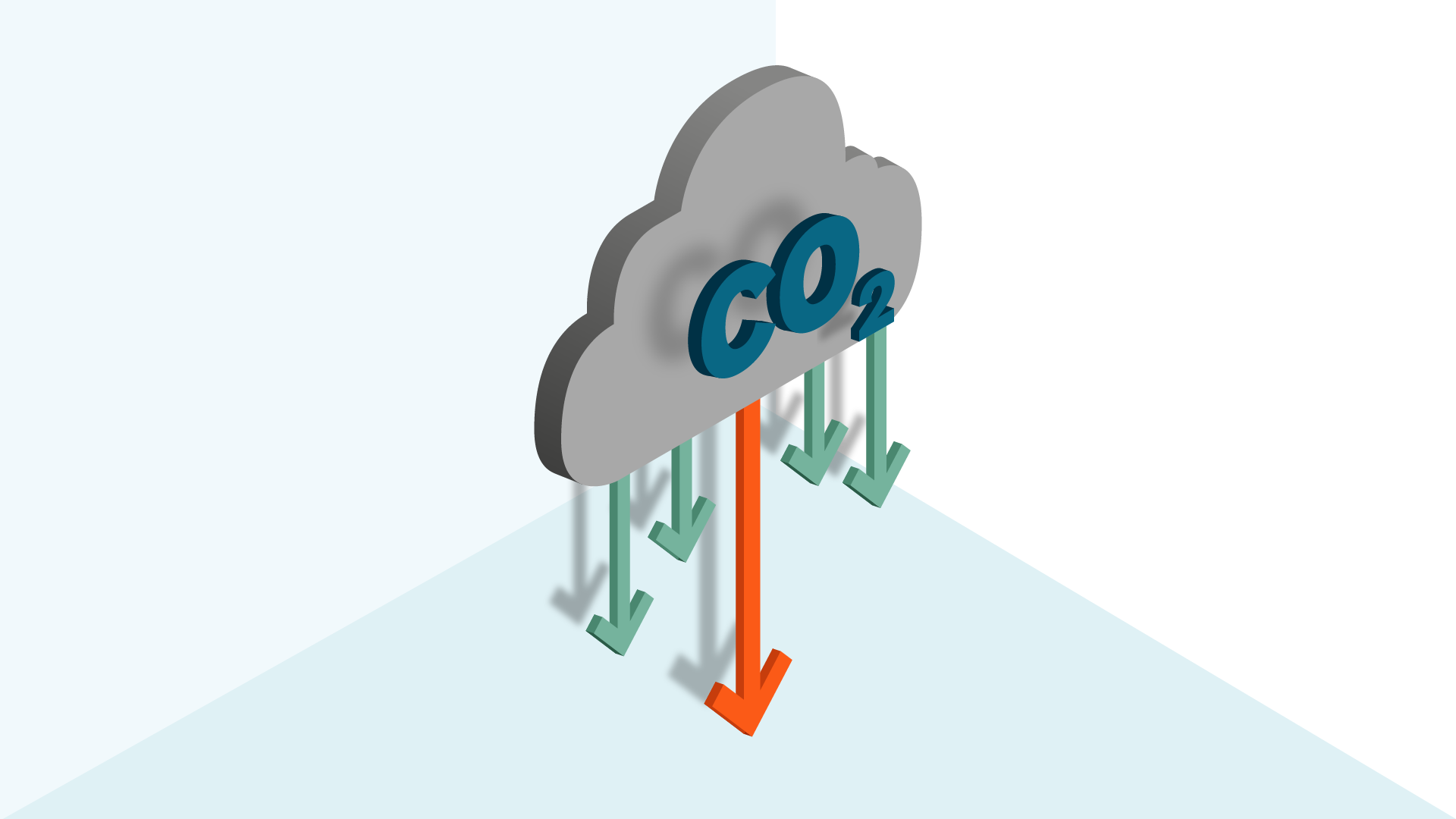
At 3,400 million tonne CO2 equivalent, India was the third-largest polluting country in 2021, just behind China and the US. While 50% of emissions are energy-linked globally, it is even higher at 57% in India. What makes matters worse is that captive power plants have a higher share in India vis-a-vis globally.

Until now, most regulations and government efforts have focused on the power and transportation sectors. However, attention is shifting to the manufacturing sector. To be sure, a large number of industrial players have announced emission targets. A number of oil and gas majors have planned investments in green hydrogen and renewables. But, we need a leap in innovation to complete industrial decarbonisation.

Industrial emissions demand attention as India targets higher share of manufacturing in GDP

Industrial emission has logged a CAGR of over 8% since 2005 and could shoot up as the PLI scheme and sharper government focus lift the share of manufacturing sector in GDP to 25% by 2030 — as per the government target — from ~17% currently.

The share of industrial segments in power consumption is currently estimated at 20% and its contribution to emissions at 19% — excluding grid power supplied for industrial purposes. Including industrial grid power, the number would be close to 30%.

The top two sectors — steel and cement alone — are estimated to account for ~45% of the total industrial emissions (excluding grid-supplied power). A further deep dive indicates that with rising consolidation in both these sectors larger players contribute to a bulk share. This implies commitments from a few players can make a difference.

Regulations must focus on stringent monitoring of early stages so that apt benchmarks can be enabled

The Central Pollution Control Board (CPCB) continues to be the central nodal agency under the Ministry of Environment for notifying regulations in the sector. Emission control involves: a) tracking pollution data at the unit level online, b) assessing the percentage of current compliance standards met, and c) mapping intensities and efficiencies across sectors with global benchmarks to provide a quicker solution by resource efficiency techniques at the optimisation stage.

However, implementation of stage 1 remains poor. Equipment for continuous monitoring of unit-level GHG emissions are not certified by Indian entities and data collection remains opaque. Until appropriate benchmarks are established using online continuous emission monitoring (OCEMS) equipment, monitoring and implementation will remain weak. In an April 2021 order, the National Green Tribunal mandated data from OCEMS to be made available. This was on the back of evidence that out of 32 state pollution control boards, more than half did not have online portals disclosing emission data of industrial units in their jurisdiction. Of the 16 states that have complied with the Supreme Court judgement on industrial emissions data, only 38% allow users to access and assess historical data.

At 3,400 million tonne CO2 equivalent, India was the third-largest polluting country in 2021, just behind China and the US. While 50% of emissions are energy-linked globally, it is even higher at 57% in India. What makes matters worse is that captive power plants have a higher share in India vis-a-vis globally.

Until now, most regulations and government efforts have focused on the power and transportation sectors. However, attention is shifting to the manufacturing sector. To be sure, a large number of industrial players have announced emission targets. A number of oil and gas majors have planned investments in green hydrogen and renewables. But, we need a leap in innovation to complete industrial decarbonisation.

Mitigating industrial emissions requires significant scale of investments and planning

Industrial emissions are unique because:

1. They are concentrated in fewer sectors – a handful contribute to 90% of total industrial emissions

2. They emit a higher intensity of non-CO2 gases, accounting for a larger proportion of SOx, NOx, mercury and methane emissions. These gases are hard to abate, and hence, need large investments

Moreover, significant investments are needed to achieve scalability. For instance, if 111 million tonne per annum of India’s crude steel production has to be moved to green hydrogen, ~50% of the targeted 500 GW of 2030 renewable energy (RE) capacity would need to be dedicated to green hydrogen production.

All this also calls for rationalisation of technologies and use of other critical resources. For example, 86% of global thermal power plants use wet flue-gas desulfurisation (FGD), a process that needs relatively more water. Hence, India may need to opt for semi-dry FGD for its thermal power plants.

Large players will play a crucial role in driving scale for lower GHG and particulate matter emissions in India.

Here, we look at a few sectors to understand how India aims to traverse the next 7-8 years in its efforts in energy optimisation. From a regulatory standpoint, while there are guidelines focusing mainly on improving efficiency levels across sectors using the Perform Achieve and Trade (PAT) scheme, the government may soon make transition to green hydrogen compulsory for a certain share in production for key industrial sectors. The quantum and kind of incentives for this transition will be crucial to enable break-even at matching cost of existing technologies.

Improving efficiency to gain significant traction

The second stage of resource efficiency also remains weak, given that the right benchmarks for Indian plants are not yet available. Further, to assess sectors where emissions are hard-to-abate, incentives for R&D would be needed for setting up Net Zero pathways. Sectors that are consolidated with larger players are better off than smaller unorganised units. That said, in areas such as thermal power, where the emission intensity of Indian plants as well as coal efficiency are below international standards, implementation of even preliminary technologies such as FGD can make a huge difference.

While overall CO2 emission remains in focus, a large percentage of other gases released are concentrated in industrial units. To be sure, over 50% of SO2, NOx and mercury emissions come from thermal power plants.

Effective retrofit processes such as FGD can reduce these emissions substantially with better efficiency and conversion of SO2 into calcium sulphate using limestone remains the area with the highest focus on optimisation in the second stage.

Commitments of larger players amid ESG focus to drive investments for deep decarbonisation

The third stage involves investment in new technologies for deep decarbonisation for hard-to-abate sectors. This will be a gradual process and may become relevant once the first two stages have been completed. However, investments and R&D will enable testing newer areas to improve the chances of shortlisting the right technology from an Indian perspective and drive focus on lowering the cost for faster adoption.

(Source: Crisil Report 2022)

Photo Source: European Commission announces hydrogen and gas market decarbonisation plans – Osborne Clarke | Osborne Clarke

18th CSR Leadership Summit 2026
ADVERTISEMENT
Ambedkar Chamber
ADVERTISEMENT
ESG Professional Network
ADVERTISEMENT
India Sustainability Awards 2026
ADVERTISEMENT
India CSR Image 1 India CSR Image 2
Tags: ESG Reporting

India CSR Day CSR, Sustainability, and ESG success stories hindustan zinc
ADVERTISEMENT
India CSR

India CSR

India CSR is the largest media on CSR and sustainability offering diverse content across multisectoral issues on business responsibility. It covers Sustainable Development, Corporate Social Responsibility (CSR), Sustainability, and related issues in India. Founded in 2009, the organisation aspires to become a globally admired media that offers valuable information to its readers through responsible reporting.

Related Posts

ESG: India CSR
ESG

Sigenergy Releases 2025 Environmental, Social, and Governance (ESG) Report

Hitachi Vantara
Sustainability

Hitachi Vantara FY25 Sustainability Report Highlights Energy-Efficient AI Systems

Balancing Modern Luxury with Environmental Responsibility
Sustainability

Balancing Modern Luxury with Environmental Responsibility

Varroc Reaffirms Commitment to Kham River Restoration and Sustainability on World Earth Day
Sustainability

Varroc Reaffirms Commitment to Kham River Restoration and Sustainability on World Earth Day

PepsiCo India Boosts Water Security, Restores 1.48 Billion Litres
Sustainability

PepsiCo India Boosts Water Security, Restores 1.48 Billion Litres

DBS Sustainability Report
Sustainability

DBS Bank’s Sustainable Financing Reaches SGD 102 billion in 2025, Up 14% Year-on-Year

Load More
18th CSR Leadership Summit 2026
ADVERTISEMENT
BBA - CSR, Sustainability and ESG, Rungta International Skills University Bhilai
ADVERTISEMENT

LATEST NEWS

CSR: Hoops4Hope Unites 100+ Underprivileged Kids for Basketball in Mumbai

Madhya Pradesh: Outrage as Baiga Tribal Man Brutally Beaten by Coal India – NCL Staff; 2 Under Arrest

Billionaires for Peace Conclave to Bring 5 Nobel Peace Laureates to Mumbai on 21 May 2026

Chatterjee National CSR Fellowship Announced to Promote Research and Thought Leadership in CSR

CSR: SAIL Bhilai Steel Plant Reinforces Rural Development Push in Chhattisgarh

Sigenergy Releases 2025 Environmental, Social, and Governance (ESG) Report

Ambedkar Chamber
ADVERTISEMENT

TOP NEWS

CSR: Vedanta Power Arogya Project Reaches 1,500 in Chhattisgarh

Nurture Counseling Brings Multilingual Mental Wellness Access to Individuals, Workplaces, and Campuses Across India

Michael James Burke Strengthens Dubai’s Financial Advisory Industry with Great Leadership

Talent Skillsvarsity Partners with FundEnable to Launch PGDM – IX Venture Studio, Redefining Management Education with Intrapreneurial Skills

What are the Benefits of Critical Health Insurance in Serious Illness Cases?

CSR: Xiaomi to Support 1,000+ Women Entrepreneurs via JeevikaSaathi+ in Rajasthan

Load More
India Sustainability Awards 2026
ADVERTISEMENT
Ad 1 Ad 2 Ad 3
ADVERTISEMENT
Economy India Largest Media on Indian Economy and Business
ADVERTISEMENT

Interviews

R. Pavithra Kumar, CEO, JSW Foundation
Interviews

Redefining CSR and Driving Sustainable Social Impact: An Interview with R. Pavithra Kumar of JSW Foundation

by Rusen Kumar

Exploring impact-driven CSR models focused on skilling, sustainability, and inclusive growth

Read moreDetails
Jyoti Sagar, Founder Trustee, Genesis Foundation

Interview: Jyoti Sagar on 25 Years of Saving Young Lives at Genesis Foundation

Satish Singh, Chief People Officer at PNB Housing Finance

Interview: Satish Singh on ESG Leadership and CSR Impact at PNB Housing Finance

Ajeet Kumar Singh, Co-Founder and Managing Director of SAVE Solutions

Driving Financial Inclusion: Ajeet Kumar Singh on SAVE Solutions’ Growth Journey

Load More
ESG Professional Network
ADVERTISEMENT
STEM Learning STEM Learning STEM Learning
ADVERTISEMENT
Facebook Twitter Youtube LinkedIn Instagram
India CSR Logo

India CSR is the largest tech-led platform for information on CSR and sustainability in India offering diverse content across multisectoral issues. It covers Sustainable Development, Corporate Social Responsibility (CSR), Sustainability, and related issues in India. Founded in 2009, the organisation aspires to become a globally admired media that offers valuable information to its readers through responsible reporting. To enjoy the premium services, we invite you to partner with us.

Follow us on social media:


Dear Valued Reader

India CSR is a free media platform that provides up-to-date information on CSR, Sustainability, ESG, and SDGs. We need reader support to continue delivering honest news. Donations of any amount are appreciated.

Help save India CSR.

Donate Now

Donate at India CSR

  • About India CSR
  • Team
  • India CSR Awards 2026
  • India CSR Leadership Summit
  • Partnership
  • Guest Posts
  • Services
  • ESG Professional Network
  • Content Writing Services
  • Business Information
  • Contact
  • Privacy Policy
  • Terms of Use
  • Donate

Copyright © 2026 - India CSR | All Rights Reserved

18th CSR Leadership Summit 2026
Register Now
No Result
View All Result
  • Home
  • Corporate Social Responsibility
    • Art & Culture
    • CSR Leaders
    • Child Rights
    • Culture
    • Education
    • Gender Equality
    • Around the World
    • Skill Development
    • Safety
    • Covid-19
    • Safe Food For All
  • Sustainability
    • Sustainability Dialogues
    • Sustainability Knowledge Series
    • Plastics
    • Sustainable Development Goals
    • ESG
    • Circular Economy
    • BRSR
  • Corporate Governance
    • Diversity & Inclusion
  • Interviews
  • SDGs
    • No Poverty
    • Zero Hunger
    • Good Health & Well-Being
    • Quality Education
    • Gender Equality
    • Clean Water & Sanitation – SDG 6
    • Affordable & Clean Energy
    • Decent Work & Economic Growth
    • Industry, Innovation & Infrastructure
    • Reduced Inequalities
    • Sustainable Cities & Communities
    • Responsible Consumption & Production
    • Climate Action
    • Life Below Water
    • Life on Land
    • Peace, Justice & Strong Institutions
    • Partnerships for the Goals
  • Articles
  • Events
  • हिंदी
  • More
    • Business
    • Finance
    • Environment
    • Economy
    • Health
    • Around the World
    • Social Sector Leaders
    • Social Entrepreneurship
    • Trending News
      • Important Days
      • Great People
      • Product Review
      • International
      • Sports
      • Entertainment
    • Case Studies
    • Philanthropy
    • Biography
    • Technology
    • Lifestyle
    • Sports
    • Gaming
    • Knowledge
    • Home Improvement
    • Words Power
    • Chief Ministers

Copyright © 2026 - India CSR | All Rights Reserved

This website uses cookies. By continuing to use this website you are giving consent to cookies being used. Visit our Privacy and Cookie Policy.
