

• India CSR Awards 2026
  • India CSR Leadership Summit
  • Guest Posts
Wednesday, September 2, 2026
India CSR
  • Home
  • Corporate Social Responsibility
    • Art & Culture
    • CSR Leaders
    • Child Rights
    • Culture
    • Education
    • Gender Equality
    • Around the World
    • Skill Development
    • Safety
    • Covid-19
    • Safe Food For All
  • Sustainability
    • Sustainability Dialogues
    • Sustainability Knowledge Series
    • Plastics
    • Sustainable Development Goals
    • ESG
    • Circular Economy
    • BRSR
  • Corporate Governance
    • Diversity & Inclusion
  • Interviews
  • SDGs
    • No Poverty
    • Zero Hunger
    • Good Health & Well-Being
    • Quality Education
    • Gender Equality
    • Clean Water & Sanitation – SDG 6
    • Affordable & Clean Energy
    • Decent Work & Economic Growth
    • Industry, Innovation & Infrastructure
    • Reduced Inequalities
    • Sustainable Cities & Communities
    • Responsible Consumption & Production
    • Climate Action
    • Life Below Water
    • Life on Land
    • Peace, Justice & Strong Institutions
    • Partnerships for the Goals
  • Articles
  • Events
  • हिंदी
  • More
    • Business
    • Finance
    • Environment
    • Economy
    • Health
    • Around the World
    • Social Sector Leaders
    • Social Entrepreneurship
    • Trending News
      • Important Days
        • Festivals
      • Great People
      • Product Review
      • International
      • Sports
      • Entertainment
    • Case Studies
    • Philanthropy
    • Biography
    • Technology
    • Lifestyle
    • Sports
    • Gaming
    • Knowledge
    • Home Improvement
    • Words Power
    • Chief Ministers
No Result
View All Result
  • Home
  • Corporate Social Responsibility
    • Art & Culture
    • CSR Leaders
    • Child Rights
    • Culture
    • Education
    • Gender Equality
    • Around the World
    • Skill Development
    • Safety
    • Covid-19
    • Safe Food For All
  • Sustainability
    • Sustainability Dialogues
    • Sustainability Knowledge Series
    • Plastics
    • Sustainable Development Goals
    • ESG
    • Circular Economy
    • BRSR
  • Corporate Governance
    • Diversity & Inclusion
  • Interviews
  • SDGs
    • No Poverty
    • Zero Hunger
    • Good Health & Well-Being
    • Quality Education
    • Gender Equality
    • Clean Water & Sanitation – SDG 6
    • Affordable & Clean Energy
    • Decent Work & Economic Growth
    • Industry, Innovation & Infrastructure
    • Reduced Inequalities
    • Sustainable Cities & Communities
    • Responsible Consumption & Production
    • Climate Action
    • Life Below Water
    • Life on Land
    • Peace, Justice & Strong Institutions
    • Partnerships for the Goals
  • Articles
  • Events
  • हिंदी
  • More
    • Business
    • Finance
    • Environment
    • Economy
    • Health
    • Around the World
    • Social Sector Leaders
    • Social Entrepreneurship
    • Trending News
      • Important Days
        • Festivals
      • Great People
      • Product Review
      • International
      • Sports
      • Entertainment
    • Case Studies
    • Philanthropy
    • Biography
    • Technology
    • Lifestyle
    • Sports
    • Gaming
    • Knowledge
    • Home Improvement
    • Words Power
    • Chief Ministers
No Result
View All Result
India CSR
No Result
View All Result
Home Finance

A Comprehensive Guide to Types of Equity Funds and Selecting the Right Option

India CSR by India CSR
July 10, 2024
in Finance
Reading Time: 6 mins read
A Comprehensive Guide to Types of Equity Funds and Selecting the Right Option
Share Share Share Share
WhatsApp icon
WhatsApp — Join Us
Instant updates & community
Google News icon
Google News — Follow Us
Get our articles in Google News feed
india csr awards
ADVERTISEMENT

Equity mutual funds can be an effective way to build wealth over time. However, with so many types of equity funds available, choosing the right one can be challenging. This article helps you understand the different categories of equity funds, what kind of securities they invest in, and how to choose a suitable one for your financial goals.

What are equity funds?

Equity funds are mutual funds that invest in a diversified basket of company stocks. They offer higher growth potential than fixed-income investments and traditional savings avenues. These funds are managed by professional fund managers who decide which stocks to buy and sell based on market research and analysis.

This makes equity mutual funds accessible even to those who are not well-versed with the financial markets. Moreover, a Systematic Investment Plan (SIP) makes mutual fund investing affordable and convenient. Therefore, investors who seek inflation-beating growth potential in the long term and are willing to accept some market risk and volatility in exchange for that consider equity mutual funds. 
19th India CSR Leadership Summit 2026
ADVERTISEMENT

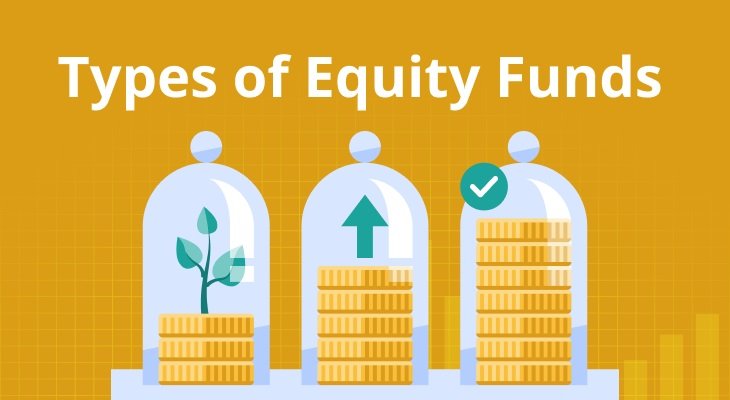
Types of equity funds

Here are the main types of equity mutual funds, as categorised by the Securities and Exchanges Board of India (SEBI):

Large cap funds: Large cap funds invest in the country’s biggest companies in terms of market capitalisation. The investment universe comprises companies ranked between 1 and 100 on the stock exchange. These are typically well-established companies with healthy financials and a strong track record. As a result, their stocks are typically less volatile than stocks of smaller companies. Such funds are suitable for investors who want the growth potential of equities but want to mitigate the impact of market volatility on their invested capital as compared to mid caps and small caps. 

Mid cap funds: Such funds invest in mid-sized companies that are ranked between 101 and 250 on the stock exchange. These are typically companies that in a phase of expansion, offering higher potential returns than large cap stocks, but with greater risk. This makes them suitable for investors with a high risk appetite and a long investment horizon that can potentially ride out short-term volatilities. 

Small cap funds: Small cap funds invest in companies ranked 251 and beyond on the stock exchange. They have the highest growth potential among market capitalisations, as they invest in companies that have the most room for expansion. However, this also makes small cap stocks vulnerable to greater risk and volatility. Therefore, small cap funds are suitable only for aggressive investors willing to take greater risks for potentially higher returns. Moreover, it is suitable for investors with a long investment horizon of 10 years or more. 

Large and mid cap funds: Such funds invest in both large and mid cap stocks, allocating at least 35% of their portfolio to each. Through this, they seek to combine the growth potential of mid cap funds with the relative stability of large cap stocks. This makes them suitable for investors seeking a balanced investment approach towards large cap and mid cap. 

Multi cap funds: Investors seeking to combine the growth potential of mid and small cap stocks with the relative stability of large cap stocks can consider multi cap funds. Such funds invest in companies across the market capitalisation spectrum, with a portfolio allocation of 25% each to large cap, mid cap and small cap stocks. This can enhance diversification and create a more balanced risk-reward profile than that of large, mid or small cap funds. 

Flexi cap funds: Similar to multi cap funds, flexi cap funds also invest across large cap, mid cap, and small cap stocks. However, the fund manager can freely adjust the portfolio allocation ratio based on market conditions. There is no minimum allocation requirement to any market capitalisation, so long as the portfolio maintains 65% equity exposure. This helps such funds dynamically alter their portfolio to capture growth opportunities while managing risks in different market scenarios. By including stocks of various market capitalisations, flexi cap funds aim to optimise return potential while mitigating the volatility associated with investing in a single category of stocks. Moreover, the flexibility to adjust the portfolio allocation allows the fund manager to increase exposure to high-performing market segments and reduce exposure to those experiencing volatility. 

Dividend yield funds: Such funds invest in companies with a high dividend yield, which is a measure of how much a company pays in dividends each year relative to its stock price. These potential dividends can help generate an income stream for investors. If reinvested, these dividends can enhance return potential by increasing the investment base. 

Value funds: Such funds invest in stocks that seem to be undervalued. The fund manager identifies and invests in stocks that are priced lower than their intrinsic value due to temporary issues or market overreactions. Such stocks typically belong to companies with strong fundamentals, such as high earnings, low debt, and robust cash flows. If the market recognises the worth of these stocks and brings them to their fair value, it can result in a potential price appreciation. However, such a strategy entails risk and requires patience and a long investment horizon. 

Contra funds: Such funds invest in stocks that are currently out of favour or are underperforming but have potential for a turnaround and for long-term growth. They are suitable for investors who find a contrarian investment style appealing and have a very high risk tolerance. 

Focused funds: These funds invest in a limited number of stocks, usually not more than 30. These are typically stocks that fund managers have a high degree of conviction in. This requires good stock-picking skills and market knowledge. Such funds have the potential to provide high returns if the selected stocks perform well, but the high portfolio concentration can enhance risk. Investors with a high risk appetite and a long investment horizon can consider such funds. 

Sectoral/thematic funds: Sectoral or thematic funds invest in specific sectors or themes, such as technology, healthcare, or infrastructure. Such funds can offer high returns if the sector performs well. However, risks are also higher than that of more diversified equity funds. 

These funds are suitable for investors with a strong belief in the growth potential of a particular sector. A certain degree of market knowledge is important for an investor to choose a suitable sector to invest in. 

ELSS (Equity Linked Savings Scheme): Fund Type: Such funds invest primarily in equities and funds offer tax benefits under Section 80C of the old regime of the Income Tax Act, 1961. An investment of up to Rs 1.5 lakh in ELSS is tax-deductible. However, ELSS funds also have a lock-in period of three years. This makes them suitable for investors who want long-term growth potential with tax advantages and do not need liquidity. 

How to choose the right equity funds

Choosing the right equity funds depends on various factors, including your financial goals, risk appetite, and investment horizon. Here are some considerations: 

Financial goals: Determine your investment objectives, such as retirement planning, buying a house, or funding your child’s education. Knowing your goals will help you choose the right equity funds. 

Risk tolerance: Understand your risk-taking ability. All equity funds require high risk appetite. Even within this spectrum, mid cap funds, small cap funds, contra funds, sector and thematic funds among other categories, may require a greater risk appetite than large cap or flexi cap funds. 

Mode of investment: Determine whether to invest in SIP or lumpsum. A Systematic Investment Plan (SIP) allows you to invest a fixed amount in regular instalments, such as monthly or quarterly. This can help reduce the per-unit cost of the investment over time. When the market is low, you buy more units and when the market is high, you buy fewer units. This can also reduce the impact of market volatility on your investments. 

Consider your investment horizon: Your investment horizon is the period for which you plan to stay invested. Equity funds are suited for long investment horizons. 

Diversify your portfolio: Diversification helps reduce risk. Invest in a mix of large cap, mid cap and small cap funds to balance your portfolio. 

Fund manager’s expertise: The fund manager’s experience and track record are crucial. A skilled fund manager can make a significant difference to the fund’s performance. 

Mutual Fund investments are subject to market risks, read all scheme related documents carefully.


Tags: Equity Mutual Funds
India CSR Image 1 India CSR Image 2

CSR, Sustainability, and ESG success stories hindustan zinc
ADVERTISEMENT
India CSR

India CSR

India CSR® is the largest media on CSR and sustainability offering diverse content across multisectoral issues on business responsibility. It covers Sustainable Development, Corporate Social Responsibility (CSR), Sustainability, and related issues in India. Founded in 2009, the organisation aspires to become a globally admired media that offers valuable information to its readers through responsible reporting.

Related Posts

Your Guide to Choosing the Right EMI Calculator for Personal and Business Loans
Finance

Personal Loan EMI Calculation: Factors That Affect Your Monthly Instalment

India CSR
Finance

Earn Interest on Gold Through a Modern Leasing Model

Finance

Indian Bank disburses ₹1,220 crore under Retail, Agriculture and MSME (RAM) segments

India CSR
Finance

CIMP Launches Residential BFSI Programme for Microfinance Professionals in Bihar

India CSR
Finance

Wellness Benefits in Health Insurance: Are They Useful for Policyholders?

Lumpsum Calculator
Finance

Lumpsum Calculator Inputs Every Investor Should Understand

Load More
bba
ADVERTISEMENT

Interviews

Vivek Prakash, Senior Vice President & Head, CSR at Jubilant Ingrevia Limited
Interviews

Didi Ki Dukaan is Helping Rural Women Become Independent Entrepreneurs: Vivek Prakash, Sr VP & Head–CSR, Jubilant Ingrevia

by India CSR

A hyper-local, community-centric model is central to both the commercial viability of the stores and the social value generated for...

Read moreDetails
India CSR

Responsible Business Must Turn Research into Real Impact: Prof Bob Doherty

Akanksha Sharma, Vice President – Sustainability, Subcontinent, Central Asia, Levant and; Egypt DP World

DP World’s Sustainability Strategy: Building Greener, Inclusive Logistics in India

Dr. V.K. Raju

Every Premature Baby Deserves the Right to Sight: Dr. V.K. Raju, Chairman, Goutami Eye Institute & Founder, Eye Foundation of America

Load More
Ad 1 Ad 2 Ad 3 Ad 4 Ad 5 Ad 6
ADVERTISEMENT

CSR UPDATES

Hindustan Zinc unveils Zinc Finisher Medal as Registrations Cross 7000 for the Vedanta Zinc City Half Marathon

CSR: Bank of Baroda supports Girl Child Education and Women’s Economic Empowerment in Sri Vijaya Puram

TREVOC Strengthens CSR With Recognition for Site Personnel and Safety Practices

Bannari Amman Sugars Spends Rs 4.28 Cr on CSR in FY 2025-26

Rachana Infrastructure Spends Rs. 9 Lakh on CSR in FY2025-26, Exceeds Mandatory Obligation

Shivam Chemicals Reports Nil CSR Expenditure for Second Straight Year; FY2025-26 Revenue Rises 30%

STEM Learning STEM Learning STEM Learning
ADVERTISEMENT
Facebook Twitter Youtube LinkedIn Instagram
India CSR Logo

India CSR is the largest tech-led platform for information on CSR and sustainability in India offering diverse content across multisectoral issues. It covers Sustainable Development, Corporate Social Responsibility (CSR), Sustainability, and related issues in India. Founded in 2009, the organisation aspires to become a globally admired media that offers valuable information to its readers through responsible reporting. To enjoy the premium services, we invite you to partner with us.

Follow us on social media:

Subscribe to Our Newsletter

Don't miss out on the latest updates in corporate social responsibility. Subscribe to our newsletter at indiacsr.in and be part of the positive change.
Please enable JavaScript in your browser to complete this form.
Loading

  • About India CSR
  • Team
  • India CSR Awards 2026
  • India CSR Leadership Summit
  • Partnership
  • Guest Posts
  • Services
  • ESG Professional Network
  • Content Writing Services
  • Business Information
  • Contact
  • Privacy Policy
  • Terms of Use
  • Donate

Copyright © 2026 - India CSR | All Rights Reserved

No Result
View All Result
  • Home
  • Corporate Social Responsibility
    • Art & Culture
    • CSR Leaders
    • Child Rights
    • Culture
    • Education
    • Gender Equality
    • Around the World
    • Skill Development
    • Safety
    • Covid-19
    • Safe Food For All
  • Sustainability
    • Sustainability Dialogues
    • Sustainability Knowledge Series
    • Plastics
    • Sustainable Development Goals
    • ESG
    • Circular Economy
    • BRSR
  • Corporate Governance
    • Diversity & Inclusion
  • Interviews
  • SDGs
    • No Poverty
    • Zero Hunger
    • Good Health & Well-Being
    • Quality Education
    • Gender Equality
    • Clean Water & Sanitation – SDG 6
    • Affordable & Clean Energy
    • Decent Work & Economic Growth
    • Industry, Innovation & Infrastructure
    • Reduced Inequalities
    • Sustainable Cities & Communities
    • Responsible Consumption & Production
    • Climate Action
    • Life Below Water
    • Life on Land
    • Peace, Justice & Strong Institutions
    • Partnerships for the Goals
  • Articles
  • Events
  • हिंदी
  • More
    • Business
    • Finance
    • Environment
    • Economy
    • Health
    • Around the World
    • Social Sector Leaders
    • Social Entrepreneurship
    • Trending News
      • Important Days
      • Great People
      • Product Review
      • International
      • Sports
      • Entertainment
    • Case Studies
    • Philanthropy
    • Biography
    • Technology
    • Lifestyle
    • Sports
    • Gaming
    • Knowledge
    • Home Improvement
    • Words Power
    • Chief Ministers

Copyright © 2026 - India CSR | All Rights Reserved

This website uses cookies. By continuing to use this website you are giving consent to cookies being used. Visit our Privacy and Cookie Policy.
