

• India CSR Awards 2025
  • India CSR Leadership Summit
  • Guest Posts
Friday, February 13, 2026
India CSR
  • Home
  • Corporate Social Responsibility
    • Art & Culture
    • CSR Leaders
    • Child Rights
    • Culture
    • Education
    • Gender Equality
    • Around the World
    • Skill Development
    • Safety
    • Covid-19
    • Safe Food For All
  • Sustainability
    • Sustainability Dialogues
    • Sustainability Knowledge Series
    • Plastics
    • Sustainable Development Goals
    • ESG
    • Circular Economy
    • BRSR
  • Corporate Governance
    • Diversity & Inclusion
  • Interviews
  • SDGs
    • No Poverty
    • Zero Hunger
    • Good Health & Well-Being
    • Quality Education
    • Gender Equality
    • Clean Water & Sanitation – SDG 6
    • Affordable & Clean Energy
    • Decent Work & Economic Growth
    • Industry, Innovation & Infrastructure
    • Reduced Inequalities
    • Sustainable Cities & Communities
    • Responsible Consumption & Production
    • Climate Action
    • Life Below Water
    • Life on Land
    • Peace, Justice & Strong Institutions
    • Partnerships for the Goals
  • Articles
  • Events
  • हिंदी
  • More
    • Business
    • Finance
    • Environment
    • Economy
    • Health
    • Around the World
    • Social Sector Leaders
    • Social Entrepreneurship
    • Trending News
      • Important Days
        • Festivals
      • Great People
      • Product Review
      • International
      • Sports
      • Entertainment
    • Case Studies
    • Philanthropy
    • Biography
    • Technology
    • Lifestyle
    • Sports
    • Gaming
    • Knowledge
    • Home Improvement
    • Words Power
    • Chief Ministers
No Result
View All Result
  • Home
  • Corporate Social Responsibility
    • Art & Culture
    • CSR Leaders
    • Child Rights
    • Culture
    • Education
    • Gender Equality
    • Around the World
    • Skill Development
    • Safety
    • Covid-19
    • Safe Food For All
  • Sustainability
    • Sustainability Dialogues
    • Sustainability Knowledge Series
    • Plastics
    • Sustainable Development Goals
    • ESG
    • Circular Economy
    • BRSR
  • Corporate Governance
    • Diversity & Inclusion
  • Interviews
  • SDGs
    • No Poverty
    • Zero Hunger
    • Good Health & Well-Being
    • Quality Education
    • Gender Equality
    • Clean Water & Sanitation – SDG 6
    • Affordable & Clean Energy
    • Decent Work & Economic Growth
    • Industry, Innovation & Infrastructure
    • Reduced Inequalities
    • Sustainable Cities & Communities
    • Responsible Consumption & Production
    • Climate Action
    • Life Below Water
    • Life on Land
    • Peace, Justice & Strong Institutions
    • Partnerships for the Goals
  • Articles
  • Events
  • हिंदी
  • More
    • Business
    • Finance
    • Environment
    • Economy
    • Health
    • Around the World
    • Social Sector Leaders
    • Social Entrepreneurship
    • Trending News
      • Important Days
        • Festivals
      • Great People
      • Product Review
      • International
      • Sports
      • Entertainment
    • Case Studies
    • Philanthropy
    • Biography
    • Technology
    • Lifestyle
    • Sports
    • Gaming
    • Knowledge
    • Home Improvement
    • Words Power
    • Chief Ministers
No Result
View All Result
India CSR
No Result
View All Result
Home Articles

Decoding Net Zero – Scope 3 emissions, a missing piece of the NetZero puzzle!

We can’t avoid or sideline Scope 3 emissions when evolving  an ideal Climate Strategy given its significance and size in the total pie of emissions generated.

India CSR by India CSR
February 1, 2022
in Articles, Sustainability
Reading Time: 6 mins read
India CSR
Share Share Share Share

Scope 3 emissions is a missing piece of the Net Zero puzzle that can’t be and shouldn’t be ignored!


By Rinika Grover

After the COP26 Glasgow Conference, 2020s is recognised as the ‘decade of delivery’ given fundamental transformations are needed to limit global warming to 1.5°C. Globally, Governments, Institutions, Industry and various other key players are reviewing their commitments to curtail greenhouse gas (GHG) emissions. Their prime focus is the maximum reduction of emissions by increasing both the mix in renewable energy and efficiency of energy consumption. These changes, once realised, will be enhanced by the creation of ‘carbon sinks’ to balance out the remaining emissions in the atmosphere. This is often referred to as Net Zero, whereby the global net emissions into the atmosphere are equalled by the removal of the equivalent greenhouse gases being removed from the atmosphere.

Is this enough? Will the world reach its Net Zero emissions by 2050? Else we are headed to a dystopian world, where we would experience a devastation at a global level with many low-lying countries being totally wiped out due to the increase in sea levels.

In response to the imminent growing threat and unsettling situation, many countries have pledged to accelerate their Renewable Energy mix. By example India enshrined a target of 50% of its energy requirements being met from renewable energy by 2030. Similarly, all of UK’s electrical energy will be generated from clean energy sources by 2035. To reach Net Zero by 2050, it is envisaged that 90% of the electricity produced will have to be from renewable sources. In tandem other clean energy fuels, such as biomass or Hydrogen, which are considered as important energy sources for a decarbonised world are being reviewed.

Also Read: Are we on track to contain to 1.5°C or is it shaping to be a disappointment?

Is this the harbinger of change that we were anticipating?  The transition to Net Zero is certainly a laudable aspiration, however not a straightforward one. Achieving Net Zero transition calls for a reduction of ‘Total’ emissions, in all 3 categories, namely Scope 1, 2 and 3 emissions. There are more specific and visible efforts focussed to address the Scope 1 and 2 emissions, which are emanating from direct and indirect sources of energy and occur in controlled environments. Now the spotlight needs to shift to Scope 3 emissions, also known as the ‘value chain’ emissions, failure to do so will result in the incomplete delivery of the Climate Change strategy.  

Scope 3 emissions are the biggest part of ‘Total’ emissions and the most difficult ones to abate, given their nature, and consensus to measure. Consequently, most Industries grapple with in disclosing Scope 3 emissions as these emissions are not directly controlled by them.  

Let’s delve into this further to have a deeper understanding! Transport Sector, is one of the top 4 carbon intensive industry, emitting extensive amount of carbon in particular its contribution in Scope 3 emissions. The Sector contributes about nearly 25% of all energy related GHG emissions. This is one of the compelling factors for the Automobile Industry, a critical pillar, to accomplish their Net Zero emission aspirations. There is a constant focus on implementing a range of initiatives that support the carbon abatement targets, and by just reducing emissions in manufacturing will not be sufficient. What consideration is being given to other emissions produced in the value chain such as during use or raw materials procurement phases?

Also Read: The ABCD of how Biodiversity makes good Business sense

The explosive growth of the Electric Vehicle (EV) in the Automobile sector, leading the move away from fossil-fuelled combustion engine, is certainly a steppingstone towards the Net Zero finish line. The changing legislations as exampled in the US by the Biden administration setting a goal of 50 % EV sales by 2030, will surely gear up a revolution to reduce the Sector’s scope 3 emissions in the ‘Use’ phase and create a ripple effect. Established car makers such as Volkswagen and Tesla have already enshrined targets and set the momentum for EV models. This has further led to the announcement of an exit model from the internal combustion engine by other manufacturers.

From the outset, it must be understood that the largest contributor of emissions is not just from the use phase, tail pipe emissions, but also from the production of raw materials, the latter is also categorised as Scope 3 emissions in the carbon footprint journey for the Automotive Sector. This is propelling automakers to work in collaborations with the supply chains to define their  carbon abatement plans and extending the same to their own supply chains.

We can’t avoid or sideline Scope 3 emissions when evolving  an ideal Climate Strategy given its significance and size in the total pie of emissions generated.

Also Read: How sustainable is Natural Rubber?

Smaller steps, as illustrated below, that reduce Scope 3 emissions in an overall plan could generate a snowball effect in the overall Net Zero plan. It is a 4-C-model- Capture, Clean Energy adaptation, Circularity of resources, and Communication   

  • Capture: Start with measuring, assessing Scope 3 emissions. There are 15 essential categories in Scope 3 to evaluate GHG emissions. It’s important to identify and capture emissions from value chain processes that are extremely deep rooted. This helps to formulate a baseline to compare with in future.
  • Clean energy adaptation – From the list of processes, identify the ‘low hanging fruit’ initiatives that can be easily implemented, and where electricity and heat sourced from renewables such as solar, wind, geo, biomass or hydrogen can be obtained. For instance, shift gradually to items where there is already support being developed in the ecosystem; EVs are prime examples which are gradually gaining popularity as charging infrastructures’ mushroom.
  • Circularity of Resources: Identify the major processes in supply chain that contribute to extensive emissions as a little change in those will have a gargantuan impact on any  total emissions reduction journey. For instance, the production of raw material in the Automotive Sector will entail a major contributor in total emissions after the use phase. Introducing a small change towards sustainable natural resources, will create large outcomes in the domain. Here ingenuity adopted in processes for material recovery, reuse or recycling efforts will be lauded. 
  • Communication and awareness – This are a critical step, and there is a need to create awareness within the Sectors to influence their supply chains to become green. Further, it entails a larger message to enlighten consumer and society to be minimalistic and promote sustainable lifestyles.

Scope 3 emissions is a missing piece of the Net Zero puzzle that can’t be and shouldn’t be ignored!

Disclaimer: The opinions expressed within this article are the personal opinions of the author. The facts and opinions appearing in the article do not reflect the views of India CSR and India CSR does not assume any responsibility or liability for the same.

About the Author
India CSR

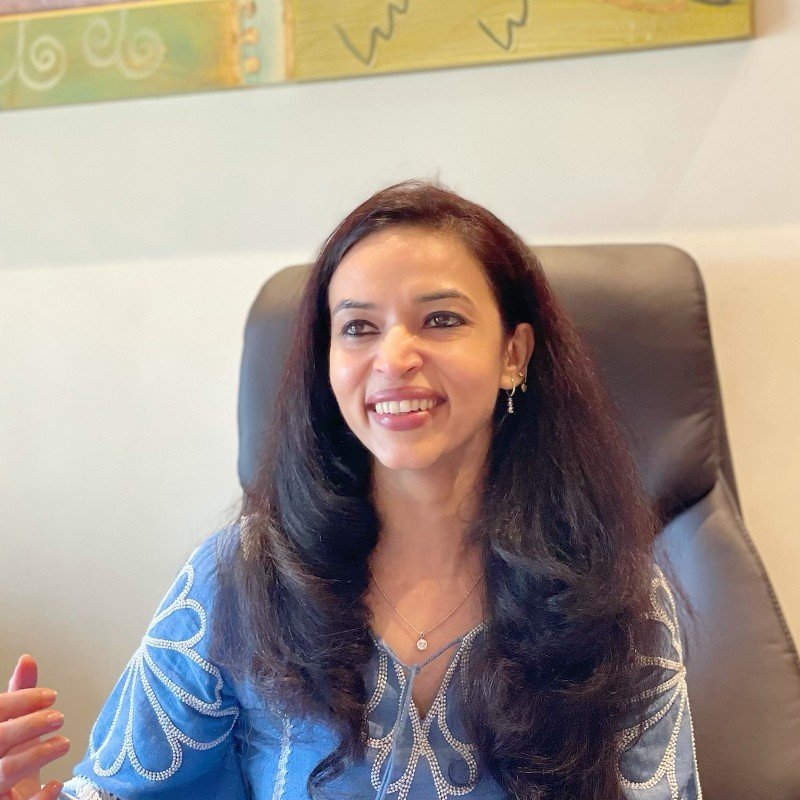
Rinika Grover has over 20 years of experience in the development sector. She started her career as a volunteer and later pursued a post-graduation programme in special education for differently abled children and worked as a special educator. She holds a master’s degree in Management and Information Systems from the University of Manchester, United Kingdom.  Later, she completed a programme in Climate Change Policy and Public Health from the University of Wisconsin–Madison, and Business Sustainability Management from The Cambridge Institute for Sustainability Leadership. She was recognised by CSR Times in their sterling 25 CSR professionals in India. Recently she was recognised and awarded by CSR Works, Singapore as Asia’s Top Sustainability Superwomen 2020.
Tags: ApolloTyresAutomobileCarbonFootprintCOP26DecarbonisationEmissionsNetZeroRinika GroverRinikaGroverScope3emissionSustainability

CSR, Sustainability, and ESG success stories hindustan zinc
ADVERTISEMENT
India CSR

India CSR

India CSR is the largest media on CSR and sustainability offering diverse content across multisectoral issues on business responsibility. It covers Sustainable Development, Corporate Social Responsibility (CSR), Sustainability, and related issues in India. Founded in 2009, the organisation aspires to become a globally admired media that offers valuable information to its readers through responsible reporting.

Related Posts

Gaurav Terdal, CHRO SMFG India Credit
Articles

Why Livestock Health Is Central to Rural Economic Stability

1 day ago
Childcare
Articles

Stronger Families, Stronger Bottom Lines: Why Childcare Support Is a Business Imperative

6 days ago
Satish Jha
Articles

Satish Jha: India Has Grown But Not Flourished

1 week ago
Corporate Social Responsibility
Articles

From Compliance to Impact: Designing Site-Specific and Need-Based CSR Programs

2 weeks ago
Gaurav Sharma, CHRO of Balancehero India.
Articles

Youth, Rural India and Sustainability — Why CSR Must Focus on Empowerment, Not Just Relief

2 weeks ago
Carbon Neutral Manufacturing: Technology Pathways and Investment Strategies
Articles

Carbon Neutral Manufacturing: Technology Pathways and Investment Strategies

2 months ago
Load More
Ambedkar Chamber
ADVERTISEMENT
India Sustainability Awards 2026
ADVERTISEMENT

LATEST NEWS

Doctor Arif Patel Dubai UAE Continues to Set Benchmarks in Patient-Focused Dental Care

Kerala-Origin Premium Highway Café Brand “Cafe Munnar” Announces Strategic Expansion with Five New Outlets

Chat to Video: Generate Veo 3 Videos When You’re Stuck

CSR: SBI Foundation Opens Applications for Youth for India Fellowship

AI Video Generator to Make Videos Online for Social Content

HarshulRai’s Role in Shaping Indore as a Hub for Sustainable Health Innovation

Economy India Largest Media on Indian Economy and Business
ADVERTISEMENT
Ad 1 Ad 2 Ad 3
ADVERTISEMENT
ESG Professional Network
ADVERTISEMENT

TOP NEWS

Fintech Platform Endl Secures 1.5 Million Dollar Investment to Scale Global Payment Infrastructure

Compassion Meets Precision: Rethinking Diagnostics in Regional India

17-Year-Old Aditya Pandya Becomes India’s Youngest Male Analog Astronaut After Completing Aaka Space’s Lunar Habitat Mission

Securing High-Turnover Assets: Why Your Business Needs a Godrej Enterprises Group Gold Locker

Kerala-Origin Premium Highway Café Brand “Cafe Munnar” Announces Strategic Expansion with Five New Outlets

Baroda BNP Paribas debuts “Baroda BNP Paribas ESG Best-in-Class Strategy Fund” – good for investors and society

Load More
STEM Learning STEM Learning STEM Learning
ADVERTISEMENT

Interviews

Prof. Kang Sung Lee, PhD
Interviews

Prof. Kang Sung Lee on Academia, Policy, and Industry-Linked Career Pathways

by India CSR
February 5, 2026

Despite being an advanced economy, South Korea faces a severe demographic crisis.

Read moreDetails
Magma Group CEO and Founder, Neal Thakker

Embedding CSR in Responsible Manufacturing at Magma Group: An Interview with Neal Thakker

January 21, 2026
Sudeep Agrawal, CFO & Head – CSR, Ashirvad by Aliaxis

Integrating Financial Leadership With Impactful CSR Initiatives: An Interview with Sudeep Agrawal, Ashirvad by Aliaxis

December 29, 2025
Satish Jha

Interview with Satish Jha: Pioneering CSR in Education

December 5, 2025
Load More
Facebook Twitter Youtube LinkedIn Instagram
India CSR Logo

India CSR is the largest tech-led platform for information on CSR and sustainability in India offering diverse content across multisectoral issues. It covers Sustainable Development, Corporate Social Responsibility (CSR), Sustainability, and related issues in India. Founded in 2009, the organisation aspires to become a globally admired media that offers valuable information to its readers through responsible reporting. To enjoy the premium services, we invite you to partner with us.

Follow us on social media:


Dear Valued Reader

India CSR is a free media platform that provides up-to-date information on CSR, Sustainability, ESG, and SDGs. We need reader support to continue delivering honest news. Donations of any amount are appreciated.

Help save India CSR.

Donate Now

Donate at India CSR

  • About India CSR
  • Team
  • India CSR Awards 2025
  • India CSR Leadership Summit
  • Partnership
  • Guest Posts
  • Services
  • ESG Professional Network
  • Content Writing Services
  • Business Information
  • Contact
  • Privacy Policy
  • Terms of Use
  • Donate

Copyright © 2025 - India CSR | All Rights Reserved

No Result
View All Result
  • Home
  • Corporate Social Responsibility
    • Art & Culture
    • CSR Leaders
    • Child Rights
    • Culture
    • Education
    • Gender Equality
    • Around the World
    • Skill Development
    • Safety
    • Covid-19
    • Safe Food For All
  • Sustainability
    • Sustainability Dialogues
    • Sustainability Knowledge Series
    • Plastics
    • Sustainable Development Goals
    • ESG
    • Circular Economy
    • BRSR
  • Corporate Governance
    • Diversity & Inclusion
  • Interviews
  • SDGs
    • No Poverty
    • Zero Hunger
    • Good Health & Well-Being
    • Quality Education
    • Gender Equality
    • Clean Water & Sanitation – SDG 6
    • Affordable & Clean Energy
    • Decent Work & Economic Growth
    • Industry, Innovation & Infrastructure
    • Reduced Inequalities
    • Sustainable Cities & Communities
    • Responsible Consumption & Production
    • Climate Action
    • Life Below Water
    • Life on Land
    • Peace, Justice & Strong Institutions
    • Partnerships for the Goals
  • Articles
  • Events
  • हिंदी
  • More
    • Business
    • Finance
    • Environment
    • Economy
    • Health
    • Around the World
    • Social Sector Leaders
    • Social Entrepreneurship
    • Trending News
      • Important Days
      • Great People
      • Product Review
      • International
      • Sports
      • Entertainment
    • Case Studies
    • Philanthropy
    • Biography
    • Technology
    • Lifestyle
    • Sports
    • Gaming
    • Knowledge
    • Home Improvement
    • Words Power
    • Chief Ministers

Copyright © 2025 - India CSR | All Rights Reserved

This website uses cookies. By continuing to use this website you are giving consent to cookies being used. Visit our Privacy and Cookie Policy.

