

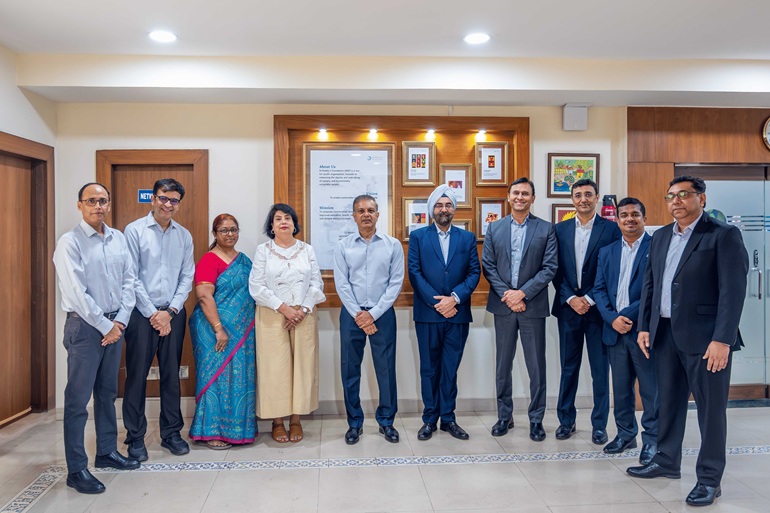


Standard Chartered and Dr. Reddy’s Foundation will train and facilitate employment for 1,250 Persons with Disabilities across five states by March 2028.
NEW DELHI (India CSR): Standard Chartered and Dr. Reddy’s Foundation have extended their partnership to strengthen the economic inclusion of Persons with Disabilities through skill development, employment and livelihood opportunities. Under the new agreement, Dr. Reddy’s Foundation will train and facilitate employment for 1,250 Persons with Disabilities by March 2028.
The programme will be implemented across Maharashtra, Telangana, Uttar Pradesh, West Bengal and Delhi. It will support people with locomotor disabilities, hearing impairment, dwarfism and cerebral palsy. Participants will receive core employability and market-relevant skills. They will also receive support to access mainstream employment opportunities.
The initiative aims to help participants secure sustainable livelihoods and achieve greater financial independence.
Partnership Expands Disability-Inclusive Employment Across Five States Through Market-Relevant Skills and Job Placements
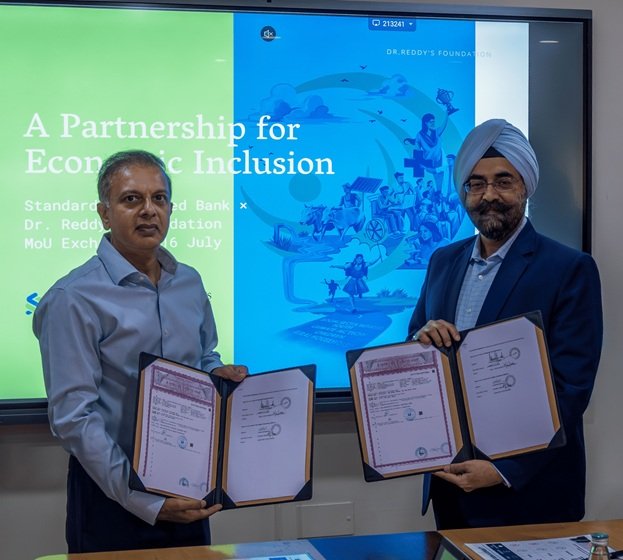
The agreement was signed in the presence of P.D. Singh, CEO, India and South Asia, Standard Chartered, and K. Satish Reddy, Chairman, Dr. Reddy’s Laboratories and Dr. Reddy’s Foundation. The renewed partnership builds on the organisations’ earlier work in disability inclusion, employability and entrepreneurship.
Standard Chartered and Dr. Reddy’s Foundation began their partnership in November 2023. The initial programme focused on developing employability skills among Persons with Disabilities. More than 3,000 candidates were trained under the first phase by December 2025. Around 70% of them secured mainstream employment.
This translates to approximately 2,100 trained candidates entering the workforce.
First Training Phase Helped Around Seventy Percent of Participants Secure Mainstream Employment Opportunities
The earlier phase demonstrated the importance of connecting training with real employment opportunities. The programme went beyond technical instruction. It focused on preparing participants for workplace expectations and formal employment. The 70% placement rate also indicated demand for skilled candidates when disability-inclusive hiring systems are supported by suitable training and employer engagement.
The extended phase will use this experience to support another 1,250 candidates by March 2028.
Self-Employment Initiative Supports 1,900 PwDs in Establishing and Expanding Their Micro-Enterprises Successfully
In January 2026, Standard Chartered and Dr. Reddy’s Foundation added a self-employment component to their partnership. Financial support was extended to 1,900 Persons with Disabilities. The funding is helping participants establish new micro-enterprises or expand their existing businesses.
The initiative seeks to increase the monthly income of participating entrepreneurs by at least 50%. The self-employment programme is currently under implementation. It is scheduled to conclude in September 2027.
This component recognises that formal employment may not be suitable or accessible for every individual. Entrepreneurship can offer an alternative path to income, independence and community participation.
Combined Initiatives Aim to Impact More Than 6,000 Youth and PwDs Positively
All the initiatives under the Standard Chartered–Dr. Reddy’s Foundation partnership are expected to positively impact more than 6,000 young people and Persons with Disabilities by March 2028.
The partnership combines three important elements:
- Employability training
- Mainstream job placement
- Support for self-employment and micro-enterprises
The model aims to address different barriers faced by Persons with Disabilities. These include limited access to skills, inaccessible recruitment processes, low employer awareness and inadequate business capital.
The programme also places economic independence at the centre of disability inclusion.
Economic Inclusion Requires Skills, Accessible Opportunities and Long-Term Employer Engagement Across India
Karuna Bhatia, Head of Sustainability, India, Standard Chartered, said the skill development programme seeks to address inequality and promote economic inclusion. “Our skill development programme is a youth economic empowerment initiative, tackling inequality and promoting greater economic inclusion. We truly believe that meaningful economic participation begins with access to opportunities,” Bhatia said.
She said the partnership reflects Standard Chartered’s commitment to fostering an inclusive workforce and enabling Persons with Disabilities to build sustainable careers. “By investing in skills development and employment pathways, we aim to help create a more equitable future where talent is recognised and nurtured irrespective of physical abilities,” she added.
Shamik Trehan, CEO, Dr. Reddy’s Foundation, said the partnership is central to the organisation’s work with Persons with Disabilities and young people from economically weaker sections. “Our partnership with Standard Chartered is central to our work in equipping persons with disabilities and youth from economically weaker sections with future-ready skills and competencies,” Trehan said.
“Through this partnership, we enable them to secure formal sector employment and support self-employed PwDs in growing their businesses,” he added.
Creating Pathways to Financial Independence
Employment remains one of the most important drivers of social and economic inclusion. For Persons with Disabilities, access to employment can be affected by several barriers. These include limited training opportunities, workplace accessibility challenges and employer perceptions. Skill development programmes can help close the employability gap. However, training alone may not be enough. Candidates also require placement support, accessible recruitment and inclusive workplaces.
The Standard Chartered–Dr. Reddy’s Foundation partnership seeks to connect these elements. Its employment and entrepreneurship tracks provide participants with more than one livelihood pathway. The approach can help candidates choose opportunities suited to their abilities, circumstances and aspirations.
The expanded initiative also supports the broader goal of building an economy in which disability does not limit access to meaningful work.



